Your pet’s reaction during a dental cleaning depends less on the procedure itself and more on how the environment is set up before it begins. Senses Therapy is the protocol The Magic Paws built to manage exactly that, combining four sensory inputs, aromatherapy, music therapy, chromotherapy, and massage, into a structured approach applied during every anesthesia-free session.
Most calming techniques used in veterinary and grooming settings address one variable at a time. A pet-friendly scent in the room, soft background music, or a gentle handling style each make a difference in isolation. Senses Therapy treats these as interconnected inputs: the effect of each component is amplified when the others are active at the same time.
The protocol was developed with a specific context in mind: anesthesia-free dental cleaning. Without sedation, the procedure depends entirely on the animal’s voluntary cooperation. A dog or cat that is alert, tense, or in a defensive state cannot safely or effectively receive dental care. An animal whose nervous system has shifted into a relaxed state can.
Understanding how each component works, and why they work in combination helps you evaluate whether this approach fits your dog or cat before you book an appointment.
What is Senses Therapy and why does it matter for pets?
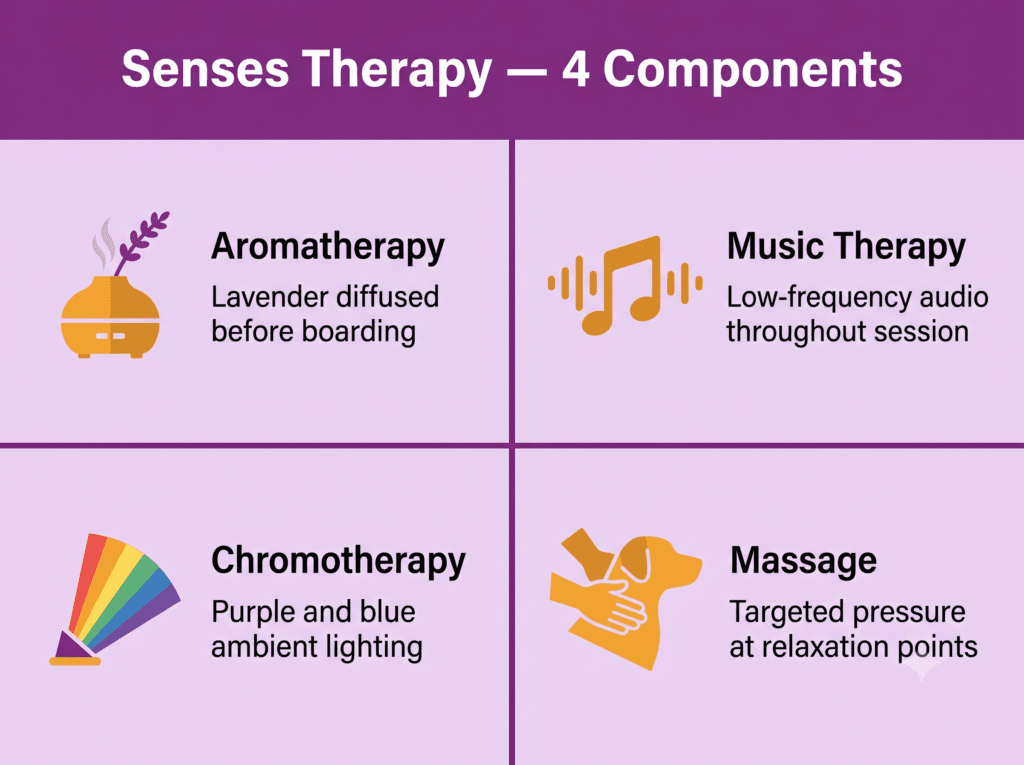
Senses Therapy is a structured multisensory calming protocol developed by The Magic Paws that applies aromatherapy, music therapy, chromotherapy, and massage simultaneously to help dogs and cats maintain a relaxed state throughout anesthesia-free dental cleaning sessions. Each component targets a different sensory pathway, and together they create cumulative input that shifts the animal’s nervous system toward a parasympathetic, or rest-and-digest, state.
When a pet enters an unfamiliar environment for a procedure, the default response is stress. Elevated cortisol affects heart rate, muscle tension, and pain perception.
In that physiological state, a cleaning that would otherwise be straightforward becomes difficult for the animal and technically limited for the technician. The quality of the procedure is directly tied to the emotional state of the patient during it.
Senses Therapy was formalized by Illana, the founder of The Magic Paws, who holds dental credentials earned in Brazil in 1995 and a Florida hygiene license obtained in 2005. When she launched The Magic Paws in 2021, she applied principles from her clinical background to develop a structured protocol that would allow anesthesia-free dog dental cleaning to be performed safely and without restraint. The four-component design is not an improvised combination of wellness trends: it is a method built around the specific physiological demands of dental care in conscious animals.
How does aromatherapy help pets stay calm during dental cleaning?
Aromatherapy for dogs during dental cleaning works by introducing specific scent molecules that bind to olfactory receptors and trigger neurological responses associated with calm. In dogs and cats, the olfactory system is the dominant sensory channel, which means scent-based input reaches the limbic system, the part of the brain governing emotion and memory, faster than visual or auditory cues.
Research has confirmed this mechanism in practical settings. A published study by Wells (2006) found that diffused lavender significantly reduced travel-induced excitement in dogs, increasing resting behavior and decreasing vocalization and movement.
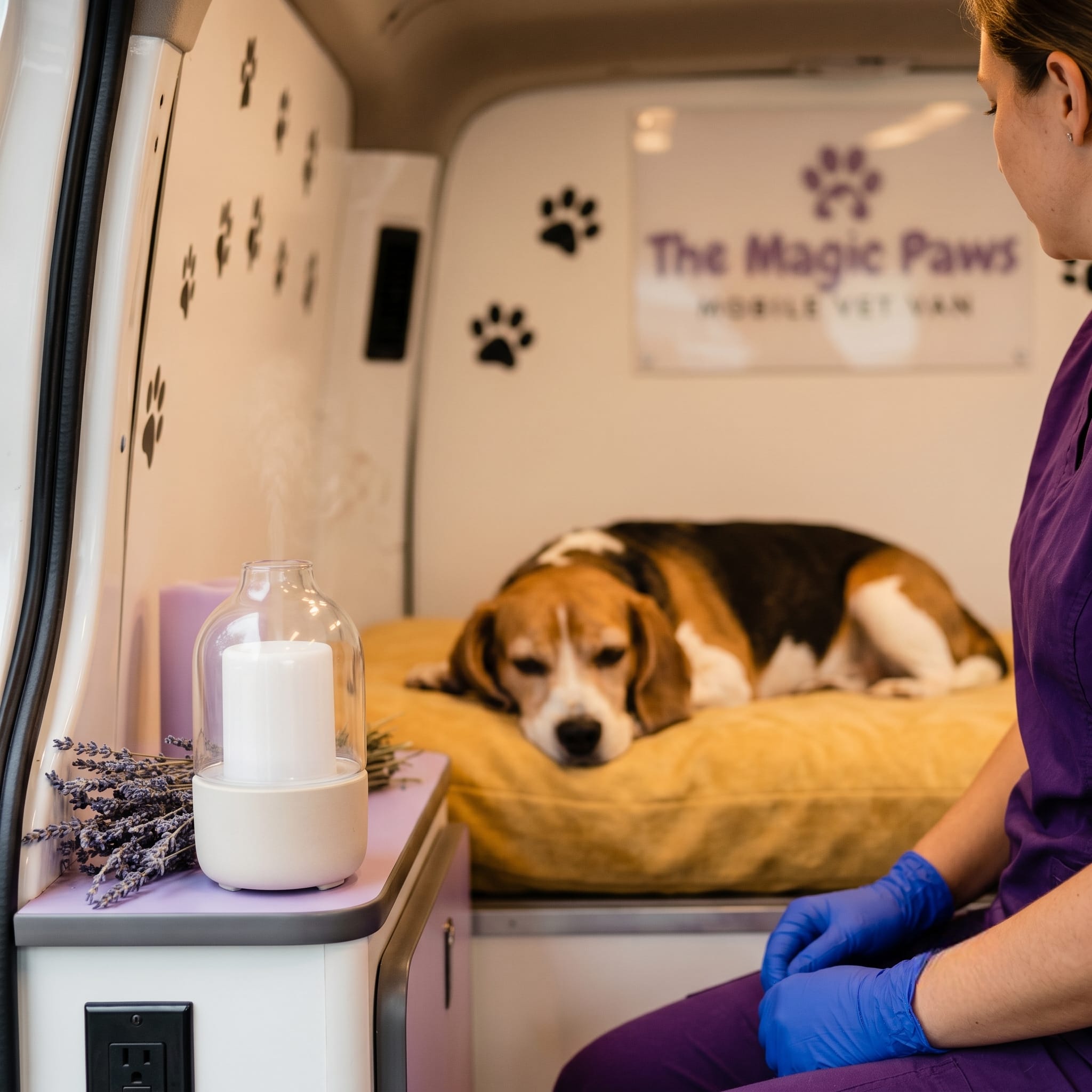
The effect was observable within minutes of exposure. In The Magic Paws protocol, lavender is diffused inside the van before the animal boards and maintained throughout the session, creating a scent environment already associated with calm by the time dental work begins.
The application method matters. Placing aromatic elements directly on the animal’s fur or skin carries risks, particularly for cats, whose liver cannot safely metabolize many essential oil compounds.
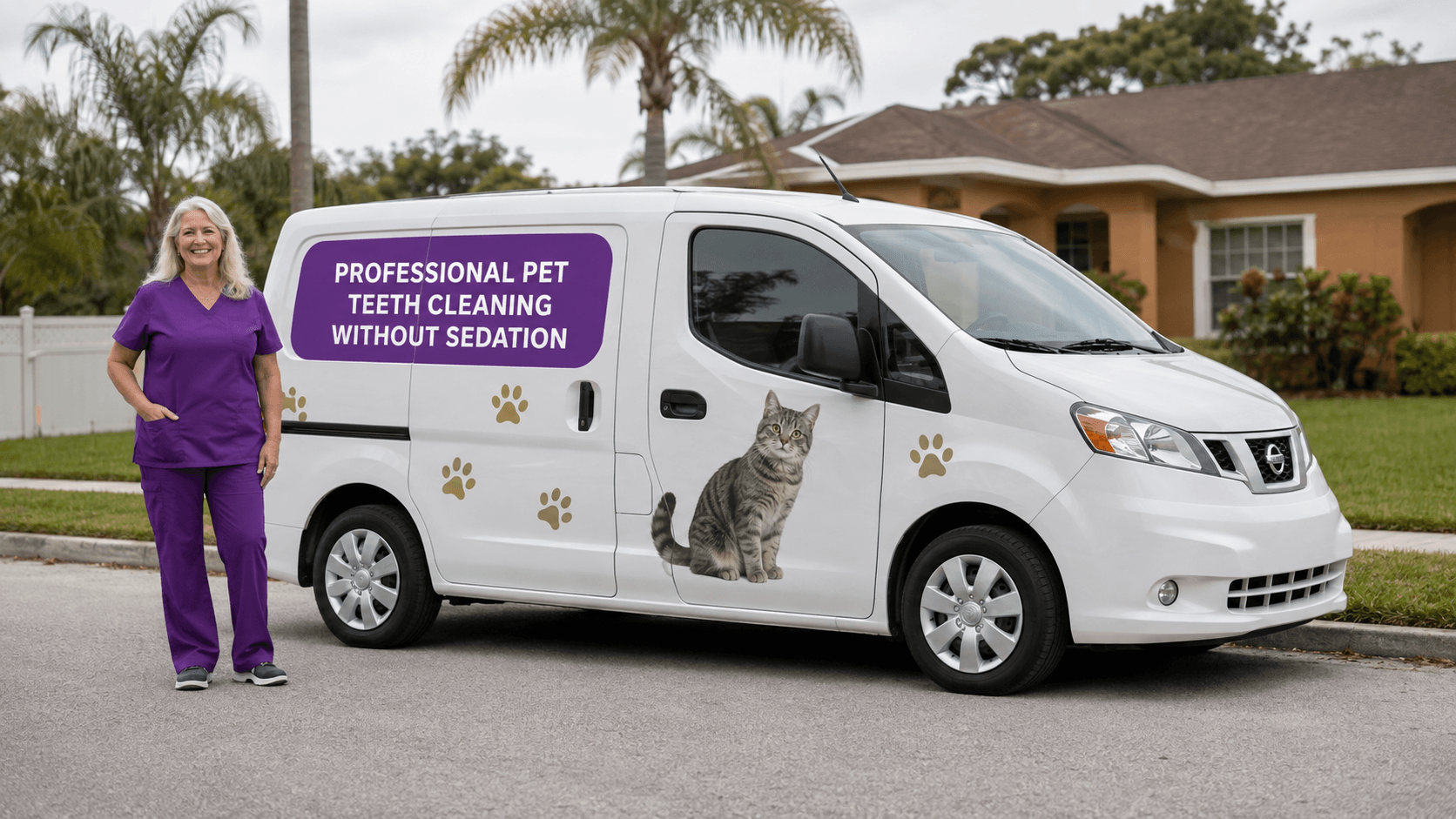
Diffusion at low concentration into an enclosed and ventilated space is the method supported by the available research. This is the approach used inside the branded Nissan NV200 that serves clients in South Florida and Central Florida, keeping risks of anesthesia for pets off the table entirely for animals that qualify as candidates.
Why lavender is the scent of choice?
Among the aromatic compounds tested in published animal studies, lavender (Lavandula angustifolia) produces the most consistent evidence of behavioral calming in dogs.
The compound linalool, present in high concentrations in true lavender, has documented interaction with GABA receptors in the central nervous system, the same pathway targeted by many pharmaceutical anxiolytics, without the sedative side effects associated with those medications.
Other scents produce responses in animals, but the evidence is less consistent. Chamomile has shown mild calming effects in some studies. Valerian affects cats more than dogs.
Citrus compounds tend to be stimulating rather than calming in canines. Lavender consistently shows the profile needed for a dental context: reduced movement, reduced vocalization, and increased resting posture without disorientation.
Within the Senses Therapy protocol, lavender is not used as a standalone intervention. It works as the scent layer of a multisensory system, establishing baseline aromatic context while the other three components address auditory, visual, and tactile input at the same time.
How does music therapy reduce stress in dogs and cats?
Music therapy for pets works on the autonomic nervous system through auditory stimulation that matches or gradually slows the animal’s physiological rhythm. In dogs and cats, low-frequency tones, moderate tempo, and simple melodic structure produce measurable reductions in indicators of stress, including heart rate, cortisol levels, and behavioral signs of anxiety.
A 2025 systematic review published on PMC examined the physiological and neurobiological mechanisms of music’s effect on dogs and cats, identifying links between auditory input and the release of endorphins and dopamine. Both of which contribute to relaxation and positive affective states.
A separate clinical study by Hampton et al. (2020) recorded lower stress scores in cats at a veterinary clinic when specific music was played during the visit, with results measured through behavioral observation and physiological markers. Inside the van, music plays throughout each session, starting before the animal boards and continuing through the entire cleaning. The selection follows low-frequency and low-tempo criteria, calibrated to match the resting state the protocol aims to establish.
The connection between dental health and broader wellbeing is real: dog bad breath, for example, is often the first external sign of bacterial accumulation that music therapy, by enabling cooperative cleaning, helps address from the start.
The role of time and frequency in calming animals
How quickly music produces a calming response in dogs and cats depends on two variables: frequency range and the duration of exposure before the stressful event begins. Lower frequencies, generally below 500 Hz, are associated with reduced arousal in multiple mammalian species. Higher frequencies and percussive sounds have the opposite effect.
Exposure duration also matters. Music introduced after the animal is already in a stressed state has limited effect on the acute response.
The Senses Therapy protocol applies music before boarding begins, giving the auditory environment time to establish baseline before the dental procedure starts. This timing distinction separates the protocol from ambient background music used as an afterthought in many veterinary or grooming settings.
The practical result is that by the time cleaning begins, the animal’s autonomic nervous system has already received several minutes of consistent, low-frequency auditory input aligned with relaxation.
What is chromotherapy and how does it work for pets?
Chromotherapy for animals is the use of specific light colors as an environmental element intended to reduce stressful visual stimuli during a procedure. Unlike aromatherapy or music therapy, chromotherapy in animals does not yet have a direct evidence base in peer-reviewed animal research.
The component is included in Senses Therapy as a controlled sensory input, not as a clinically proven intervention on its own.
The argument for chromotherapy draws from documented human research, where blue and purple wavelengths have been associated with reduced physiological arousal compared to red or yellow environments, and from basic sensory stimulation logic.
Animals process visual input differently from humans, and their sensitivity to certain light wavelengths varies by species, but eliminating harsh, high-contrast, or high-intensity lighting reduces one potential source of visual stress during a procedure.
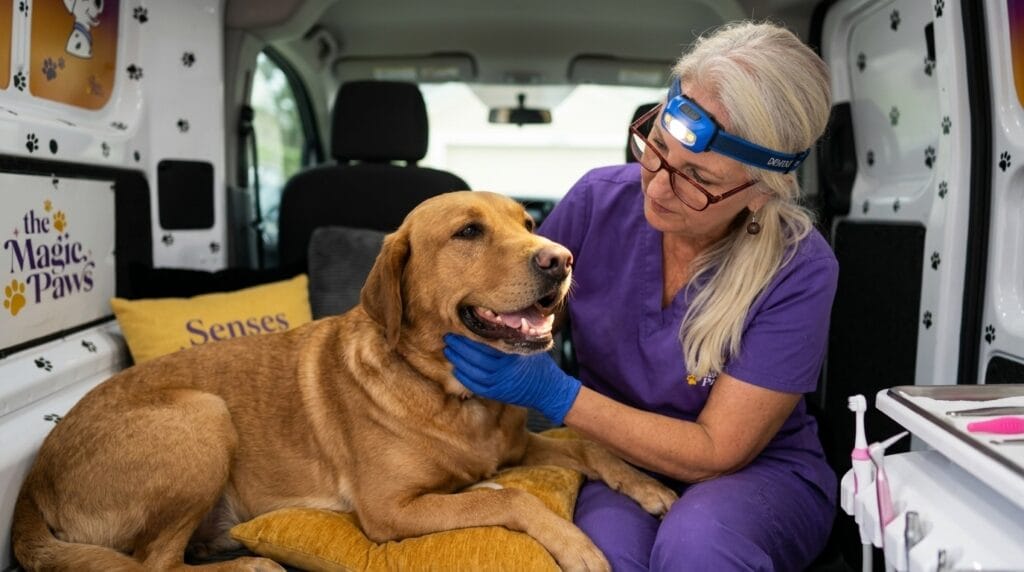
Inside the Magic Paws van, the use of purple and blue lighting is also consistent with the brand’s visual identity.
The environment is designed to communicate calm at first glance, both for the dog or cat entering the space and for the owner watching from outside. As part of a four-component system, chromotherapy contributes to a coherent sensory environment rather than a clinically isolated variable.
Purple and blue light inside The Magic Paws van
The interior of the Nissan NV200 was configured with lighting in purple and blue tones as a deliberate design choice, not a decorative one.
These wavelengths sit at the cooler end of the visible spectrum and are associated, in human perception, with calm, trust, and reduced urgency. The visual environment inside the van is consistent from session to session, meaning animals that return for follow-up cleanings encounter the same chromatic context each time.
For first-time visits, the lighting contributes to first impressions. A pet boarding an unfamiliar vehicle in bright white lighting with high visual contrast receives a different set of environmental cues than one entering a space with consistent, low-intensity, cool-tone illumination. The Magic Paws treats this as a controllable variable and controls it consistently.
This level of environmental consistency also supports the owner’s confidence in the process. What you see when you look into the van reflects the same care that goes into the protocol design.
See how The Magic Paws brings Senses Therapy to your door. Book your pet’s first Senses Therapy session today.
How does massage on relaxing points calm pets during a procedure?
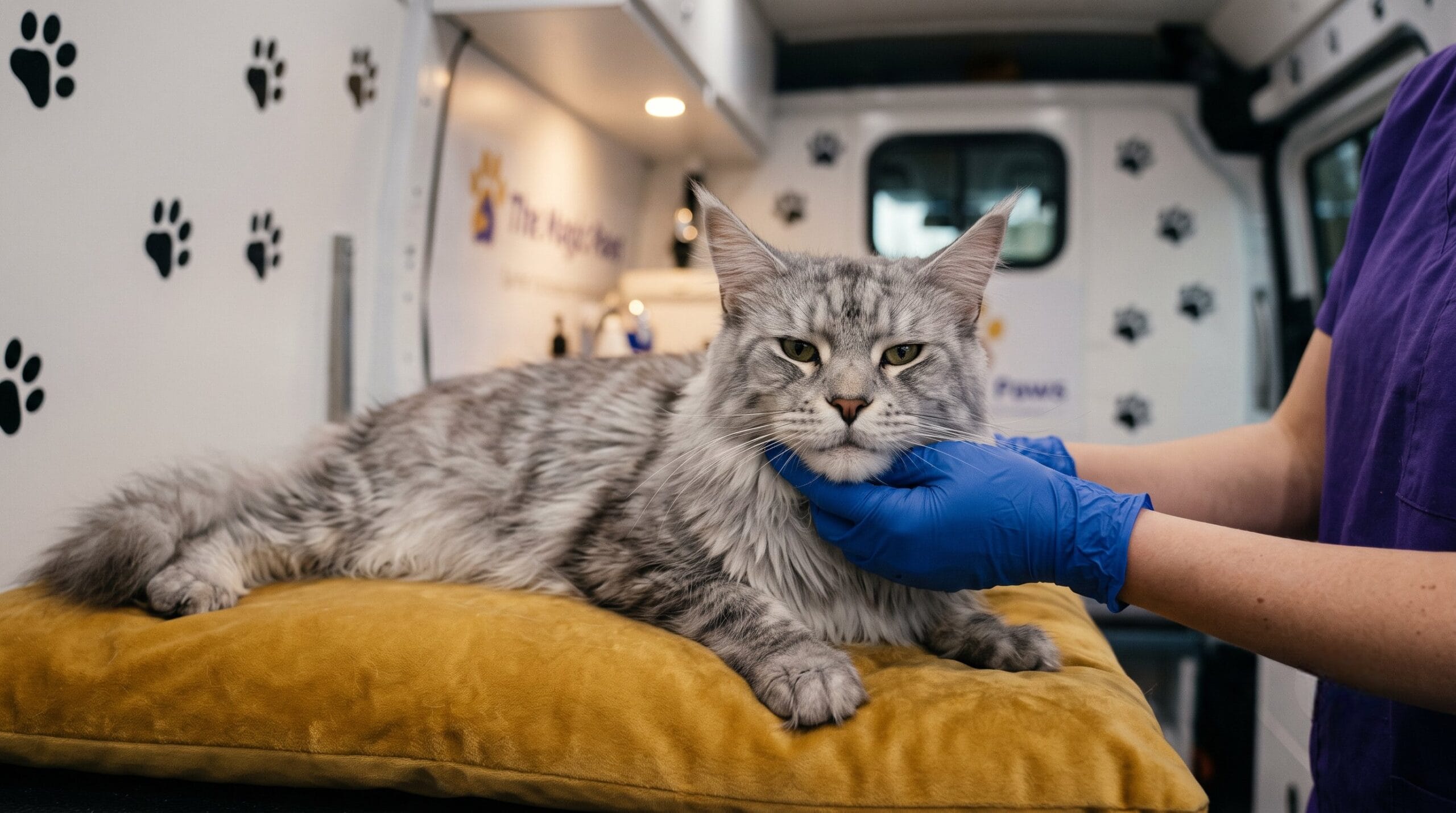
Massage therapy for dogs and cats during anesthesia-free dental cleaning works by activating the parasympathetic nervous system through physical contact at established relaxation points. Targeted pressure on specific areas, including the base of the skull, the neck, the shoulder blades, and the area behind the ears, stimulates the vagus nerve, which is the primary driver of the rest-and-digest response in mammals.
When vagal tone increases, heart rate slows, muscle tension decreases, and the animal’s physiological state shifts toward receptiveness rather than defense. This is the same mechanism accessed by acupressure points in both human and veterinary applications.
The technician applies this touch at the beginning of the session, before the dental work begins, and continues targeted contact throughout the dog dental cleaning session as needed to maintain the calm state.
Another practical effect is a cooperative animal that remains still without physical restraint. This is important for the quality of the cleaning, since a dog or cat that is not being held down allows the technician access to all tooth surfaces, including the posterior molars, where tartar accumulation tends to be most significant.
The difference between massage and restraint
Physical restraint during veterinary or grooming procedures suppresses behavior rather than changing the emotional state behind it.
An animal held still by force remains in a sympathetic nervous system activation state: heart rate elevated, muscles tensed, cortisol high. The procedure is completed, but the experience is one of controlled fear, not cooperation.
Therapeutic touch in the Senses Therapy protocol operates on a different logic. The goal is not to prevent movement by overpowering it but to shift the animal’s internal state so that movement is no longer the default response.
A dog or cat that has received targeted pressure at relaxation points, within a scented, musically calibrated, and visually calm environment, is in a different physiological position than one that has been wrapped or held.
No competitor in the current anesthesia-free dental cleaning market describes this distinction in clinical terms or attributes it to a named, structured protocol. The difference between the two approaches is mechanism, not style.
How do the four components of Senses Therapy work together?
The combined effect of Senses Therapy’s four components is greater than any single input applied alone. Each component targets a distinct sensory pathway: olfactory, auditory, visual, and tactile.
When all four are active simultaneously, the pet’s nervous system receives consistent, coherent calming signals across multiple channels at once, making it significantly harder for a stress response to override the combined input.
The sequence during a session follows a specific progression. The van environment, with lavender diffused, music active, and lighting set, is established before the animal boards.
Gentle touch at relaxation points begins while the patient settles into the space. Only after these inputs have had time to shift the animal’s baseline state does the dental cleaning begin. For dogs keeping up with dog dental care at home between sessions, the protocol builds on an existing foundation of oral familiarity and dental health.
The structure also means that if one component produces less response in a particular animal, the others continue to exert influence.
A cat less responsive to music, for example, still receives full aromatherapy, chromotherapy, and tactile input throughout the session.
Is Senses Therapy safe for all dogs and cats?
Senses Therapy is designed to be safe for the majority of healthy adult dogs and cats, but candidacy for the full protocol is evaluated before each session. Animals with certain respiratory conditions, severe anxiety disorders, or dental infections beyond the scope of anesthesia-free cleaning are identified during this evaluation and referred to a veterinary clinic for sedation-based care.
The four-component protocol itself carries no pharmacological intervention and no physical restraint. The safety question is not whether the protocol is hazardous; it is whether the animal’s specific condition makes it a suitable candidate for anesthesia-free cleaning at all.
This evaluation is part of the professional pet dental cleaning process at The Magic Paws, and a session will not proceed if the technician identifies contraindications during the initial assessment.
For animals that do qualify, the protocol has particular value for those in categories where sedation carries elevated risk: brachycephalic breeds, older dogs with compromised organ function, and cats with cardiac sensitivities.
The calming effect of Senses Therapy reduces the physiological demands on the animal during the procedure, which matters most precisely in these cases. Signs of dental disease in cats, for example, are often detected during the pre-session evaluation, and understanding signs of dental disease in cats early determines whether the protocol is appropriate or whether a veterinary referral is needed first.
How can you experience Senses Therapy with The Magic Paws?
Booking a Senses Therapy session means scheduling a mobile appointment where the van comes to your address in South Florida (Miami-Dade, Broward, and Palm Beach counties) or Central Florida (Orlando and the surrounding region). No transportation of your pet to a clinic, no waiting room, and no recovery period after the procedure.
Once the appointment is confirmed, the session follows the same protocol structure for every animal: the van environment is prepared before arrival, all four components are active from the moment your dog or cat boards, and cleaning begins only after the calming phase is established.
The dog dental cleaning cost varies by the animal’s size and the extent of the cleaning required, and pricing is confirmed when you book.
For dogs entering their later years, Senses Therapy is one of the most practical options available, since it eliminates anesthesia exposure while still delivering effective dental care for adults. Senior dog dental care considerations are worth reviewing before the next annual cleaning.
Your pet doesn’t have to be stressed to get their teeth clean. Book a Senses Therapy session with The Magic Paws. Book your pet’s first Senses Therapy session today.
FAQ about Senses Therapy by The Magic Paws
What is Senses Therapy?
Senses Therapy is the proprietary calming protocol developed by The Magic Paws for anesthesia-free dental cleaning in dogs and cats. It combines four components applied simultaneously: aromatherapy with diffused lavender, music therapy using low-frequency calming audio, chromotherapy through purple and blue lighting, and massage at established relaxation points on the animal.
Who created the Senses Therapy protocol?
Senses Therapy was created by Ilanna, founder of The Magic Paws, who holds dental credentials earned in Brazil in 1995 and a Florida hygiene license obtained in 2005. She launched The Magic Paws in 2021, applying her clinical background to develop a structured multisensory protocol that enables anesthesia-free dental cleaning without physical restraint.
Does aromatherapy actually work on dogs and cats?
Yes, based on published research. A study by Wells (2006), indexed on PubMed, found that diffused lavender reduced travel-induced agitation in dogs, increasing resting behavior and decreasing movement and vocalization. The evidence is strongest for dogs. Application method matters: diffusion in a ventilated space is supported by the literature; direct skin or fur contact with essential oils is not recommended, particularly for cats.
Is chromotherapy proven to work on animals?
Direct clinical evidence for chromotherapy in animals is limited. Within the Senses Therapy protocol, chromotherapy is used as an environmental element: purple and blue lighting reduces harsh visual stimuli and creates a consistent, low-arousal visual context. The argument draws from documented human research on cool-spectrum wavelengths and from sensory stimulation logic, not from standalone clinical claims in animal populations.
Can music therapy replace sedation in pets?
Not as a standalone intervention. As part of a structured multisensory protocol, music therapy contributes to the animal’s cooperative state by stimulating the release of dopamine and endorphins and supporting parasympathetic nervous system activation. The published evidence, including a 2025 PMC review and the Hampton et al. (2020) clinical study, supports its role as a meaningful component of a broader calming approach.
How long does a Senses Therapy session take?
A full session runs 45 to 60 minutes, including the initial candidacy evaluation, the calming phase with all four Senses Therapy components active, and the dental cleaning itself. There is no recovery period after the procedure. The pet can resume normal activity immediately.
Is Senses Therapy safe for senior pets?
Yes, and it is particularly well-suited for older animals. Senior dogs and cats often face elevated anesthesia risks due to compromised organ function, cardiac sensitivities, or other age-related conditions. Senses Therapy enables effective dental care without sedation, eliminating that risk. A pre-session candidacy evaluation confirms whether the animal is suitable for the anesthesia-free protocol.
Does Senses Therapy work for cats as well as dogs?
Yes. The protocol is applied to both dogs and cats, with adaptations for how each species responds to sensory input. Cats are generally more sensitive to olfactory stimuli and require lower diffusion concentrations for aromatherapy. Their response to music also differs from dogs, with particular sensitivity to frequency range. The session structure and all four components remain the same; application is calibrated to the individual animal.
Where is Senses Therapy available?
The Magic Paws serves South Florida, covering Miami-Dade, Broward, and Palm Beach counties, and Central Florida, including Orlando and the surrounding region. The service is mobile: the Senses Therapy protocol is delivered inside the van, which travels to the owner’s address. No clinic visit is required.
How is Senses Therapy different from other calming techniques?
Senses Therapy is a named, structured protocol with four defined components applied simultaneously by a technician with dental credentials. Most calming techniques used in veterinary or grooming contexts address one variable in isolation: a scent in the room, soft background audio, or a gentle handling style. Senses Therapy treats these inputs as an integrated system, with consistent application, defined sequencing, and a protocol tied to the clinical background of the practitioner who developed it.