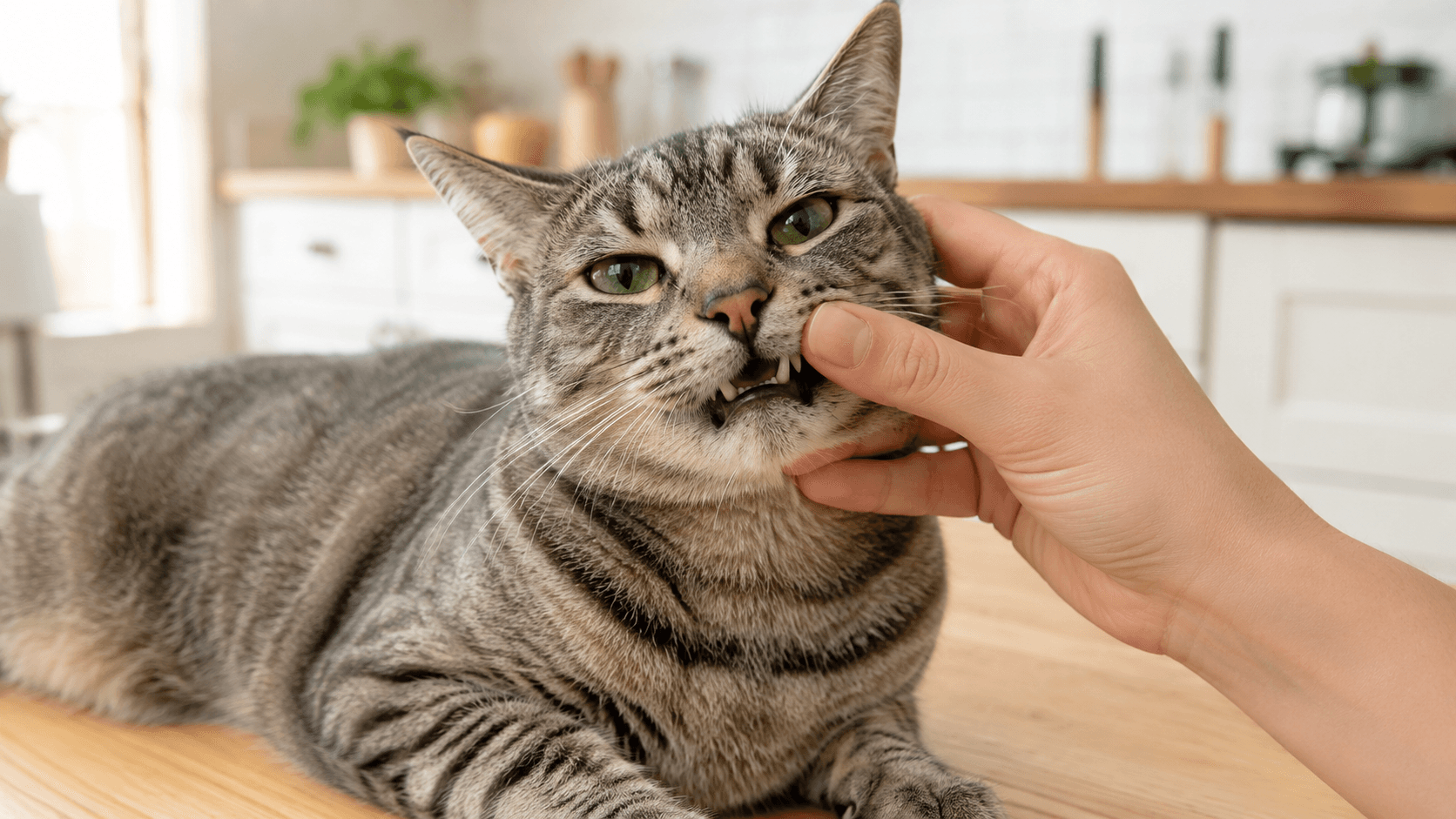
Tartar control treats for cats are one of the most common purchases tutors make when they notice their cat’s breath has changed or the teeth look duller than before. The label promises cleaner teeth with every crunch, which sounds like a simple fix for a problem most owners would rather not think about too often.
What the packaging rarely explains is the difference between preventing new buildup and removing tartar that has already formed. Those are two different jobs, and a treat can only ever do one of them well, regardless of how the marketing copy is worded.
This becomes especially relevant for older cats, whose gum tissue has usually been exposed to years of plaque accumulation already. A treat introduced late in a cat’s life is working against tartar that may already be mineralized, not preventing it from forming in the first place.
The sections below walk through what tartar control treats actually do, where their limits sit, and what tends to change when an older cat’s mouth needs more than daily chewing can provide.
What does “tartar control treat for cats” mean on a label?
On most packaging, “tartar control” means the treat is designed to slow new buildup through chewing, not to remove tartar that has already hardened along the gumline. That distinction matters more with cats than most labels suggest, since a session with expert cat dental cleaning services in the USA often reveals how much has already calcified beneath the surface.
The wording is not regulated the way medication claims are, so two products with very different actual effects can both use the same phrase. A cat that eats mostly wet food, for example, may get almost no mechanical benefit from a crunchy treat, while a cat on dry kibble already chews in a similar pattern every day.
How do tartar control treats for cats teeth clean?
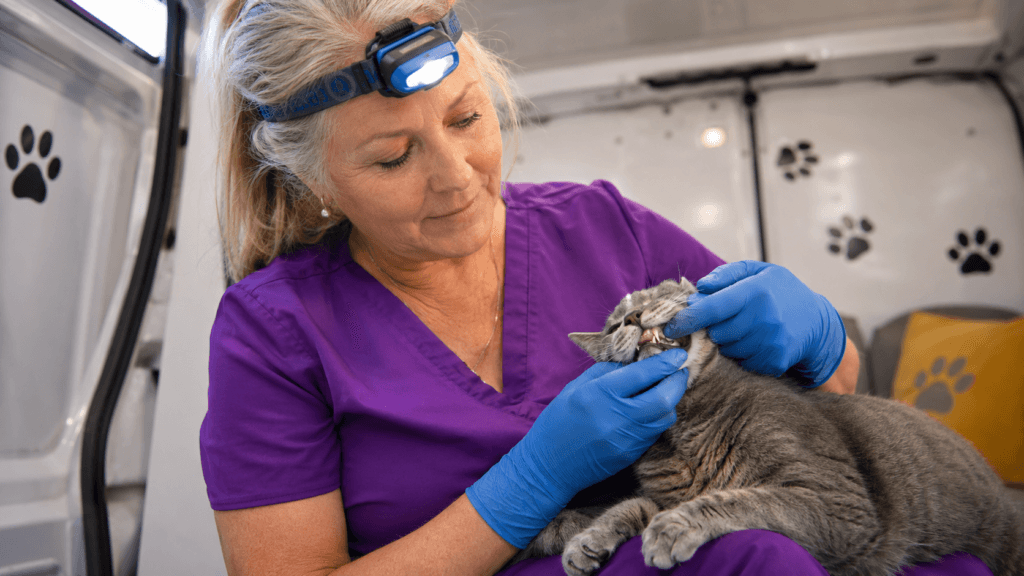
Tartar control treats clean through two combined actions: a texture that scrapes plaque off mechanically as the cat bites down, and, in some formulas, enzymes that interrupt bacterial buildup. According to the Cornell Feline Health Center, how well this works depends on chewing habits, tooth positioning, and how consistently the cat dental treats are offered.
The mechanical scraping works best on the back teeth, where chewing pressure is highest, since most cats barely engage their front teeth when breaking down a treat. Knowing how many teeth a cat has helps explain why the front incisors rarely see the same cleaning benefit as the molars further back.
Can these treats remove tartar that is already there?
Tartar control treats cannot remove tartar once it has mineralized on the tooth surface. Once plaque hardens, only a professional cleaning performed by dog and cat dental cleaning experts can physically scale that layer away.
This is the gap most product listings avoid mentioning. Chewing pressure alone is not strong enough to break down calcified tartar, and no amount of daily treats will reverse deposits that have already bonded to the enamel below the gumline.
A veterinarian remains the right professional to confirm whether a cat’s case still qualifies for a sedation-free approach or whether the buildup has progressed further. Every cat’s eligibility should be evaluated individually before any cleaning method is chosen.
Why did my senior cat’s breath change so suddenly?
A sudden change in an older cat’s breath usually signals that bacteria has spread below the gumline, not that something shifted in the diet. Teams recognized as leading experts in dental pet cleaning often flag this exact shift as one of the clearest warning signs that a professional evaluation is overdue.
Old cat bad breath that appears abruptly, rather than gradually, tends to point toward an active infection or advanced periodontal disease rather than ordinary plaque. This is one reason senior cat teeth cleaning is usually recommended sooner than tutors expect once the smell changes noticeably.
Treats given at this stage will not resolve the underlying cause. They can still support hygiene afterward, but the sudden change itself is a signal to schedule an evaluation rather than to add another bag of treats to the routine.

Is a treat enough, or does a senior cat need more?
A treat alone is rarely enough for a senior cat, since chewing strength and frequency both tend to decline with age. Comparing daily treats, brushing, and options such as cat dental cleanings in Florida shows why professional care becomes more important as a cat gets older.
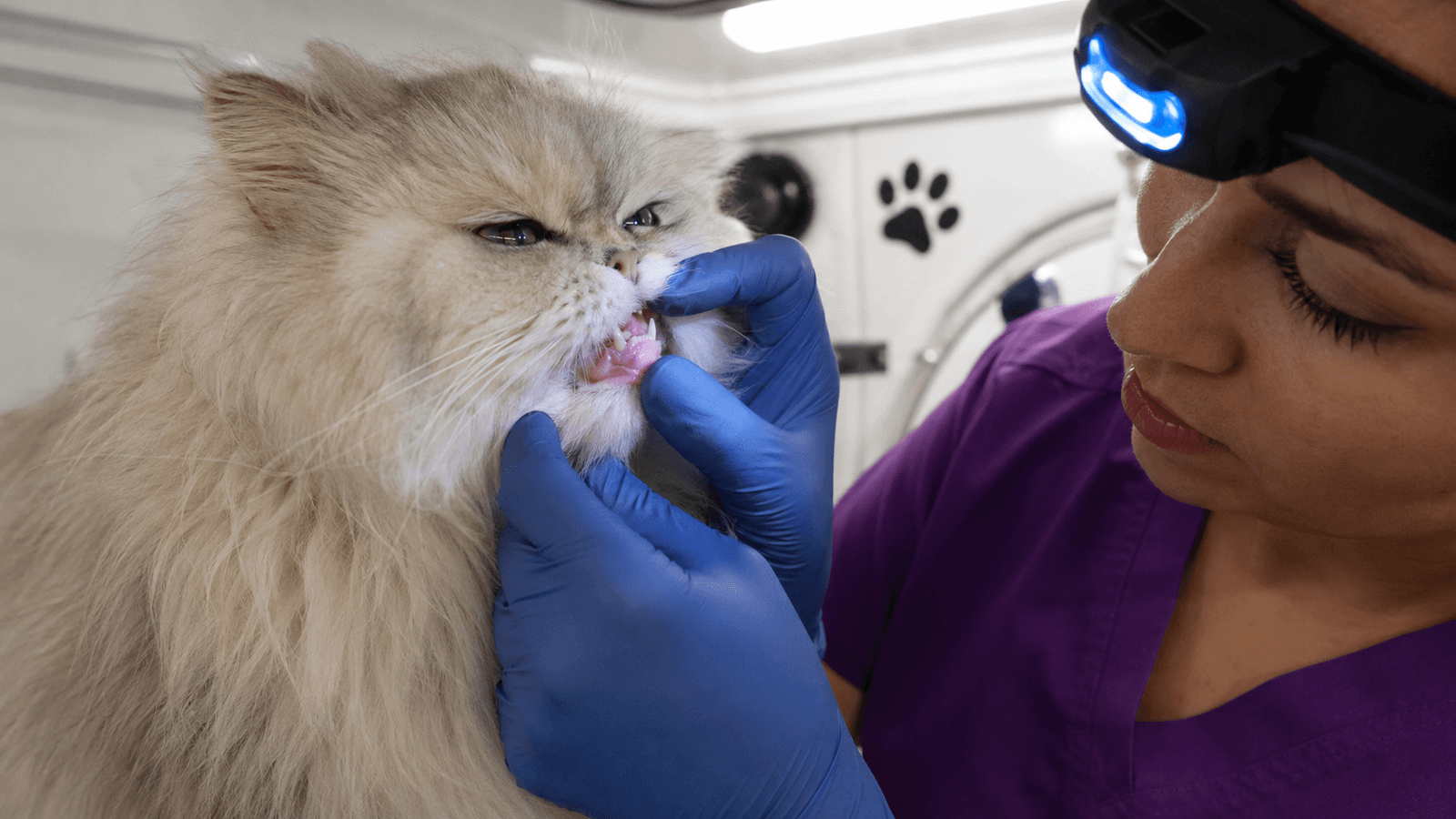
For tutors managing more than one senior pet, mobile pet dental care removes the added stress of transporting an anxious cat to a clinic, since the evaluation happens at the home instead.
The table below compares what each approach realistically covers, so it becomes easier to see where a treat’s role ends and where other care needs to begin.
| Approach | What it does | Limitation |
| Daily tartar control treat | Slows new buildup through chewing | Cannot remove hardened tartar |
| Brushing | Removes soft plaque before it mineralizes | Requires consistency the cat may resist |
| Professional cleaning | Removes tartar already formed below the gumline | Requires veterinary evaluation for eligibility |
See how a sedation-free cleaning works for senior cats: see how a sedation-free cleaning works.
How do you choose a tartar control treat that works?
The clearest way to choose an effective treat is to look for the seal from the Veterinary Oral Health Council (VOHC), which certifies that a product was tested and shown to reduce plaque or tartar under controlled conditions. Products without this seal rely on marketing language that has not been independently verified.
Beyond the seal, texture and ingredient consistency matter more than flavor variety. A treat that crumbles instead of resisting the bite will not produce the scraping action the packaging implies, regardless of how it is marketed.
The Magic Paws was founded by Ilanna Reisner, whose formal training in human dentistry shapes how her team evaluates which cats are good candidates for a pet dental cleaning experts without anesthesia session. More than two thousand pets across Florida have already gone through that same individual evaluation before any cleaning began.
An anesthesia-free cleaning works as a safer, more accessible layer of preventive care alongside daily treats, not as a replacement for veterinary judgment. A veterinarian should always confirm which approach fits a specific cat’s health history first.
Tartar control treats slow down buildup, but a professional cleaning removes what’s already there. Book a professional teeth cleaning for your cat today.
FAQ about tartar control treats for cats
What are tartar control treats for cats?
Tartar control treats are crunchy or enzymatic snacks formulated to reduce the buildup of new tartar as the cat chews. They work through texture and, in some formulas, added enzymes that interrupt bacterial growth on the tooth surface.
How often should I give my cat tartar control treats?
Most labels recommend one treat per day, adjusted to the cat’s weight. Check the packaging for the exact serving size, since overfeeding treats can offset the calorie balance of a regular diet.
Can kittens have tartar control treats?
Most tartar control treats are formulated for adult cats with fully developed teeth. Check the product label for an age recommendation before offering one to a kitten.
Do tartar control treats cause weight gain in cats?
They can, since treats add calories on top of a regular diet. Mixing the treat into the daily portion rather than adding it separately helps keep the overall calorie intake balanced.
What ingredients should I look for in a tartar control treat?
Look for an abrasive texture that resists the bite and, when included, enzymatic ingredients designed to interrupt plaque formation. These features tend to matter more than flavor when it comes to actual cleaning effect.
Is bad breath the only sign my cat needs a dental checkup?
No. Difficulty chewing, excessive drooling, and pawing at the mouth are additional signs worth watching alongside any change in breath.
Can dental treats replace a professional cat teeth cleaning?
No, because treats cannot remove tartar that has already mineralized on the tooth surface. A professional cleaning is the only way to physically remove that hardened layer.
What else can I do besides treats to prevent tartar in my cat?
Brushing removes soft plaque before it hardens, and a professional cleaning removes what has already formed. Both work best as complementary layers alongside daily treats, not as substitutes for one another.
How much do tartar control treats cost compared to a professional cleaning?
Treats represent a smaller, recurring cost spread across months, while a professional cleaning is a single, one-time investment that addresses tartar already present. The two serve different purposes rather than competing on price.
When should I schedule my cat’s first professional dental cleaning?
Most veterinarians recommend an annual evaluation starting in adulthood, sooner if signs like sudden bad breath or visible tartar appear. Scheduling early makes it easier to catch buildup before it progresses further.