Senior dog dental disease is one of the most under-recognized health issues in dogs over the age of seven, largely because the signs rarely look like an emergency. A dog that is still eating, still greeting you at the door, and still acting like itself can be carrying a mouth full of pain that has been building for years.
Age changes the picture in several ways at once. Plaque and tartar have had more time to accumulate and mineralize, gum tissue becomes thinner and more prone to recession, and the immune response that once fought off bacterial buildup weakens. None of this happens overnight, which is exactly why it is so easy to miss.
At the same time, older dogs are experts at masking discomfort. A younger dog with a sore tooth may paw at its mouth or refuse a hard treat outright. A senior dog is more likely to keep eating out of habit and instinct, adjusting quietly rather than signaling distress in an obvious way.
This guide walks through what makes dental disease in older dogs different, the early signs most owners overlook, how the condition affects the rest of the body, and where anesthesia fits into treatment once disease is already present. Knowing how to treat dental disease in senior dogs starts with recognizing these differences, not with guessing based on age alone.
We also cover what a real evaluation involves and what to do next if your senior dog is showing any of these signs.
What is senior dog dental disease and why does it progress differently?
Senior dog dental disease is periodontal disease that has been developing for years rather than months, which means the tissue damage is typically further along by the time it becomes visible.
The same bacterial process that causes dog teeth cleaning to be recommended in young dogs is present in senior dogs too, but it has had far longer to work beneath the surface.
In a younger dog, plaque accumulation calcifies into tartar over months. In a senior dog, that tartar buildup has often been forming in layers for years, pushing gum tissue away from the tooth and creating pockets where bacteria thrive undisturbed.
Age also slows the body’s own defenses. A younger animal’s immune system can hold bacterial buildup somewhat in check for longer, while an older dog’s gums and supporting bone lose that resistance more quickly once disease takes hold.
The result is a condition that looks similar to periodontal disease in any dog on the surface, but carries a much narrower window between mild inflammation and irreversible bone loss.
What are the early signs of dental disease in senior dogs?
The early signs of dental disease in senior dogs are frequently mistaken for normal aging, because a dog that is quietly compensating for oral pain still behaves like a dog that is simply getting older.
This is the compensatory-signs pattern: the animal keeps eating out of survival instinct, even while chewing has become genuinely difficult.
A senior dog with a painful tooth rarely stops eating altogether. Instead, it may shift to swallowing kibble whole, favor one side of the mouth, or take longer at the food bowl without any dramatic change in appetite.
Watch for the following physical signs, which are more reliable than behavior alone:
- Persistent bad breath in older dogs: breath that smells sharply of decay, not just mild “dog breath,” often signals active bacterial infection
- Visible tartar and gum recession: brown or yellow buildup along the gumline, combined with gums that appear to be pulling away from the tooth
- Reluctance to chew hard food: a dog that suddenly prefers soft food or drops kibble mid-chew may be protecting a painful tooth
- Pawing at the face or drooling more than usual: subtle but consistent signs of oral discomfort, especially after meals
- Loose teeth or visible tooth root exposure: a clear sign that periodontal disease has already reached an advanced stage
For a closer look at how this buildup develops in the first place, dog dental cleanings in Jacksonville breaks down what routine care typically catches before it reaches this point.
How does dental disease affect a senior dog’s overall health?
Dental disease in a senior dog affects far more than the mouth, because oral bacteria that enter the bloodstream through inflamed gum tissue can reach the heart, kidneys, and liver.
This systemic health risk grows with the animal’s age, since aging organs are already working with less reserve capacity.
According to the Cornell University College of Veterinary Medicine, periodontal disease in older dogs is common past three years of age and tends to worsen steadily without intervention, which means a senior dog has typically been carrying this bacterial load far longer than a younger animal.
Chronic oral bacteria place ongoing strain on organs that filter and process the bloodstream, and the heart and kidney impact of that long-term exposure is well documented in aging animals. A pet with existing kidney or liver changes has less capacity to manage the additional bacterial burden over time.
There is also a behavioral overlap worth understanding. Cognitive decline and chronic pain can look remarkably similar in an older dog, including withdrawal, irritability, and reduced interest in play.
This overlap is why oral pain is frequently overlooked as a contributing cause rather than investigated directly. Reviewing dog teeth cleaning cost alongside bloodwork requirements helps owners understand why senior evaluations often involve more diagnostic steps than a routine cleaning in a younger dog.
Is anesthesia always necessary to treat dental disease in a senior dog?
Anesthesia is not always necessary to treat dental disease in a senior dog, and the answer depends entirely on how advanced the disease already is.
Early-stage buildup with healthy gum attachment can often be addressed without it, while deeper periodontal pockets and mobile teeth typically require it for a safe, thorough cleaning.
Age alone is not a disqualifier for anesthesia, and it is also not a reason to assume anesthesia is unavoidable. Evaluating senior dog teeth cleaning risks means looking at the animal’s current health status, not its birthdate, along with the actual stage of dental disease present.
Bloodwork before anesthesia evaluates kidney, liver, and organ function before any sedation decision is made, which is why a senior dog’s dental plan typically involves more diagnostic care upfront than a younger dog’s would. Reviewing anesthesia risk during teeth cleaning in more detail helps set realistic expectations about what senior-specific screening actually involves.
See if your senior dog qualifies for anesthesia-free cleaning: explore The Magic Paws pricing.
When can a senior dog still qualify for anesthesia-free cleaning?
A senior dog can still qualify for anesthesia-free cleaning when dental disease is caught early, bloodwork confirms the animal is a safe candidate, and the buildup has not yet progressed to loose teeth or deep periodontal pockets.
Anesthesia-free cleaning for senior dogs is a realistic option in these early cases, and age is one factor in that decision, not the deciding one.
Eligibility is a practical decision rather than a fixed rule, and it depends on comparing where the animal currently sits: a case that is still preventive, or one that has already become curative and needs a different approach.
| Case type | Typical condition | Anesthesia-free eligible |
| Preventive case | Surface tartar, mild gum inflammation, no mobility in teeth | Usually yes, pending bloodwork |
| Curative case | Deep pockets, loose or fractured teeth, significant bone loss | Usually no, requires anesthesia |
A senior dog that falls into the preventive category can often be maintained with regular sedation-free dental cleaning sessions, spaced closely enough to prevent the disease from advancing into the curative category. Once a dog crosses into that second category, the safety of dog dental cleanings depends on proper anesthesia protocols rather than avoiding sedation altogether.
The distinction matters because it reframes the question owners usually ask. Instead of “is my senior dog too old for a cleaning,” the more useful question is “which category does my dog’s mouth currently fall into.”
What happens during a dental evaluation for a senior dog?
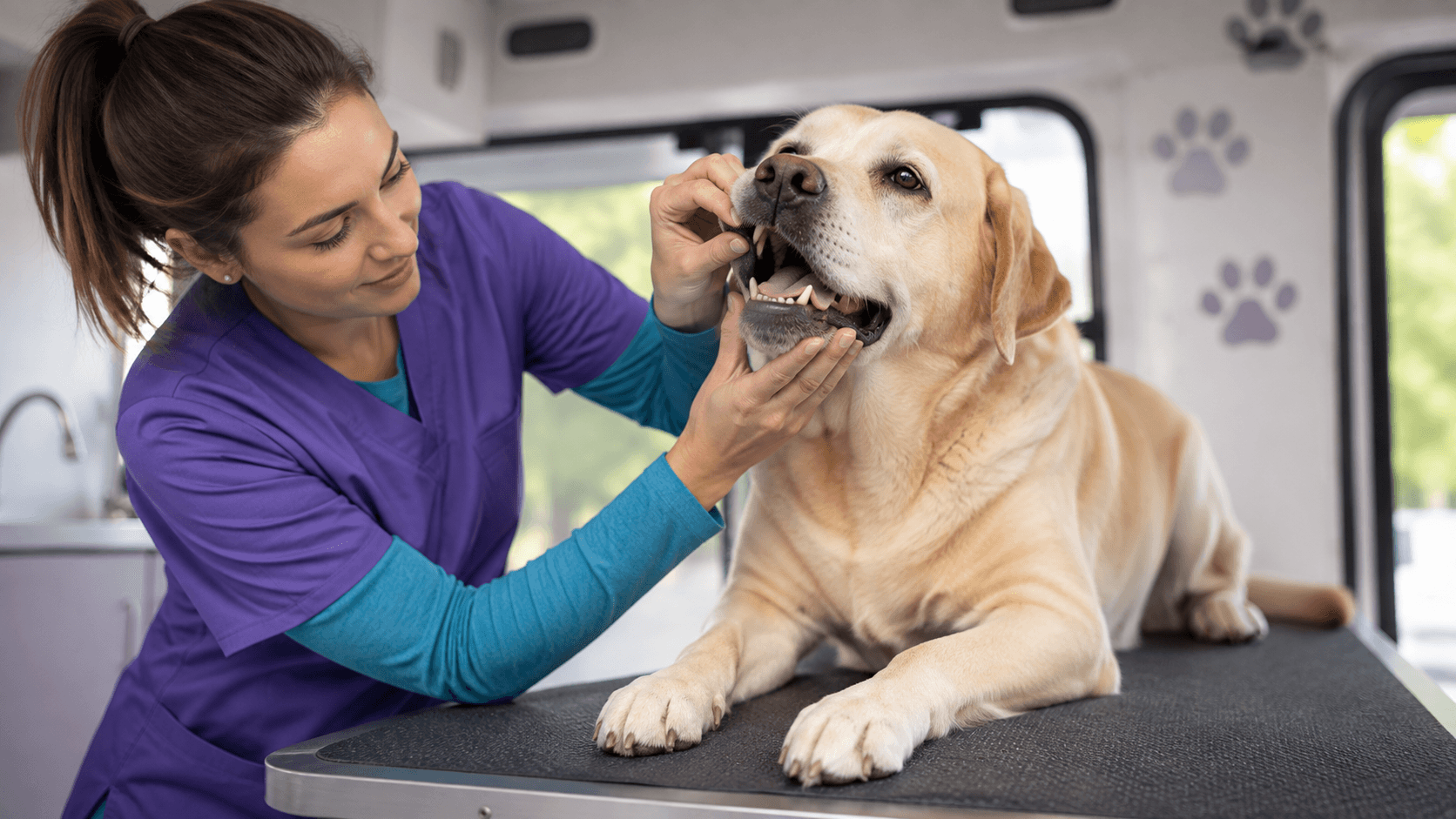
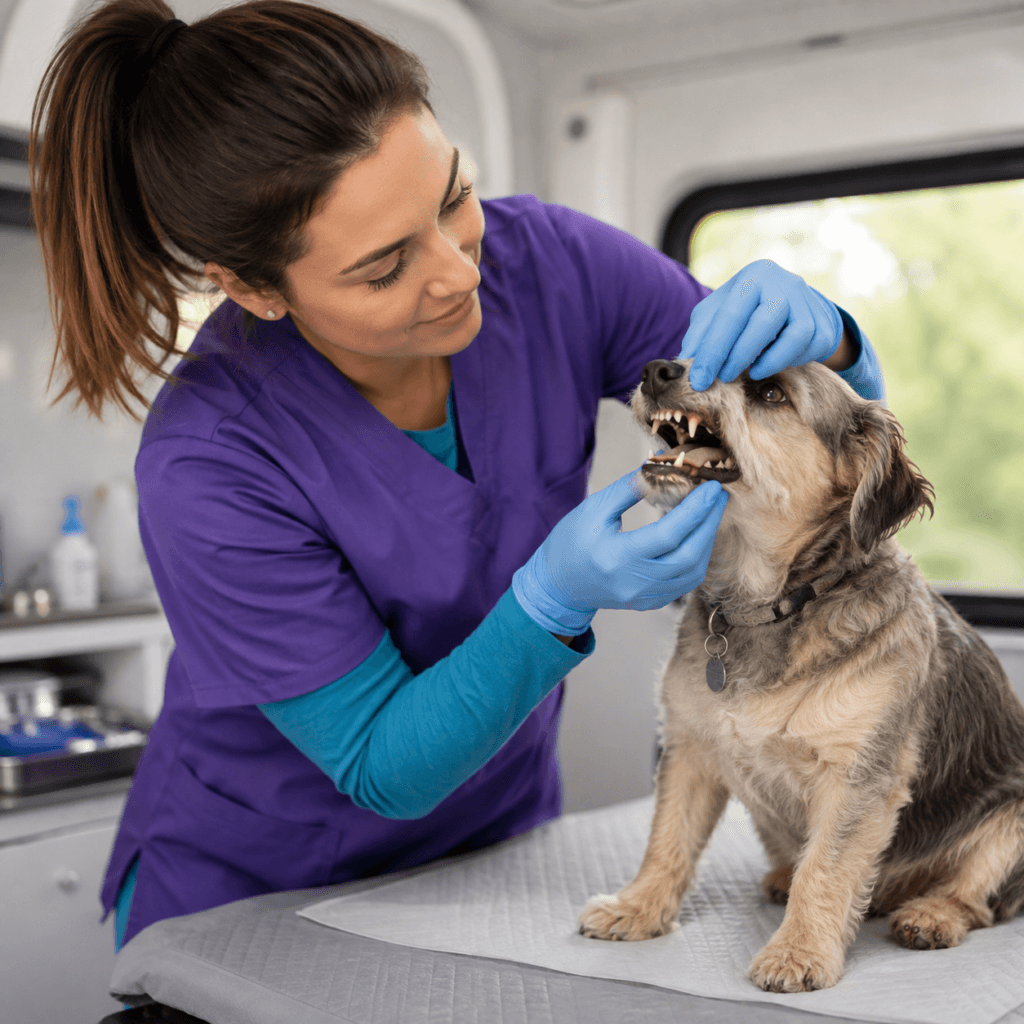
A dental evaluation for a senior dog starts with a physical exam of the gums, teeth, and jaw, followed by bloodwork to confirm the animal is a safe candidate for whichever cleaning approach fits the case.
When deeper disease is suspected, dental X-rays reveal what’s happening below the gumline, including root damage that a visual exam alone cannot show.
This candidacy check happens before any cleaning begins, never after.
At The Magic Paws, that evaluation includes our Senses Therapy protocol, a calming approach designed specifically for animals that find clinical environments stressful, which is especially relevant for senior dogs that may already be more anxious or physically sensitive.
The technician reviews the animal’s temperament, comfort level, and physical condition throughout the appointment, adjusting pace and handling as needed rather than following a fixed script. Understanding how long a dog dental cleaning takes helps owners plan the visit, since senior evaluations often take somewhat longer than a routine young-dog appointment.
If bloodwork or the physical exam raises any concern, the evaluation is the point where that gets flagged, before committing to a specific cleaning method. This step exists precisely to protect senior dogs from a one-size-fits-all approach to dental care.
What should you do if your senior dog shows signs of dental disease?
If your senior dog shows signs of dental disease, the next step is a professional evaluation rather than waiting to see if symptoms worsen, since early-stage disease is far easier and safer to treat than advanced disease.
Watching for the signs covered earlier gives you a starting point, not a diagnosis.
Once a cleaning or treatment is complete, care does not stop there. Reviewing what to feed a dog after dental cleaning helps the mouth recover comfortably, particularly for a senior pet with more sensitive gum tissue.
Between professional visits, at-home maintenance still matters, and dog dental chews can play a supporting role for animals that tolerate chewing well. They work alongside professional care, not in place of it.
Waiting rarely improves the outlook for a senior dog’s dental disease, and an evaluation carries far less risk than most owners expect once the actual health status of the animal is known.
Book your senior dog’s dental evaluation in Florida today. Schedule with The Magic Paws.
Frequently asked questions about senior dog dental disease
How often should a senior dog get a dental check for disease?
A senior dog should get a dental check about every six months, more often than the annual check typical for younger dogs. This shorter interval catches disease progression while it is still manageable.
Can dental disease in senior dogs be reversed?
Gingivitis, the earliest stage, is reversible with treatment at any age. Advanced periodontitis, involving bone and attachment loss, is not reversible and shifts the goal toward management rather than reversal.
What blood tests are needed before treating dental disease in an older dog?
Kidney and liver function tests are the standard pre-anesthetic screening for older dogs, confirming the animal’s organs can safely process sedation before any procedure is scheduled.
Does pet insurance cover senior dog dental disease treatment?
Coverage for dental treatment varies significantly by policy and provider. Owners should review their specific plan’s terms directly rather than assume coverage applies.
Is bad breath in senior dogs always a sign of dental disease?
Usually, but not always. Persistent, decay-like odor is a strong indicator, though diet and other health conditions can also affect breath, so it is one sign among several rather than the only one.
How much does anesthesia-free cleaning cost for a senior dog?
Anesthesia-free cleaning typically falls between $180 and $250, though the final cost depends on the extent of buildup and whether additional evaluation steps are needed.
Can dental disease in senior dogs cause behavior changes like aggression?
Yes. Chronic oral pain can present as irritability, withdrawal, or reduced tolerance for handling, particularly around the face, and is often mistaken for a purely behavioral issue.
What dog breeds are more prone to dental disease in their senior years?
Small breeds with crowded teeth, such as Yorkshire Terriers and Chihuahuas, tend to accumulate tartar faster throughout life, which compounds into more severe disease by the senior years.
How do you know if it’s too late to treat a senior dog’s dental disease?
It is rarely too late. Even advanced cases can typically be stabilized and managed with proper evaluation, though the approach shifts from prevention to damage control.
How do I book a dental evaluation for my senior dog in Florida?
Owners in Florida can book a senior dog dental evaluation directly with The Magic Paws to determine the right next step for their pet’s specific case.