Dog bad breath is something most owners notice, but few investigate closely. The smell tends to get dismissed as a normal part of having a dog, or masked with dental chews and flavored treats, when in reality it is almost always a signal worth taking seriously.
The mouth tells a lot about what is happening in a dog’s body. Persistent odor, especially when it changes in character or intensity, reflects a buildup process that has been going on for longer than the owner realizes. Plaque accumulates daily, and without regular removal, it mineralizes into tartar that cannot be brushed away.
Understanding what is causing the smell and what type of smell it is helps owners respond faster and more accurately. Some situations call for a change in home routine. Others require a vet visit. A few need attention within days. Knowing the difference is what makes this information useful.
This article covers the main causes of bad breath in dogs, what each odor pattern can indicate, what can be done at home, and when professional care is the right next step.
Is dog bad breath actually normal?
Dog bad breath is not normal in the sense that it should be expected and accepted as a permanent condition. A healthy mouth has some natural odor, especially after eating, but it fades within minutes. Breath that lingers, intensifies over time, or develops a distinct and unpleasant character signals that something is off.
The most common reason is dental disease. Plaque forms on the teeth every day, fed by bacteria that break down food residues. When that layer is not removed, it hardens into tartar, a rough surface that harbors even more bacteria and produces the sulfur compounds responsible for the characteristic foul odor. The process is gradual, which is why many owners only notice the smell when the buildup is already significant.
That said, not every case of bad breath in a dog comes from the mouth itself. In some situations, the odor originates from the digestive tract, the kidneys, or metabolic changes. These cases are rarer but more serious, and they tend to produce smells that are distinctly different from the typical dental odor.
So: mild odor after meals is normal. Persistent, strong, or unusual breath is not.
What does your dog’s breath smell tell you?
The character of the odor is one of the most useful early indicators of what might be happening inside the animal’s body. Before doing anything else, pay attention to the type of smell.
| Smell | Most likely cause | Level of urgency |
| Fishy or foul | Plaque, tartar, periodontal disease | Schedule a cleaning |
| Ammonia or urine-like | Kidney disease | Vet within days |
| Sweet or fruity | Diabetes | Vet within days |
| Decay or rotting tissue | Advanced oral infection, foreign object | Vet promptly |
| Fades after eating | Normal post-meal odor | Monitor |
Dog breath smells like fish
A fishy odor is the most common type of bad breath in dogs and almost always comes from the mouth. Bacteria that thrive in plaque and tartar break down proteins and produce volatile sulfur compounds, which create a distinctly foul, fish-like smell. The odor tends to be constant and does not go away between meals.
In female dogs, a fishy smell can also come from the anal glands if they are impacted or infected. If the smell seems to come from the back of the pet rather than the mouth, that is worth checking separately.
Dog breath smells like ammonia
Ammonia-like breath, sometimes described as smelling like urine, is a sign that the kidneys may not be filtering waste efficiently. When kidney function declines, urea builds up in the bloodstream and gets partially exhaled through the lungs.
This type of odor is distinct from dental bad breath. It tends to be sharper, more chemical, and harder to place as a typical mouth smell. If a dog develops this kind of breath, especially alongside changes in drinking or urination habits, a vet should evaluate kidney function without delay.
Dog breath smells sweet or fruity
A sweet or fruity odor, sometimes compared to nail polish remover, can indicate diabetic ketoacidosis. When an animal’s body cannot use glucose properly, it starts burning fat for energy, producing ketones as a byproduct. Those ketones are excreted through the breath.
This smell warrants prompt veterinary evaluation, particularly if the dog has been drinking and urinating more than usual, losing weight, or showing changes in appetite. Diabetes in dogs is manageable when caught early.
Dog breath smells like death or decay
A smell of decay, rotting tissue, or something strongly putrid usually points to advanced oral infection, necrotic tissue in the gum, or a foreign object lodged in the mouth or between the teeth. In some cases, it signals late-stage periodontal disease where bone loss has already occurred.
This is the type of odor that should prompt a vet visit quickly. The sooner the cause is identified, the better the outcome for the animal.
What causes bad breath in dogs?
Bad breath in dogs develops when bacteria in the mouth, digestive system, or bloodstream produce compounds that are released through the breath. The cause determines both the type of smell and the right treatment approach. In the vast majority of cases, the origin is the mouth.
Periodontal disease and plaque buildup
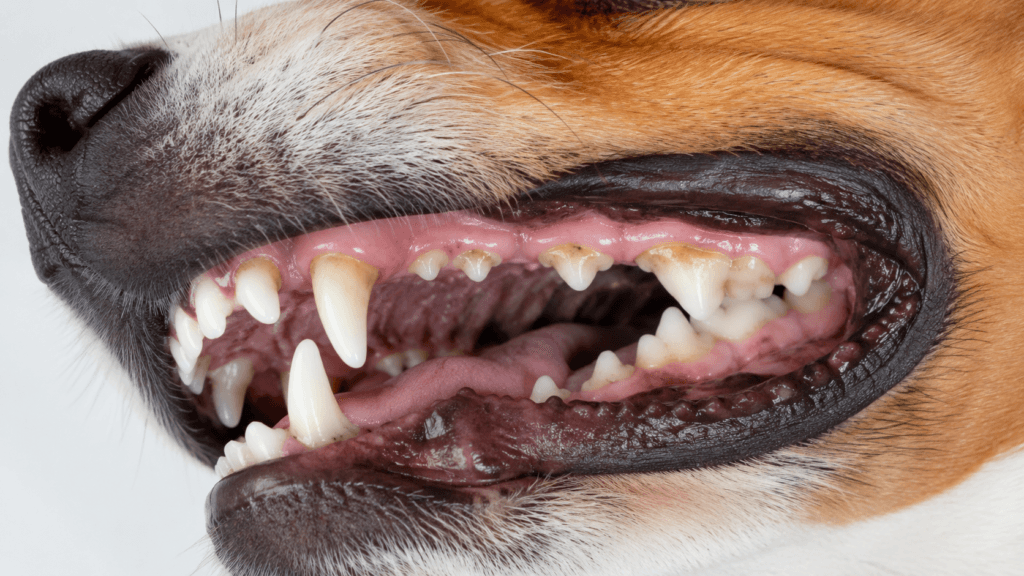
Periodontal disease is by far the most common cause of bad breath in dogs. The American Veterinary Medical Association estimates that most dogs show some degree of dental disease by age three, making it one of the most widespread health conditions in companion animals.
Plaque forms on tooth surfaces within hours of eating. Without daily disruption, it calcifies into tartar in a matter of days. Tartar cannot be removed by brushing; it requires professional scaling.
As the buildup progresses below the gumline, it causes inflammation, infection, and tissue breakdown. The bacterial activity throughout this process is the direct source of the odor.
Small breeds and brachycephalic dogs, such as French Bulldogs and Pugs, are particularly prone to rapid tartar accumulation because their teeth are more crowded, leaving fewer self-cleaning surfaces.
Kidney disease and liver disease
When the kidneys are not functioning properly, waste products that would normally be filtered out accumulate in the bloodstream. Some of those compounds are eliminated through the lungs, producing the ammonia-like odor described earlier.
Liver disease can cause a similarly unusual breath, sometimes described as musty or sweet in a sour way, because the liver’s failure to process toxins affects what gets exhaled.
According to VCA Animal Hospitals, halitosis associated with systemic disease is important to differentiate from dental halitosis because the treatments are entirely different. In both cases, the odor is a secondary symptom: the underlying organ problem is what requires attention.
If your dog’s breath has changed recently or developed an unusual character, The Magic Paws can help identify whether the cause is dental. Schedule a professional cleaning and get a clearer picture of your pet’s oral health.
Diabetes
Diabetic dogs that are not properly regulated may develop sweet-or fruity-smelling breath because of elevated ketone levels in the blood. This is not a dental issue and will not improve with teeth cleaning. The priority is managing blood glucose levels under veterinary supervision.
The smell in these cases is chemical and distinct from anything that comes from plaque. If the pet is also drinking more water, losing weight, or urinating more frequently, those signs together with the breath change point strongly toward a metabolic cause.
Foreign objects and oral infections
Dogs use their mouths to explore, and sometimes food fragments, splinters, or plant material get lodged between the teeth or under the gum. These foreign objects create localized infection and tissue breakdown, producing a concentrated decay smell that can be strong even if the rest of the mouth is relatively clean.
Oral infections that develop around a broken tooth, an abscess, or an untreated wound in the gum tissue also produce intense odor. In most of these cases, the smell comes on relatively suddenly and is localized rather than general.
What can you do at home to help with dog bad breath?
Home care slows the progression of dental disease and reduces odor between professional cleanings. It does not reverse existing tartar or treat systemic causes, but it makes a meaningful difference when applied consistently.
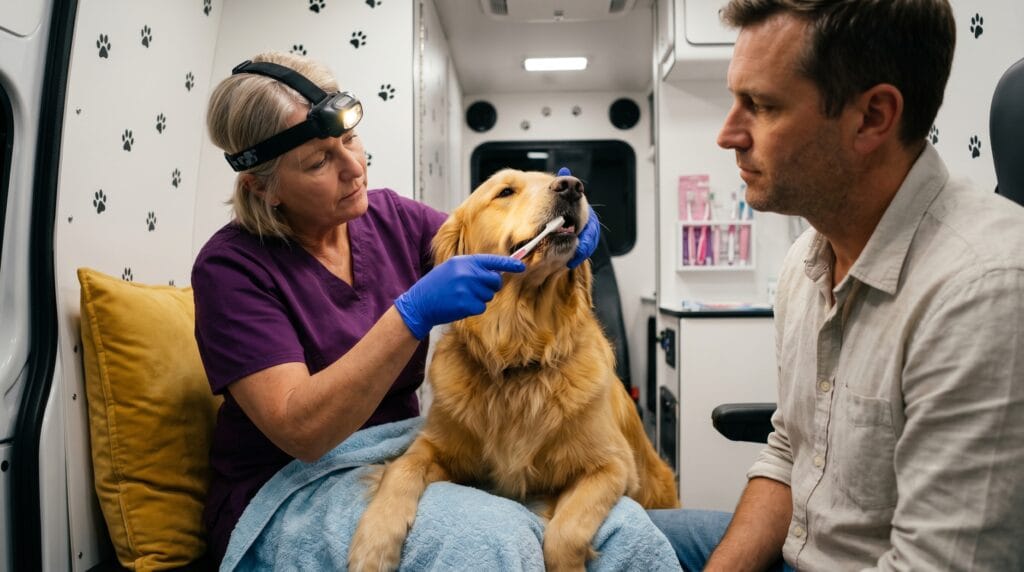
Brushing your dog’s teeth
Daily tooth brushing is the single most effective home measure against plaque buildup. Using a toothbrush designed for dogs or a finger brush, along with dog-safe toothpaste (never human toothpaste, which contains fluoride and sweeteners that are toxic to dogs), disrupts the plaque layer before it has a chance to harden.
Most adult dogs can be trained to accept brushing with patience and gradual introduction. Starting slowly, letting the animal sniff and taste the toothpaste, and keeping sessions short in the beginning helps build tolerance. Even three to four sessions per week provide measurable benefit compared to no brushing at all.
For dogs already showing signs of accumulation, brushing between professional dog teeth cleaning sessions extends the benefit of the cleaning and slows re-accumulation.
Dental chews and water additives
Some dental products have gone through independent clinical testing and met established efficacy standards. The Veterinary Oral Health Council maintains a list of accepted products for dogs, covering dental chews, water additives, and diets with demonstrated measurable plaque or tartar reduction in controlled studies. Looking for the VOHC seal is a practical shortcut when evaluating which products are worth buying.
Dental chews work mechanically: the chewing action helps abrade plaque from the tooth surface. Water additives reduce bacterial load in the mouth throughout the day. Both are useful complements to brushing, not replacements for it.
Diet and what your dog eats
Dry kibble tends to be better for dental health than wet food, primarily because the texture creates mild mechanical cleaning during chewing. Some specially formulated dental diets use larger kibble sizes designed to force chewing contact with more tooth surface before the piece breaks apart.
What the animal eats between meals also matters. High-sugar treats and soft foods promote faster bacterial growth. Raw carrots can provide some mechanical plaque reduction and are a low-calorie option that most dogs accept readily.
When does dog bad breath need professional attention?
Not every case of bad breath requires an urgent vet visit, but several situations do. Knowing the difference helps owners act quickly when it counts.
A professional evaluation is the right call when:
- The bad breath is persistent and does not improve with home care after two to three weeks
- The smell has changed recently, especially if it has become sharper, more chemical, or more like decay
- The breath comes with other symptoms: changes in appetite, visible gum redness or swelling, difficulty chewing, excessive drooling, or weight loss
- The animal is over seven years old and has not had a professional dental exam in the past year
- The smell is distinctly ammonia-like, urine-like, or strongly sweet and fruity
For owners in Florida who are unsure whether what they are seeing is a dental issue or something more systemic, understanding how long a dog dental cleaning takes and what the procedure involves can help make the decision easier.
Your dog’s oral health affects more than just breath. Book a professional dental evaluation at with The Magic Paws and get clarity on what the current state of your pet’s mouth requires.
How does professional anesthesia-free dental cleaning help with bad breath?
Professional dental cleaning directly addresses the most common cause of bad breath in dogs by removing plaque and tartar from the visible tooth surfaces and along the gumline. For pets whose halitosis comes from oral disease rather than a systemic condition, a single cleaning session produces a noticeable improvement within days.
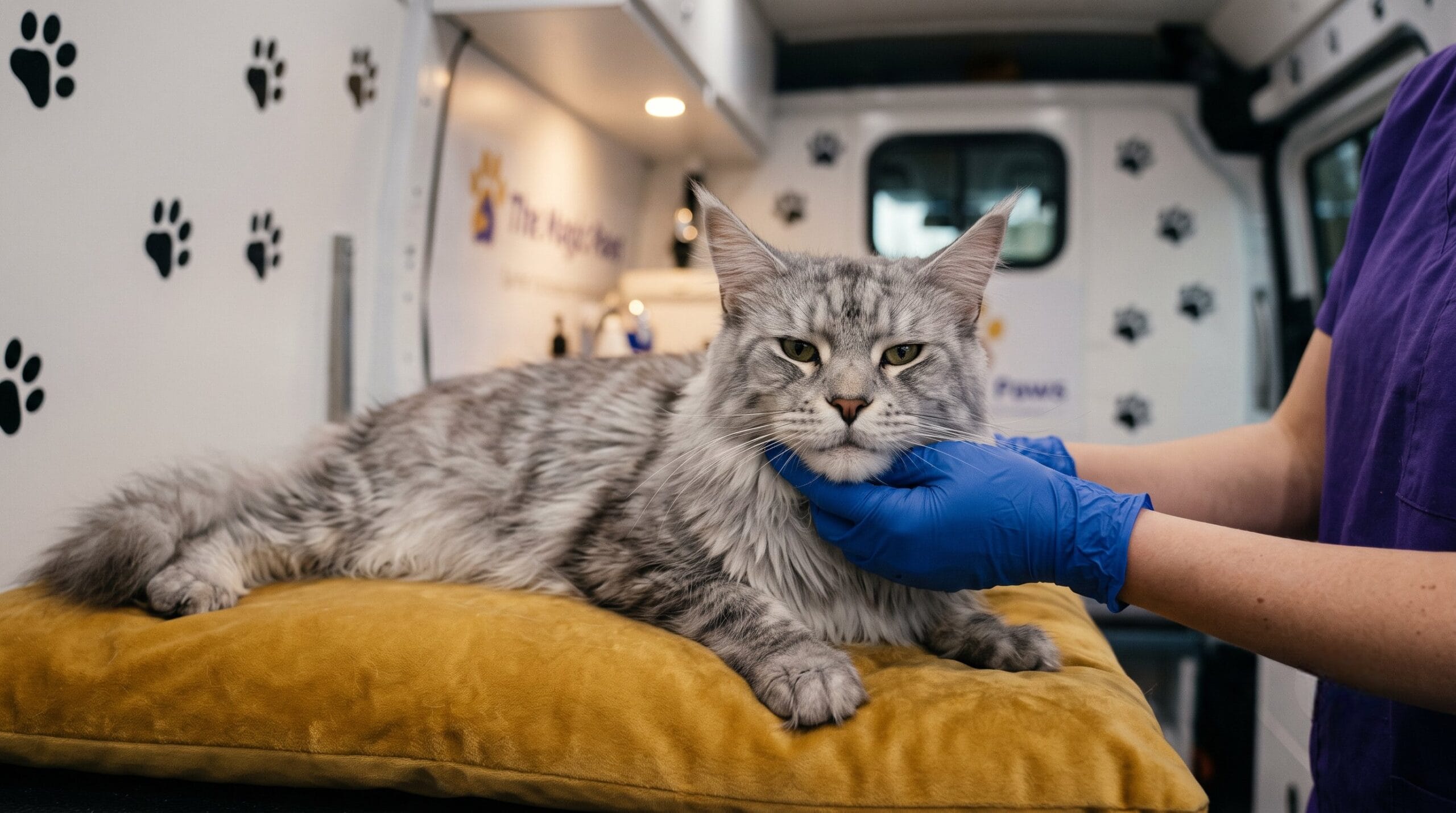
The Magic Paws provides anesthesia-free dental cleaning at the owner’s home in South Florida and Central Florida, removing the need to transport the animal to a clinic and eliminating the waiting room stress that many pets find difficult.
The service uses the Senses Therapy protocol (aromatherapy, music therapy, chromotherapy, and massage) to create a calm environment from the moment the technician arrives, reducing the anxiety that makes many dogs resist oral procedures.
Anesthesia-free cleaning is appropriate for dogs whose bad breath is driven by plaque and tartar accumulation without advanced periodontal disease. The procedure removes visible buildup, reduces the bacterial load responsible for odor, and gives the owner a clear picture of the animal’s current oral condition. For dogs with advanced disease, a prior veterinary evaluation helps determine whether more intensive treatment is needed first.
Owners concerned about dog dental cleaning safety often find that anesthesia-free options reduce the risk factors associated with sedation, particularly for older animals or those with existing health conditions.
For pet owners in Central Florida, a dog dentist in Orlando who provides mobile service eliminates the logistical barriers that often delay necessary care.
The same applies across the region: mobile pet dental cleaning in Central Florida and in-home pet dental cleaning in Tampa bring the procedure to the animal rather than the other way around.
Is your dog’s breath telling you it’s time to act?
Bad breath in dogs rarely appears out of nowhere. It builds gradually, following the same progression that plaque and tartar follow: slow at first, then persistent, then harder to ignore. By the time an owner notices a real problem, the underlying condition has often been developing for months.
The mouth is one of the most accessible parts of a dog’s body to monitor, and consistent attention to how it looks and smells catches problems early. A routine that includes brushing, VOHC-approved dental products, and periodic professional cleaning covers most of what is needed to keep oral disease from progressing.
When the breath does not respond to home care, or when the type of smell points toward something systemic, the right move is to get a professional opinion rather than wait. Early intervention costs less, causes less discomfort to the animal, and produces better outcomes than treating advanced disease.
Your dog’s breath is trying to tell you something. If brushing and dental chews are not enough to keep it under control, it may be time for a professional cleaning.
The Magic Paws brings anesthesia-free dental care directly to your home in South Florida and Central Florida, using the Senses Therapy protocol (aromatherapy, music therapy, chromotherapy, and massage) to keep your dog calm and comfortable from start to finish. Schedule a visit!
FAQ about dog bad breath
What is the most common cause of bad breath in dogs?
Periodontal disease. Plaque and tartar build up over time, creating an environment where odor-producing bacteria thrive. Most dogs develop some degree of dental disease by age three, which is why routine dental care matters even when the mouth looks clean.
Can dog bad breath go away on its own?
It depends on the cause. If it comes from something the animal ate, it fades within a few hours. Persistent bad breath does not resolve on its own because it signals an underlying condition, whether dental or systemic, that requires attention.
Why does my dog’s breath suddenly smell worse than usual?
A sudden change can indicate a new dental infection, a foreign object stuck in the mouth, or the onset of a systemic condition like kidney disease or diabetes. If the change is abrupt and comes with other symptoms, contact your veterinarian.
Is bad breath in dogs a sign of kidney disease?
It can be. When the kidneys are not filtering waste properly, urea builds up in the bloodstream and produces breath that smells like ammonia or urine. This type of odor is distinct from typical dental bad breath and should be evaluated by a vet promptly.
What home remedies actually help with dog bad breath?
The most effective at-home measures are daily tooth brushing with dog-safe toothpaste, VOHC-approved dental chews, and water additives formulated for oral health. Raw carrots can also help reduce plaque mechanically. None of these replace professional cleaning when dental disease is already present.
How often should I have my dog’s teeth professionally cleaned?
Most dogs benefit from a professional cleaning every 6 to 12 months, depending on breed, age, and how quickly plaque accumulates. Small and flat-faced breeds tend to need more frequent care due to tooth crowding. Your vet can help determine the right interval.
What is the best dog breath freshener?
Products listed on the Veterinary Oral Health Council’s accepted product list, including dental chews, water additives, and specialized diets with proven results. The VOHC seal means the product has been tested and meets clinical standards. Avoid products that only mask odor.
Can I use a breath freshener for dogs instead of brushing their teeth?
No. Fresheners reduce odor and slow plaque formation, but they do not remove the biofilm that causes dental disease. They work best as a complement to brushing, not a replacement, especially for pets already showing signs of tartar buildup.
Is anesthesia-free dental cleaning a good option for dogs with bad breath?
For dogs whose bad breath stems from plaque and tartar accumulation without advanced disease, yes. It removes visible buildup, reduces bacterial load, and maintains oral health between vet visits. Animals with advanced periodontal disease may require veterinary evaluation first.
At what point should I take my dog to the vet for bad breath?
Take your dog to the vet if the bad breath is persistent, has changed recently, smells like ammonia, urine, or decay, or comes with changes in appetite, excessive drooling, or visible gum inflammation. These signs suggest the cause goes beyond routine dental buildup.