Dental wash for cats is one of those products that looks like a simple solution to a complicated problem. You pour it in the water bowl, apply it as a gel, or rinse your cat’s mouth, and the label promises fresher breath and cleaner teeth. For cat owners who struggle to brush their pet’s teeth, that kind of ease is appealing.
The reality is more specific. Dental wash, cat oral rinse, oral gel, and water additive: these are all categories of at-home products designed to slow plaque formation on the visible surface of the teeth. They work. Just not in the way some owners expect, and not to the extent that it replaces professional dental care.
Feline dental disease is more common than most owners realize. A significant portion of cats show signs of periodontal disease by age three, often without showing obvious pain or discomfort. Plaque is invisible at first, then it mineralizes into tartar. By the time the smell becomes noticeable, the buildup is usually already past what any rinse can address.
This article explains what dental wash actually does, how to use it, when it stops being enough, and what a complete feline oral care routine looks like. If you’re trying to do right by your cat’s teeth, this is where to start.
What is dental wash for cats?
Dental wash for cats is an oral care product formulated to reduce plaque, slow bacterial growth, and freshen breath. It comes in three main formats: oral rinse, enzymatic gel, and water additive. Each works differently in terms of application and how much contact it makes with the tooth surface.
These products are designed for regular home use between professional cleanings. They are not treatment products and are not intended to address existing tartar or gum disease. Think of them the way you’d think of fluoride rinse in a human dental routine: useful, supportive, and not a substitute for the dentist.
Dental rinse, oral gel, and water additives: what sets them apart
The three formats of cat dental wash differ in how they are applied, how often they should be used, and how effectively they reduce plaque. The table below summarizes each.
| Format | How it’s applied | Frequency | Main benefit |
| Oral rinse | Applied directly to gums and teeth with a syringe or gauze | Daily | Direct contact with the tooth surface |
| Enzymatic gel | Applied with a finger, brush, or applicator | Daily | Enzymatic action breaks down plaque at the source |
| Water additive | Added to the water bowl | Daily | Passive exposure; no direct application needed |
Water additives are the easiest option for animals that resist direct handling. The trade-off is consistency: the product only works on the areas the water reaches, and intake varies by cat. Gels and rinses provide more targeted contact but require the feline to tolerate some degree of handling near the mouth.
Not every product on the market performs equally. The Veterinary Oral Health Council (VOHC) maintains a list of accepted products that have passed rigorous studies demonstrating plaque or tartar reduction. When selecting a cat dental wash, looking for the VOHC seal is the most reliable way to confirm the product delivers measurable results.
Does dental wash actually work for cats?
Dental wash works for surface-level plaque control and breath improvement, but it does not remove tartar that has already hardened, and it cannot reach the area below the gumline where periodontal disease develops. The effectiveness is real and documented for what it targets, but the scope is limited.
Plaque forms quickly. According to the Veterinary Oral Health Council, bacterial deposits begin accumulating on a cleaned tooth surface within six hours. Daily use of a cat dental wash slows that process by disrupting the biofilm before it mineralizes. What it cannot do is reverse buildup that has already calcified into tartar.
Tartar, also called calculus, is mineralized plaque. Once it forms, it bonds to the tooth surface and cannot be removed by rinsing, wiping, or any enzymatic formula. Scraping tartar off requires professional instruments. This distinction matters because many owners use dental wash hoping it will prevent or eliminate tartar buildup, when in reality it only addresses the earlier stage.
How to choose a dental wash your cat will actually tolerate
The most effective cat dental wash is the one your cat will consistently accept. Palatability is a real variable: poultry and seafood flavors tend to have better feline acceptance than mint-based products, which animals often reject because they lack the receptors that make mint pleasant.
Texture matters too. Thick gels can feel intrusive to cats sensitive around the mouth, while liquid rinses applied with a syringe may feel less threatening. For cats that resist all direct handling, a water additive offers a low-stress alternative, even if the coverage is less precise.
When in doubt, products on the VOHC accepted products list have documented efficacy. Your veterinarian can also help match the right format to your cat’s tolerance level and oral condition. If your cat consistently refuses the product, a different format will always be more effective than persistence with one that doesn’t work.
For a broader look at what goes into maintaining a cat’s oral health, the article on cat dental cleaning covers the full picture, from home routines to professional care.
How do you use dental wash on a cat?
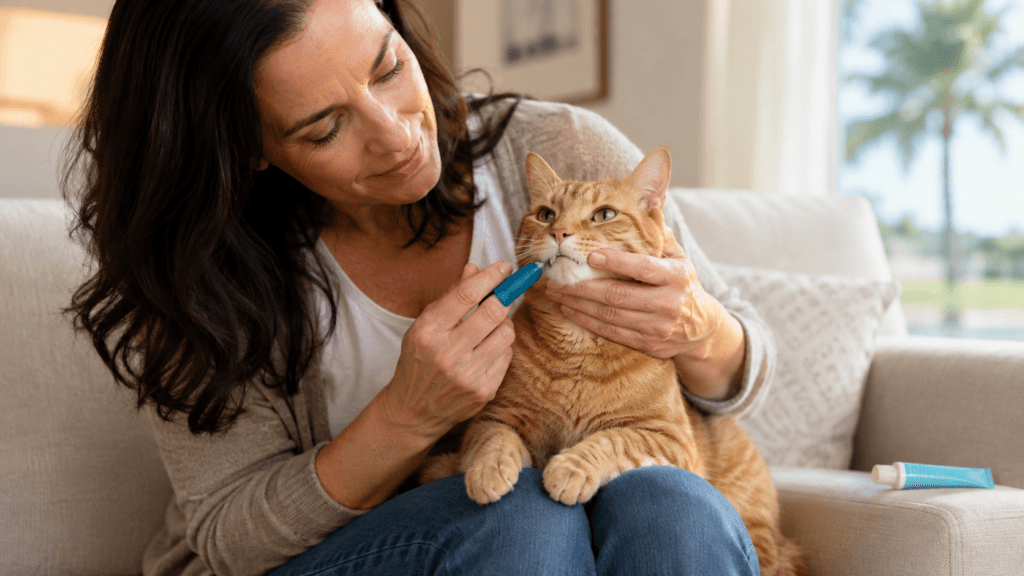
Using dental wash on a cat depends on the format. For a gel or rinse, lift the lip gently to expose the outer surface of the teeth, apply the product with a fingertip, gauze, or the applicator provided, and allow the animal to lick or swallow naturally. No rinsing is needed. For a water additive, add the indicated dose to a clean bowl of fresh water and refresh daily.
A few practical steps make the experience easier for both cat and owner:
- Start with short sessions: a few seconds of contact is enough at first. Duration can increase as the cat becomes comfortable.
- Use positive reinforcement before and after. A brief play session or a small treat afterward builds a neutral association with the routine.
- Choose a consistent time of day. Cats adapt to routine, and predictability reduces resistance.
- Never use a product designed for dogs. Concentration levels differ, and some canine formulas contain ingredients that are unsafe for cats.
- Apply to the outer surfaces of the teeth, where plaque accumulates most visibly. The inner surfaces are harder to reach but are naturally cleaned by the tongue.
Cats that have never tolerated tooth brushing may still accept a gel or water additive. Building a toothbrushing routine for your pet early in life makes all forms of oral hygiene easier, but even adult cats can be gradually habituated to mouth handling with patience.
When is dental wash not enough for your cat?
Dental wash is not enough when tartar has already formed, when the tissue below the gumline is affected, or when your cat is showing signs of active periodontal disease. These are the conditions that require professional intervention, and no at-home product can substitute for it.
The subgingival area, the space between the gum and the tooth root, is where periodontal disease starts. Bacteria collect there, form a protected biofilm, and cause inflammation that eventually damages the bone supporting the tooth. Dental wash products make no contact with this area. They act on what is visible: the crown surface above the gumline.
The warning signs below indicate that your cat’s oral condition has moved beyond what a rinse or water additive can maintain:
- Persistent bad breath that does not improve with consistent product use
- Red, swollen, or bleeding gum tissue
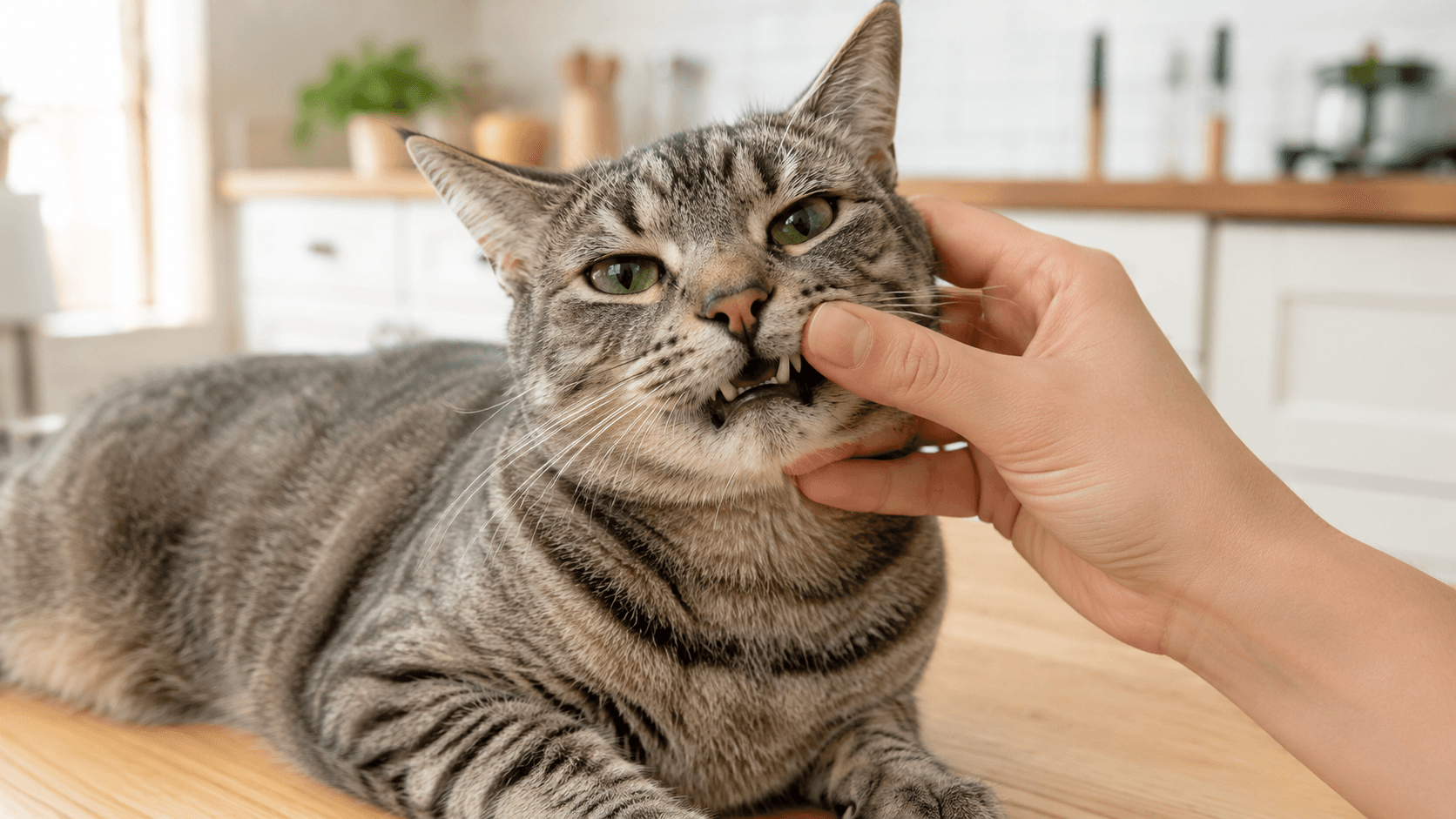
- Visible brown or yellow deposits along the gumline
- Reluctance to eat, dropping food, or chewing only on one side
- Pawing at the mouth or face
- Increased drooling
If your cat shows any of these signs, the next step is a professional evaluation. The article on signs your pet might have dental problems covers each warning sign in more detail and explains what to look for before the situation progresses. For cats already showing moderate buildup or gum sensitivity, connecting with a dentist for cats experienced in feline oral health is the most direct path to a clear diagnosis.
Is your cat’s breath telling you something? A professional cleaning gets to what dental wash can’t.
What does a complete dental wash cats oral care routine look like?
A complete feline oral hygiene routine has three components working together: daily home care, dental products that support it between appointments, and professional cleaning at regular intervals. Dental wash fits into the second layer. It does not replace the others.
Tooth brushing remains the gold standard for at-home cat oral hygiene. A soft-bristled brush or finger brush used with feline-safe enzymatic toothpaste physically disrupts plaque before it hardens. Dental wash, cat mouth rinse, and water additives all complement brushing but do not replicate the mechanical action of a brush against the tooth surface.
The third layer, cat teeth cleaning performed by a trained professional, is what addresses the areas home care cannot reach. Tartar removal, gum assessment, and evaluation of the subgingival tissue are all part of a professional session. Skipping this layer means the condition below the visible surface goes unchecked.
For cats that already have some degree of buildup, professional cleaning is not optional. It is the part of the routine that resets the baseline so that home care can do its job. Regular dental check-ups for your pet are what make the entire routine effective over time.
How often should cats have professional dental cleanings?
Most healthy cats benefit from a professional cleaning once a year. Animals with a history of rapid plaque buildup, those eating a soft-food-only diet, or older pets with existing gum sensitivity may need more frequent appointments. Your veterinarian is best positioned to recommend an interval based on your cat’s specific oral condition.
The perception that professional cleaning always requires anesthesia keeps many owners from booking appointments. Anesthesia-free options exist and are appropriate for cats in good general health with mild to moderate feline dental disease. Knowing this option is available changes the calculus for owners who have been delaying care out of concern for sedation risks.
Is professional cat dental cleaning possible without anesthesia?
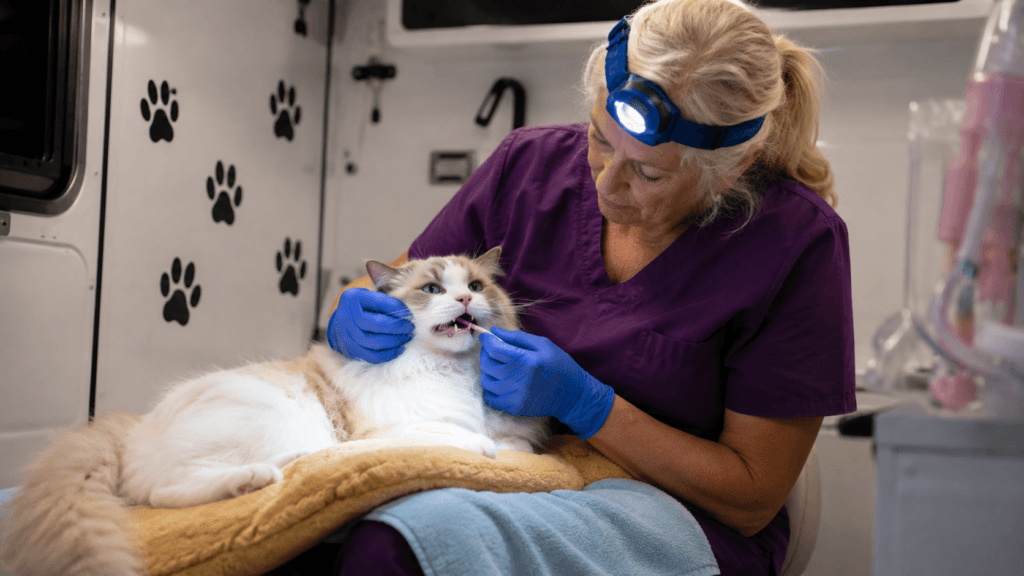
Yes, anesthesia-free professional cat dental cleaning is a real and viable option for healthy cats with mild to moderate periodontal disease. It eliminates the risks associated with sedation while still addressing tartar, surface staining, and early gum inflammation in a way that no at-home product can.
The American Veterinary Dental College is clear that not every cat is a candidate for anesthesia-free cleaning. The procedure is appropriate for animals in good general health whose oral condition does not require the deeper access that sedation enables, such as extractions, X-rays, or treatment of advanced disease. An eligibility assessment before the appointment ensures the right cats receive the appropriate care.
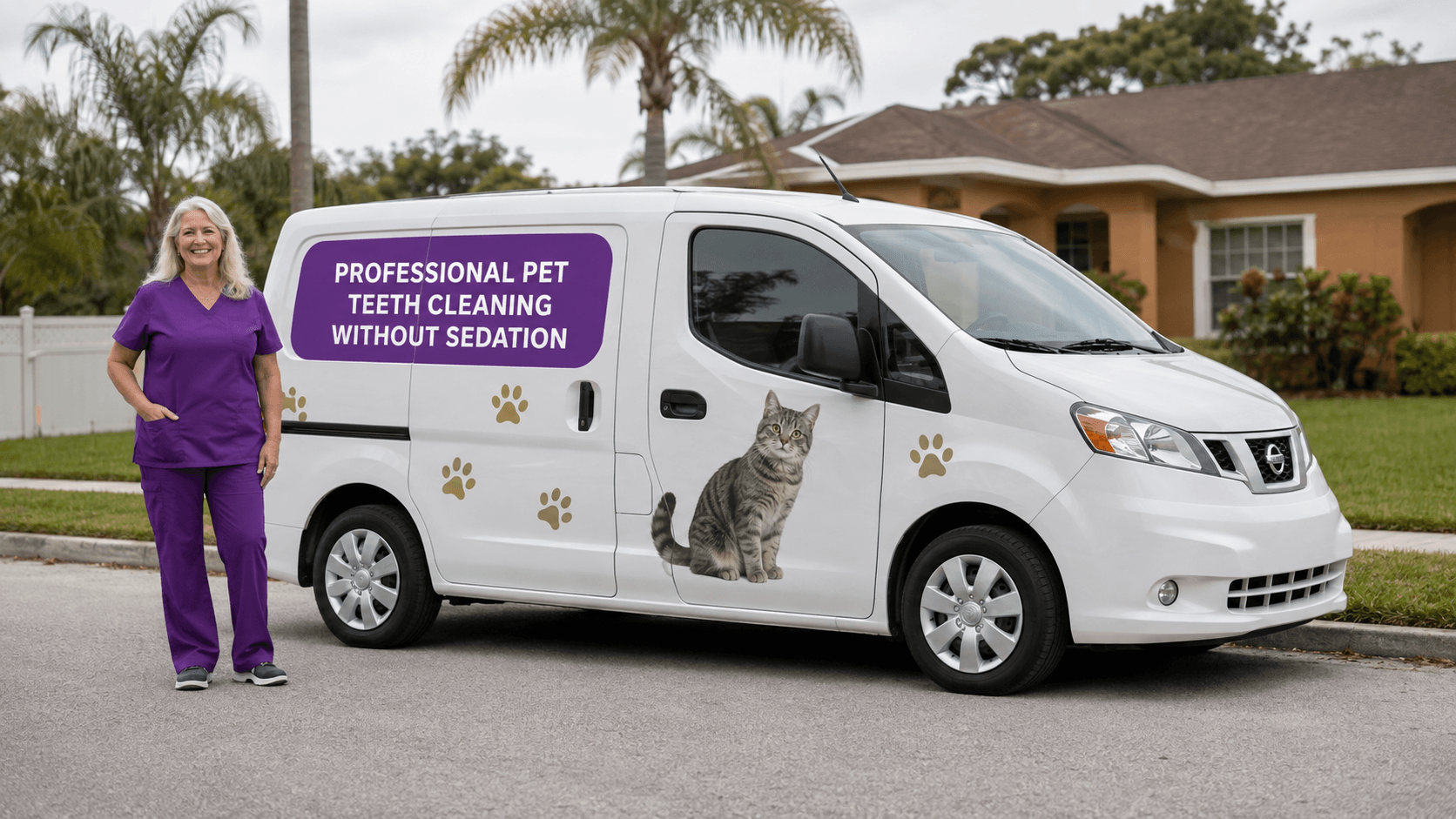
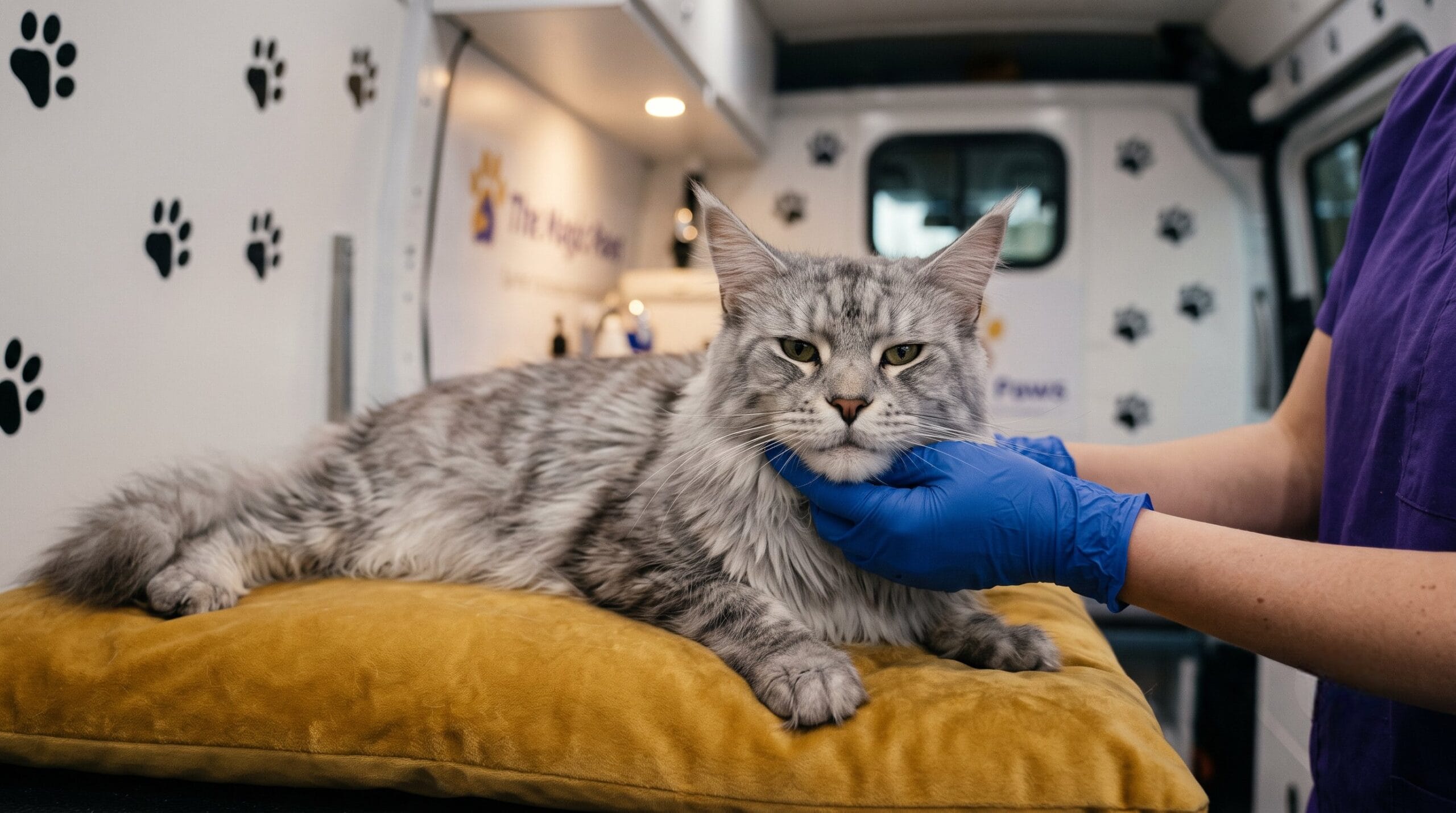
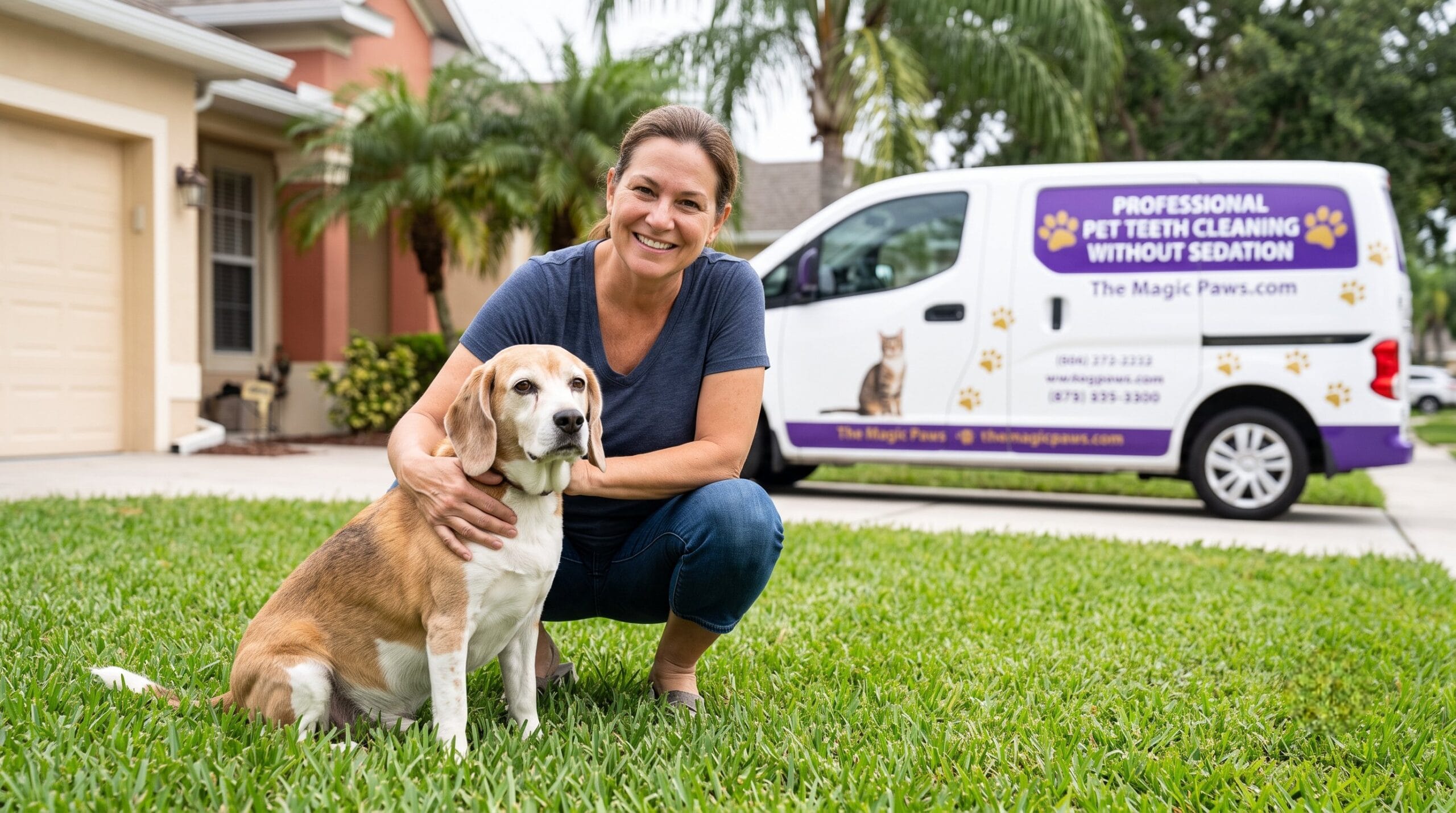
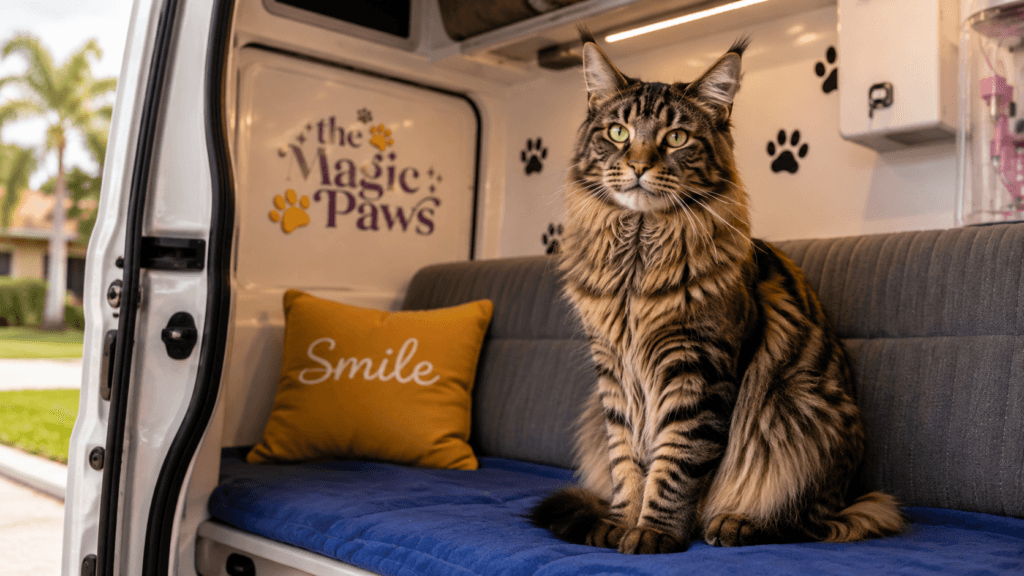
The Magic Paws offers anesthesia-free professional cat teeth cleaning across Florida, with appointments conducted inside a fully equipped mobile van that comes directly to the owner’s home.
The session includes the proprietary Senses Therapy protocol: aromatherapy, music therapy, chromotherapy, and massage, four elements that work together to keep the cat calm and cooperative throughout the procedure.
With more than 2,000 pets served and a 90% satisfaction rate, the service is designed for owners who want professional-quality dental care without the stress of a clinical setting.
For cats that have never had a professional cleaning, or whose owners have delayed care due to concerns about anesthesia, this is the most accessible starting point. The experience of receiving the service at home is described in the article about cat teeth cleaning in the comfort of your home.
Dental wash is a start. A professional cleaning is what keeps your cat’s mouth truly healthy. Schedule your cat’s anesthesia-free cleaning today.
Frequently asked questions about dental wash for cats
What is dental wash for cats?
Dental wash for cats is an at-home oral care product designed to reduce plaque and improve breath. It comes in three formats: oral rinse, enzymatic gel, and water additive. Unlike toothpaste, it does not require brushing and works through chemical or enzymatic action on the tooth surface. VOHC-accepted formulas have demonstrated measurable efficacy in clinical studies.
Can I use human mouthwash on my cat?
No. Human mouthwash contains ingredients that are toxic to cats, including xylitol and fluoride in concentrations unsafe for feline physiology. Even small amounts can cause serious harm. Only products specifically formulated for cats should be used.
Does dental wash replace professional cleaning for cats?
No. Cat dental wash controls surface plaque but does not remove consolidated tartar and cannot reach the subgingival area where periodontal disease develops. Professional cleaning remains a necessary part of any complete feline oral care routine. The Magic Paws offers anesthesia-free cleaning as an accessible option for healthy cats.
How often should I use dental wash on my cat?
Most products indicate daily use or a few times per week. Follow the manufacturer’s instructions for the specific format you’re using. Your veterinarian can adjust the recommendation based on your cat’s oral condition, overall health, and tolerance for the routine.
What is the safest dental wash for cats?
Look for products accepted by the Veterinary Oral Health Council (VOHC), which have passed independent studies confirming plaque or tartar reduction. Your vet can recommend the most appropriate format and formula for your cat’s specific oral profile and behavioral tolerance.
Can dental wash help with bad breath in cats?
Yes, when the bad breath is caused by surface plaque and bacterial buildup. However, very strong or persistent halitosis in cats can indicate periodontal disease, tooth resorption, or a systemic health issue. If breath does not improve with consistent product use, a veterinary evaluation is the right next step.
Is water additive the same as dental wash for cats?
A water additive is one type of dental wash. It is added directly to the water bowl and acts chemically in the mouth as the cat drinks. Unlike an oral rinse or gel, it does not involve direct application. Coverage is less precise, but it is the lowest-stress option for pets that resist mouth handling.
At what age should I start dental care for my cat?
Ideally, dental care begins during kittenhood. Early exposure to mouth handling, brushing, and oral products builds tolerance that carries into adulthood. Adult cats can also be gradually habituated with patience and positive reinforcement. Your veterinarian can perform an initial evaluation to establish a baseline and recommend the right routine for your cat’s age and condition.
How do I know if my cat needs a professional dental cleaning?
Watch for these signs:
- Persistent bad breath that does not respond to dental wash
- Red, swollen, or bleeding gum tissue
- Visible tartar deposits along the gumline
- Difficulty chewing, dropping food, or favoring one side of the mouth
Any of these signs warrants a professional evaluation rather than a stronger rinse.
Is anesthesia-free cat dental cleaning safe?
Yes, for healthy cats with mild to moderate periodontal disease. The procedure removes surface tartar and addresses early gum inflammation without the risks associated with sedation. An eligibility assessment before the appointment confirms whether the cat’s condition is appropriate for the anesthesia-free approach. The Magic Paws performs this evaluation as part of the scheduling process.