Dental wash for dogs is one of the most searched topics in canine oral hygiene, and for good reason: most owners want to do something about their dog’s teeth but don’t always know where the products end and the gaps begin.
The reality is that plaque starts forming within hours of a meal. Bacteria colonize the tooth surface, build up along the gumline, and, if left undisturbed, mineralize into tartar in a matter of weeks. By the time you notice discoloration or bad breath, the process has usually been going on for a while.
That doesn’t mean home care is pointless. It means understanding what each product actually does, which ones are worth using, and when the situation has moved past what any water additive or spray can address.
This guide covers the full picture: the mechanics behind dental wash products, how to choose and use them correctly, how to build a realistic routine, and how to recognize when your dog needs more than what a bottle can offer.
What is dental wash for dogs?
Dental wash for dogs is a category of oral hygiene products that deliver antimicrobial or enzymatic ingredients into a dog’s mouth to reduce bacterial plaque. The term covers three main formats: water additives, dental sprays, and oral rinses. All three work without requiring a toothbrush, which makes them accessible for dogs with low tolerance for direct handling.
These products don’t clean mechanically. They rely on chemical or enzymatic action, meaning the active ingredients need to reach the target surface through saliva distribution, licking, or direct application. When used consistently and correctly, they can slow plaque accumulation and support overall dog oral hygiene between cleanings.
Understanding this distinction matters before choosing any product. A spray applied once a week will not produce the same result as a water additive used daily. And no format, regardless of how well it performs, will reverse tartar that has already hardened on the enamel surface.
How does dental wash work in your dog’s mouth?
A dental wash product works by releasing active compounds into the dog’s oral environment, where they interact with saliva and distribute across tooth surfaces. Most formulations rely on chlorhexidine, zinc compounds, or enzymatic systems that target the bacterial film responsible for plaque formation.
Enzymes such as glucose oxidase and lactoperoxidase, commonly found in dog enzymatic toothpaste and some rinses, generate compounds that inhibit bacterial growth. These naturally occurring systems are effective because they work with the pet’s own saliva rather than against it.
Water additives deliver these ingredients passively every time the animal drinks. Sprays allow for more targeted application, particularly along the gumline, where plaque accumulation tends to be most damaging. Oral rinses provide the broadest surface contact but require the dog to tolerate having liquid applied directly to the mouth.
None of these mechanisms can dislodge calcified tartar. Once mineral deposits have formed on the enamel, only mechanical scaling, performed by a trained professional, can remove them safely.
What’s the difference between water additives, oral rinses and dental sprays?
The three formats differ in how they’re applied, how widely they distribute through the mouth, and what level of cooperation they require from the dog. The table below summarizes the key distinctions.
| Format | How to apply | Main advantage | Limitation |
| Water additive | Added to the drinking bowl daily | Requires no handling; suitable for resistant animals | Dilution reduces concentration; distribution is passive |
| Dental spray | Applied directly to teeth and gums | Targeted application; reaches gumline | Requires moderate cooperation; some dogs resist spray |
| Oral rinse | Squirted or poured along the gumline | Wide surface contact; fast application | Requires the most handling; not suitable for all pets |
For owners evaluating best dog teeth cleaning products across these categories, the most practical starting point is the water additive. It integrates into the daily routine without any additional handling and works passively while the dog drinks. From there, adding a spray or rinse as the animal becomes more comfortable with mouth contact is a reasonable progression.
Dental chews are often grouped with these products in conversations about canine oral care. They work differently, relying on abrasive texture rather than chemical action. If you’re evaluating all options, a dedicated look at dog dental chews can help you understand where they fit within a complete routine.
How do you choose a dental wash product for your dog?
The right product is one that delivers verified efficacy, contains no harmful ingredients, and fits the pet’s tolerance level. Those three criteria, applied in order, will eliminate most of the noise in the market.
Check the ingredient list before anything else
The first thing to confirm is that the product contains no xylitol. This sweetener is widely used in human oral hygiene products and is acutely toxic to dogs. Even small amounts can cause dangerous drops in blood sugar and liver damage. It has no place in any canine product, regardless of what else the label claims.
Beyond xylitol, look for active compounds with known antimicrobial or enzymatic activity: chlorhexidine gluconate, cetylpyridinium chloride, zinc gluconate, or enzyme systems. These are the categories with the most clinical backing. Avoid products that rely on flavoring and fragrance as their primary ingredients, with no documented active mechanism.
Look for the VOHC seal of acceptance
The Veterinary Oral Health Council is an independent body that evaluates dental products for dogs and cats based on controlled clinical trials. A product that carries the VOHC seal has demonstrated measurable efficacy for plaque or tartar control under defined research conditions. You can review the full list of accepted products directly at vohc.org/accepted-products.
The seal is not a brand endorsement. It tells you that the specific claim on the label has been tested. Two products from the same brand can have very different VOHC status depending on their formulations. Treat the seal as a minimum threshold, not a ranking.
Match the product format to your dog’s tolerance
A water additive is the lowest-friction option. If the animal avoids the bowl after you add the product, try a different formula. Some dogs are sensitive to taste or smell even in trace concentrations.
Sprays and rinses require progressive introduction. Start with the applicator near the mouth, reward the dog, and gradually work toward direct contact. A dog specific toothbrush follows the same logic: tolerance is built over sessions, not forced in one. The goal is consistent daily use, which matters more than format.
How do you build a dental hygiene routine for your dog?
A consistent dental hygiene routine for dogs combines daily low-effort maintenance with periodic hands-on cleaning. The sequence below works for most dogs, regardless of current oral condition.
1. Start with a water additive on day one. Pour the recommended dose into the drinking bowl every morning. This establishes the habit before adding any handling.
2. After one week, introduce a spray or wipe. Apply to the outer surface of the back teeth, where plaque accumulates fastest. Reward immediately after each session.
3. Add a dog toothbrush once the pet tolerates direct contact. Use dog toothpaste, never a human formulation. Start with 10 to 15 seconds per session and extend gradually.
4. Apply dog enzymatic toothpaste if the animal resists standard paste. The enzymatic system works even when mechanical contact is brief, making it more effective for resistant dogs.
5. Review the routine every 30 days. If breath is improving and gum tissue looks healthy, the routine is working. If not, step up to a professional evaluation.
For a practical breakdown of how to introduce brushing without stress, the guide on how to make toothbrushing a fun routine for your pet covers the approach in detail.
The key variable in any dog dental hygiene routine is frequency. A water additive used every day for a month does more than a spray used three times. Consistency is the mechanism, not the product.
What can you do when your dog resists brushing?
Some dogs will not tolerate a toothbrush, no matter how gradual the introduction. That’s a real constraint, and it doesn’t mean oral hygiene is off the table. It means the routine needs to rely more heavily on passive and low-contact formats.
A water additive combined with a dental rinse applied with a soft cloth or finger applicator can cover a significant portion of the tooth surface without direct brush contact. This combination won’t match the mechanical action of a dog toothbrush, but it’s meaningfully better than no daily intervention.
The guidance on essential dog dental care covers alternative approaches and how to adapt a routine when standard brushing isn’t feasible. The focus is on what’s achievable, not on a single ideal method.
What matters most is that something happens daily. Even a water additive alone creates a different oral environment than nothing. For dogs that resist all handling, professional cleaning becomes proportionally more important as the primary mechanism for controlling tartar buildup.
See how a professional cleaning complements your dog’s home care routine: dog dental cleaning at The Magic Paws, no anesthesia required.
Does dental wash replace professional cleaning for dogs?
Dental wash does not replace professional cleaning. This distinction is not a disclaimer. It’s a functional limit built into how these products work. No liquid or additive, regardless of formulation, can remove calcified tartar from a tooth surface or address bacterial activity below the gumline.
Tartar, once formed, is a mineralized structure bonded to enamel. Its removal requires mechanical scaling with professional instruments. If that scaling is skipped for long enough, bacteria extend beneath the gumline and begin affecting the periodontal ligament, the bone, and, in advanced cases, systemic organs. Periodontal disease in dogs has documented associations with cardiac and kidney complications.
Reading about signs your pet might have dental problems is a useful step if you’re not sure where your dog currently stands. And if the concern is about the safety of the procedure itself, the article on is dental cleaning safe for dogs addresses the anesthesia question directly.
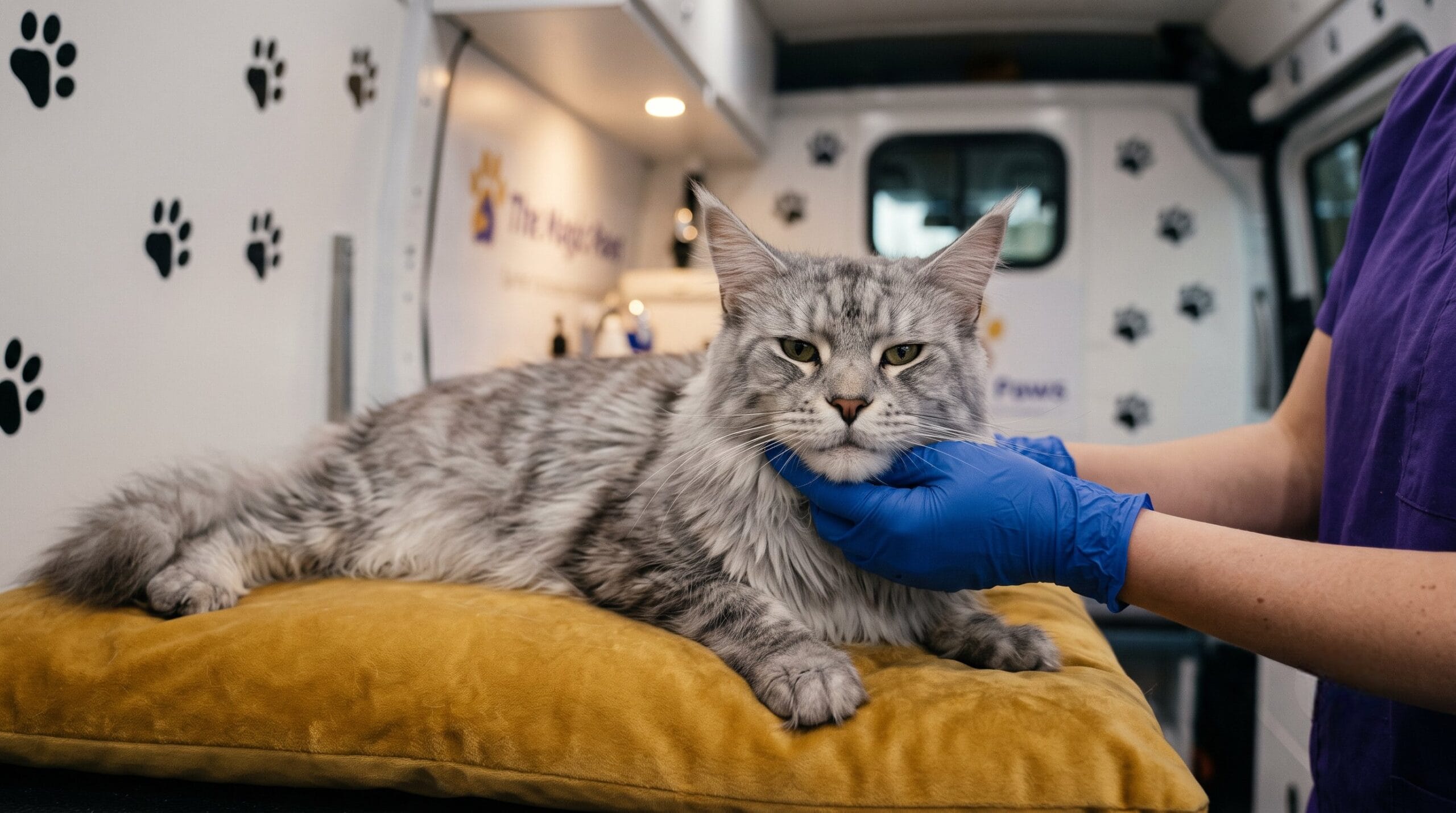
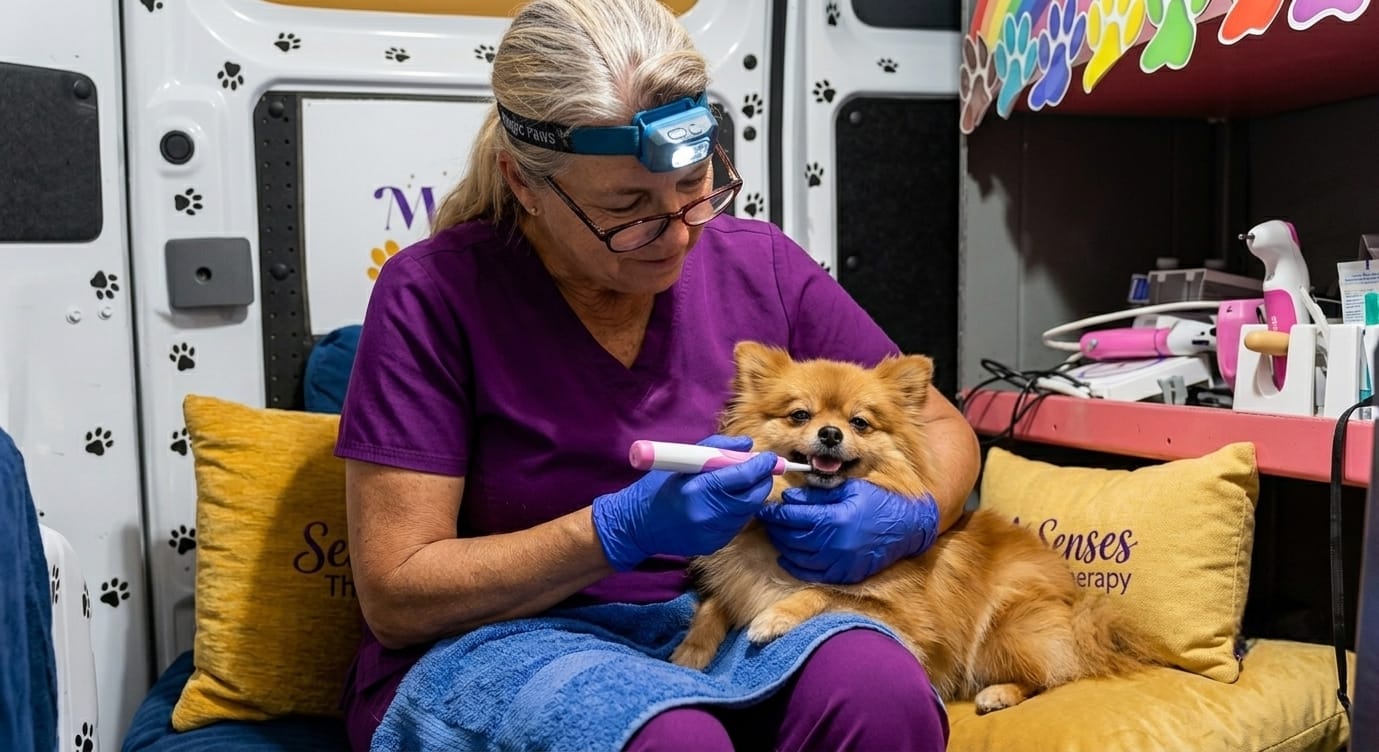
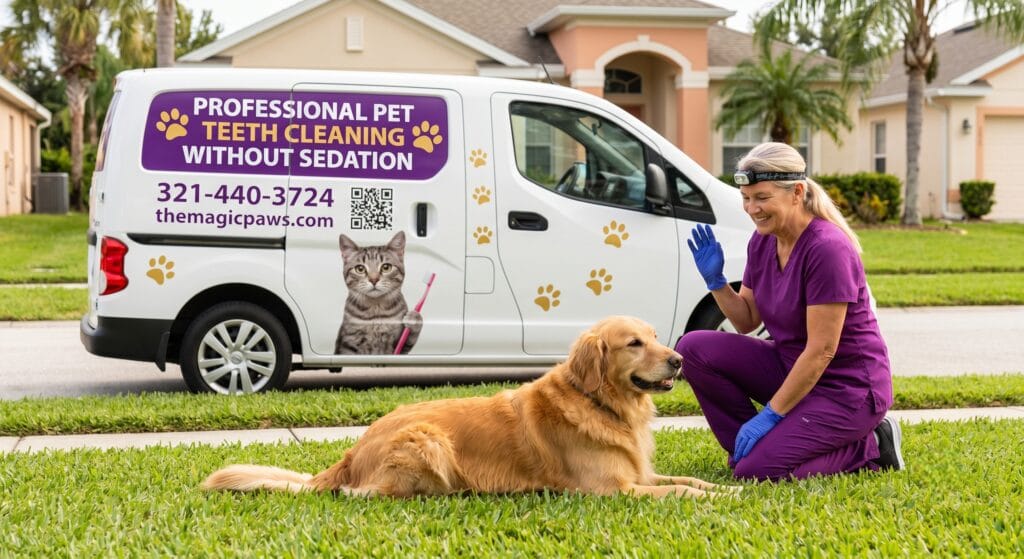
The Magic Paws performs anesthesia-free dental cleaning using a structured calming protocol called Senses Therapy, which combines aromatherapy, music therapy, chromotherapy, and massage to keep dogs calm throughout the procedure, without sedation. It’s a preventive service, positioned as the professional layer that dental wash alone cannot provide.
What are the signs your dog needs more than a dental wash?
When home care is no longer sufficient, the signs are usually visible before they become urgent. Catching them early makes the difference between a routine cleaning and a more involved intervention.
- Persistent bad breath that doesn’t improve with consistent dental wash use
- Visible yellow or brown deposits on the tooth surface, particularly near the gumline
- Red, swollen, or bleeding gum tissue when touched
- Behavioral changes during eating: hesitation, chewing on one side, dropping food
- Excessive pawing at the mouth or rubbing the face along surfaces
These are signals that tartar is established, that gum disease in dogs may be progressing, or that infection is present. A water additive is not designed to address any of these conditions. They require professional assessment.
The article on how to tell if your dog needs a dental cleaning walks through the specific indicators with more clinical detail. If two or more of the signs above are present in your dog, scheduling a professional cleaning is the appropriate next step, not adjusting the product routine.
Is dental wash safe for dogs of all breeds and ages?
Dental wash products are generally safe for adult dogs when used as directed and formulated for canine use. However, several factors affect suitability, including breed, size, and age.
Small breeds and brachycephalic dogs (those with compressed facial structure, such as Bulldogs, Pugs, and French Bulldogs) have a higher predisposition to dental crowding, which accelerates plaque and tartar accumulation. For these animals, dental wash alone is rarely sufficient, and professional cleaning intervals should be shorter. Understanding the progression of dog dental disease in these breeds helps set realistic expectations for what home care can achieve.
Dog mouth bacteria is a different population than human oral bacteria, and products formulated for canine use are designed accordingly. Human dental products, including mouthwash, toothpaste, and whitening gels, are not safe for dogs. This applies even to products that appear mild. Fluoride in concentrations safe for humans can cause toxicity in pets when ingested regularly.
For puppies under 12 weeks, most dental wash products are not recommended. Before introducing any product to a young dog, consulting a veterinarian is the appropriate first step. For senior dogs, gum sensitivity may affect tolerance for certain formulations, particularly those with alcohol bases or high chlorhexidine concentrations. A lower-concentration enzymatic product is usually the better starting point for older animals.
Your dog’s teeth need more than a water additive. Book a professional cleaning today and see the difference. Dog dental cleaning.
FAQ about dental wash for dogs
Can I use dental wash instead of brushing my dog’s teeth?
No, dental wash does not replace brushing. It complements it. Brushing provides mechanical disruption of the bacterial film on tooth surfaces, which no liquid product can replicate. A spray or water additive reduces bacterial load through chemical or enzymatic action, but without physical contact, it cannot remove the plaque already attached to enamel. Use dental wash as part of a routine that includes brushing whenever the dog tolerates it.
How often should I use dental wash for my dog?
Most water additives and dental sprays are formulated for daily use. The manufacturer’s instructions on the product label are the primary reference. Some higher-concentration rinses may specify every other day. If your dog has an existing condition or is on medication, consult a vet before establishing the frequency, since certain ingredients can interact with treatments.
Is dental wash safe for puppies?
Most dental wash products are not recommended for dogs under 12 weeks. Young animals have developing immune systems and may have different sensitivities to active ingredients. For puppies, beginning with gentle gum massage using a damp cloth acclimates the pet to mouth handling before introducing any product. Always consult a veterinarian before adding any oral hygiene product to a puppy’s routine.
What ingredients should I avoid in dog dental wash?
Xylitol is the primary ingredient to avoid in any canine oral hygiene product. It is a sweetener common in human products and is acutely toxic to dogs even in small amounts. Beyond xylitol, avoid products without any documented active ingredient, high-alcohol formulations for dogs with gum sensitivity, and any product that does not specify it is formulated for dogs. The VOHC seal is a reliable signal that a product has been tested and meets efficacy standards.
Does dental wash help with bad breath in dogs?
For most dogs, consistent daily use of a dental wash product will reduce dog breath odor within days to weeks. Persistent bad breath, however, is often a sign of an underlying oral condition that dental wash cannot resolve: established tartar, infected gum tissue, or tooth root involvement. If breath doesn’t improve after two to three weeks of consistent use, a professional examination is the next step.
Can dental wash remove tartar from my dog’s teeth?
No. Dental wash acts on bacterial plaque, which is the soft film that forms before tartar. Once plaque mineralizes into tartar, no liquid product can remove it. Existing tartar requires mechanical scaling by a trained professional. Home dental care, including dental wash, is most effective as a prevention tool used before tartar forms, not as a remedy after it has already established.
How long does it take to see results with dental wash for dogs?
Breath improvement is often noticeable within the first week of consistent use. Measurable plaque reduction takes longer, typically two to four weeks of daily application. The degree of improvement depends on the dog’s starting oral condition, the format and quality of the product, and how consistently it’s used. A dog with significant existing buildup will show less response than one starting with a clean baseline.
Is it safe to use dental wash with other dental products?
Combining a water additive with a toothpaste or spray is generally safe. The main caution is avoiding two products that both contain chlorhexidine at the same time, since combined use can exceed the effective concentration and cause temporary staining of the teeth. If you’re unsure about a specific combination, a veterinarian can advise based on the formulations. Using products from different active ingredient categories reduces the risk of interaction.
What’s the difference between dog dental wash and human mouthwash?
Human mouthwash is formulated for a human oral environment and contains ingredients that are not safe for dogs. Xylitol, present in many human products, is toxic to dogs. Fluoride at concentrations used in human products can cause toxicity when ingested regularly, as dogs swallow everything applied to their mouths. Canine dental wash products are specifically formulated for ingestion and do not contain these compounds. Never use human oral hygiene products on a dog, regardless of how mild they appear.
When should my dog see a professional for dental cleaning?
When you see visible tartar on the teeth, notice persistent bad breath that doesn’t improve with daily dental wash, observe gum redness or bleeding, or notice any behavioral change around eating, it’s time for a professional cleaning. Anesthesia-free professional cleaning, like the service provided by The Magic Paws, is indicated for regular maintenance and for cases where tartar is present but the condition hasn’t progressed to the point requiring surgical intervention.