Senior dog dental care is one of the most overlooked aspects of aging in dogs. Owners notice the gray muzzle, the slower pace, and the preference for the couch over the yard. What they rarely notice is what is happening inside the mouth, where years of bacterial activity quietly reach a tipping point.
Most dogs show signs of periodontal disease by age 3. By the time they reach senior status, many already have damage that ranges from gum inflammation to early bone loss. The problem is not that dental disease starts in old age. It is that it has been progressing for years, and the body becomes less equipped to slow it down.
The changes that come with aging are not cosmetic. They affect how the mouth heals, how the immune system responds to bacterial load, and how teeth are anchored in the jaw. A cleaning routine that worked at age 2 may not be enough at age 9.
Understanding what changes and why is the starting point for making decisions that actually protect your dog at this stage of life.
Why does dental health change as dogs age?
A dog’s oral health declines with age because the biological systems that once controlled bacterial damage become less effective over time. Plaque is a soft bacterial film that forms on the teeth within hours of eating. In younger animals, the immune response, saliva composition, and gum tissue work together to slow the progression. In older dogs, each of those mechanisms is less efficient, and what once stayed manageable begins to compound.
Tartar buildup in older dogs happens faster because the saliva changes in composition and the gum tissue recedes, exposing more tooth surface to bacterial colonization.
Once tartar forms, it cannot be removed by brushing. It bonds to the enamel, pushes under the gumline, and creates pockets where bacteria thrive without exposure to oxygen, making the infection harder to control.
When is a dog considered senior?
The senior threshold varies by size. Large breeds, those over 25 kg, typically reach senior status around age 6. Medium breeds transition around age 7 to 8. Small breeds tend to age more slowly and are generally considered senior around age 10.
| Size | Weight | Senior from |
| Small breed | Under 10 kg | Around age 10 |
| Medium breed | 10 to 25 kg | Around age 7 to 8 |
| Large breed | Over 25 kg | Around age 6 |
| Giant breed | Over 45 kg | Around age 5 |
The dental implications of this variation are real. A large-breed dog at age 7 has been in the senior stage for a year already. Their gum tissue, immune response, and bone density have all been declining for longer than a small-breed dog at the same age.
How periodontal disease progresses in older dogs
Periodontal disease in dogs advances through four clinical stages, as defined by the American Veterinary Dental College (AVDC):
1. Stage 1, Gingivitis: Inflammation of the gums with no bone loss. Fully reversible with professional cleaning and at-home care.
2. Stage 2, Early periodontitis: Less than 25% bone loss. Mild attachment loss around affected teeth.
3. Stage 3, Moderate periodontitis: 25% to 50% bone loss. Increased pocket depth, bleeding on probing, some mobility.
4. Stage 4, Advanced periodontitis: More than 50% bone loss. Tooth mobility, root exposure, systemic risk from chronic bacterial load.
Senior dogs progress through these stages faster than younger animals because the supporting structures, including the bone and periodontal ligament, are already weakened by years of low-grade inflammation.
What presents as Stage 1 in a 3-year-old may escalate to Stage 3 within months in a 10-year-old with no professional cleaning history.
What are the signs of dental disease in senior dogs?
Dental disease in older dogs produces a predictable set of signs, but many owners miss them because some overlap with general aging. Senior dog teeth problems are often visible before they become medically urgent. The earlier they are caught, the more options remain available.
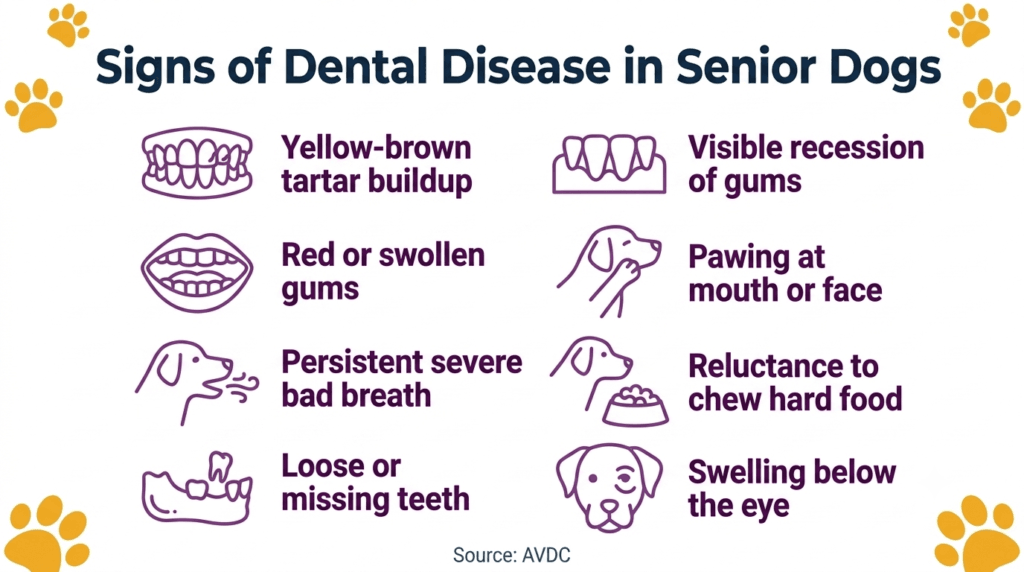
The main signs to watch for:
- Yellow or brown deposits along the gumline (tartar)
- Red, swollen, or bleeding gums
- Persistent bad breath not related to recent meals
- Loose or missing teeth
- Visible gum recession, with more of the tooth root exposed
- Pawing at the mouth or rubbing the face
- Reluctance to pick up toys or chew hard food
- Swelling under the eye (can indicate root abscess in upper teeth)
Bad breath odor is typically the first thing owners notice. The cause is not age. It is the bacteria in active plaque and tartar that release sulfur compounds as a byproduct. Persistent dog breath odor that does not resolve after brushing is a signal worth taking seriously.
Signs that are easy to confuse with normal aging
Several signs of dental disease are regularly misread as inevitable aging. Lethargy, reduced interest in food, and difficulty chewing are the most common examples. Owners assume the dog is “just slowing down.”
Difficulty chewing, in particular, regularly has a direct dental cause. A dog eating on one side of the mouth, dropping kibble, or showing reluctance toward hard treats is likely experiencing pain. That behavior is not a personality shift. It is a response to discomfort the animal cannot communicate directly.
Loss of appetite combined with weight loss in a senior dog always justifies a dental evaluation before other diagnoses are pursued.
How often should senior dogs have their teeth cleaned?
Senior dogs benefit from professional dental cleaning at least once a year, and twice a year for those with a history of periodontal disease or significant tartar accumulation. The exact frequency depends on the individual dog’s baseline oral health, breed, diet, and consistency of at-home care.
Dog dental health by age follows a pattern: the older the animal, the faster the situation changes between visits. A dog that was Stage 1 at the last cleaning can present as Stage 2 or Stage 3 twelve months later, particularly if at-home maintenance is limited. Scheduling a dental exam for pets at least annually gives you a reliable reference point rather than relying on visible signs alone.
If your dog has never had a professional cleaning and is now 7 or older, the baseline exam is the priority. It determines whether the current condition requires treatment or preventive maintenance and what frequency makes sense going forward.
What can you do at home to protect your senior dog’s teeth?
The most effective at-home measure for older dogs is daily brushing, adapted to the sensitivity that often comes with age. Combined with the right supplementary products, a consistent routine significantly reduces the rate of plaque accumulation between professional cleanings.
For product selection, the Veterinary Oral Health Council publishes a list of VOHC-approved dental products that have demonstrated efficacy in controlled trials, including toothpastes, dental chews, water additives, and diets.
Solutions that carry the VOHC seal have been tested and shown to reduce plaque or tartar. Products without that seal have not.
The combination that tends to work best for senior dogs:
- Toothpaste: Pet-specific enzymatic formula, never human toothpaste (xylitol is toxic to dogs)
- Dental chews: VOHC-approved options appropriate for the dog’s size and chewing ability
- Water additive: Odorless, tasteless options added to the drinking bowl daily
At-home care does not replace professional cleaning. It extends the interval between visits and slows the accumulation of new deposits. Knowing how to toothbrush a dog properly makes the daily routine more effective and less stressful for both of you.
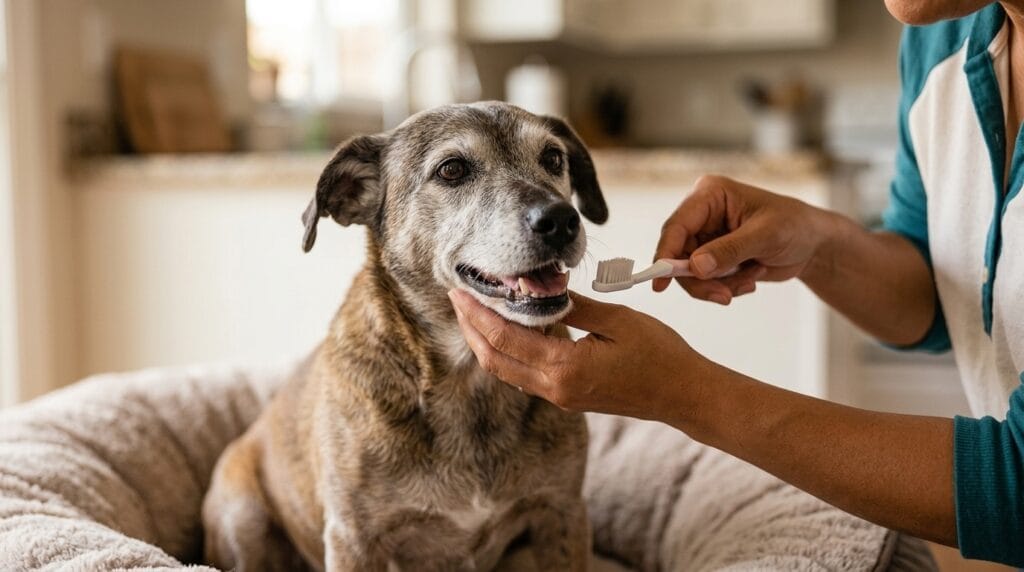
Adjusting the brushing routine for older dogs
Older animals frequently have increased sensitivity around the gums and jaw, particularly if there is active inflammation. The technique requires adjustment.
Use a soft-bristle brush or a finger brush. Apply minimal pressure, working in small circular motions along the gumline rather than scrubbing. Focus on the outer surfaces of the upper back teeth, where tartar accumulates fastest. A 30-second session per side is more useful than a longer session that causes the dog to resist.
If the animal pulls away or shows distress, do not force it. Short, calm sessions done daily produce better long-term results than prolonged sessions done infrequently. Brushing three to four times a week is better than once a week and far better than none.
Book an anesthesia-free cleaning with The Magic Paws and keep your senior dog’s mouth healthy between vet visits.
Is anesthesia-free dental cleaning a good option for senior dogs?
Anesthesia-free dental cleaning is particularly well-suited for senior dogs because it removes the primary risk that makes owners hesitant about routine dental care at this age. As dogs age, their ability to metabolize anesthesia changes. Kidney and liver function decline, recovery time increases, and the margin for complications narrows.
That does not mean anesthesia is never appropriate for older dogs. Therapeutic procedures, including tooth extractions and treatment of advanced periodontal disease, require full anesthesia under veterinary supervision.
The question is whether every preventive cleaning needs to carry that risk. For many senior patients, the answer is no.
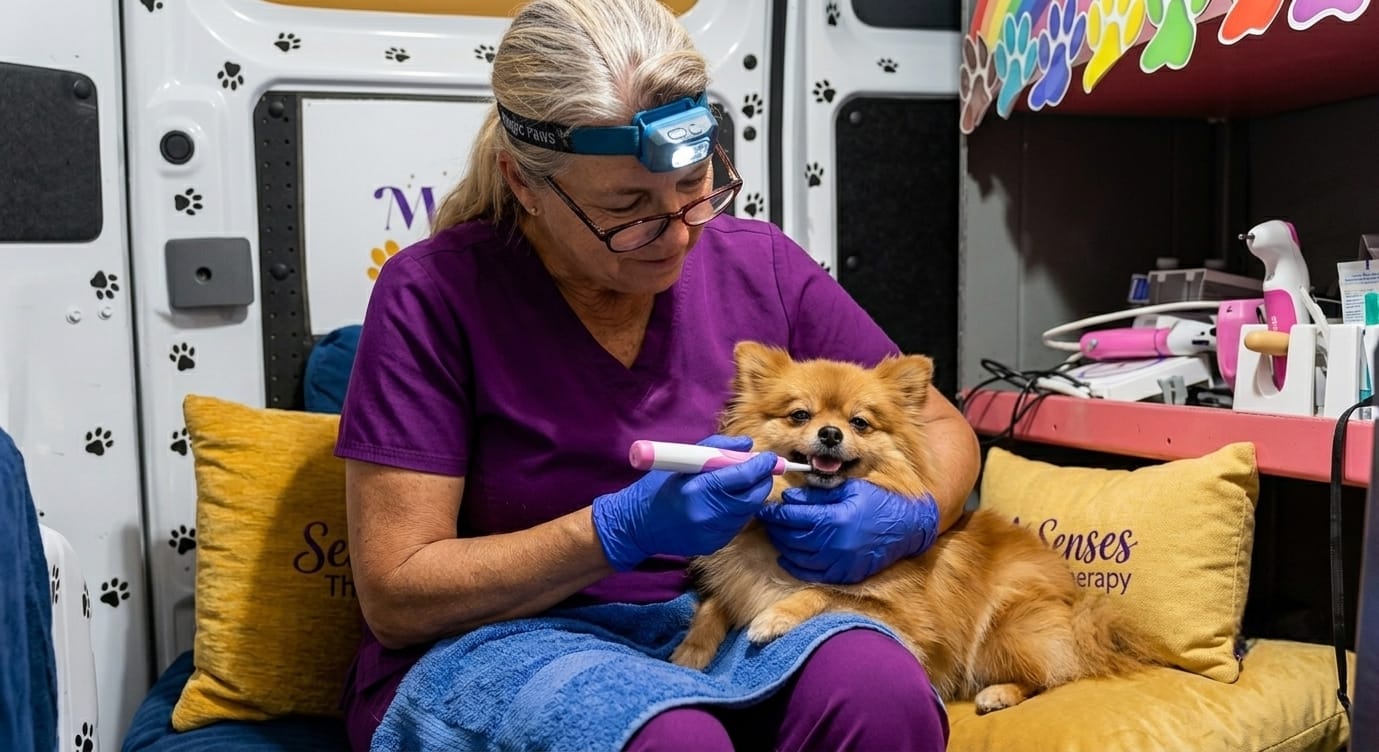
Anesthesia-free dental cleaning addresses the preventive layer: mechanical removal of plaque and soft tartar deposits on accessible tooth surfaces.
For a dog that receives regular cleanings and maintains low accumulation, this is the appropriate level of care. You can find more detail on what the procedure involves in the article on no anesthesia dog teeth cleaning, and if the mortality question is on your mind, the data on how many dogs die from teeth cleaning puts the numbers into context.
How the Senses Therapy protocol helps senior dogs stay calm
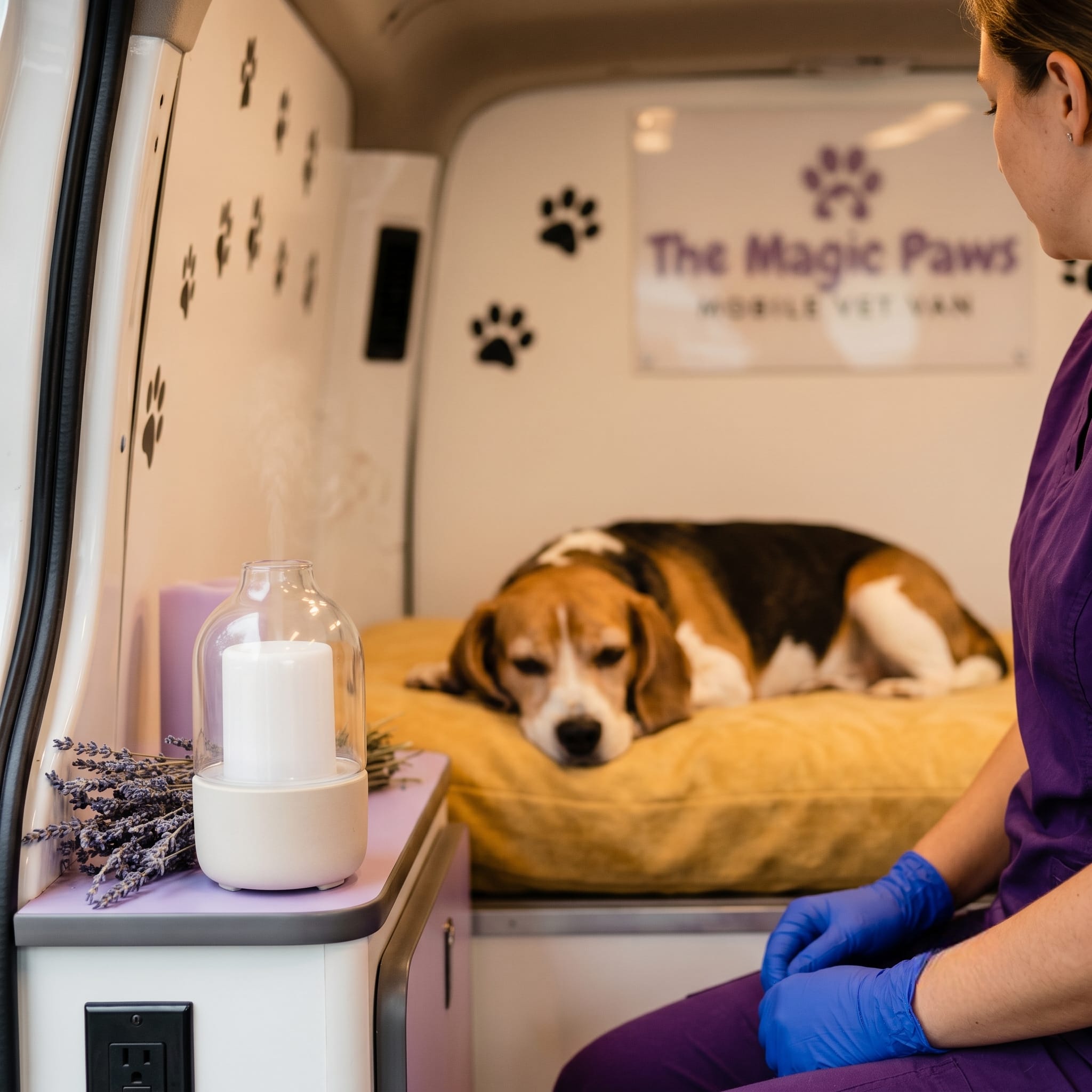
The Magic Paws uses the Senses Therapy protocol during every cleaning session, a combination of aromatherapy, music therapy, chromotherapy, and massage designed to lower the dog’s physiological stress response before and during the procedure.
For senior dogs, each of these components addresses a specific challenge. Aromatherapy with calming scents reduces anxiety without sedation, particularly useful for older animals that are more sensitive to environmental changes.
Music therapy with species-specific calming frequencies has been shown to lower cortisol levels in dogs. Chromotherapy uses specific light wavelengths that have a measurable calming effect on the nervous system. Massage before and during the cleaning relaxes muscle tension and reduces the instinctive protective response that makes oral procedures difficult in anxious animals.
The combination matters because senior dogs often carry a history of stressful veterinary experiences, and stress itself has physiological costs at this age. Keeping the animal calm is not just a comfort measure. It is part of delivering care that the body can tolerate without a recovery period.
What happens if senior dog dental health is ignored?
Ignoring dental disease in older dogs is not a passive choice. Oral bacteria enters the bloodstream through inflamed gum tissue and reaches the kidneys, heart, and liver. The inflammatory load from chronic periodontal disease contributes to organ stress over time, compounding the natural vulnerability that comes with age.
The connection between gum disease and systemic health is well-established. A dog with active periodontal disease at Stage 3 or Stage 4 is not just experiencing tooth loss. The infection is a continuous source of bacterial exposure for vital organs. The article on dog teeth cleaning covers this connection in more detail.
| With regular dental care | Without dental care |
| Plaque controlled before hardening | Tartar accumulates rapidly under the gumline |
| Gum tissue remains healthy | Progressive gum recession and pocket formation |
| Teeth retain structural support | Bone loss leads to mobility and eventual tooth loss |
| Systemic bacterial exposure is limited | Continuous low-grade infection enters the bloodstream |
| Eating remains comfortable | Pain affects appetite, weight, and mood |
Tooth loss in senior dogs is not just a dental outcome. When a dog loses teeth, chewing becomes painful and inefficient, which affects nutrition and body weight. The cascade from ignored gum disease to reduced quality of life is direct and preventable.
How do you know if your senior dog needs a dental cleaning now?
Some situations justify scheduling a cleaning without waiting for the next routine appointment. The following signs indicate the need for prompt evaluation:
- Visible tartar covering more than one third of any tooth surface
- Gum bleeding that occurs without brushing
- One or more teeth that appear loose when the dog chews
- Swelling, discharge, or odor localized to one area of the mouth
- Sudden reluctance to eat hard food after no prior issues
- Pawing at the face repeatedly without other cause
- Facial swelling below the eye on one side
If any of these apply, a dental exam for pets is the next step. Some of these signs are consistent with conditions that require veterinary attention before or alongside preventive cleaning.
Knowing what you are dealing with before scheduling determines which type of care is appropriate.
A healthier mouth is the quietest gift you can give your senior dog
A dog at 9 or 11 years old does not need less care. It depends on care that understands what the body has already been through. Dental health at this stage connects directly to comfort, to the ability to eat without pain, and to the cumulative burden the immune system carries day after day.
The decisions made now about cleaning frequency, at-home routine, and which procedures are appropriate for an aging patient affect the years ahead in ways that are measurable.
Quality of life in a senior dog is not just about mobility or energy. It is also about whether the mouth is a source of chronic discomfort or a well-managed part of daily health.
Before reading the complete guide to what professional dental care involves at this stage, take stock of what your dog’s mouth looks like today. If the last professional cleaning was more than a year ago, that is where to start. You can find the full breakdown in the complete guide to professional pet dental cleaning.
Your senior dog’s mouth deserves the same attention as the rest of their care. Book a professional, anesthesia-free cleaning with The Magic Paws and give them a healthier, more comfortable life.
FAQ
At what age is a dog considered senior?
It depends on size. Large dogs, those over 25 kg, typically reach the senior stage around age 6. Small dogs, under 10 kg, are generally considered senior around age 10. Medium breeds fall between ages 7 and 8. The practical implication is that dental care requirements increase earlier in larger breeds, making annual dental evaluations especially important for bigger dogs from middle age onward.
Can senior dogs get their teeth cleaned without anesthesia?
Yes. Anesthesia-free dental cleaning is suitable for senior dogs who need preventive maintenance, specifically mechanical removal of plaque and soft tartar deposits on accessible tooth surfaces. The procedure is appropriate for animals in stable health without active infection, significant pocket formation, or teeth requiring extraction. A dental evaluation beforehand confirms whether anesthesia-free cleaning meets the dog’s current needs or whether a veterinary procedure is indicated.
How does poor dental health affect a dog’s organs?
Oral bacteria from inflamed gum tissue enters the bloodstream and reaches the kidneys, heart, and liver. The mechanism involves bacteria traveling through the blood vessels exposed by gum recession and periodontal pockets. Over time, chronic exposure contributes to organ inflammation and increases the risk of kidney disease, endocarditis, and liver stress, particularly in older dogs whose organs are already under more strain.
Is bad breath normal in older dogs?
No. Persistent bad breath is not an aging byproduct. It is produced by the bacteria present in active plaque and tartar deposits, which release sulfur compounds continuously. Bad breath that does not improve after brushing indicates a level of bacterial load that warrants a dental evaluation, not just a change in toothpaste.
Can a senior dog lose teeth from dental disease?
Yes. Advanced periodontal disease destroys the bone and ligament that anchor each tooth. When bone loss reaches Stage 3 or Stage 4, teeth become mobile and eventually fall out or require extraction. In senior dogs, tooth loss directly impacts the ability to eat comfortably, which affects nutrition, body weight, and overall quality of life.
How can I tell if my senior dog is in dental pain?
Dental pain in dogs is often masked by instinct. Signs to watch for include chewing exclusively on one side of the mouth, dropping food while eating, refusing kibble or hard treats that were previously accepted, pawing at the mouth or face, and increased wariness when the face is touched. These behaviors often develop gradually, which is why they go unnoticed until the discomfort is significant.
What toothpaste is safe for senior dogs?
Use only toothpaste formulated for dogs. Human toothpaste often contains xylitol, which is toxic to dogs, as well as fluoride levels that are unsafe if swallowed. For product selection, the Veterinary Oral Health Council (VOHC) publishes a list of approved products that have demonstrated efficacy. Enzymatic formulas are generally well-tolerated by older dogs and effective against plaque without requiring aggressive brushing pressure.
How is anesthesia-free dental cleaning different from a vet cleaning?
| Anesthesia-free cleaning | Veterinary dental cleaning | |
| Purpose | Preventive maintenance | Therapeutic treatment |
| Sedation | None | General anesthesia |
| Recovery time | None | 12 to 24 hours or more |
| Scope | Accessible tooth surfaces | Full oral exam, subgingival scaling, extractions if needed |
| Ideal for | Dogs with low accumulation and no active disease | Dogs with periodontal disease, abscesses, or tooth loss |
Does dental disease in dogs get worse with age?
Yes. Plaque and tartar accumulate over years, and the damage they cause is cumulative. In older dogs, the immune response to chronic bacterial exposure is weaker, gum tissue regenerates more slowly, and bone density is lower. These factors together mean that periodontal disease tends to advance faster in senior animals than in younger ones at the same baseline. Regular professional cleaning and consistent at-home care are the most effective ways to slow that progression.
How do I book a dental cleaning for my senior dog with The Magic Paws?
Visit The Magic Paws website to book a professional, anesthesia-free cleaning. The Magic Paws serves South Florida and Orlando/Central Florida with a mobile service that comes to your location. No drop-off, no waiting room, no sedation.