Periodontal disease in senior dogs is one of the most common health conditions veterinarians see, and one of the most overlooked by owners who assume bad breath and a little tartar are just part of getting older.
The disease starts quietly along the gumline, long before any visible sign appears. By the time a pet is considered a senior, years of plaque and tartar have often had time to work beneath the surface, where the real damage happens.
Age changes more than an animal’s energy level. A slower immune response, thinner gum tissue, and a longer history of untreated buildup all combine to make advanced disease more likely in older years than at any earlier stage of life.
This guide covers what periodontal disease looks like in a senior dog, why the risk climbs with age, and the signs worth watching for. It also looks at how the condition connects to the rest of the body and what safe cleaning options, including anesthesia-free care, look like at this stage.
What is periodontal disease in senior dogs?
Periodontal disease in senior dogs is a progressive infection of the gum and bone tissue that supports the teeth, caused by bacteria in plaque that hardens into tartar over time. Left untreated, it destroys the structures holding each tooth in place.
Veterinary professionals describe dental disease in senior dogs through distinct stages, from mild inflammation to advanced bone loss. A dog can look and behave completely normal well after the earliest stage has passed, which is part of why so many cases go unnoticed until they are advanced. Routine dog dental cleaning removes plaque before it can mineralize into tartar, which remains the most effective way to slow the disease at any age.
For senior dogs, this makes dog teeth cleaning less about cosmetic upkeep and more about protecting the tissue that still holds each tooth in place, especially once gingivitis progression has already begun.
Stages of gum disease, from gingivitis to advanced periodontitis
Periodontal disease in dogs progresses through three recognizable stages: gingivitis, early periodontitis, and advanced periodontitis. Each stage reflects deeper damage to the gum and bone tissue, and each becomes harder to reverse than the one before it.
| Stage | What happens | Reversible? |
| Gingivitis | Red, swollen gums caused by plaque buildup along the gumline | Yes, with prompt cleaning |
| Early periodontitis | Gum recession begins and early bone loss around the teeth starts | Partially |
| Advanced periodontitis | Significant bone loss, tooth root exposure, and loose teeth in dogs | No |
According to the American Animal Hospital Association, periodontal disease incidence climbs steadily as dogs move from young adulthood into their senior years, which is why staging matters more the older a pet gets.
Why does the risk increase as dogs get older?
The risk of periodontal disease increases with age mainly because plaque and tartar have more years to accumulate, while a senior dog’s immune response to bacteria below the gumline becomes progressively weaker over time.
This is one reason the importance of regular dental check-ups grows heavier with age, since early intervention becomes the main option available once natural resistance starts to decline. Dog dental health as they age depends less on genetics and more on how consistently tartar was managed in earlier years.
Years of untreated inflammation lead to gum recession and tooth root exposure, both of which accelerate bone loss around the teeth. Each additional year of neglect tends to cost more than the last, which is why periodontal issues in aging dogs rarely stay the same size for long.
What are the signs of periodontal disease in senior dogs?
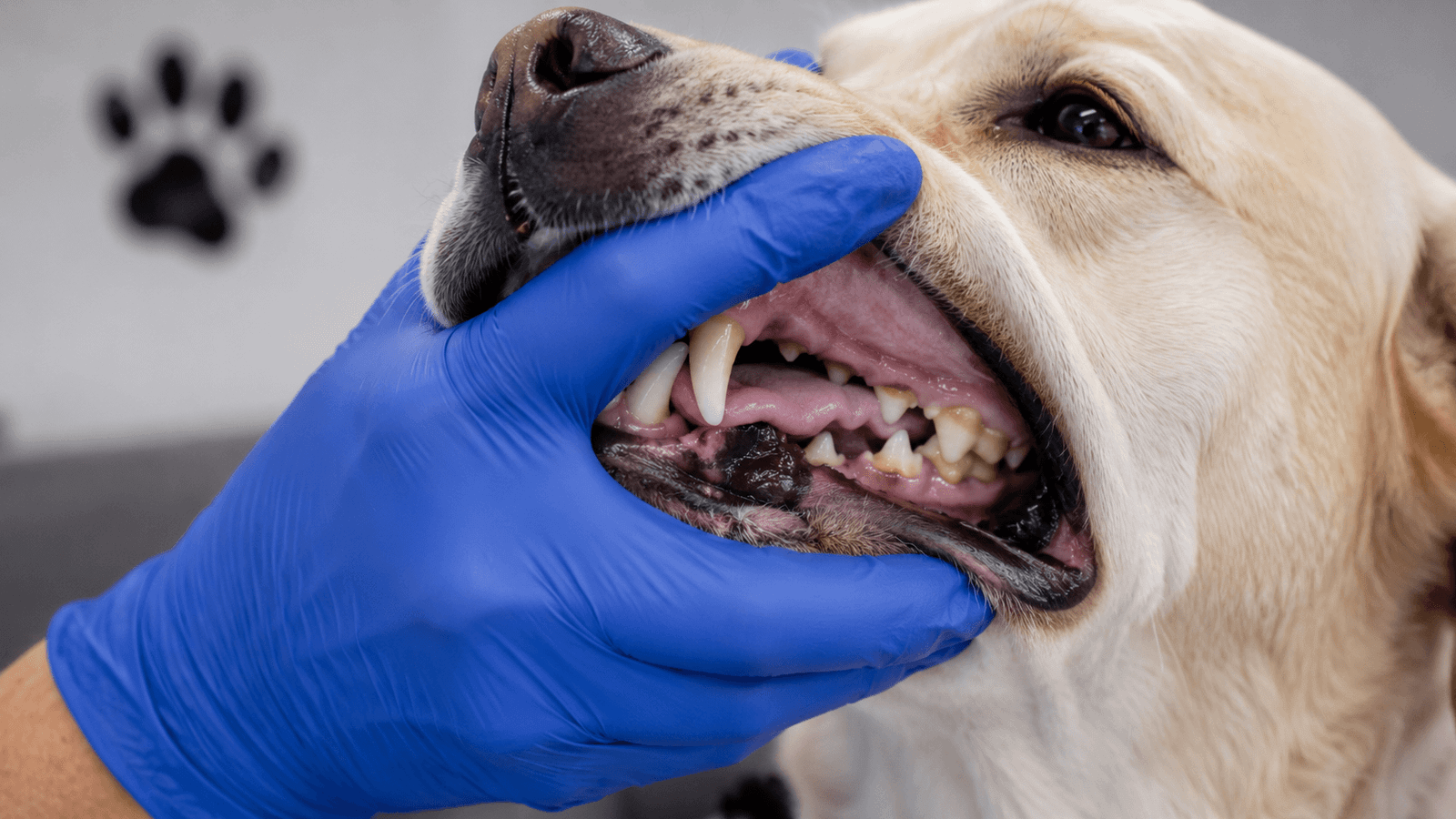
Signs of periodontal disease in senior dogs include persistent bad breath, red or bleeding gums, visible tartar, reluctance to chew, and loose or missing teeth. Many of these signs develop gradually enough that owners mistake them for normal aging.
- Persistent bad breath that does not improve with brushing
- Red, swollen, or bleeding gums
- Visible tartar buildup, especially along the back teeth
- Dropping food, chewing on one side, or avoiding hard treats
- Loose teeth or teeth that have already fallen out
Persistent dog bad breath is often the first sign an owner notices, even though it usually means the disease has already been active for some time beneath the surface. A closer look at signs your pet might have dental problems can help separate normal aging from symptoms that call for a professional opinion.
How does periodontal disease affect overall health?
Periodontal disease affects overall health by allowing oral bacteria to enter the bloodstream through inflamed gum tissue, where it can reach organs such as the heart, liver, and kidneys and contribute to chronic inflammation elsewhere in the body.
A study published by the National Library of Medicine found a possible association between periodontal disease and cognitive changes in older dogs, adding another reason prevention matters beyond the mouth itself.
For a senior dog, organs are already working harder simply due to age. Oral health decline adds one more source of strain at a stage when the body has less reserve to compensate, which is part of why the disease weighs more heavily on longevity later in life.
Is anesthesia-free cleaning safe for senior dogs?
Anesthesia-free teeth cleaning for senior dogs can be safe when performed by a trained professional who evaluates each pet’s health before starting, since it removes the added risk of general anesthesia while still addressing visible tartar and gumline buildup.
Concerns about how many dogs die from teeth cleaning under anesthesia are valid for older patients with underlying heart or kidney conditions, which is exactly the population this alternative approach was designed to serve. A closer look at no anesthesia dog teeth cleaning explains how the technique manages tartar removal without sedation, while still referring any case that needs surgical work to a licensed veterinarian.
See if your senior dog qualifies for anesthesia-free cleaning: check eligibility and book now.
Is there an age limit for anesthesia-free cleaning?
Yes, there is a recommended age limit for anesthesia-free cleaning, and it varies by breed size, overall health, and the severity of existing dental disease. A licensed professional should always be consulted before deciding whether the procedure is appropriate for a specific dog.
Age alone never determines eligibility. The Magic Paws evaluates each senior dog individually, considering heart function, joint comfort, and behavior during handling, before recommending anesthesia-free cleaning over any other path forward.
Some advanced cases fall outside the safe window for this method entirely and call for a veterinary referral instead. This is why the service is positioned as a preventive option that works alongside a veterinarian, never as a substitute for one.
How is a senior dog evaluated before a cleaning?
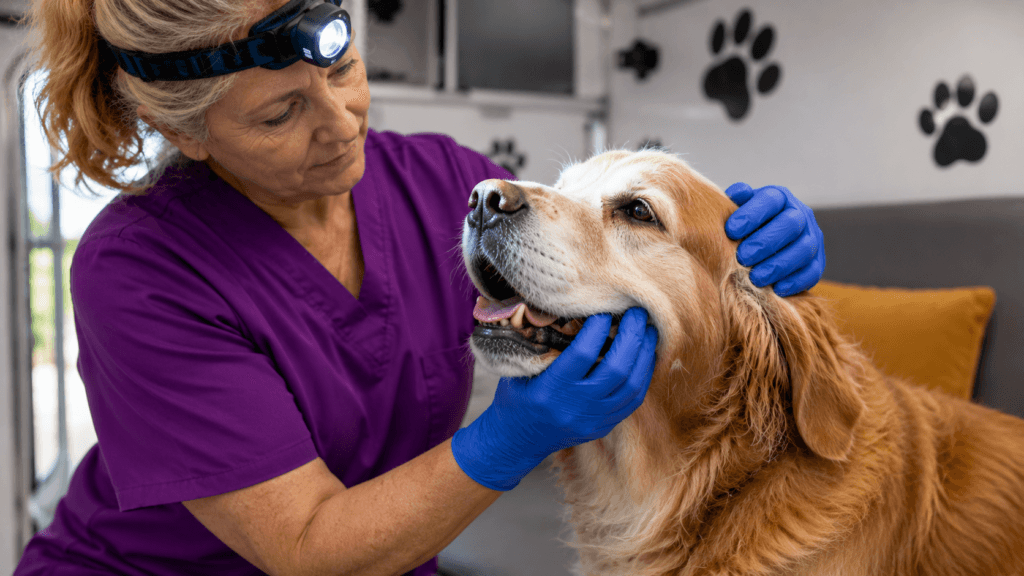
A senior dog is evaluated through a review of health history, a physical check of the gums and teeth, and an assessment of temperament and mobility, all completed before any cleaning begins.
Illana Reisner, who trained as a dentist before specializing in pet dental care, built this evaluation process around the same diagnostic habits used in human dentistry, adapted for a mobile setting inside the branded Nissan NV200 van rather than a traditional clinic. The Senses Therapy protocol, which combines aromatherapy, music therapy, chromotherapy, and massage, helps keep an older dog calm throughout the evaluation and the cleaning that follows.
Between visits, dog dental care at home such as brushing and approved chews helps maintain the results of a professional cleaning and slows how quickly tartar returns. Because the entire process happens through mobile dog teeth cleaning in Florida, senior dogs avoid the stress of a waiting room and are seen in a familiar, low-pressure setting.
What can you do to prevent further dental damage?
Preventing further dental damage means brushing regularly at home, scheduling professional teeth cleaning for dogs before tartar advances, and watching for early signs rather than waiting for a dog to show obvious pain.
Most owners are relieved to learn how long a dog dental cleaning takes is usually under an hour, which makes it easy to fit into a senior dog’s routine without added stress. Knowing how to treat periodontal disease in dogs starts with catching it early, since every stage that is skipped becomes harder and more expensive to manage later.
A consistent routine, paired with regular professional visits, is what keeps dental disease progression from outpacing a senior dog’s ability to recover. Small habits repeated often protect more of the mouth than occasional intervention ever could.
Book your dog’s anesthesia-free cleaning with The Magic Paws today. See pricing and schedule now.
Frequently asked questions about periodontal disease in senior dogs
Is periodontal disease painful for dogs?
Yes, especially in advanced stages, and the pain often goes unnoticed because dogs are naturally skilled at hiding discomfort while still eating and behaving normally.
Can periodontal disease be reversed in senior dogs?
Gingivitis is reversible with prompt cleaning, but advanced periodontitis is not. This is exactly why catching the disease before it progresses matters more than treating it after the fact.
What happens if periodontal disease goes untreated in a senior dog?
Untreated disease leads to progressive bone loss, tooth mobility, and eventual tooth loss, along with a growing risk that oral bacteria will affect organs beyond the mouth.
How often should a senior dog get a dental cleaning?
Frequency depends on individual evaluation rather than a fixed schedule, since tartar accumulation, breed, and existing disease stage all change how often cleaning is needed.
Is periodontal disease more common in small senior dogs?
Small breeds tend to show higher rates of periodontal disease because their teeth are often crowded into a smaller jaw, which traps plaque more easily than in larger breeds.
Does bad breath always mean periodontal disease in older dogs?
Bad breath is a frequent sign but not an exclusive one, since diet and other health issues can also cause it. A professional evaluation is the only way to confirm the cause.
How much does treating periodontal disease in a senior dog cost?
Cost depends on the stage of disease and the individual evaluation of the dog, so it is best addressed directly with a personalized assessment rather than a general estimate.
What breeds are more prone to periodontal disease as they age?
Toy and small breeds with compact jaw structures tend to face more crowding and faster tartar buildup, which raises their risk profile compared with larger, wider-jawed breeds.
How do I know if my senior dog is a candidate for anesthesia-free cleaning?
Eligibility is always determined through an individual evaluation performed before every procedure, rather than through age alone, so the safest answer comes from an in-person assessment.
Can periodontal disease affect a senior dog’s heart or kidneys?
Yes. Oral bacteria entering the bloodstream through inflamed gums can reach the heart and kidneys, a connection supported by the same research already cited earlier in this guide.