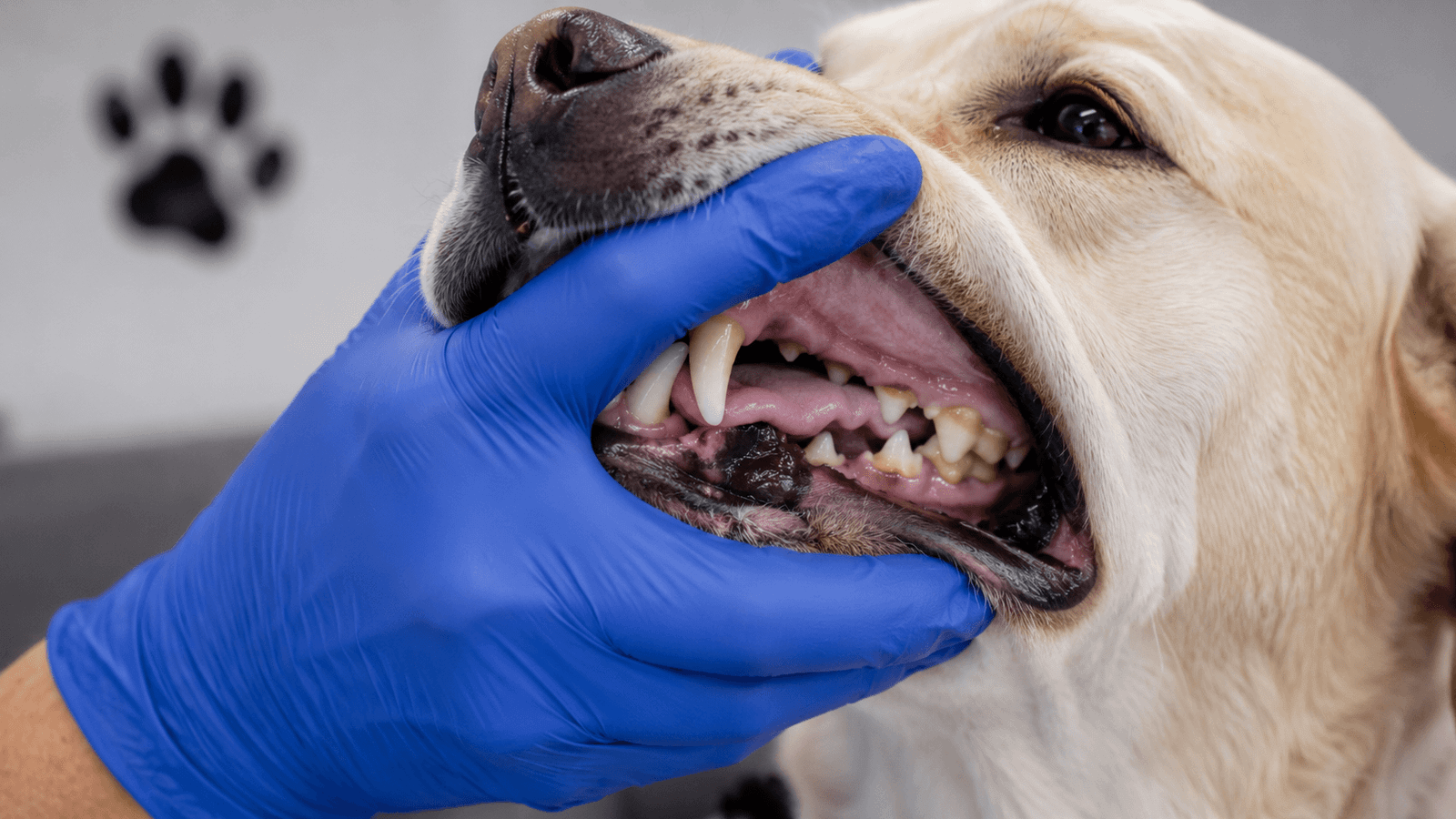

Tartar control treats for dogs sit on nearly every pet store shelf, promising cleaner teeth in exchange for something as simple as a daily chew. Packaging often shows a bright smile and a claim that sounds almost too easy: hand your dog a treat, and tartar takes care of itself.
Most owners buy these products without knowing exactly what happens once the treat disappears. Some assume any chew labeled dental automatically removes buildup. Others give up on the idea entirely after noticing that yellow deposits along the gumline never seem to budge, no matter how many bags they go through.
The confusion usually comes down to two words that get used interchangeably but describe different stages of the same problem: plaque and tartar. Plaque is the soft film that forms on teeth daily. Tartar is what plaque becomes once it hardens and bonds to the tooth surface, a transformation that changes what any treat, brush, or chew can realistically accomplish.
This guide breaks down how tartar control treats actually work, what the Veterinary Oral Health Council seal really guarantees, and where the limit sits between daily maintenance and a problem that already needs a different kind of intervention.
What are tartar control treats for dogs?
Tartar control treats for dogs are chews formulated to slow the buildup of plaque and tartar through a combination of physical texture and active ingredients. Unlike a regular treat, they carry a specific shape, density, or coating engineered to interact with the tooth surface during chewing, rather than simply providing calories or entertainment.
A Labrador chewing on a plain rawhide bone gets some abrasive contact almost by accident. A dog working through a purpose built dental chew gets that same contact by design, since the ridges, grooves, or fibrous texture are shaped specifically to scrape along the tooth as the jaw closes.
How do tartar control treats actually work?
Tartar control treats work through two mechanisms that often act together: mechanical abrasion from the physical act of chewing, and enzymatic or chemical action from ingredients embedded in the treat itself. Understanding both helps explain why some products perform better than others depending on how a dog chews.
Plaque begins forming within hours of a meal, a soft film of bacteria that a treat’s abrasive texture can disrupt before it mineralizes. Left untouched for several days, that same film hardens into tartar, a calcified deposit that bonds to the enamel and no longer responds to chewing alone. For a closer look at what happens once buildup reaches that stage, this dog teeth cleaning guide walks through the full process a trained provider uses to remove it.
Mechanical abrasion
Mechanical abrasion depends entirely on chew behavior. A dog needs to bite down repeatedly and with enough force for the ridges or texture of the treat to scrape along the tooth surface, particularly the premolars and molars where buildup tends to start first.
Animals that gulp treats whole or chew only on one side get little benefit from this mechanism, regardless of how the product is formulated. Breed, bite strength, and individual chewing habits all affect how much abrasive contact actually happens.
Enzymatic action
Enzymatic action comes from ingredients added directly into the treat, most commonly enzymes or organic acids such as malic acid, that interact with the biofilm bacteria produce on the tooth surface. These compounds help break down that biofilm chemically, working alongside the physical scraping rather than replacing it.
Some formulas also include mineral binding agents designed to interfere with the calcification process, slowing how quickly soft plaque converts into hardened tartar. None of these ingredients dissolve tartar that has already set.
What is the VOHC seal, and why does it matter?
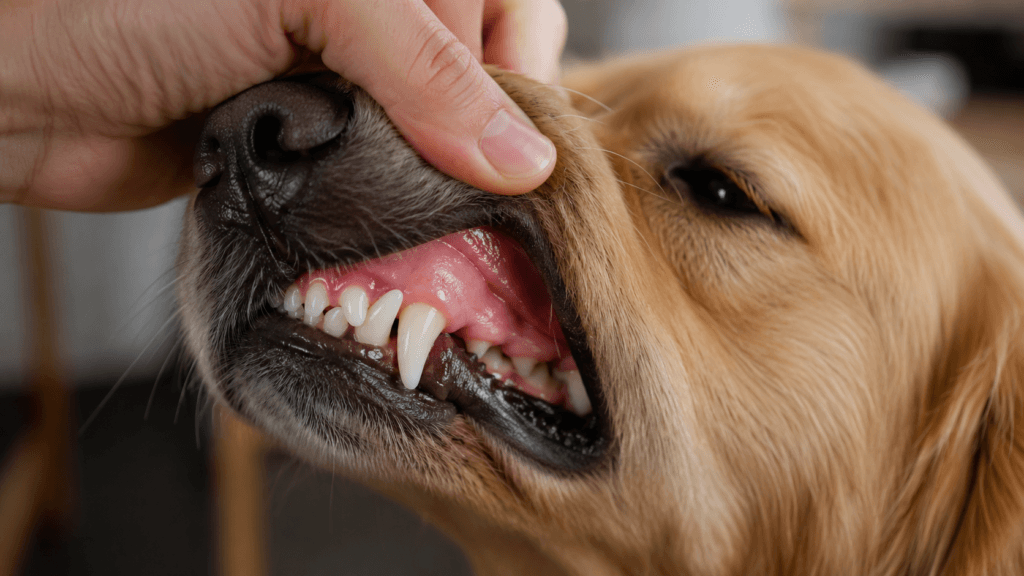
The VOHC seal, awarded by the Veterinary Oral Health Council, tells owners that a product has passed standardized testing showing it measurably reduces plaque or tartar accumulation compared to a control group. It does not mean the product removes buildup that has already hardened.
The distinction matters because the seal is often read as a broader guarantee of dental health, when it actually applies to a narrow, tested claim. A short list clarifies what the seal covers and what it leaves out:
- Confirms the product was tested in a clinical trial against a control group
- Confirms measurable retardation of plaque or tartar formation under those test conditions
- Does not confirm removal of tartar that has already mineralized
- Does not confirm protection against every form of dental disease
Can tartar control treats remove tartar that has already hardened?
No. Tartar control treats act on soft plaque before it mineralizes; once that plaque calcifies into tartar and bonds to the tooth, no chew, however abrasive or enzymatically active, can break that bond loose. Removing hardened tartar requires scaling below the gumline, a mechanical process a treat cannot replicate.
According to VCA Animal Hospitals, tartar that accumulates below the gumline harbors bacteria that can affect organs beyond the mouth, including the heart and kidneys, if the buildup is left in place over time.
A Golden Retriever that has gone two years without professional attention may show thick deposits along the back molars that no amount of daily chewing will dislodge, regardless of how consistently the treats are given.
What signs mean a treat alone is no longer enough?
Certain signs mean tartar control treats alone are no longer doing the job and a veterinary evaluation is warranted. Persistent bad breath, visible buildup, red or bleeding gums, and any reluctance to chew all point toward a stage where daily maintenance needs backup from a trained professional.
- Persistent bad breath that does not improve with treats or brushing
- Visible brown or yellow deposits along the gumline
- Red, swollen, or bleeding gums during normal handling
- Reluctance to chew, or chewing only on one side
- Loose teeth or visible gaps where a tooth used to sit
Waiting past these signs increases the odds that any needed treatment involves a deeper intervention. Understanding the anesthesia risk in dogs that comes with advanced dental disease is part of why catching these signs early matters, since prevention lowers the chance that a case escalates to that point.
See how anesthesia-free cleaning fits into your dog’s dental routine.
How do tartar control treats fit into a full dental care routine?
Tartar control treats work best as one part of a layered routine rather than a stand alone solution. Daily brushing addresses plaque before it mineralizes, treats provide a secondary line of defense between brushing sessions, and periodic professional attention removes whatever tartar accumulates despite both habits.
Providers like The Magic Paws, a mobile dog dentist operating throughout Florida, bring that professional layer directly to the owner’s driveway. Founder Illana Reisner, who trained in human dentistry before developing the company’s protocol, has overseen more than two thousand cleanings using sedation-free dental cleaning methods designed for dogs who cannot safely undergo general anesthesia.
This approach works as a safer, more accessible preventive alternative to cleaning under anesthesia rather than a direct replacement for it, and a veterinarian should always confirm which option fits a specific dog’s health profile.
The Senses Therapy protocol used during each visit combines aromatherapy, music therapy, chromotherapy, and massage to help dogs stay calm without medication, which matters for pets whose only prior experience with dental care involves a clinical setting.

Are tartar control treats safe for every dog?
Tartar control treats are safe for most healthy adult dogs when sized correctly and given as directed, but they carry real risks for certain groups. Animals with existing dental disease, very small breeds, and aggressive chewers who swallow large pieces without breaking them down first face the highest risk of injury or choking.
Choosing the right size for your dog’s breed
Choosing the right size matters more than most owners realize. A treat sized for a Labrador poses a genuine choking hazard for a Chihuahua, while a treat too small for a large breed may be swallowed whole before any abrasive contact happens.
Most packaging lists a weight range, but chewing style matters as much as size. A pet that breaks a treat into pieces before swallowing benefits differently than one that attempts to swallow it whole. For a closer comparison between this product category and other options, dog dental chews covers how different formats and textures perform against each other.
How often should you give your dog a tartar control treat?
Most tartar control treats are formulated for once daily use, and manufacturers typically design the dosage around that frequency to balance plaque control against calorie intake. Giving more than the recommended amount does not accelerate results and can contribute to weight gain over time.
Consistency matters more than frequency. A treat given every day for two weeks and then skipped for a month provides far less benefit than the same product given daily without interruption, since plaque begins reforming within hours of the last chewing session.
Pairing daily treats with scheduled professional dental cleaning closes the gap that at home care alone cannot cover, since only scaling removes tartar that has already hardened. After any professional session, following guidance on dog dental cleaning recovery helps the mouth heal properly before daily treats and brushing resume.
So, is a tartar control treat enough on its own?
A tartar control treat on its own is not enough to protect a dog’s long term dental health, though it plays a genuine role within a broader routine. It slows plaque formation and supports the work daily brushing already does, but it cannot remove tartar once that plaque has hardened.
The dogs who benefit most from these treats are the ones whose owners treat them as one tool among several, not a replacement for brushing or a substitute for professional attention when the signs call for it. Buildup accumulates daily regardless of how good any single product is, which is why consistency across the full routine matters more than any individual formula.
Tartar builds up daily. Book a preventive cleaning before it becomes a bigger problem. See pricing and book a mobile dental visit for your dog.
Frequently asked questions about tartar control treats for dogs
Do tartar control treats really work?
Yes, within a specific limit. The mechanical scraping and enzymatic ingredients in these treats measurably slow how quickly plaque hardens into tartar, but they cannot remove tartar that has already mineralized on the tooth. Their real value lies in prevention, not in reversing buildup that already exists.
Can tartar control treats replace brushing?
No. Brushing removes plaque mechanically every single day, reaching surfaces and angles a treat’s shape cannot consistently contact. Tartar control treats work as a complement to that daily habit, filling gaps between brushing sessions rather than substituting for them.
What ingredients are commonly used in tartar control treats?
Common ingredients fall into a few categories: enzymes that break down bacterial biofilm, organic acids such as malic acid that help loosen soft plaque, and mineral binding agents that interfere with the calcification process. Specific formulas vary, but these categories cover most products on the market.
Do vets recommend tartar control treats?
Most veterinarians recommend them as part of a broader preventive routine rather than as a standalone solution. They typically pair a daily treat with regular brushing and scheduled professional attention, since no single intervention addresses every stage of plaque and tartar formation.
Can puppies have tartar control treats?
Most tartar control treats are formulated for adult dogs and carry a minimum age recommendation, often around six months. Puppies going through teething have softer gums and looser teeth, so smaller, softer pieces and closer supervision matter until the permanent teeth are fully in place.
Do tartar control treats help with bad breath?
They can help, since reduced bacterial activity and plaque generally lead to fresher breath over time. They do not guarantee full elimination of bad breath, particularly if the underlying cause is gum disease or a tooth already affected by hardened tartar.
How long does it take to see results from tartar control treats?
Most owners notice a difference within a few weeks of consistent daily use, though results depend on chewing behavior and existing buildup. Tartar control treats work as ongoing maintenance rather than a one time fix, so benefits fade if the habit stops.
What is the difference between tartar control treats and dental chews?
Tartar control treats are specifically formulated and tested for plaque or tartar reduction, often carrying a VOHC seal. General dental chews may offer similar abrasive benefits through texture alone but are not necessarily tested against the same clinical standard, so the claims on each package are not interchangeable.
Are grain-free tartar control treats better for dogs?
Grain-free formulas are not inherently better for dental effectiveness. That distinction relates to food tolerance and ingredient sensitivities, not to how well a treat scrapes plaque or delivers active enzymes. A grain-free and a grain-inclusive treat with the same texture and ingredients perform similarly for tartar control.
How much do tartar control treats for dogs cost?
Prices for tartar control treats typically range from about ten to thirty dollars per bag, depending on brand, size, and quantity. Since treats alone cannot replace professional attention, factoring in the cost of periodic scaling gives a more complete picture of what full dental care actually requires.