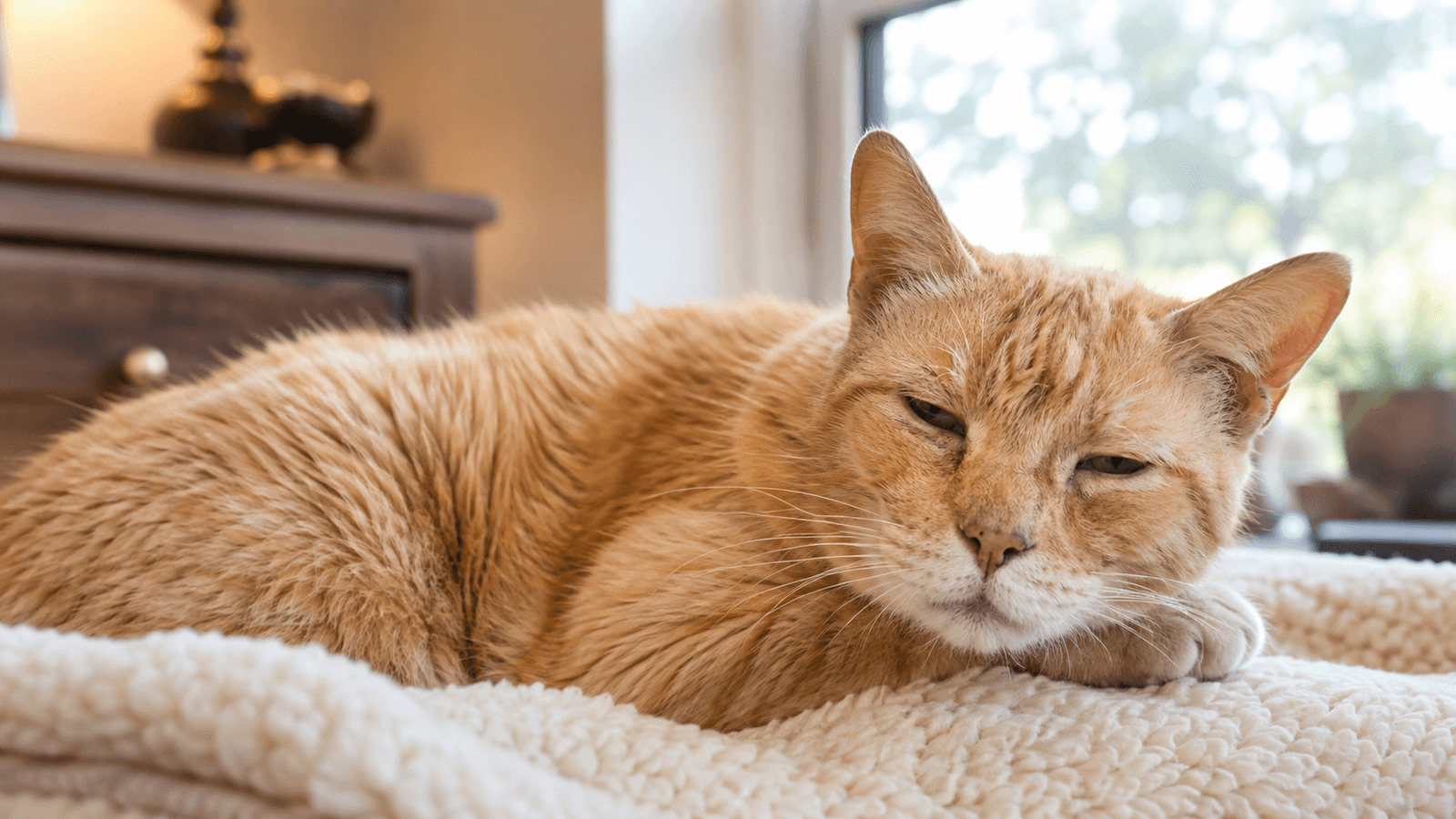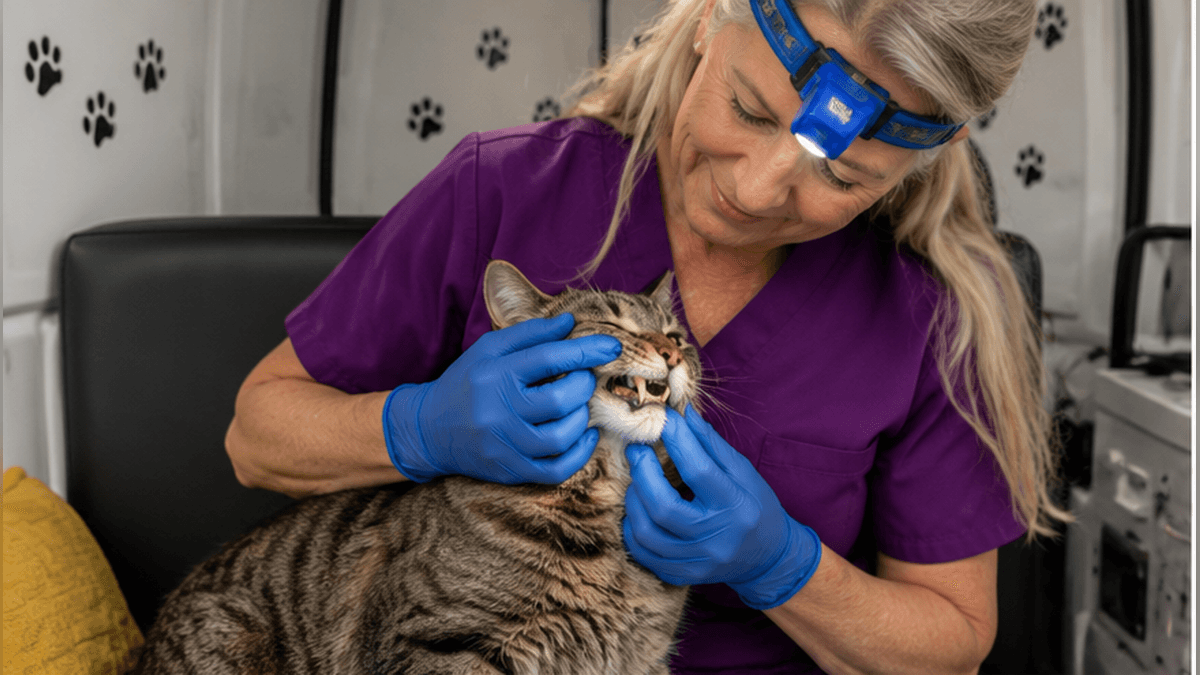
Senior cat teeth cleaning looks different from a routine cleaning done at two or three years old, mostly because cats get remarkably good at masking pain as they age. A cat that seems fine at home can already have gum inflammation or hidden tooth damage.
Most owners assume that if their cat is still eating, grooming and behaving normally, the mouth is probably fine. That assumption gets riskier every year past seven, when periodontal disease becomes far more common in cats than most people expect.
The shift is not really about the cleaning itself. It is about what happens before it, the questions asked, the health history reviewed and the eligibility check that decides whether a gentle preventive approach fits or whether a veterinary exam should come first.
This article walks through what actually changes for an aging cat, what signs deserve attention, how a structured multisensory method works without sedation, and when a visit to the veterinarian should come before anything else.
What signs of dental disease affect senior cats?
Senior cats show dental disease through subtle changes rather than obvious pain, including slower eating, bad breath, drooling or a reluctance to chew on one side of the mouth. Owners often mistake these signs for normal aging instead of a symptom worth checking, as this guide on signs your pet might have dental problems explains in more detail.
Bad breath deserves particular attention in older cats, since it usually signals bacterial activity below the gumline rather than something the cat ate. According to the Cornell Feline Health Center, dental disease affects between 50% and 90% of cats over four years old, a figure that climbs further as cats move into their senior years.
Subtle signs owners often miss in older cats
Appetite changes rank among the easiest signs to overlook. A senior cat that shifts from dry kibble to only wet food, or that eats more slowly than before, may be avoiding pressure on a sore tooth rather than simply losing interest in one texture.
Avoidance of hard toys or chew items follows a similar pattern. A cat that once batted at fabric toys but now ignores them, or that stops carrying items in its mouth, could be protecting a painful area without any visible swelling or bleeding.
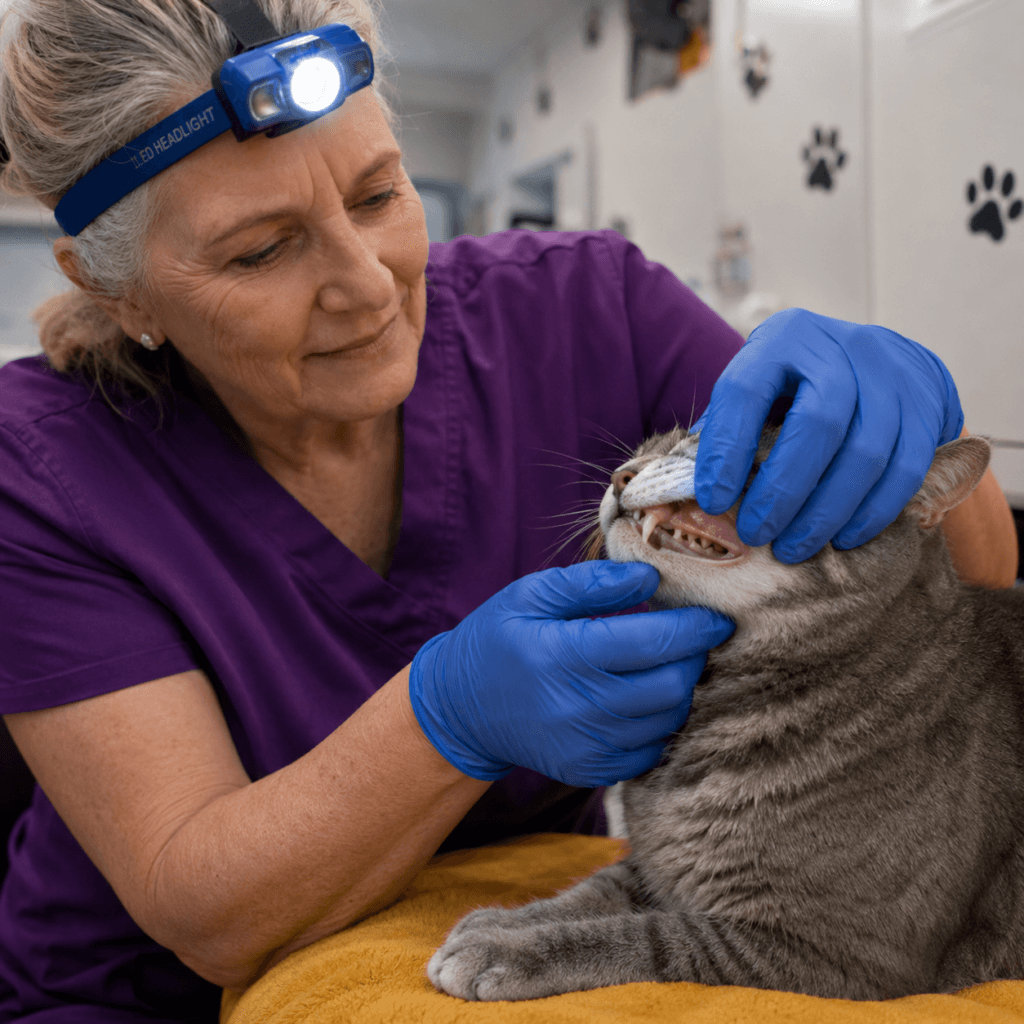
Is anesthesia-free teeth cleaning safe for senior cats?
Anesthesia-free teeth cleaning can be safe for senior cats when a proper eligibility screening happens first, since the method relies on the cat’s cooperation and calm rather than sedation. It works as a preventive option for cats without advanced disease, not as a substitute for veterinary treatment when one is needed, a distinction covered in this overview of cat teeth cleaning.
That screening typically includes a review of health history, current medications and any known conditions like kidney or heart disease, similar in spirit to what happens during a standard dental exam for pets. The American Animal Hospital Association recommends individualized assessment before any sedative procedure in senior pets, and that same logic applies to deciding whether anesthesia-free cleaning fits a given cat.
What disqualifies a senior cat from anesthesia-free cleaning
Advanced periodontal disease, loose teeth or visible oral pain generally point toward veterinary treatment instead of a preventive session. These signs suggest the animal already needs curative care rather than maintenance, and a trained technician should recognize and refer rather than proceed.
Severe anxiety or resistance during handling can also rule out the anesthesia-free path for a particular visit, even if the cat qualified before. Eligibility gets reassessed each time, since a cat’s tolerance and health status can shift between appointments.
See pricing for senior cat dental care in Florida: see pricing.
How does Senses Therapy work for older cats?
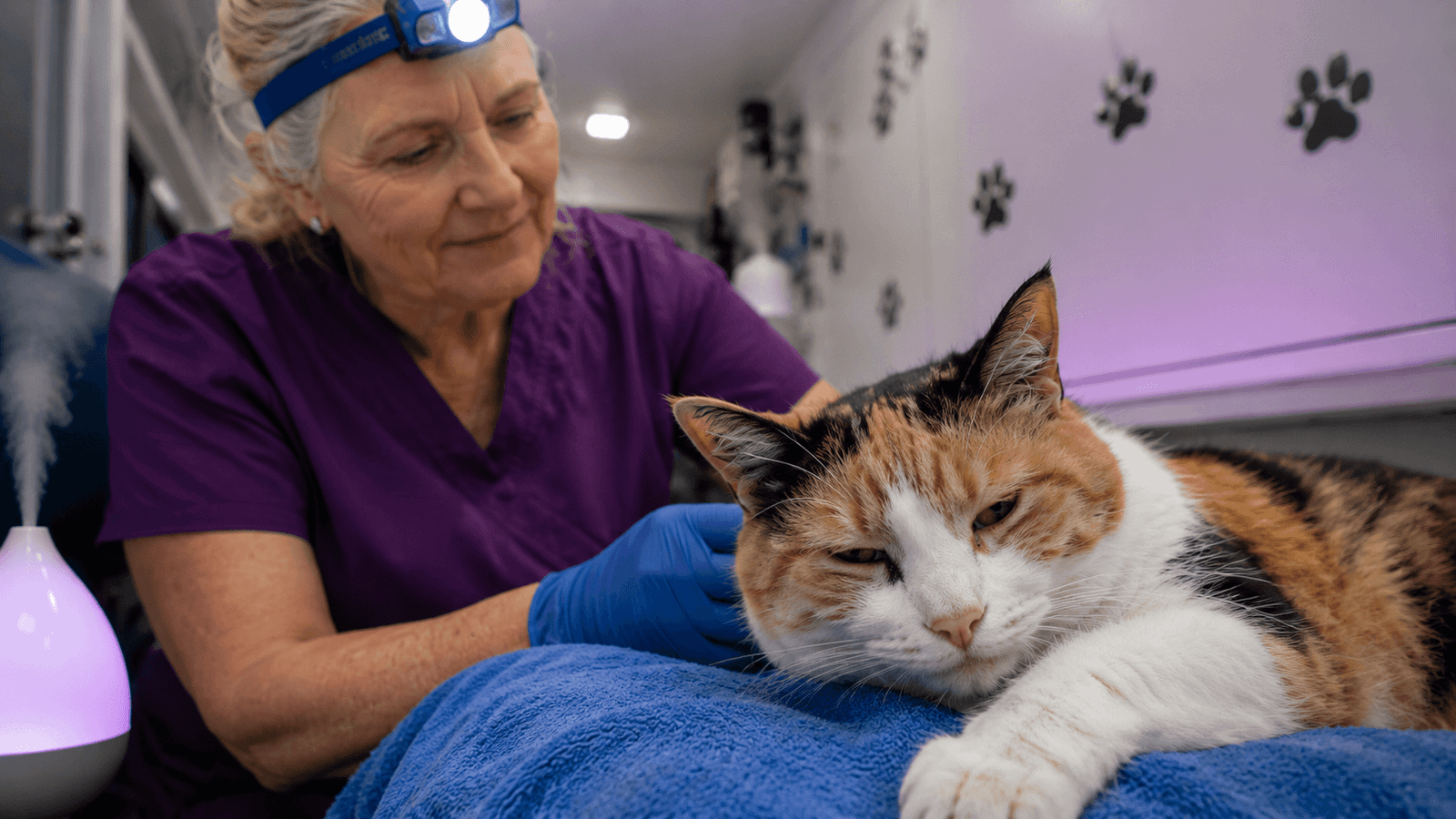
Senses Therapy calms senior cats during dental care through four elements delivered in sequence: aromatherapy, music therapy, chromotherapy and massage. The Magic Paws built this senses therapy for pets protocol specifically to reduce stress in animals that cannot be sedated, which matters even more for older cats with lower tolerance for handling.
Aromatherapy sets a relaxed tone before the technician even opens the cat’s mouth, while soft music keeps the environment predictable throughout the visit. Chromotherapy uses calming light tones, and gentle massage at relaxation points closes out the sequence, a full picture available in this guide to everything you need to know about cat dental cleaning.
Illana Reisner, who founded The Magic Paws after training in human dentistry, built this protocol around one principle: an older cat cooperates far more easily when it feels safe than when it feels restrained. The company has applied that approach across thousands of mobile visits throughout Florida.

How often should senior cats get teeth cleaned?
Senior cats generally benefit from more frequent preventive cleanings than younger cats, since tartar and bacteria accumulate faster once periodontal disease has already started. A schedule built around consistent check-ins works better than waiting for visible problems, an approach detailed in this piece on the importance of regular dental check-ups for your pet.
Frequency is not a fixed number that applies to every senior cat equally. A cat with mild tartar and no gum inflammation might do well with two visits per year, while one with a history of periodontal disease may need closer monitoring. This is a decision a veterinarian or trained technician makes case by case, not a rule set in advance.
How can you support senior cat dental health at home?
Home care between professional visits helps slow tartar buildup and gives owners an early window into changes in the cat’s mouth. Dental treats formulated for texture and abrasion, like those covered in this guide to cat dental treats, offer one supporting option, though they work best alongside professional cleaning rather than replacing it.
Brushing remains the most direct home tool, even if senior cats often resist it more than kittens do. Building the habit gradually, with short sessions and plenty of patience, tends to work better than forcing a full routine at once, as explained in this guide on how to make toothbrushing a fun routine for your pet.
Owners should also watch for changes in breath or eating pace between visits, since these often surface before any visible tartar. Catching a shift early gives more room to address it preventively instead of reactively.
When does a senior cat need a veterinarian instead?
A senior cat needs a veterinarian rather than a preventive cleaning when there is visible pain, bleeding gums, loose teeth or a sudden refusal to eat. These signs point to active disease that requires diagnosis and treatment, not maintenance, and a responsible provider should refer rather than attempt to clean through it.
Cats with known kidney disease, heart conditions or other systemic issues also warrant a veterinary conversation first, since those factors affect what kind of dental care is appropriate at that stage. Anesthesia-free cleaning remains a preventive complement to veterinary care, and understanding a cat’s full mouth anatomy helps explain why, as covered in this reference on how many teeth does a cat have, never a replacement for it.
Give your senior cat a stress-free path to a healthier smile. Book your cat’s mobile teeth cleaning in Florida today.
What questions do owners ask most about senior cat dental care?
At what age is a cat considered senior for dental purposes?
Most veterinary guidelines treat seven to ten as the range where dental risk starts climbing more noticeably, though the shift is gradual rather than sudden. A seven-year-old cat is not automatically high risk, but it is the point where closer attention starts paying off.
Can a senior cat get teeth cleaned without anesthesia?
Yes, provided the cat passes an individual eligibility screening that rules out advanced disease or health conditions that would make sedation-free handling unsafe. The method works as prevention within that screened group, not as a universal option for every senior cat.
Does senior cat teeth cleaning require bloodwork first?
Not always. The anesthesia-free model relies on an individual health and behavior assessment rather than mandatory bloodwork, though cats with a known history of kidney or heart issues may still be referred for veterinary testing before proceeding.
Is it too late to clean an old cat’s teeth?
No. Age alone does not disqualify a cat from dental care, and delaying cleaning tends to make existing problems worse rather than avoiding risk. Prevention still has value even in cats well into their senior years.
What happens if my senior cat has a lot of tartar buildup?
Extensive tartar often signals that a veterinary evaluation should come before any preventive cleaning, since it can hide inflammation or damage beneath the surface. A technician trained to recognize this will typically pause and refer rather than continue.
Does senior cat teeth cleaning hurt the cat?
The goal is the opposite. Structured methods like Senses Therapy exist specifically to keep the experience calm rather than painful, using aromatherapy, music, light and massage to reduce stress throughout the visit.
How much does senior cat teeth cleaning cost in Florida?
Cost varies by cat size and specific location within Florida, so the most accurate figures come from checking current pricing directly rather than relying on a fixed number here.
Can kidney disease affect senior cat teeth cleaning decisions?
Yes. Systemic conditions like kidney disease factor directly into whether a preventive, sedation-free cleaning fits a cat or whether a veterinary procedure under professional supervision makes more sense for that case.
What is the difference between senior cat teeth cleaning and a regular cleaning?
The cleaning itself is similar, but the screening beforehand is stricter for senior cats. Health history, current conditions and behavior all get reviewed more closely before deciding on the right approach.
How do I know if my senior cat’s dental pain needs urgent care?
Refusing food entirely, visible bleeding from the mouth or facial swelling all call for immediate veterinary attention rather than a scheduled preventive visit. These signs indicate a problem that cannot wait.