
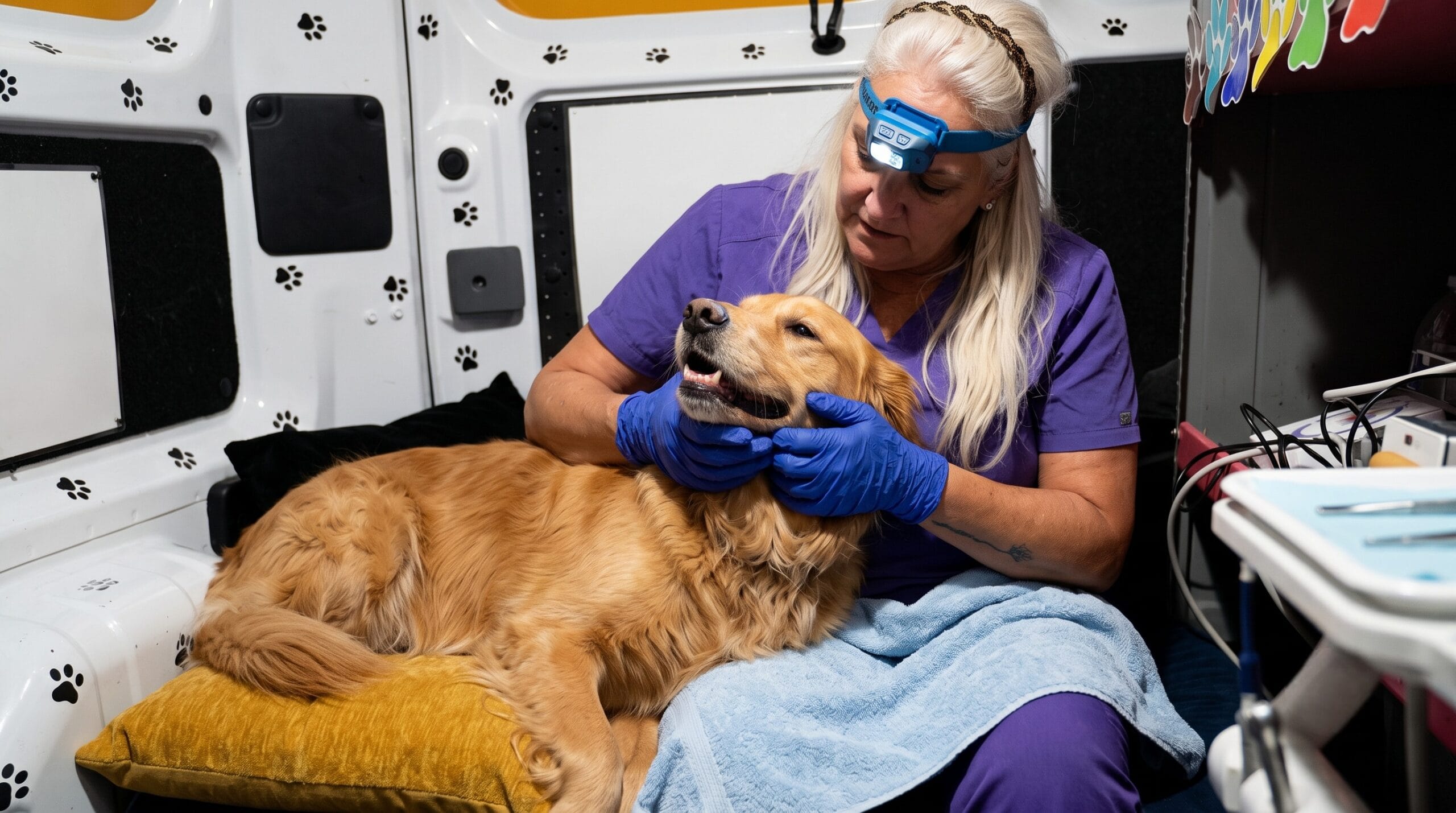
Dog tooth extraction cost is one of the more jarring numbers a pet owner encounters at the veterinarian’s office, often arriving at the end of a routine check-up when a dental problem turns out to be further along than expected. For many families, it is the first time they realize how far dental disease can progress without visible symptoms.
The total bill for a single tooth removal in dogs rarely reflects just the extraction itself. Anesthesia, pre-anesthetic bloodwork, intraoral X-rays, medication, and follow-up care all add to the final number. Understanding what goes into that cost changes how you think about prevention.
Dogs adapt to oral pain with remarkable efficiency. An animal dealing with a cracked tooth or advanced gum disease will often continue eating and playing, giving owners no obvious signal that something is wrong. By the time the discomfort becomes visible, the disease has typically been progressing for months.
Most owners who face an extraction bill are not dealing with a sudden accident. They are dealing with a condition that built up gradually, starting with plaque, then tartar, then inflammation, then bone loss. The cost of that bill reflects every stage that went untreated.
How much does a dog tooth extraction cost?
A dog tooth extraction cost runs between $500 and $2,500 when the full procedure is included: anesthesia, intraoral X-rays, the extraction, and post-operative medication. The cost per tooth alone ranges from $150 to $1,500 depending on complexity.
The table below breaks down the main extraction scenarios and typical total costs:
| Extraction type | Cost per tooth | Estimated total (full procedure) |
| Simple extraction (single root, no complication) | $150 to $400 | $500 to $1,000 |
| Surgical extraction (multi-root, fracture, or impaction) | $500 to $1,500 | $1,200 to $2,500 |
| Multiple extractions (same procedure) | Varies per tooth | Can exceed $3,000 |
These ranges are broad by necessity. A general practice in a rural area will price differently than a board-certified dental specialist in an urban market. What remains consistent is the structure of the bill: the extraction fee is rarely the largest line item.
Simple vs. surgical extraction: what changes in the bill
Simple extraction applies to single-root teeth with no structural complication, typically smaller incisors or premolars in reasonably healthy bone. The veterinarian can loosen and remove the tooth with dental elevators and forceps in a controlled sequence.
Surgical extraction is a different category. Multi-rooted teeth such as carnassials (the upper fourth premolars) and canine teeth require sectioning of the tooth before removal. If the tooth has fractured, if the root is curved, or if bone loss has created a compromised socket, the procedure becomes technically demanding, and the cost rises accordingly. For owners researching dog teeth cleaning as a preventive step, understanding this cost distinction is one of the clearest arguments for acting earlier.
Additional costs most owners don’t see coming
The extraction fee is the starting point, not the full picture. The following line items appear on most extraction invoices and are often not included in the initial estimate:
- Pre-anesthetic bloodwork (recommended for all dogs, required for seniors): $80 to $200
- General anesthesia and monitoring: $200 to $500
- Intraoral X-rays (dental radiographs): $150 to $300
- Pre-surgical examination: $50 to $150
- Antibiotic course: $30 to $80
- Post-procedure pain medication: $30 to $80
- Follow-up consultation: $50 to $100
A family expecting a $300 extraction can reasonably end up with a $1,200 bill once the full procedure is itemized. Researching dog dental cleaning cost before disease advances gives owners a realistic basis for comparison, and that comparison is significant.
What drives the final price of a dog tooth extraction?
Three factors determine the final number: the type of tooth being removed, the clinical complexity of the case, and the pricing structure of the veterinary practice. These variables interact, meaning a complicated extraction at a specialist clinic in a high-cost market can reach three to four times the cost of a simple removal at a general practice in a rural area.
Dog teeth removal cost is not standardized across the country. There is no regulated fee schedule for veterinary dental procedures, which means two clinics in the same city may quote the same extraction very differently based on their equipment, staffing, and specialist credentials.
Which teeth cost the most to extract
Multi-rooted teeth are consistently the most expensive to remove. The upper fourth premolar (the carnassial) and the canine teeth have deep, complex root systems that require sectioning and careful elevation to remove without fracturing the jaw or leaving root fragments.
A carnassial tooth that has developed a root abscess, for example, may require surgical access through the gum tissue, bone removal, and extended time under anesthesia. The clinical risk and procedural time involved are reflected directly in the cost. Dogs that develop dog periodontal disease at these teeth face some of the most expensive extraction scenarios.

How your location affects the price
Urban markets with higher practice overhead and access to board-certified dental specialists will price extractions significantly higher than general clinics in less populated areas. A general practice may charge $500 to $800 for a surgical extraction; a specialist may charge $1,500 to $2,500 for the same procedure.
The specialist cost is not always avoidable. Complex extractions with root fractures, impacted teeth, or advanced bone loss benefit from specialist training and equipment. For straightforward cases, however, a general practitioner with dental training can perform the procedure at lower cost.
When does a dog actually need a tooth pulled?
Extraction is indicated when a dog presents with periodontal disease at stage 3 or 4, a tooth fracture with pulp exposure, a root abscess, or a retained deciduous tooth that is blocking the permanent dentition. Dog dental surgery becomes necessary when the supporting structures are too damaged to preserve the tooth.
The distinction between “needs extraction” and “still treatable” is one of the most important clinical decisions in canine dentistry, and it depends entirely on how far the disease has progressed.
The four stages of periodontal disease and what they mean for your dog’s teeth
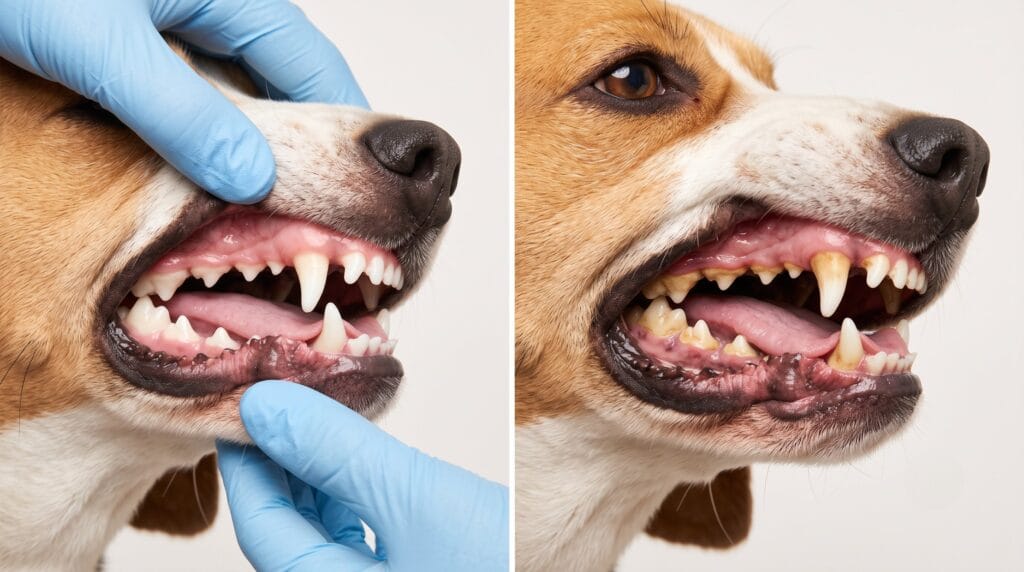
Periodontal disease follows a predictable path. The American Veterinary Dental College (AVDC) defines four stages based on attachment loss, pocket depth, and bone involvement. The stage determines whether the tooth is salvageable or needs to come out.
| Stage | Condition | Reversible | Indicated treatment |
| Stage 1 | Gingivitis only, no attachment loss | Yes | Professional cleaning, home care |
| Stage 2 | Early periodontitis, less than 25% attachment loss | Partially | Professional cleaning, possible local therapy |
| Stage 3 | Moderate periodontitis, 25% to 50% attachment loss | No | Extraction or advanced therapy |
| Stage 4 | Advanced periodontitis, more than 50% attachment loss | No | Extraction required |
According to Cornell University College of Veterinary Medicine, periodontal disease is the most common health condition in adult dogs, with the majority showing signs by age three. The disease progresses silently: a dog at stage 2 looks and behaves like a healthy animal from the outside.
Stages 1 and 2 are where professional cleaning intervenes effectively. If the disease has not yet destroyed the bone surrounding the tooth, the tooth can be kept. Once stage 3 begins, that window narrows. For owners asking whether is dental cleaning safe for dogs and worth the investment, this table answers that question in concrete terms.
Signs your dog may already need an extraction
Visible symptoms of tooth disease in dogs typically appear later than owners expect. By the time behavioral changes are obvious, the underlying condition has usually been developing for months. The following signs suggest the disease is progressing and a veterinary evaluation is needed:
- Difficulty chewing or dropping food
- Resistance to being touched around the muzzle or face
- Persistent bad breath that does not respond to dental treats or brushing
- Receded gum tissue with exposed root surface
- Visibly fractured, discolored, or loose tooth
None of these signs alone confirms the need for extraction. A broken tooth that has not exposed the pulp may be managed without removal, and gum recession in an early stage may still be treatable. What they confirm is that a dental examination with intraoral X-rays is needed. Knowing how long does a dog dental cleaning take and what the appointment covers helps owners set realistic expectations before that visit.
Your dog’s teeth may still be at a stage where cleaning prevents the extraction. Book a session with The Magic Paws today.
Can a dog tooth extraction be avoided with preventive cleaning?
Yes, when the disease is still at stage 1 or 2. Professional cleaning removes tartar deposits and reverses gingivitis before bone loss occurs. Affordable dog dental cleaning, performed twice a year, is the evidence-based intervention that keeps periodontal disease from crossing into the irreversible stages. Low cost dog dental cleaning options exist and cost a fraction of what extraction will cost later.
To illustrate the financial case for prevention, the table below compares the cumulative cost of two annual professional cleanings over two years against the cost of a single surgical extraction with full ancillary fees.
| Approach | Year 1 | Year 2 | Total (2 years) |
| Two preventive cleanings per year | $360 to $720 | $360 to $720 | $720 to $1,440 |
| One surgical extraction (full cost) | $1,200 to $2,500 | Follow-up care | $1,500 to $3,000+ |
No competitor makes this calculation explicitly. The argument for prevention is not only clinical; it is financial.
What anesthesia-free cleaning does and who it’s right for
Anesthesia-free cleaning is a preventive procedure designed for dogs that do not have advanced periodontal disease, fractured teeth, or conditions requiring X-rays or surgical intervention. It removes supragingival and accessible subgingival tartar buildup without sedation, using a structured calming protocol to keep the animal relaxed throughout.
It is not a substitute for an extraction that has already been indicated, and it is not appropriate for dogs at stage 3 or 4 disease. The eligibility evaluation before each session exists to confirm the animal is a great candidate. For dogs within the preventive window, dog dental cleaning without anesthesia removes the accumulation that drives periodontal progression.
How often should dogs get a professional cleaning to avoid extractions
The recommended frequency for effective prevention is every six months. This interval keeps tartar from mineralizing into deposits that cleaning alone cannot remove, and it ensures that any early signs of disease progression are caught before the reversible window closes.
The American Veterinary Medical Association (AVMA) recommends regular professional dental care as part of routine preventive health maintenance. The frequency your individual dog needs depends on breed, diet, and home care consistency, and Illana Reisner, licensed dental hygienist and founder of The Magic Paws, evaluates each animal’s oral status before every session. Top dog dental cleaning experts consistently emphasize this interval as the threshold between maintenance and escalation.
Does pet insurance cover dog tooth extractions?
Most comprehensive pet insurance plans cover tooth extractions caused by disease or accident, but the details vary significantly by policy. Discount dog dental cleaning and cheap dog dental cleaning services are not typically included unless the plan includes a wellness add-on.
Understanding what your specific plan covers before the procedure is scheduled prevents the double frustration of an unexpected bill after a stressful veterinary visit.
What to ask your insurer before approving the procedure
Before authorizing the extraction, get clear answers to the following questions:
- Whether the tooth condition qualifies as a pre-existing condition, which would typically exclude coverage
- The deductible amount that applies before reimbursement begins
- The reimbursement percentage after the deductible (typically 70% to 90%)
- Whether the policy requires prior authorization before the procedure is performed
- Whether all ancillary costs (anesthesia, X-rays, medication) are included or capped separately
Is it too late to prevent a tooth extraction for your dog?
It depends on the stage. If your dog is still showing signs consistent with gingivitis or early stage 2 disease, the preventive window is open. A professional cleaning now costs a fraction of what extraction will cost after the disease advances past the reversible threshold.
The calculus is straightforward. A dog at stage 2 periodontal disease that receives consistent professional cleaning twice a year is unlikely to reach stage 3 or 4. A dog at stage 2 that goes two or three more years without professional care will almost certainly need extractions.
Illana Reisner, the licensed dental hygienist behind The Magic Paws, founded the service on this principle: prevention is not cosmetic. It is the clinical intervention that shifts the trajectory of a dog’s oral health before disease becomes irreversible. With over 2,000 pets treated across Florida, the service operates on the premise that most of the animals that end up needing extractions could have avoided that outcome with consistent dog dental cleaning scheduled twice a year.
The earlier the intervention, the lower the cost, the less the discomfort, and the longer the tooth stays in the dog’s mouth where it belongs.
Dog tooth extractions are expensive, painful, and often preventable. Book an anesthesia-free cleaning with The Magic Paws in South Florida or Central Florida and stop the problem before it starts. Schedule your dog’s cleaning today.
Frequently asked questions about dog tooth extraction cost
How much does it cost to pull a single dog tooth?
A simple extraction of a single-root tooth runs between $300 and $700, while a surgical extraction of a multi-rooted tooth typically costs $800 to $1,500 for the extraction alone. The total procedure cost, including anesthesia, intraoral X-rays, and post-operative medication, usually brings the full bill to $500 to $2,500 depending on tooth type and clinical complexity.
Does pet insurance cover dog tooth extractions?
Most comprehensive plans cover extractions resulting from disease or injury. Preventive dental cleaning requires a separate wellness add-on in most policies. Before the procedure, confirm whether the condition is classified as pre-existing, check the deductible and reimbursement percentage, and ask whether prior authorization is required.
Can a dog live with a bad tooth?
Technically yes, but not comfortably. Untreated dental disease causes chronic pain, localized infection, and systemic risk as bacteria from the oral cavity enter the bloodstream. Dogs adapt to oral discomfort without showing obvious distress, which is precisely what makes the condition dangerous: the problem progresses without triggering the behavioral signals that would normally prompt a veterinary visit.
What happens if you don’t treat a dog’s bad tooth?
The progression is predictable:
- Chronic pain that the animal adapts to but does not stop experiencing
- Localized abscess formation at the tooth root
- Bone infection spreading to adjacent teeth
- Bacterial entry into the bloodstream, with documented risk to the heart, kidneys, and liver
- Eventual tooth loss and jawbone damage
Is dog tooth extraction covered by a basic vet visit?
No. Extraction is a separate procedure that requires a dedicated surgical appointment, general anesthesia, intraoral X-rays, and a structured recovery protocol. A routine check-up may identify the need for extraction, but the procedure itself is scheduled separately with its cost structure.
Can a dog’s tooth be saved instead of extracted?
It depends on the stage of periodontal disease. At stage 1 or 2, professional cleaning removes the tartar and bacterial accumulation driving the disease, and the tooth can be preserved. At stage 3 or 4, where significant bone loss or a root abscess is present, extraction is generally the only viable option. This is the answer that changes the conversation: acting at stage 2 costs hundreds of dollars; acting at stage 4 costs thousands.
What is the cheapest way to handle a dog tooth problem?
Prevention is the lowest-cost option by a significant margin. Regular preventive cleaning, scheduled every six months, removes the buildup that drives periodontal disease before it reaches the stages that require extraction. Anesthesia-free cleaning is an affordable option for eligible dogs that do not have advanced disease, fractured teeth, or conditions requiring sedation and X-rays.
How do I know if my dog needs a tooth pulled?
The clearest signs include difficulty chewing, resistance to muzzle contact, persistent bad breath, receded gum tissue exposing the root, and visibly damaged or loose teeth. These signs indicate that dental disease is advanced enough to warrant a veterinary examination with intraoral X-rays for a definitive diagnosis.
How long does a dog tooth extraction take?
The full procedure, including anesthesia induction, the extraction itself, and initial recovery before the animal is ready to go home, typically takes 45 minutes to two hours. Multiple extractions in the same session extend that time. Recovery at home generally involves a soft diet for several days and a course of pain medication.
Where can I get an affordable dog dental cleaning in Florida?
The Magic Paws offers mobile, anesthesia-free dental cleaning in South Florida and Central Florida. The service brings the cleaning to your door, with no clinic visit required. It is designed for dogs within the preventive window and includes a full calming protocol to keep the animal relaxed throughout the session. Scheduling is available at themagicpaws.com/#pricing.