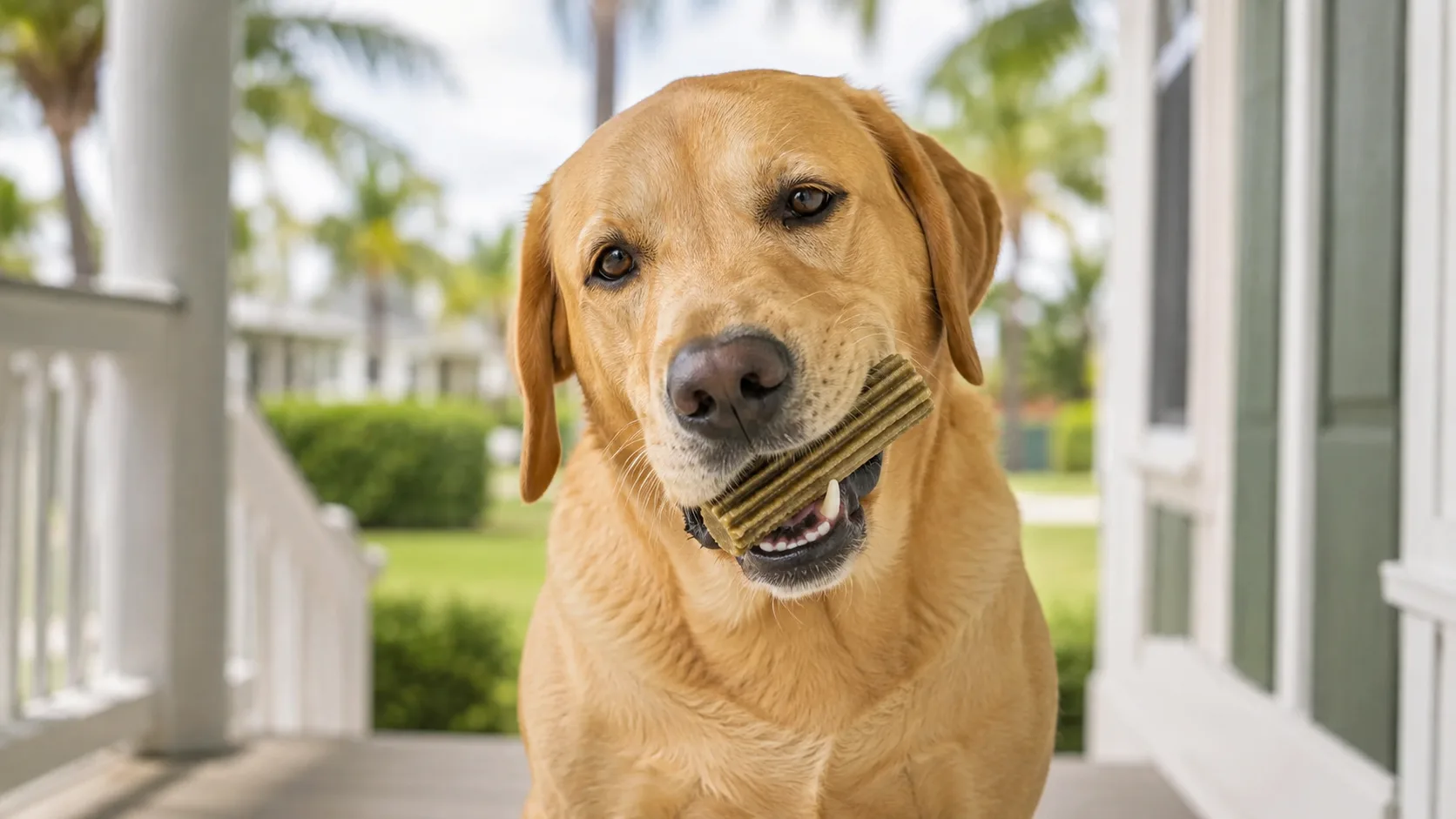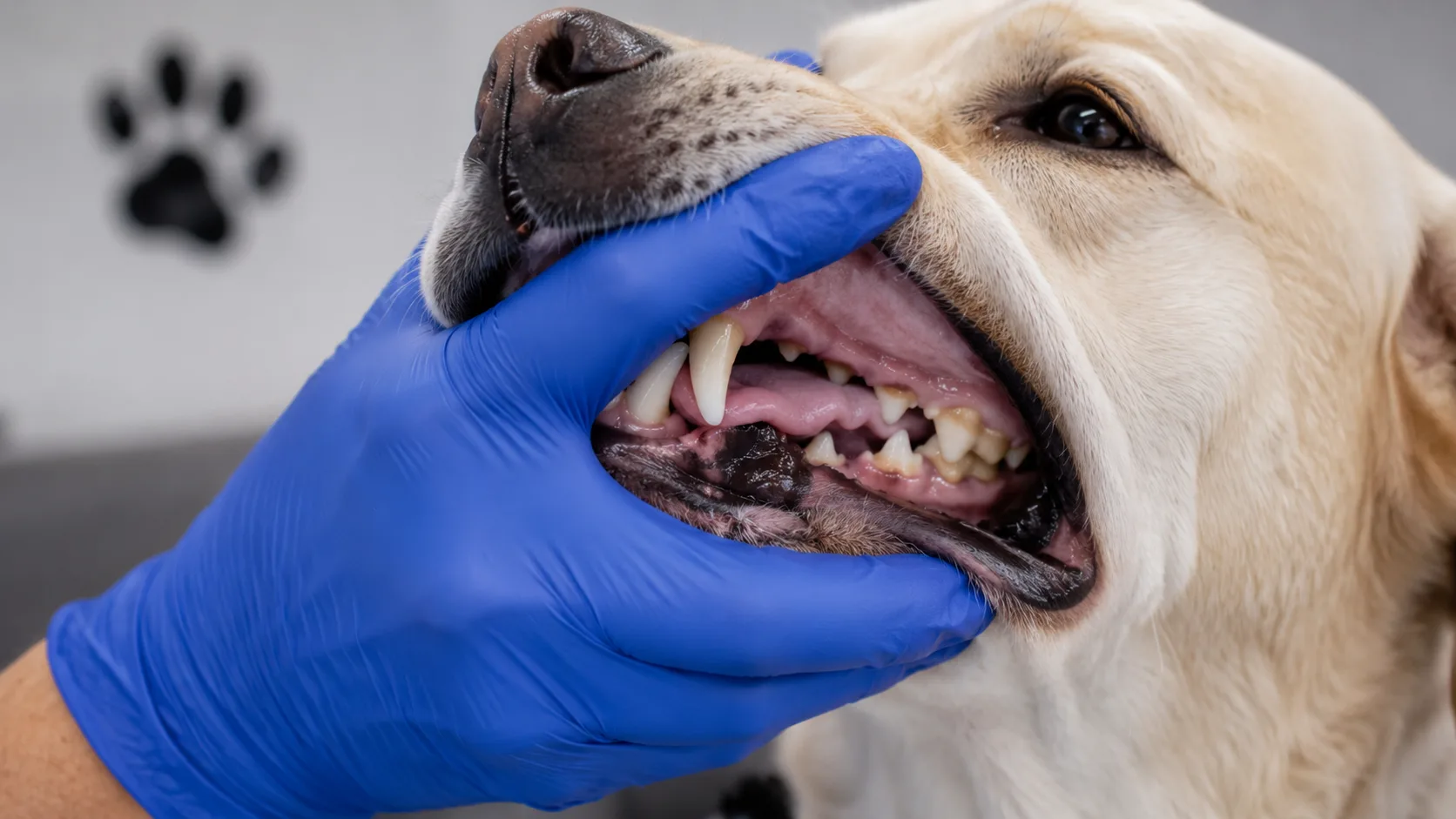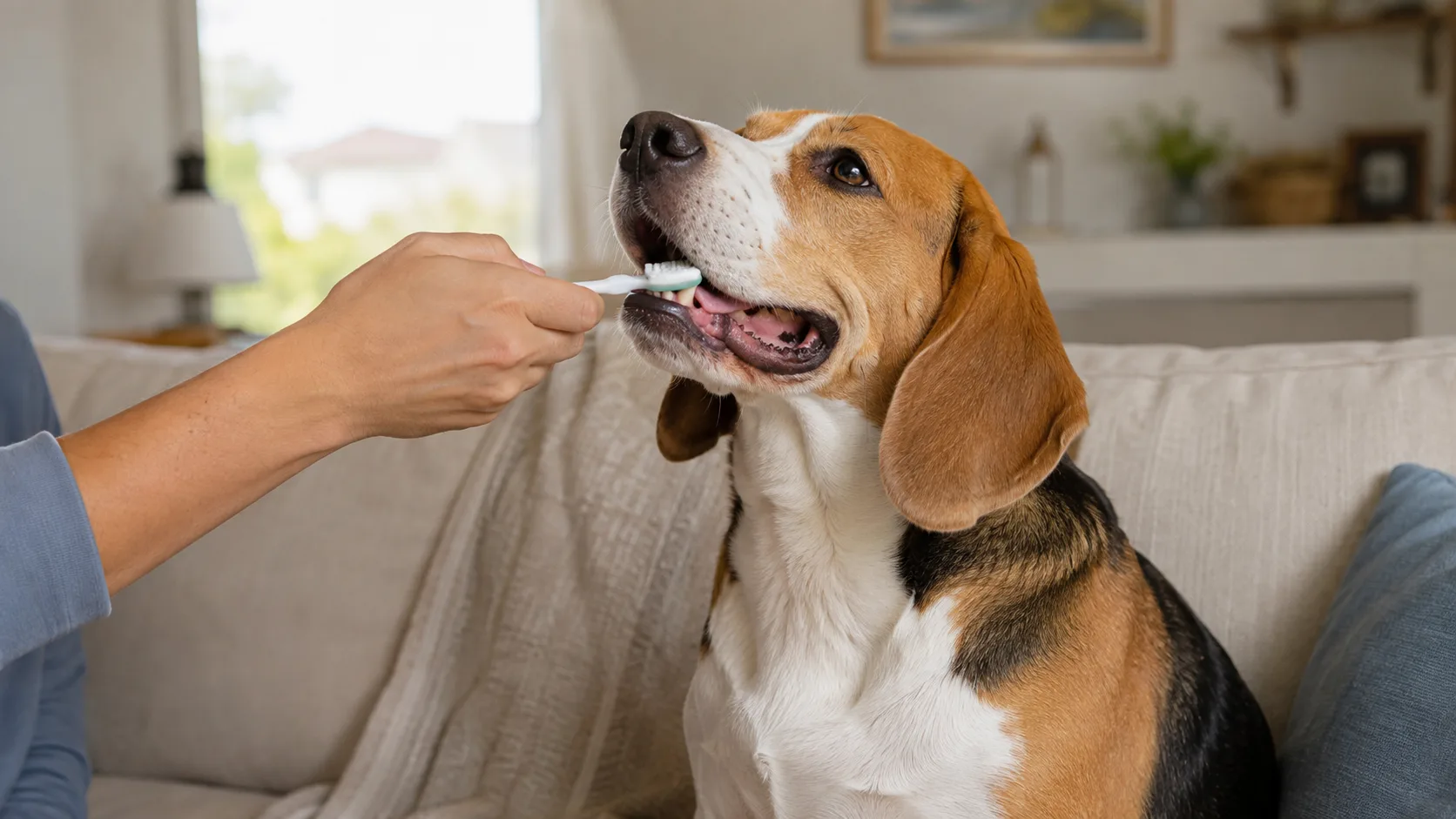
The best dog toothpaste is not defined by flavor or brand recognition, but by two factors: safe ingredients and a mechanism proven to reduce plaque and tartar. Most products on pet store shelves have never been independently tested for that claim, even when the label suggests otherwise.
Pet store shelves carry dozens of options, from poultry to malt scented pastes, each claiming to fight plaque and tartar. Few labels explain what backs that claim, or whether the formula was tested under any independent protocol at all.
Toothpaste plays one part in a dog’s broader dental care routine. It works daily, alongside brushing frequency and diet, but it cannot undo tartar that has already hardened onto the tooth surface.
This guide breaks down what actually makes a formula effective, which products currently carry independent clinical backing, and how to choose based on your dog’s age, ingredients, and tolerance rather than packaging claims.
Understanding these differences matters for gum disease prevention long term. A formula chosen for the wrong reason, whether taste, price, or marketing, does little to protect against canine periodontal disease as a dog ages.
What actually makes dog toothpaste effective?
Dog toothpaste works through mechanical brushing action combined with an active ingredient designed to interrupt bacterial buildup. The most effective enzymatic dog toothpaste relies on a combination of glucose oxidase and lactoperoxidase, which react with saliva to produce a mild antibacterial compound that targets the bacteria responsible for plaque.
Timing matters as much as the formula itself. Plaque begins mineralizing into tartar within 48 to 72 hours if it is not disrupted, which is why daily contact with an enzymatic paste has more impact than an occasional deep clean.
Reviewing how many teeth do dogs have helps explain why certain teeth, particularly the back molars, accumulate plaque faster than others.
This also answers the common question of how often to brush dog teeth: daily, or as close to daily as realistically possible, produces meaningfully better outcomes than a longer session once a week.
The enzymatic reaction also produces a mild oxygen release that helps neutralize sulfur compounds linked to bad breath, one of the earliest and most noticeable signs of plaque buildup in a dog’s mouth.
For a deeper look at how plaque escalates into disease, understanding dog dental disease explains the stages from mild gingivitis to periodontal breakdown. Once bacteria colonize below the gumline, brushing alone, regardless of the toothpaste used, can no longer reach the site of the problem.
Which dog toothpastes carry the VOHC seal?
The Veterinary Oral Health Council (VOHC) has accepted only two dog toothpastes as of its list updated in November 2025: Petsmile Professional and Tartar Shield PRO CARE Natural Pet Toothpaste. Every other product lacks that verification.
A product being widely recommended by veterinarians is not the same as carrying the VOHC seal. Virbac C.E.T. enzymatic toothpaste is a common recommendation, but it does not currently appear among VOHC accepted dog toothpaste products, since testing applies to specific formulations, not general reputation.
Tartar Shield PRO CARE is built around a coconut oil base and works as an enzymatic toothpaste, while Petsmile relies on Calprox, a form of calcium peroxide, for its plaque inhibition claim. The two products reached the seal through different chemical routes.
The distinction matters beyond the seal itself. A toothpaste that controls plaque effectively often has a secondary effect on dog bad breath, since the bacteria behind both issues largely overlap. Following the technique described in how to brush dog teeth matters just as much as the product itself.
The table below compares the two VOHC accepted toothpastes against a widely recommended non-VOHC alternative, showing what each product claims and what independent testing actually confirmed.
| Product | VOHC seal | Claim tested | Active mechanism |
| Petsmile Professional | Yes | Plaque | Calprox, calcium peroxide |
| Tartar Shield PRO CARE Natural Pet Toothpaste | Yes | Plaque and tartar | Enzymatic, coconut oil base |
| Virbac C.E.T. enzymatic toothpaste | No | Not VOHC tested | Dual enzyme, glucose oxidase and lactoperoxidase |
None of this means a non-VOHC product is ineffective. It means the manufacturer has not submitted data for independent review of its plaque control claims, which makes it harder for owners to compare tartar buildup prevention across formulas on equal footing.
How do you choose the right dog toothpaste?
Choosing the right dog toothpaste comes down to three criteria: ingredient safety, flavor tolerance, and age appropriateness. Knowing the dog toothpaste ingredients to avoid is usually the fastest way to narrow the field.
Ingredients to avoid: xylitol and fluoride
Xylitol is the most dangerous ingredient found in any toothpaste reaching a dog’s mouth. Even trace amounts trigger a rapid insulin release that can cause life-threatening hypoglycemia within minutes of ingestion.
According to the Cornell University Riney Canine Health Center, xylitol toxicity in dogs can occur from doses far smaller than what a tube of human toothpaste typically contains. This is a central reason human toothpaste is dangerous for dogs and should never substitute for a formula made for pets.
Fluoride carries a lower but still relevant risk, particularly in small dogs that swallow rather than spit. A fluoride-free formula removes that variable entirely, which is one reason most dog specific toothpastes skip fluoride even though it appears in nearly every human formula.
Flavor and palatability make brushing possible
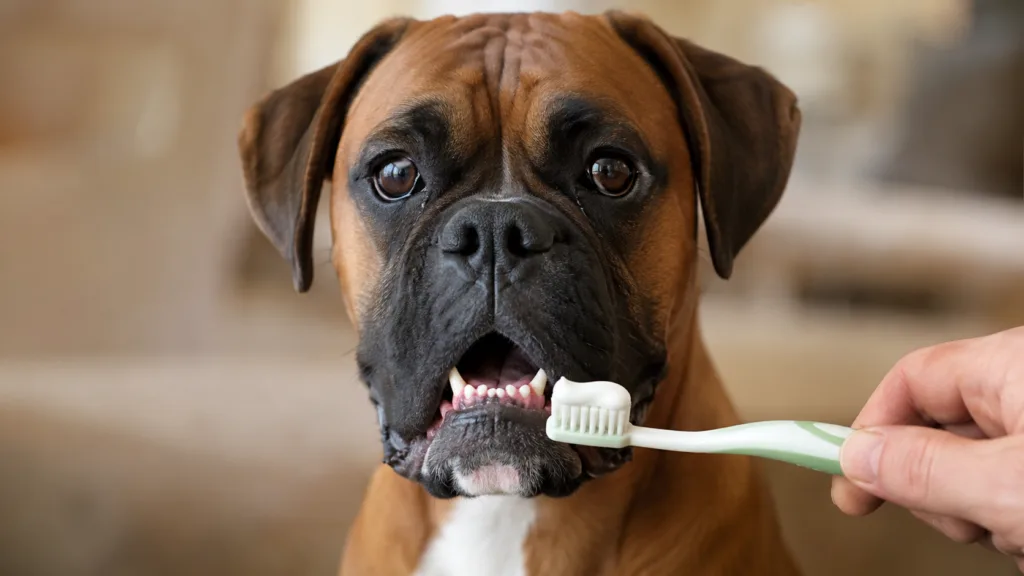
A dog that resists brushing gets no benefit from even the most advanced formula. Flavor exists specifically to solve that problem, turning a stressful routine into something closer to a treat.
Poultry-flavored toothpaste and malt-flavored toothpaste dominate the market for a reason: both mimic tastes dogs already associate with reward. Pairing the right dog toothpaste flavor with a gradual introduction, as described in a guide to make toothbrushing a fun routine, makes daily use realistic rather than a battle.
A soft-bristled dog toothbrush or a finger brush changes the outcome further, since texture matters almost as much as taste for a dog encountering the process for the first time.
Senior dogs need a gentler formula
Older dogs often have thinner gum tissue and pre-existing sensitivity, which makes an abrasive formula counterproductive. A gentler enzymatic paste, applied with a soft brush, protects without adding irritation to teeth that may already be compromised.
A twelve-year-old Cocker Spaniel with early gum recession, for example, benefits far more from a soft brush and a gentle formula than from a high-abrasion paste marketed toward younger dogs.
Age alone does not disqualify a dog from home dental care, but it does change the approach. The Magic Paws applies a 14-year age limit for its own mobile procedures, for comfort and safety during the appointment, a useful reference point even for owners managing brushing at home.
Watching for signs your pet might have dental problems becomes more important as a dog ages, since older mouths hide pain more effectively.
What can’t toothpaste do for your dog’s teeth?
Toothpaste, no matter how advanced, cannot remove tartar that has already mineralized below the gumline. Once plaque calcifies, it bonds to the tooth surface and forms a texture no brush can dislodge, regardless of the enzymatic system or flavor used.
According to the American Animal Hospital Association, at-home dental care reduces the rate of new plaque formation but does not substitute for professional removal of existing tartar, particularly in the subgingival space where periodontal disease actually begins.
This is the gap most owners misunderstand. A dog can be brushed every single day and still develop canine periodontal disease below the gumline, since brushing simply cannot reach that space.
Routine monitoring closes that gap. Scheduling regular dental check-ups for your pet catches early buildup before it progresses into something that requires more invasive treatment.
For owners who want the tartar physically removed without the added risk of general sedation, there is a specific option built around that exact need.
Anesthesia-free dog teeth cleaning reaches the areas brushing physically cannot access, closing the loop that toothpaste alone leaves open.
See if your dog qualifies for a mobile cleaning near you: dog teeth cleaning near me.
Should you pair toothpaste with professional cleaning?
Pairing toothpaste with professional cleaning gives a dog the most complete protection available. Daily brushing manages plaque as it forms, while professional dental cleaning addresses what has already hardened, and neither one replaces the other.
Only a veterinarian can determine which combination of home care and professional intervention fits a specific dog, based on age, breed, and the current state of the gums. What works for one animal’s routine may fall short for another.
Illana Reisner, founder of The Magic Paws, brings a background in human dentistry to how the service approaches preventive care, treating plaque control the same way a dental hygienist would treat a human patient: as a maintenance routine, not a one time fix.
The Magic Paws offers a mobile, anesthesia-free cleaning as a safer, more accessible alternative to sedation-based procedures, without replacing the value that cleaning under anesthesia provides in more advanced cases. Checking dog teeth cleaning near me shows availability across Florida.
The approach has held up at scale. The Magic Paws has applied this preventive philosophy across more than two thousand pets served throughout Florida, using a mobile model built specifically around comfort rather than convenience alone.
Beyond the cleaning itself, appointments also include the brand’s Senses Therapy protocol, designed to keep a dog calm throughout the visit without sedation.
See Magic Paws pricing across Florida and book your dog’s next cleaning. See pricing and book your dog’s next cleaning.
Frequently asked questions about dog toothpaste
Does a VOHC-accepted dog toothpaste mean you can skip professional cleaning?
No. The VOHC seal certifies that a product reduces plaque and tartar above the gumline under controlled testing. It does not mean tartar already mineralized below the gumline is removed, which is the specific gap professional cleaning addresses.
How often should you brush a dog’s teeth for dog toothpaste to actually work?
Daily brushing produces the most consistent results, since plaque begins calcifying into tartar within 48 to 72 hours. If daily is not realistic, brushing two to three times per week still meaningfully reduces buildup compared with occasional or inconsistent use.
Can you use baking soda instead of dog toothpaste?
Baking soda does not replace an enzymatic formulation designed for a dog’s mouth. It lacks the plaque targeting mechanism found in dog specific pastes, and swallowing it repeatedly can alter a dog’s gastric pH, which creates a separate digestive concern over time.
Why won’t some dogs accept dog toothpaste, even flavored ones?
Texture and unfamiliar handling around the mouth are usually the real obstacles, not the flavor itself. Introducing the paste gradually, letting a dog taste it from a finger before a brush touches its teeth, builds tolerance far more reliably than switching flavors repeatedly.
What happens if a dog swallows dog toothpaste?
Most dog toothpastes are formulated to be safely swallowed, since dogs cannot spit on command. Human toothpaste is different: its fluoride and potential xylitol content make accidental ingestion a genuine emergency, which is why the two should never be used interchangeably.
Do dogs need a special toothbrush to use dog toothpaste?
A finger brush works well for dogs that resist handling, while a soft-bristled dog toothbrush reaches tighter spaces along the back teeth. Either option works when paired with gradual introduction, and the choice of brush matters less than consistency over time.
How much does VOHC-accepted dog toothpaste typically cost compared to regular brands?
VOHC accepted formulas tend to sit at a premium over standard drugstore toothpaste, reflecting the cost of clinical testing behind the seal. Exact pricing varies by retailer, so checking the manufacturer’s current listing gives the most accurate figure for a specific product.
Can puppies use the same dog toothpaste as adult dogs?
Yes, in most cases, once a puppy’s permanent teeth have erupted. Introducing toothpaste earlier, before the transition from deciduous teeth completes, is unnecessary and can make a puppy less tolerant of brushing later, since the mouth is still changing rapidly.
What’s the difference between dog toothpaste and dental wipes or water additives?
Toothpaste requires mechanical brushing to work, wipes remove surface residue without a brush, and water additives work passively through drinking water. Each targets plaque differently, and none is inherently better, though brushing generally reaches more of the tooth surface.
How long does it take to see results from brushing with dog toothpaste?
Most owners notice fresher breath within one to two weeks of consistent brushing. Visible plaque reduction typically takes closer to a month, and the outcome depends far more on consistency than on which specific product is used.