
February arrives and most pet owners notice the promotional materials at their vet’s office, the social media posts from animal shelters, the word “dental” appearing everywhere. For many, the month passes without much action. Understanding what pet dental health month actually is, and why it was created, changes that.
Oral health is one of the most overlooked areas of routine pet care. Unlike limping or vomiting, dental disease develops without obvious symptoms for months, sometimes years. By the time an owner notices bad breath, difficulty chewing, or visible tartar, the condition has often already affected the gum tissue and supporting structures beneath the surface.
This article covers what the month is, when it takes place, why it was established, and what you can do, whether you have a dog, a cat, or both.
What is pet dental health month?
Pet dental health month is an annual campaign sponsored by the American Veterinary Medical Association (AVMA), held every February, to raise awareness about oral health in dogs and cats. The initiative encourages owners to schedule professional dental evaluations, establish home care routines, and recognize early signs of periodontal disease before they become serious.
The AVMA uses the month to publish resources for owners, support veterinary clinics with educational materials, and highlight the connection between oral hygiene and overall physical health. You can read more about the initiative directly on the AVMA’s official page for the event.
Beyond the official campaign, national pet dental health month has become a broader movement. Veterinary clinics, pet organizations, and animal shelters use February to offer discounted checkups, run awareness posts, and encourage first-time professional cleanings for animals that have never had one.

When is pet dental health month?
Pet dental health month takes place every February. The date does not change from year to year: every February is, officially, the month dedicated to pet oral health awareness.
The AVMA has sponsored this initiative since 1994, making it a tradition that is now more than 30 years old. February was selected in part because it falls early in the calendar year, when owners are often setting new routines and resolutions related to health, including the health of their animals.
The february pet dental health month timing also gives owners a natural anchor point. Scheduling a professional evaluation in February, before the busier spring and summer seasons, tends to result in better follow-through. It is a practical choice as much as it is a symbolic one.
Why does pet dental health month matter for your dog or cat?
Pet dental health month exists because periodontal disease is the most common health condition diagnosed in dogs and cats, and it is largely preventable. The month is not a marketing event. It reflects a real clinical gap between how often animals develop dental disease and how rarely owners recognize it in time.
According to the AVMA, approximately 80% of dogs and 70% of cats show evidence of periodontal disease before age three. These numbers are significant: they mean the average household dog or cat already has some degree of gum disease before most owners have even considered scheduling a dental appointment.
When plaque and tartar are allowed to build up below the gumline, the bacteria present can enter the bloodstream and affect organs including the heart, kidneys, and liver. A dental exam for pets is not a cosmetic step. It is part of responsible preventive care, the kind that extends your animal’s quality of life over time.
Delaying care is not neutral. Gingivitis, if caught early, is reversible. Left untreated, it progresses to periodontal disease, which causes permanent damage to the bone and tissue supporting each tooth. The February Dental Health Month Pets initiative exists precisely to interrupt that progression before it reaches the point of no return.
Among cats, tooth resorption is an additional concern, a condition in which the tooth structure breaks down from within. It is painful, common, and often invisible to owners without professional evaluation. Scheduling a checkup during pet dental health month is one of the most direct ways to catch it early.
See how a professional cleaning works without anesthesia.
How do you participate in pet dental health month?
Participating in pet dental health month starts with a single honest assessment: when was the last time your dog or cat had a professional dental evaluation? For many owners, the answer is never. For others, it has been years. February is the right moment to close that gap.
There are four concrete actions you can take during the month. First, assess the warning signs at home: look for bad breath, yellow or brown buildup on the teeth, red or swollen gums, drooling more than usual, or a reluctance to eat hard food. Any of these points to a condition that needs professional attention.
Second, schedule a professional cleaning. Home care alone, including brushing, cannot remove tartar that has already calcified below the gumline. For dog owners, a complete guide to dog teeth cleaning covers what the process involves and what to expect. Cat owners will find equivalent detail in the guide to cat teeth cleaning.
Third, start or reinforce a brushing routine. The Veterinary Oral Health Council (VOHC) maintains a list of approved products for plaque and tartar control in dogs and cats, from toothpastes to chews to rinses. VOHC-approved options have passed controlled studies confirming their effectiveness. You can review the full list at vohc.org.
Fourth, book the appointment before the month ends. February fills up quickly at clinics and mobile services that offer dental care. Committing to a specific date, rather than a general intention to “schedule soon,” is what separates owners who follow through from those who revisit the intention next February.
Does pet dental health month only apply to dogs?
No. Pet dental health month applies to all companion animals, with particular emphasis on dogs and cats, the two species most commonly affected by preventable periodontal disease. February is not a dog-only campaign, and the oral health risks it addresses are just as real for felines.
For dog owners, the month is a prompt to evaluate frequency. Most dogs benefit from professional cleaning at least once a year, combined with a consistent home care routine. Essential dog dental care covers the habits that make the most difference between appointments: daily brushing, VOHC-approved dental chews, and regular monitoring of the gum line.
For cat owners, the conversation is different in important ways. Cats are highly skilled at masking discomfort, which means dental disease in felines often goes undetected longer than in dogs.
Learning how to brush your cat’s teeth and building that habit from an early age significantly reduces the accumulation of plaque between professional sessions.
Cat dental chews and dental wash for cats are useful complements when brushing is not possible every day, though they do not replace the mechanical cleaning that a toothbrush provides.
Understanding how many teeth cats have helps owners grasp the full surface area that needs attention, and why professional evaluation is the only way to check beneath the gumline.
Both species accumulate plaque. Both develop tartar. Both face systemic complications when gum disease is ignored. The month applies equally to both.
Is professional dental cleaning part of pet dental health month?
Yes. The AVMA positions professional dental cleaning as a central recommendation during national pet dental health month, not an optional upgrade. Home care maintains what professional cleaning establishes. It does not replace it.
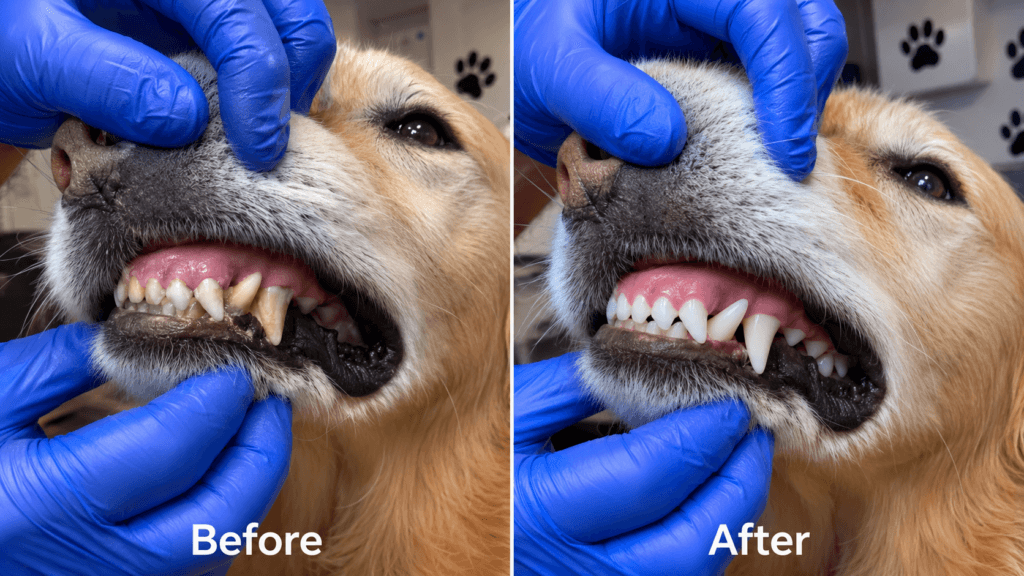
For owners who have avoided professional cleaning due to concerns about sedation, the anesthesia-free option provides a different path. Anesthesia-free dog teeth cleaning is a preventive maintenance approach designed for eligible animals: cooperative pets without advanced disease or existing cardiovascular conditions. It removes surface-level plaque and tartar, delivers a calm environment, and works as a consistent part of an annual care plan.
Understanding the risks associated with anesthesia in dental cleanings helps owners make informed decisions. For pets that qualify, the anesthesia-free route removes a significant barrier that has historically kept owners from scheduling care at all.
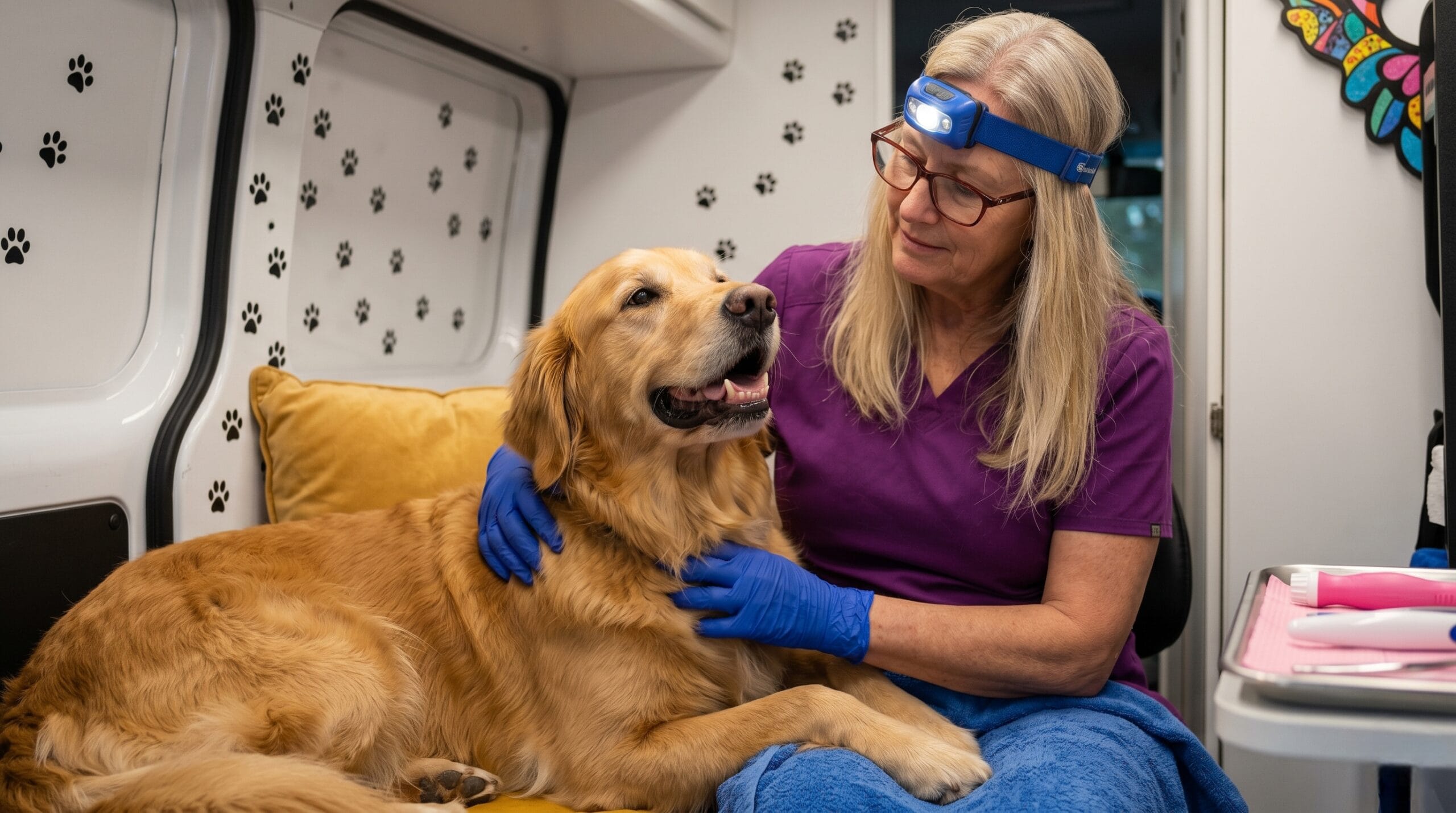
The Magic Paws provides professional anesthesia-free dental cleaning throughout Florida, including South Florida and Central Florida. The service comes to your address, removing the stress of clinic transport. A mobile dog dentist brings the full procedure to your neighborhood, which means your animal stays calm from the moment the appointment begins. If you are wondering what the session looks like in practice, the article on how long a dog dental cleaning takes walks through the timeline from arrival to completion.
What should you do after pet dental health month ends?
February ends. Dental disease does not.
The habits and appointments that start during pet dental health month only matter if they continue. A single professional cleaning, without follow-up care at home and a next appointment on the calendar, delivers short-term results at best. The owners whose animals maintain healthy gums year after year treat February as an anchor, not a finish line.
The recommended frequency for professional dental cleaning varies by animal. Most dogs benefit from annual cleaning, though breeds with crowded dentition may need more frequent care. Cats with a history of tooth resorption or early-stage gingivitis should also be evaluated more than once a year.
Between appointments, consistency matters more than intensity. Daily brushing, VOHC-approved products, and knowing the early signs of gum disease, including redness along the gumline and persistent bad breath, are the tools that keep your pet’s oral health from regressing between sessions.
February is a good month to start. Every other month is the right time to continue.
Pet dental health month is the right moment to act. Schedule an anesthesia-free dental cleaning for your dog or cat in Florida.
FAQ about pet dental health month
What is pet dental health month?
Pet dental health month is an annual awareness campaign sponsored by the American Veterinary Medical Association (AVMA), held every February. Its goal is to educate pet owners about oral hygiene for dogs and cats, encourage professional dental evaluations, and promote home care habits that prevent periodontal disease from progressing.
When is pet dental health month?
Pet dental health month takes place every February. The AVMA has sponsored the initiative since 1994, making it a continuous tradition for more than 30 years.
Who created national pet dental health month?
National pet dental health month was created and is officially sponsored by the American Veterinary Medical Association (AVMA), the leading organization for veterinary professionals in the United States. The AVMA coordinates resources, educational campaigns, and veterinary outreach every February in support of the initiative.
Is pet dental health month only for dogs?
No. The campaign covers all companion animals, with a strong focus on dogs and cats. Approximately 70% of cats show signs of periodontal disease before age three, making feline oral health just as important as canine care during the month.
Is pet dental health month the same as national pet dental health month?
Yes. Both names refer to the same event. The official designation is National Pet Dental Health Month, sponsored by the AVMA every February. The shorter name is commonly used in informal contexts but refers to the same campaign.
What does the AVMA recommend during pet dental health month?
The AVMA recommends a professional oral evaluation, a daily brushing routine using toothpaste formulated for animals, and awareness of early signs of periodontal disease such as red gums, bad breath, and tartar buildup. The organization also encourages owners to look for VOHC-approved dental care products.
Do veterinarians offer discounts during pet dental health month?
Many veterinary clinics and professional dental cleaning services offer special rates or promotions during February. The availability and terms vary by provider. Owners should contact their chosen service directly to confirm what is available during the month.
How long has pet dental health month been celebrated?
Since 1994, when the AVMA first officially sponsored the initiative. February 2026 marks more than 30 years of continuous national pet dental health month campaigns.
Is professional dental cleaning recommended during pet dental health month?
Yes. The AVMA includes professional cleaning as a core recommendation during the month. For pets that qualify, anesthesia-free dental cleaning is an option that removes the sedation barrier and allows more owners to move forward with preventive care.
Does pet dental health month happen every year?
Yes, every February. The oral care habits and professional appointments that pet dental health month encourages should be maintained throughout the year, not limited to February alone.