A pet dental cleaning without anesthesia is different from what happens under general sedation in a veterinary clinic. There’s no IV line, no fasting overnight, no groggy recovery on the couch. The animal is awake the entire time, and the session is built around keeping it calm and cooperative rather than chemically immobilized.
If your dog or cat has a cleaning scheduled and you’re not sure what the visit actually looks like, you’re not alone. Most owners have questions about what happens from the moment the appointment starts to the moment their pet is back in their arms. This article walks through the full experience so you can go in prepared and confident.
The procedure focuses on supragingival cleaning, which means removing plaque and tartar from the visible surfaces of the teeth. It’s a maintenance approach, and for pets that receive it regularly, it works to prevent the accumulation that eventually leads to periodontal disease, gum inflammation, and more serious dental problems down the line.
Understanding what to expect before, during, and after the visit helps you prepare your pet properly, and it helps you make sense of what the technician is doing at each stage. The sections below cover the full picture, from who qualifies to what happens right after the session ends.
What is a pet dental cleaning without anesthesia?
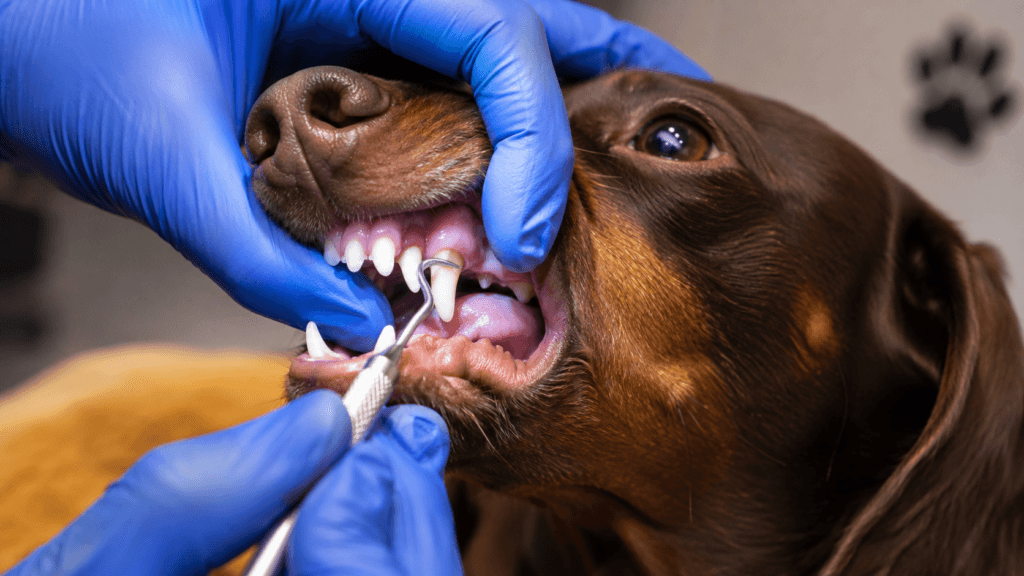
A pet dental cleaning without anesthesia is a professional oral hygiene procedure where a trained technician removes plaque and tartar from a dog’s or cat’s teeth using hand scalers, without any sedation or general anesthesia. The animal stays awake, and the session takes place in a calm, controlled environment designed to support cooperation.
The technique used is supragingival scaling, which means the work happens on the visible portion of the tooth, above the gum line. The American Veterinary Dental College (AVDC) defines supragingival scaling as the removal of calculus and deposits from the crown of the tooth, and this is precisely what hand scaling targets during a sedation-free session (https://avdc.org/avdc-nomenclature/).
For dogs specifically, owners looking for detail on the scope of the procedure can also read about no-anesthesia dog teeth cleaning to understand how the technique applies to canine dental anatomy. The same foundational approach is used for cats, with adjustments for feline behavior and smaller oral structure.
How anesthesia-free cleaning differs from traditional procedures
The two approaches serve different clinical purposes. Anesthesia-free cleaning is preventive maintenance. Traditional cleaning under general anesthesia is typically indicated for deeper intervention, including subgingival scaling, extractions, and advanced periodontal work.
| Feature | Anesthesia-free cleaning | Cleaning under anesthesia |
| Sedation | None | General anesthesia or heavy sedation |
| Fasting required | No | Yes, typically 8-12 hours |
| Area cleaned | Supragingival (above gum line) | Supragingival and subgingival |
| Recovery time | None: pet is immediately alert | Several hours, sometimes with groggy effects |
| Ideal candidates | Pets with mild to moderate tartar, cooperative behavior | Pets requiring extraction, deep cleaning, or X-rays |
| Session duration | 30 to 60 minutes | 1 to 3 hours |
| Risk of anesthesia complications | Absent | Present, varies by age and health status |
Both options have their place. The difference is in the clinical need. For pets that don’t require surgical intervention, the sedation-free approach offers effective dental calculus removal without the risks that come with putting an animal under.
Who is a good candidate for anesthesia-free dental cleaning?
Most dogs and cats with mild to moderate tartar buildup, manageable behavior, and no signs of advanced periodontal disease are good candidates for anesthesia-free dental cleaning. The technician assesses each animal before beginning, and the session only proceeds if the oral condition and temperament are compatible with the approach.
Good candidates typically share a few characteristics:
- Mild to moderate tartar and plaque accumulation on visible tooth surfaces
- No signs of severe gum recession, tooth mobility, or deep pockets requiring subgingival intervention
- Behavioral tolerance for gentle handling, even if the animal needs time to settle
- No active infection that would require immediate veterinary attention
- Senior pets with anesthesia contraindications who still need regular oral maintenance
For dogs, more detail on the scope and approach is available through dog teeth cleaning content that covers the basics owners should know. For feline owners, the same considerations apply: read about cat teeth cleaning to understand how the protocol adapts for cats.
When anesthesia-free cleaning may not be the right fit
Some oral conditions are outside the scope of what sedation-free scaling can address. When advanced periodontal disease is present, including deep pockets, significant bone loss, or teeth that need extraction, the cleaning becomes a veterinary procedure rather than a hygiene visit.
Pets that display extreme stress, sustained aggressive behavior, or conditions that make safe restraint impossible also fall outside the scope of the anesthesia-free protocol. A responsible technician will identify these situations during the initial oral evaluation and refer the owner to a veterinarian rather than proceeding with an unsuitable case.
The goal is not to push every pet through the session regardless of condition. The goal is to serve the animals that benefit from this approach and protect the ones that require a different level of care.
Why do pet owners choose cleaning without anesthesia?
Pet owners select anesthesia-free dental cleaning primarily because it removes the metabolic risks associated with sedation while still delivering meaningful oral hygiene maintenance. No sedation means no intubation, no anesthesia monitoring, no post-procedure grogginess, and no recovery waiting period. The animal goes home the same way it arrived: awake, alert, and calm.
According to VCA Animal Hospitals, periodontal disease affects the majority of dogs and cats by age three, making routine oral care a genuine health priority rather than an optional extra (https://vcahospitals.com/know-your-pet/dental-disease-in-dogs). For owners who want to stay ahead of that progression without subjecting their animal to unnecessary sedation, the anesthesia-free route is a practical option.
Some animals are also poor candidates for general anesthesia due to age, heart conditions, respiratory issues, or organ function concerns. For these pets, sedation-free cleaning isn’t just a preference; it’s often the only viable maintenance path. If you’ve ever wondered about the risks associated with anesthesia in dogs, that article covers what owners of aging or health-compromised pets should understand.
Cost is a factor for many families as well. Anesthesia-free sessions are generally more affordable than full veterinary dental procedures, which makes regular maintenance more realistic over the long term.
How do you prepare your pet for an anesthesia-free dental cleaning?
Preparing your dog or cat for an anesthesia-free dental cleaning is straightforward. Because there’s no sedation involved, the requirements are minimal compared to a procedure under general anesthesia.
1. Skip fasting. No food or water restrictions are needed. Your animal can eat normally before the appointment.
2. Avoid brushing right before the session. Let the technician assess the current state of the teeth without disruption.
3. Keep the morning calm. Avoid high-energy play or stressful situations in the hour before the visit. A calm animal is easier to work with.
4. Bring any health records if requested. Some services ask for a brief health history, especially for senior pets or animals with known conditions.
5. Leash your dog or secure your cat in a carrier. Arrival control reduces stress from the first moment.
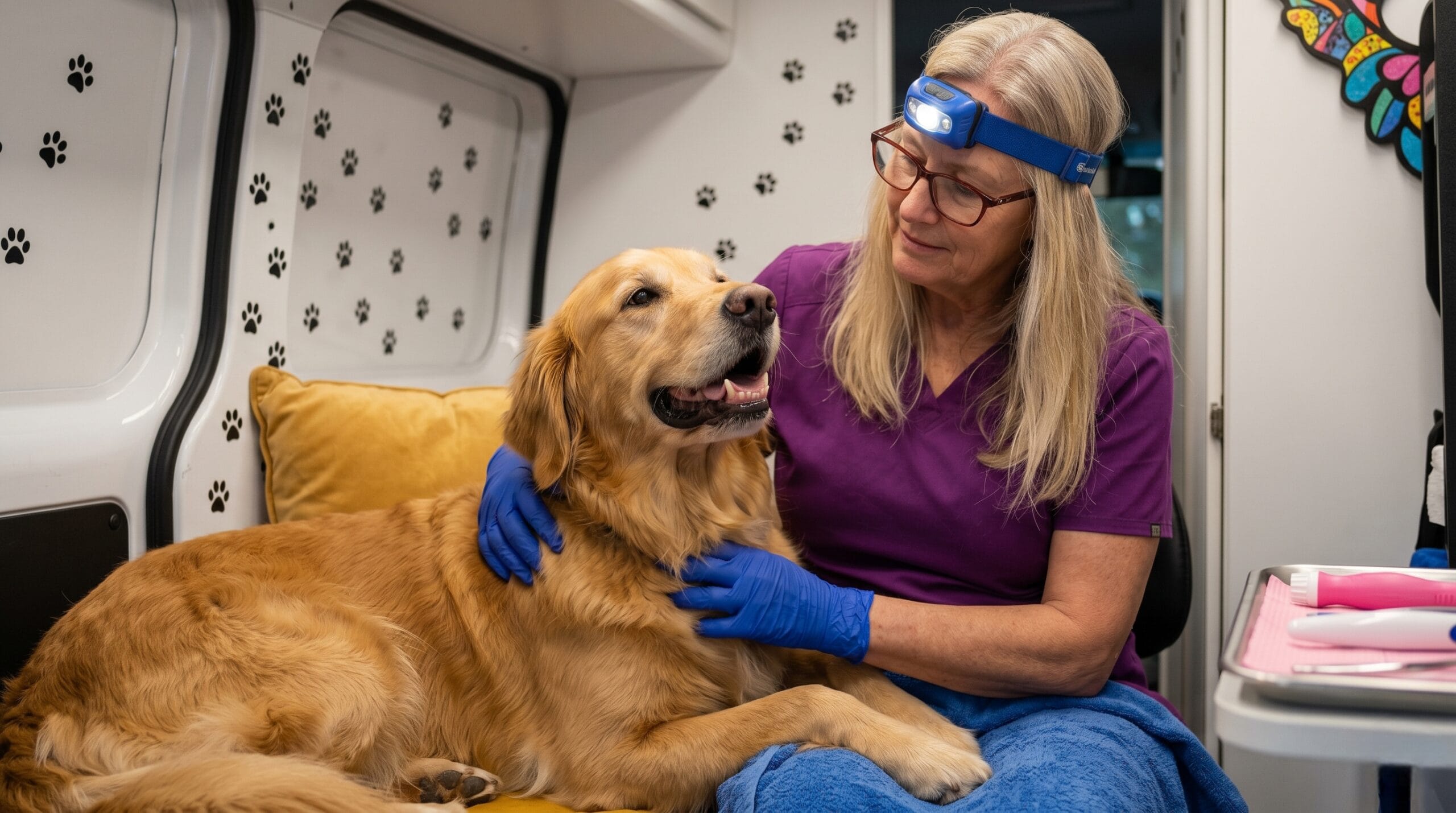
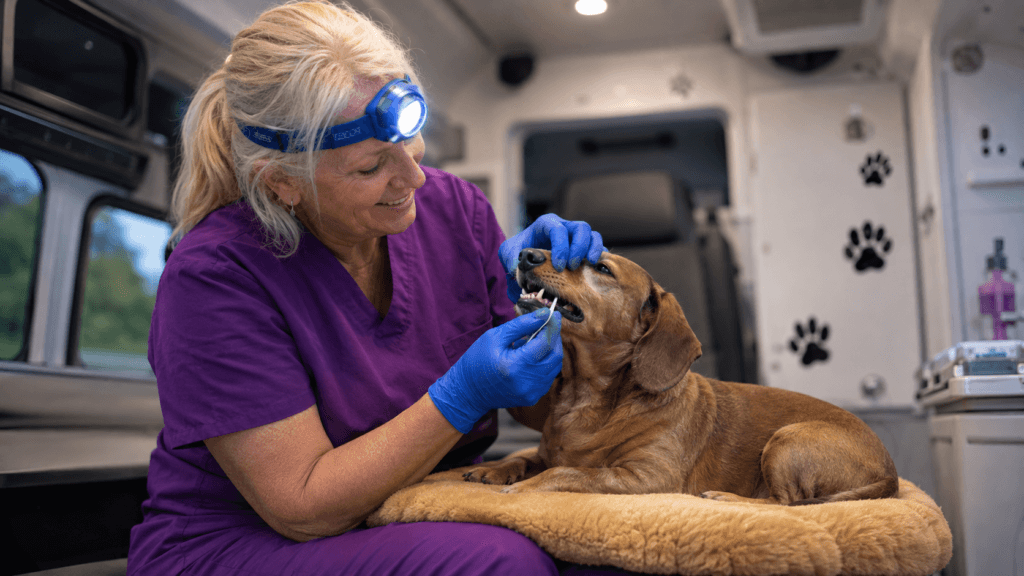
If you’re using a mobile dog dentist service, there’s an additional benefit: your pet doesn’t travel to an unfamiliar facility. The technician comes to your location, which eliminates a major source of pre-appointment anxiety for many animals. A detailed how to prepare your dog for dental cleaning checklist is also available for owners who want a step-by-step guide before the visit.
Schedule your pet’s anesthesia-free dental cleaning in South Florida or Central Florida.
What happens during a pet dental cleaning without anesthesia?
During an anesthesia-free dental cleaning, the technician works through a structured sequence: an oral evaluation, controlled positioning of the animal, systematic scaling of each tooth, and a final polish. The entire session runs between 30 and 60 minutes, depending on the level of tartar accumulation and how the pet responds.
The steps below describe what the technician does and what your animal experiences at each stage. For more detail on the evaluation component, see dental exam for pets. If you want to understand how long a dog dental cleaning takes based on different scenarios, that breakdown covers the variables that affect session length.
Step 1: Oral evaluation
Before any instrument touches the teeth, the technician examines the oral cavity. They check for signs of infection, loose teeth, gum recession, and anything that would indicate the animal needs a veterinary referral rather than a hygiene session.
Step 2: Positioning and calm restraint
The animal is settled into a comfortable position using gentle hold techniques. For dogs, this usually means lying on their side or resting with their head supported. For cats, a secure wrap position often works well.
Step 3: Hand scaling
The technician uses manual scalers to remove tartar deposits from each tooth systematically. They work from the visible crown surface, addressing each tooth before moving to the next.
Step 4: Tooth polishing
After scaling, the surfaces are polished to smooth the enamel and slow future plaque adhesion. This step also helps the owner see the difference immediately.
Step 5: Post-cleaning assessment
The technician notes any areas of concern and provides the owner with observations about the animal’s oral health and recommended follow-up frequency.
How does Senses Therapy support your pet during the cleaning?
Senses Therapy is the proprietary protocol developed by The Magic Paws to support pet behavior during the anesthesia-free dental cleaning session. It combines four sensory elements: aromatherapy, music therapy, chromotherapy, and massage. Each component acts on a different aspect of the animal’s stress response to create a calming environment before and during the procedure.
Aromatherapy
Lavender-based essential oils are used to create a scent environment that supports relaxation in the nervous system. Olfactory stimulation through calming compounds has a measurable effect on anxiety markers in animals, helping dogs and cats enter a lower-stress state before the technician begins working on the teeth.
Music therapy
Soft, rhythmic sound is played at a consistent low volume throughout the session. Sound stimuli at specific frequencies reduce cortisol responses in animals and lower vigilance behavior, which means fewer sudden movements and a more cooperative experience for both the pet and the technician.
Chromotherapy
Colored lighting, particularly in the purple spectrum, is used to create a visually calming atmosphere inside the treatment space. Chromatic stimulation influences mood regulation in mammals, and the controlled lighting environment helps reduce the alerting response that many animals show in unfamiliar settings.
Massage
Before and during the cleaning, targeted pressure is applied to specific relaxation points on the animal’s body. This structured touch activates the parasympathetic nervous system response, reducing tension in the muscles and lowering the heart rate, which directly supports compliance during the oral hygiene procedure.
What should you expect after the procedure?
After an anesthesia-free dental cleaning, your pet should be fully alert and behaving normally within minutes of the session ending. There is no recovery period, no grogginess, and no special diet required for the rest of the day. Most dogs and cats are ready to eat, drink, and play as soon as they leave the session.
Mild gum sensitivity on the day of the cleaning is normal, particularly for animals with heavier tartar accumulation. This typically resolves within 24 hours. If sensitivity persists beyond that or you notice unusual swelling, consult your veterinarian.
The absence of sedation means the animal doesn’t go through the metabolic stress of being put under and brought back, which is one of the main advantages of this type of oral care. You can read more about ongoing maintenance options through the dog dental cleaning service page if you’re thinking about scheduling regularly.
Is it time to schedule your pet’s anesthesia-free dental cleaning?
For most dogs and cats in good general health with mild to moderate tartar buildup, every six months is the standard maintenance interval for anesthesia-free cleaning. Some animals, particularly those prone to rapid plaque accumulation or with a history of gum sensitivity, benefit from quarterly visits.
If your pet hasn’t had a professional oral hygiene session in over a year, or if you’ve noticed changes in breath odor, visible tartar on the molars, or reluctance to chew. Those are practical signals that a cleaning is overdue.
If you’re looking for dog teeth cleaning near you in Florida, scheduling through The Magic Paws connects you with a dental technician who comes directly to your location.
Book your pet’s anesthesia-free dental cleaning with The Magic Paws. Schedule your appointment here.
FAQ about pet dental cleaning without anesthesia
Does my pet need to fast before an anesthesia-free dental cleaning?
No fasting is required before an anesthesia-free dental cleaning. Because no sedation or general anesthesia is used, there is no risk of aspiration during the procedure. Your dog or cat can eat and drink normally before the appointment.
How long does a pet dental cleaning without anesthesia take?
Most sessions run between 30 and 60 minutes. The exact duration depends on the amount of tartar buildup and how the individual animal responds to the procedure. After the session, the pet goes home immediately with no waiting period.
Is anesthesia-free dental cleaning safe for senior pets?
Yes, and it is particularly well-suited for older animals. Senior dogs and cats often carry cardiovascular, respiratory, or organ-related conditions that make general anesthesia higher risk. The absence of sedation eliminates those metabolic risks entirely, making this approach a practical maintenance option for aging pets.
Can cats get an anesthesia-free dental cleaning?
Yes. The protocol adapts to feline behavior and anatomy. Cats tend to require a different approach to positioning and handling than dogs, but the core procedure, scaling, polishing, and oral evaluation, applies to both species.
Will my pet be stressed during the procedure?
It depends on the calming protocol in place. Environments structured with sensory stimuli, including specific scents, sounds, lighting, and tactile input, significantly reduce stress responses in dogs and cats during dental procedures. Animals that receive this kind of environmental support are generally more cooperative and relaxed throughout the session.
How often should I schedule an anesthesia-free dental cleaning for my pet?
Every six months is the standard recommendation for maintenance. Pets that accumulate tartar quickly or have a history of gum sensitivity may benefit from more frequent visits. Your technician can advise on the right interval based on what they observe during the session.
What does a pet dental cleaning without anesthesia actually remove?
Anesthesia-free cleaning removes supragingival plaque and dental calculus, meaning deposits located above the gum line on the visible surface of the teeth. It does not reach subgingival areas, which are the spaces below the gum line. For pets with deep pockets or subgingival disease, a veterinary procedure under anesthesia is the appropriate next step.
Does the pet need any medication before or after the cleaning?
No medications are part of the anesthesia-free procedure, either before or after. The session does not involve sedation, and routine post-procedure medication is not required. If your veterinarian has prescribed something for an existing condition, follow their instructions independently of the cleaning schedule.
How do I know if my pet is a good candidate for anesthesia-free cleaning?
Dogs and cats with mild to moderate tartar, cooperative or manageable behavior, and no signs of advanced periodontal disease are typically good candidates. If you’re unsure, an evaluation before booking is the best way to confirm. Technicians who follow a responsible protocol will assess eligibility before starting rather than applying the procedure indiscriminately.
How do I schedule a pet dental cleaning without anesthesia in Florida?
The Magic Paws offers anesthesia-free dental cleaning for dogs and cats across Florida, including South Florida and Central Florida. Scheduling is available directly through the website. The technician comes to your home, eliminating the need to transport your pet to a clinic.