What goes into your pet’s bowl affects more than digestion. Certain foods accelerate plaque formation, others slow it down, and a specific category of pet food to prevent tartar buildup has the clinical evidence to back that claim. Most pet owners have no idea the distinction exists.
Tartar is not a cosmetic problem. Once dental calculus hardens on the tooth surface, it creates a rough environment where bacteria thrive, gum inflammation sets in, and periodontal disease begins. By the time bad breath becomes noticeable, the damage is already underway.
The frustrating part is that most of the information circulating about diet and oral health is oversimplified. “Dry food cleans teeth” is one of the most repeated myths in pet care, and it is not accurate. Understanding what actually works, and what only seems to, changes how you approach your companion’s daily feeding routine.
This article covers the full picture: how tartar forms, what different food types do to slow or accelerate the process, where the science is solid, and where diet alone reaches its limit.
How does tartar actually form in your pet’s mouth?
Tartar forms when plaque, the soft bacterial film that coats tooth surfaces after eating, is left undisturbed long enough to absorb calcium and phosphate from saliva and harden into dental calculus. This mineralization happens within 24 to 72 hours, according to information published by VCA Animal Hospitals.
Once calculus hardens, no food, treat, or chew can remove it. The surface becomes porous and rough, making it easier for new layers of oral biofilm to attach and accelerate accumulation. That is when subgingival bacteria begin migrating below the gumline, which is where periodontal disease develops and where diet has no reach at all.
The distinction between plaque and tartar matters because it defines what food can and cannot do. Diet can reduce the speed at which plaque accumulates above the gumline. It cannot reverse what has already hardened, and it cannot access the periodontal pockets where the real damage happens.
Why plaque mineralizes faster in some pets than others
The speed of mineralization depends on biology, not just diet. Mouth pH, saliva composition, and how frequently brushing disrupts the oral biofilm all influence how quickly plaque becomes tartar.
Pets with more alkaline saliva tend to mineralize plaque faster than others. Systemic health conditions, including kidney disease and some metabolic disorders, can also alter saliva chemistry. In those cases, even an excellent diet produces only limited results because the environment inside the mouth accelerates calculus formation regardless of what the animal eats.
This is why two dogs on the same food can have very different dental outcomes. The food is one variable. The biology is another.
Does the type of food your pet eats affect tartar buildup?
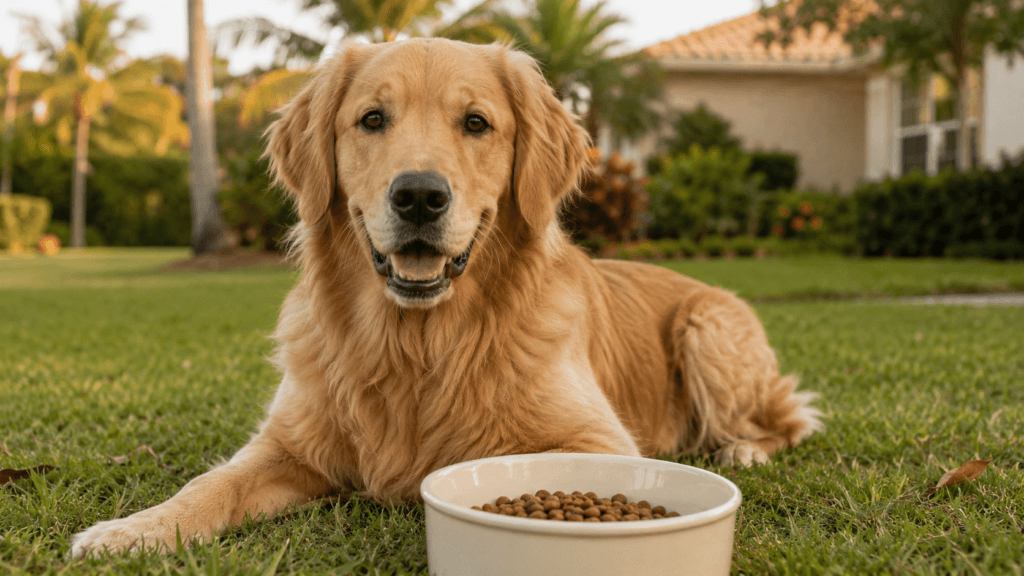
Yes, and the difference between food types is significant. The effect on tartar accumulation varies by formulation, species, and how the animal chews. Not all dry food is equivalent, and wet food is neither the villain it is often made out to be nor a protective tool.
The table below compares the four most common food categories based on available evidence:
| Food type | Effect on tartar accumulation |
| Regular kibble (standard) | Minimal to no protective effect. Shatters on contact without meaningful abrasion |
| VOHC-approved dental diet | Clinically proven reduction in plaque and tartar accumulation |
| Raw diet (raw meaty bones) | Real abrasive and enzymatic benefits; depends on chewing behavior |
| Wet food | Does not increase tartar risk; provides no mechanical plaque removal |
The most important thing to take from this table: regular kibble and dental kibble are not the same product. Treating them as equivalent is one of the most common mistakes in everyday pet care.
Kibble, raw diet, and wet food: what the evidence says
Standard dry food does not clean teeth. The claim that kibble has a scrubbing effect assumes the pet chews each piece deliberately and fully, which rarely happens. Most dogs swallow small pieces without meaningful contact between the kibble and the tooth surface. For cats, the situation is worse: felines frequently swallow kibble whole, eliminating any possible abrasive effect entirely.
A VOHC-approved dental diet is a different product. The kibble size, shape, and internal fiber matrix are specifically engineered to allow the tooth to penetrate the piece before it shatters, creating actual abrasion along the crown. Some formulations also include sodium hexametaphosphate, a compound that binds calcium in saliva and reduces how much is available for plaque mineralization.
Raw diets offer real mechanical benefits through chewing on raw meaty bones, and the enzymatic action present in unprocessed protein contributes to oral biofilm disruption. The benefit is genuine but depends heavily on how the animal interacts with the food. Pets that gulp instead of chew receive far less protective effect. Owners considering a raw diet should also account for bacterial safety protocols, especially in households with immunocompromised individuals.
Wet food does not increase tartar risk in any meaningful way. The absence of a scrubbing effect does not mean it causes more tartar: plaque accumulates after every meal regardless of texture. Many cats, in particular, benefit from the hydration that wet food provides, and there is no clinical reason to avoid it for dental health reasons alone. Dental chews can serve as a practical complement in a wet-food routine, and understanding how dog dental chews fit into the preventive picture is worth the read.
What is a VOHC-approved dental diet and does it work?
A VOHC-approved dental diet is a pet food that has passed independent clinical trials demonstrating a measurable reduction in plaque or tartar accumulation. The Veterinary Oral Health Council (VOHC) awards its seal only to products that submit data from controlled studies meeting its standards. It is the most reliable filter available when choosing dental food.
The seal is not given for formulation claims or packaging language. It requires submitted trial data showing a statistically significant reduction compared to a control group. This makes it meaningfully different from the broader category of “dental” kibble, which may carry no independent validation at all.
Brands that carry the VOHC seal in the dental diet category include Hill’s Prescription Diet t/d, Royal Canin Dental, and Purina Pro Plan Veterinary Diets DH. These are not interchangeable with their standard lines and are usually available through veterinary clinics.
Even pets on a VOHC-approved diet benefit from periodic dog teeth cleaning to address what dietary abrasion cannot reach. If you want to understand how much time that involves, a straightforward overview of how long a dog dental cleaning takes makes the planning easier.
Does pet food actually prevent tartar buildup, or just slow it down?
Diet slows tartar accumulation above the gumline. It does not prevent it, and it does not reach the subgingival area where periodontal disease originates. No food, regardless of its formulation, has mechanical access to the periodontal pockets where the most damaging bacterial colonies develop.
This matters because most pet owners expect diet to function as a standalone solution. It is not. The value of food choices for pet oral health is real, but it belongs in a preventive hierarchy alongside brushing and professional cleaning, not as a replacement for either.
Owners who have already heard about no anesthesia dog teeth cleaning understand that professional care does not have to mean sedation. For those who have hesitated because of concerns about risks associated with anesthesia in dental cleanings, the anesthesia-free option changes the calculation entirely.
See how anesthesia-free cleaning works for dogs and cats in Florida.
Which pets are most at risk even with a good diet?
Some pets accumulate tartar at a significantly faster rate than others regardless of diet quality. Breed structure, tooth alignment, and individual salivary chemistry all influence how quickly plaque mineralizes, making a dental exam for pets especially important for these profiles.
Pets with crowded mouths, irregular spacing, or elevated saliva alkalinity tend to accumulate dental calculus faster than average. Diet alone, even a VOHC-approved one, cannot compensate for structural factors that accelerate plaque retention.
Small breeds and brachycephalic dogs: when diet alone is not enough
Small breeds and brachycephalic dogs, including French Bulldogs, Bulldogs, and Pugs, have disproportionately crowded teeth relative to jaw size. This creates spaces where plaque accumulates and is harder to disrupt mechanically, whether by food, chew, or brushing. The food contact is also reduced because of the irregular angles between teeth.
For these profiles, diet is a useful tool but not a sufficient one. Professional cleaning reaches the areas that kibble texture and chewing mechanics cannot access. A mobile dog dentist can provide that care without requiring the animal to travel to a clinical environment, which is important especially for brachycephalic breeds that are more sensitive to stress and temperature.
Cats and tartar: why felines are a special case
Cats develop tartar regardless of diet, and at a rate that surprises many owners. The primary reason is that cats often swallow kibble whole: without the chewing action that drives any abrasive benefit, even dental-formulated dry food produces little mechanical effect. The tooth never contacts the piece long enough to matter.
Felines also have a natural predisposition to dental calculus accumulation driven by their salivary composition and tooth morphology, independent of what they eat. Food choices for cat oral health remain relevant, but the gap between diet and professional cleaning is wider for cats than for most dog breeds. Dedicated cat teeth cleaning addresses what food cannot, and cat dental cleaning services are available throughout Florida for owners who want consistent preventive care.
How do you build a routine that actually protects your pet’s teeth?
The most effective approach combines three layers: a diet that reduces plaque accumulation, daily or near-daily brushing to disrupt oral biofilm before it mineralizes, and periodic professional cleaning to address subgingival tartar. Each layer does something the others cannot.
Diet is the foundational layer. Choosing a VOHC-approved dental diet or a raw diet with appropriate chewing behavior reduces how quickly plaque builds up. That extends the interval between cleanings without replacing them.
Brushing is the most powerful home-care tool available. Done consistently, it interrupts plaque formation before it mineralizes. Even three to four times per week produces measurably better outcomes than diet alone.
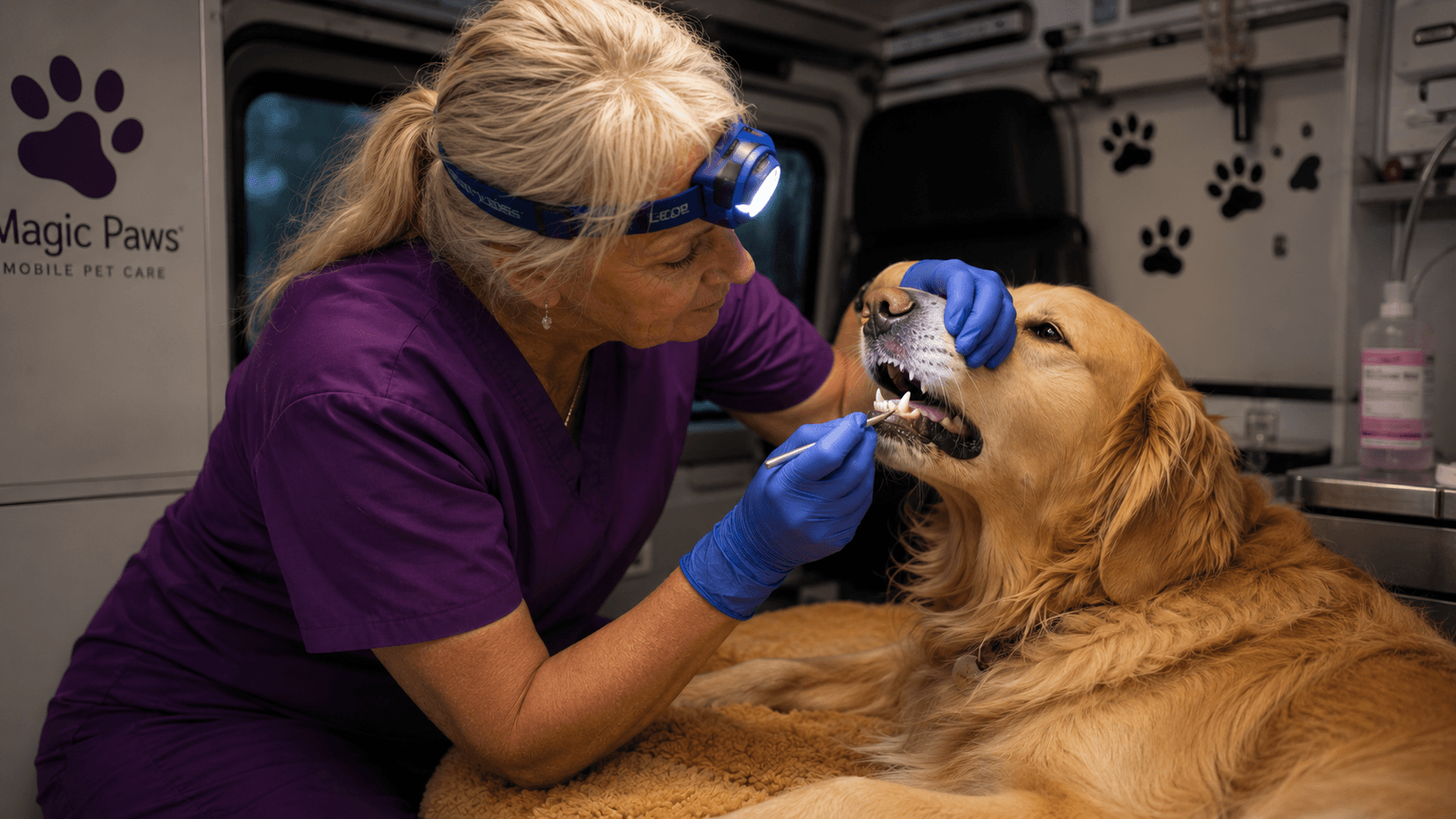
Professional cleaning removes the calculus that has already hardened, reaches the periodontal pockets that food and brushing cannot access, and resets the surface so the rest of the routine can work effectively. The Magic Paws provides anesthesia-free dog dental cleaning and cat dental cleaning throughout Florida, making professional preventive care accessible without the risks or logistics of anesthesia-based procedures.
Your pet’s diet is doing its part. Now let a professional do the rest. Book your session at The Magic Paws.
What every pet owner should know before changing their pet’s diet
The connection between food and oral health is real, but it is easy to overestimate what diet alone can accomplish. The best pet food to prevent tartar buildup reduces the speed of accumulation. It does not stop it, and it does not substitute for professional care.
If you are considering switching to a dental diet, look for the VOHC seal. Packaging language about “oral health” or “dental formula” means nothing without independent validation. The seal is the only marker that reflects actual clinical evidence.
If you have a brachycephalic dog, a small breed, or a cat, the structural and biological factors that accelerate tartar in those profiles require more than a food change. Build the routine around those realities, not around the assumption that the right bowl will solve the problem.
The owners who see the best long-term results are the ones who treat diet, brushing, and professional cleaning as a complete system rather than alternatives to each other. A mobile dog dentist that comes to your door removes one of the biggest barriers to consistent professional care, particularly for pets that are anxious or owners whose schedules make clinic visits difficult.
Tartar prevention starts at the bowl. But it does not end there.
Frequently asked questions about pet food to prevent tartar buildup
What is the best pet food to prevent tartar buildup in dogs?
VOHC-approved dental diets are the best-documented option. Hill’s Prescription Diet t/d, Royal Canin Dental, and Purina Pro Plan Veterinary Diets DH all carry the VOHC seal and have clinical evidence supporting their effectiveness. No diet replaces professional cleaning, but these formulations meaningfully reduce plaque accumulation between sessions.
Does dry food actually clean a dog’s teeth?
Standard dry food does not clean teeth in any meaningful way. The claim assumes deliberate, prolonged chewing contact that most dogs do not provide. Only dental diets specifically formulated and clinically validated for that purpose have proven results. Regular kibble and dental kibble are different products with very different outcomes.
Can wet food cause more tartar buildup in cats and dogs?
Wet food does not directly cause tartar. The absence of a scrubbing effect does not translate into higher accumulation: plaque forms after every meal regardless of texture. Cats, in particular, benefit from wet food’s hydration, and there is no clinical reason to eliminate it for dental health purposes.
What ingredients in pet food help reduce tartar?
Sodium hexametaphosphate reduces the calcium available for plaque mineralization. Abrasive fiber matrices in dental kibble create mechanical contact during chewing. Enzymes present in raw diets disrupt oral biofilm. The VOHC seal is the most reliable guide for identifying which products actually deliver these effects at a validated level.
Is raw diet better for pet dental health than kibble?
Raw diets offer genuine abrasive and enzymatic benefits, provided the animal actually chews rather than gulps. The advantage is real but not absolute: brachycephalic breeds and cats may not chew in a way that maximizes those benefits. Raw diet is a useful complement to the preventive routine, not a complete replacement for professional cleaning.
How often should a pet on a dental diet still get a professional cleaning?
Even pets eating a VOHC-approved dental diet accumulate subgingival tartar over time. Professional cleaning remains necessary because no food reaches the periodontal pockets. Frequency varies by breed, size, dental history, and individual salivary chemistry. Most pets benefit from annual or biannual professional care regardless of diet quality.
Can diet alone prevent periodontal disease in pets?
No. Diet can reduce supragingival plaque accumulation, but periodontal disease develops in the subgingival area where no food has access. Oral biofilm in the periodontal pockets is the primary driver of tissue loss, bone deterioration, and systemic bacterial spread. Diet is a useful preventive tool, but it cannot substitute for professional cleaning in preventing periodontal disease.
Why do cats still develop tartar even when eating dry food?
Cats frequently swallow dry food whole, removing any possible abrasive effect. They also have a natural predisposition to dental calculus accumulation regardless of diet, driven by their salivary composition and tooth morphology. Dry food provides no meaningful protection for most cats, making professional dental care especially important in feline routines.
Do small breeds and brachycephalic dogs need more than a dental diet to control tartar?
Yes. Irregular tooth alignment and crowding in small breeds and brachycephalic profiles create conditions where plaque accumulates in areas that food and chewing mechanics cannot reach. Even the best dental diet leaves these areas exposed. Professional periodic cleaning is particularly important for these breeds.
Does The Magic Paws offer anesthesia-free cleaning for pets on dental diets?
Yes. The service is designed to complement any preventive routine, including pets already eating a dental diet. Anesthesia-free cleaning removes the subgingival tartar and periodontal pocket accumulation that no food can reach. The Magic Paws serves dogs and cats throughout Florida, with no sedation required.