Most dog and cat owners associate pet dental care with the toothbrush they bought and rarely use. They know it matters. They just don’t always know what it actually looks like when done right or who should be doing it.
The gap between occasional at-home brushing and real professional dental care is wider than most people realize. And the gap between a certified technician and a licensed dentist performing that professional cleaning is wider still. Both of these distinctions have consequences for the animal in the chair and for the owner who trusts the person holding the instruments.
In Florida, where The Magic Paws serves dogs and cats across the state, owners are increasingly asking better questions before they book. They want to know what professional pet dental care actually covers. They wish to know what warning signs to watch for.
And they intend to know whether the person visiting their home has the background to make responsible decisions during the procedure.
This article covers all of that, from the basics of what a complete dental session includes to what credentials to look for and how anesthesia-free cleaning fits into a long-term oral health plan.
What does professional pet dental care actually include?
Professional pet dental care covers the removal of plaque and tartar from both the visible tooth surface and the area below the gumline, combined with a full oral exam and a polishing step that slows future accumulation. It is not a cosmetic procedure. It is a health evaluation with a cleaning component.
Home brushing removes soft plaque from surfaces the brush can reach. Professional cleaning goes further, accessing the subgingival zone where bacteria accumulate and where periodontal disease begins. Without periodic professional intervention, that buildup progresses silently.
A complete session for dogs also covers what brushing alone cannot address: the inspection of gum tissue for recession or inflammation, checking tooth stability, and identifying areas that may require veterinary follow-up.
For cats, the same logic applies, though certain breeds carry a higher risk for conditions like tooth resorption that require a trained eye to catch early. Understanding what goes into a thorough dog teeth cleaning or a proper cat teeth cleaning session makes it easier to evaluate whether a provider is actually delivering that level of care.
The components of a professional pet dental cleaning typically include:
- Supragingival scaling: removal of tartar and calculus visible above the gumline
- Subgingival cleaning: accessing the pocket between the tooth and the gum, where bacteria collect
- Dental prophylaxis: the full preventive cleaning sequence, not just surface polishing
- Oral exam: assessment of gum health, tooth surface integrity, and any signs of dental disease
- Polishing: smoothing the enamel surface to reduce how quickly new plaque adheres
The difference between home care and professional cleaning
Daily brushing at home is valuable, and owners who do it consistently see fewer complications over time. But brushing does not reach the subgingival zone. It cannot remove hardened tartar. And it cannot provide the oral exam component that catches early signs of gum disease before they become something a veterinarian needs to treat.
The two practices are complementary, not interchangeable. Professional dental care addresses what home routines cannot, and home routines reduce how quickly the professional work undoes itself between sessions. Neither one eliminates the need for the other.
What are the signs that your pet requires dental attention?
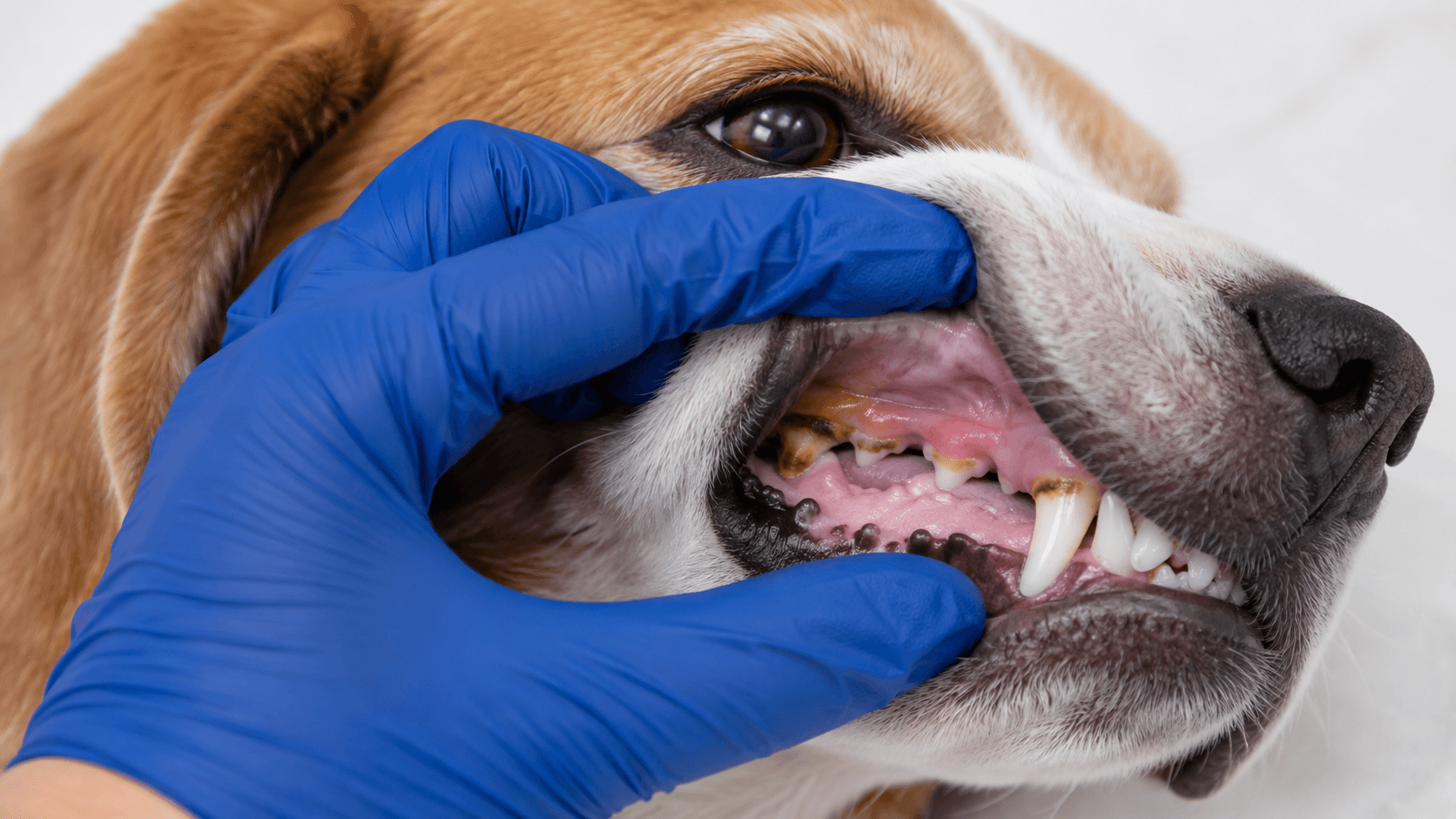
The most common signs that a dog or cat needs professional dental attention are persistent bad breath, reddened or swollen gums, visible yellow or brown buildup on the teeth, difficulty chewing, and unexplained changes in eating behavior. Any one of these is a reason to schedule a dental exam.
Bad breath in pets is often dismissed as normal. It is not. Odor that persists beyond a few hours after eating indicates bacterial activity in the mouth, and that activity frequently points to plaque accumulation, gum inflammation, or early periodontal disease. The AVMA notes that periodontal disease is among the most common clinical conditions seen in adult dogs and cats, with signs appearing in many animals before the age of three, according to their pet dental care resources.
Scheduling a dental exam for pets at the first sign of these changes gives a professional the chance to assess what stage the problem is at. Whether home care adjustments or a full cleaning session is the appropriate next step.
The most common signs to watch for include:
- Persistent bad breath (halitosis) that does not resolve between meals
- Red, swollen, or bleeding gums, which may indicate gingivitis or early gum disease
- Visible plaque or tartar on the tooth surface, especially near the gumline
- Chewing on one side, dropping food, or showing hesitation around the bowl
- Rubbing the face against furniture or pawing at the mouth
- Behavioral shifts like increased irritability or reduced interest in play
When signs are subtle: what most owners miss
Not every signal is visible. Changes in chewing pattern are easy to miss unless owners are watching for them. A dog that shifts to eating primarily on one side, or a cat that suddenly loses interest in harder kibble, may be compensating for oral discomfort without showing any outward distress.
Animals are particularly good at masking pain. What looks like a preference for softer food or a reduced interest in chew toys may actually be a response to sensitivity or inflammation that has been developing for months. Absence of visible plaque or obvious bad breath does not mean the mouth is healthy. It means the problem has not yet reached the surface.
What should you look for in a pet dental care provider?
When choosing who performs your pet’s dental cleaning, the key criteria are the executor’s formal background, the protocol they follow during the session, and whether they conduct a pre-procedure evaluation to determine if the animal is a suitable candidate. These are not secondary considerations. They define the quality and safety of what happens during the appointment.
Most providers operating in the pet dental space have some form of training, but the depth of that training varies considerably. Some are technicians certified in specific cleaning methods. Others work under veterinary oversight. And then there is a much smaller group, like Illana at The Magic Paws, who bring formal human dental training into pet oral care. Illana is a licensed dentist with a clinical background that includes dental hygiene and professional certification in pet dental cleaning, applying that foundation to every dog and cat she sees in Florida.
That distinction matters not because technicians cannot perform competent cleanings, but because a licensed dentist evaluating an animal’s mouth is assessing tissue health, identifying structural concerns, and making referral judgments from a different level of anatomical knowledge. For owners researching a mobile dog dentist option or comparing providers for their cats, the executor’s credentials are a legitimate and underused filter.
At The Magic Paws, the dog dental cleaning service is performed by a professional whose background starts in human dentistry, not in pet care certification alone. That context shapes every clinical decision made during the appointment.
How mobile pet dental services work
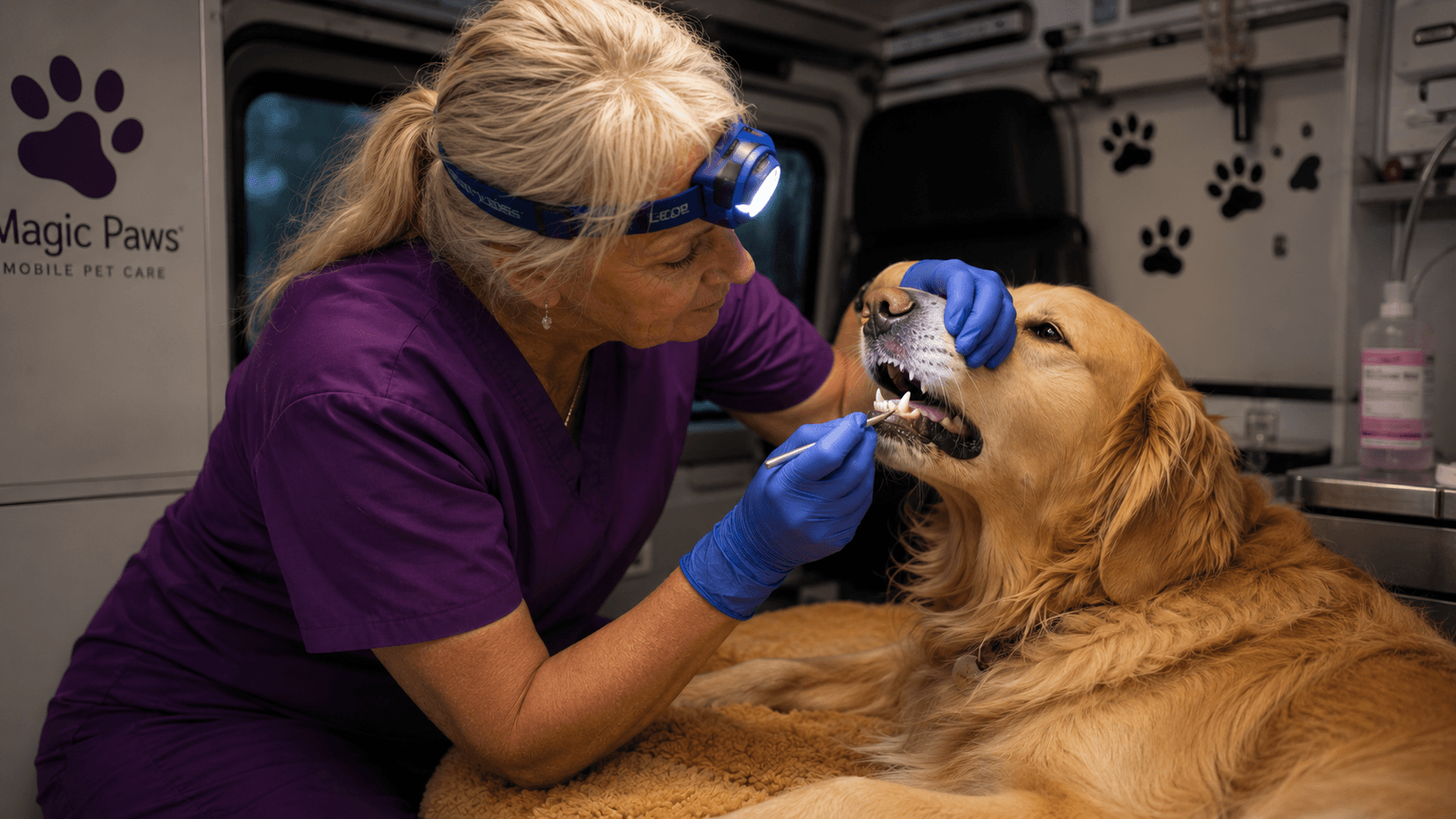
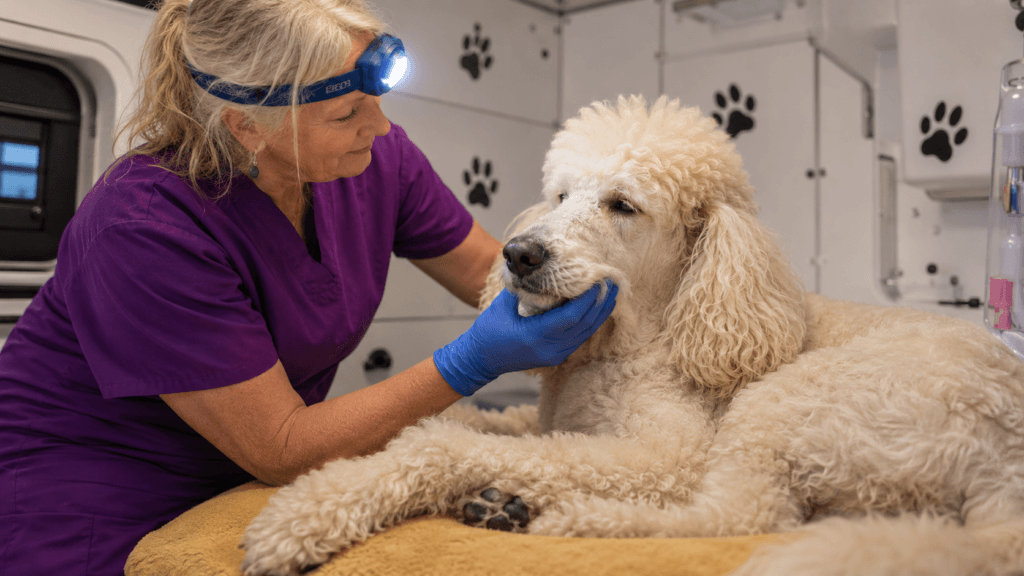
Mobile pet dental services bring a fully equipped setup to the owner’s address. In practice, this means the cleaning happens inside a dedicated van with the tools needed for a complete professional session, not a scaled-down version of what a clinic provides.
For dogs and cats, the familiar location reduces the stress typically associated with clinic visits. The animal is already in a known neighborhood, surrounded by recognizable sounds, and the absence of a waiting room full of other animals changes the baseline anxiety level before the procedure even begins. For owners across Florida, finding a dog teeth cleaning near me that comes to the address, rather than requiring a trip to a facility, is both a logistical and a welfare consideration.
Questions to ask before booking a pet dental cleaning
Before confirming an appointment, owners benefit from asking a few direct questions:
1. Who performs the procedure, and what is their specific background in dental care?
2. Do they conduct a pre-procedure assessment to confirm the animal is a good candidate?
3. What happens if they identify a problem during the cleaning that requires veterinary attention?
4. How is the animal kept calm during the session, and what is the protocol if the animal becomes too stressed to continue safely?
5. What does the session cover, and what is explicitly outside its scope?
Answers to these questions reveal whether the provider has a structured protocol or is offering a service without defined clinical standards.
Is anesthesia-free dental cleaning a valid option for pets?
Anesthesia-free dental cleaning is a legitimate preventive option for dogs and cats that are suitable candidates based on temperament, oral health stage, and general physical condition. It is not appropriate for every animal, and it does not replace anesthesia-based procedures when those are medically required.
For eligible pets, it allows regular access to professional cleaning without the physiological risks that come with sedation, including the pre-anesthesia workup, recovery period, and the inherent unpredictability of anesthetic response in older or medically compromised animals. The value of the anesthesia-free modality is in its accessibility as a maintenance tool, allowing pet owners to keep oral health in check between veterinary dental procedures or as an ongoing preventive routine.
For owners researching this option, the article on no anesthesia dog teeth cleaning covers the procedure in detail, and the data on how many dogs die from teeth cleaning provides context on anesthesia-related risk that helps owners make more informed comparisons between the two modalities.
The safety of any anesthesia-free session depends on three factors: the animal’s suitability, the executor’s training, and the protocol in place. A licensed dentist performing the procedure with a structured pre-evaluation changes the risk profile compared to a session performed without those elements.
What anesthesia-free cleaning does and does not cover
An anesthesia-free session covers supragingival scaling, subgingival access in cooperative animals, polishing, and a thorough oral exam. It can identify visible inflammation, plaque accumulation, and surface-level changes that warrant follow-up with a veterinarian. What it does not cover is radiography, extractions, or treatment of conditions diagnosed below the gumline.
Understanding how long does a dog dental cleaning take in an anesthesia-free setting also sets accurate expectations: the duration is shaped by how cooperative the animal is and what the oral exam reveals, not by a fixed schedule. An honest provider will communicate what the session found, what it addressed, and when veterinary follow-up is the right call.
How can you support your pet’s oral health between cleanings?
The most effective home routine combines daily brushing with products that have been evaluated for safety and efficacy in companion animals, alongside a diet that does not accelerate tartar buildup. Consistency matters more than any single product.
Brushing remains the highest-impact individual habit, but owners who cannot manage daily brushing consistently still have options. The Veterinary Oral Health Council evaluates dental hygiene products for dogs and cats and maintains a list of those that meet their standards for plaque and tartar control. Using a product from that reference, provides a validated baseline for at-home oral hygiene between professional sessions.
For cats, the approach differs slightly because most felines resist brushing more than dogs do. Water additives, dental treats with a VOHC seal, and specific diets designed to reduce buildup are all options worth discussing with a veterinarian before adding them to the routine.
Owners scheduling cat dental cleaning sessions regularly already have the professional layer in place. The home routine complements that, extending the time before significant accumulation returns.
Oral hygiene for dogs at home also benefits from monitoring behavioral cues: changes in how the animal approaches food, shifts in chewing preference, or new reluctance around the mouth during petting are worth noting before the next professional session. Pet preventive care is as much about observation as it is about products.
Is your pet’s dental health in the right hands?
Professional pet dental care starts with choosing who performs it. Equipment matters. Protocol matters. But the person evaluating the animal’s mouth, deciding what needs attention, and determining when a veterinary referral is the right call is where the real standard of care lives.
In Florida, The Magic Paws was built around that premise. Illana, a licensed dentist with formal training in human dental care and certification in pet dental cleaning, performs each session. The service is mobile, which means dogs and cats receive professional care in a familiar environment without the added stress of a clinic trip.
From South Florida to Central Florida, owners all around the state schedule using a direct booking system, and each appointment follows a set clinical protocol.
Pets that receive consistent professional attention are not just getting cleaner teeth. They are getting regular oral evaluations from someone trained to notice what a technician without a clinical background might miss. That difference, sustained over years, is what professional dental care actually means.
Not sure if your dog or cat is due for a professional cleaning? Book a session with The Magic Paws and have a licensed dentist evaluate your pet at your.
Frequently asked questions about pet dental care
What does pet dental care include beyond brushing?
Pet dental care at the professional level includes scaling to remove hardened tartar from the tooth surface, subgingival cleaning to access the area below the gumline, polishing to reduce how quickly new plaque adheres, and a full oral exam. These steps address what home brushing cannot reach and provide an evaluation that identifies early signs of gum disease or tooth damage before they become veterinary problems.
How often should dogs and cats get professional dental cleaning?
Annual professional cleaning is a reasonable baseline for most dogs and cats, but frequency varies by breed, age, and individual oral health condition. Small breeds and brachycephalic dogs tend to accumulate tartar faster and may benefit from more frequent sessions. Cats prone to tooth resorption require closer monitoring. A provider who conducts a genuine oral evaluation at each visit will give a frequency recommendation based on what they actually find, not a fixed schedule.
Does the person performing my pet’s dental cleaning need to be a dentist?
There is no legal requirement that a pet dental cleaning be performed by a dentist, but the executor’s background has a direct effect on what the session covers. A veterinarian brings diagnostic authority. A certified technician brings procedural training. A licensed dentist, like Illana at The Magic Paws, brings formal anatomical knowledge of tooth structure, gum tissue, and oral pathology that changes what gets identified during the exam and what decisions get made in response. For owners who want more than a surface clean, the executor’s credential is a meaningful distinction.
What is the difference between anesthesia and anesthesia-free pet dental cleaning?
Anesthesia-based dental cleaning allows full access to every area of the mouth, including radiography and extractions, and is the appropriate choice when a pet has advanced periodontal disease, requires surgical intervention, or cannot be safely managed without sedation. Anesthesia-free pet dental cleaning is a preventive maintenance procedure for cooperative animals with manageable oral health, removing plaque and tartar and providing an oral exam without sedation. The two are not competing options: they serve different purposes and different animal profiles.
Is anesthesia-free dental cleaning safe for pets?
Yes, when performed by a qualified professional on a suitable animal. Safety depends on the pre-procedure evaluation that confirms the animal is a good candidate, the executor’s ability to assess what they observe during the session, and the protocol in place if the animal becomes stressed or a concerning finding requires immediate referral. A service without a pre-evaluation process or a defined protocol for unexpected findings does not meet the same standard of care.
What are the early signs that a pet needs dental care?
The most common early indicators include:
- Persistent bad breath that does not resolve between meals
- Reddened, swollen, or tender-looking gums
- Visible yellow or brown accumulation on the teeth, particularly near the gumline
- Changes in eating behavior, such as favoring one side or avoiding harder food
- Pawing at the face or rubbing it against surfaces
Any of these, especially in combination, warrants a professional evaluation.
Can bad breath in dogs and cats be a sign of something serious?
Persistent bad breath in pets is not normal and frequently indicates bacterial activity associated with plaque buildup or gum disease. In more advanced cases, the oral bacteria linked to periodontal disease have been associated with systemic health effects involving the heart, kidneys, and liver. The relationship is not cause-and-effect in simple terms, but the connection between oral health and overall organ function is well documented in veterinary literature. Chronic bad breath is worth treating as a clinical signal, not a cosmetic inconvenience.
How do I know if my pet is a good candidate for anesthesia-free cleaning?
The main criteria are temperament, current stage of periodontal disease, age, and general health condition. Animals with advanced dental disease, significant gum recession, loose teeth, or behavioral profiles that make cooperative handling difficult are not good candidates. A provider who asks about the animal’s history, conducts a pre-procedure assessment, and makes an individualized eligibility decision is operating with the clinical rigor that the procedure requires.
How much does professional pet dental care cost in Florida?
Costs in Florida vary by modality, provider, animal size, and current oral health condition. Anesthesia-based cleaning at a veterinary clinic typically involves pre-anesthesia bloodwork, the procedure itself, and post-recovery monitoring, which places it in a higher cost bracket. Anesthesia-free professional cleaning from a qualified provider is a lower-cost option for maintenance, though pricing differs by region and service scope. Transparent pricing information is available through each provider’s booking process.
How can I book a pet dental care appointment with The Magic Paws?
Appointments for dogs and cats can be scheduled directly through themagicpaws.com/#pricing. The booking page includes pricing by animal size and region, service area information for South Florida and Central Florida, and the option to select a session and confirm availability.