The cost of cat dental cleaning is one of those numbers that surprises most pet owners the first time they see it on an estimate. You bring your cat in for a routine checkup, the veterinarian recommends a dental procedure, and the figure attached to that recommendation is higher than you expected. Understanding why the range exists helps you make a more informed decision.
Cat dental cleaning costs vary considerably depending on what the procedure actually involves. A visit that requires only a basic scaling and polishing is priced very differently from an appointment that uncovers tooth resorption lesions, requires multiple extractions, and demands extended anesthesia monitoring. The cost is not arbitrary. It follows the clinical complexity of what is found.
What makes this search difficult is that most sources online present a price range without explaining what falls on each end of it. A quote of $300 covers a straightforward case in a healthy young cat. A bill of $1,500 or more reflects a procedure with extractions, specialist involvement, or complications discovered under anesthesia. Those are not the same appointment.
This article walks through the variables that drive the price, what is included in different types of cleaning, and how the preventive approach changes the equation for cats who are still in good oral health.
How much does cat dental cleaning cost on average?
Cat dental cleaning cost at a general veterinary clinic ranges from approximately $300 to $700 for a routine procedure. When extractions or advanced treatment are needed, the total frequently climbs past $1,000 and can reach $1,500 or more.
The table below breaks down the typical components included in a standard full cleaning under anesthesia and their approximate cost ranges:
| Component | Estimated cost |
| Pre-anesthetic exam | $50 to $100 |
| Pre-anesthetic bloodwork | $80 to $200 |
| Anesthesia (induction + maintenance) | $100 to $300 |
| IV catheter and fluids | $50 to $150 |
| Scaling and polishing | $100 to $250 |
| Dental X-rays | $75 to $200 |
| Tooth extraction (per tooth) | $50 to $130+ |
| Post-operative pain medication | $20 to $60 |
These are ranges, not fixed prices. A cat requiring only the base procedure without extractions or X-rays sits closer to the lower end. A cat with active periodontal disease, multiple teeth affected by tooth resorption, or a complicated anesthesia profile sits at the higher end.
Studies referenced by the Cornell Feline Health Center indicate that periodontal disease affects the majority of cats over three years of age. Because the condition often develops silently, many owners book what they expect to be a routine appointment and learn mid-procedure that their animal requires more work than anticipated.
For an owner researching everything you need to know about cat dental cleaning before their first appointment, understanding the base structure of the estimate prevents surprises.
Practically speaking, knowing about cat teeth cleaning helps you assess whether the suggested treatments are suitable for the real oral state of your pet.
What factors make cat dental cleaning more expensive?
The price of a cat dental cleaning goes up when any of the following are present: advanced age, poor baseline oral health, geographic location with higher operating costs, the need for specialist involvement, or complications that only become visible under anesthesia.
Tooth extraction: the biggest wildcard in the bill
Tooth extraction is the single most unpredictable cost in a cat dental procedure. Each removed tooth typically adds $50 to $130 to the bill. In severe cases involving multiple extractions, the total for removals alone can reach $500 or more before accounting for the base appointment cost.
Feline Odontoclastic Resorption Lesions (FORL), sometimes called tooth resorption, are a cat-specific condition that the Cornell Feline Health Center identifies as one of the most common dental diseases affecting domestic cats.
These lesions cause the tooth structure to break down from the inside out, and they can only be reliably detected through dental X-rays taken while the animal is under anesthesia. A cat that appears to have minor dental issues during an awake examination may have several FORL-affected teeth that require immediate removal.
Understanding the hidden danger in your cat’s mouth from tooth resorption is one reason that delaying a cleaning appointment often makes the eventual bill larger, not smaller.
Pre-anesthetic bloodwork and monitoring: what is always included
Beyond the cleaning itself, the cost of a full dental procedure under anesthesia includes a set of baseline services that are standard across most veterinary clinics. Pre-anesthetic bloodwork evaluates organ function to confirm the animal is a safe candidate for anesthesia.
An IV catheter is placed to allow administration of fluids and emergency medication during the procedure. Anesthesia monitoring tracks heart rate, blood pressure, oxygen saturation, and respiratory rate throughout the appointment.
These components exist to protect the pet, not to inflate the estimate. They are included whether the procedure takes 45 minutes or two hours, because the same monitoring requirements apply regardless of how complex the cleaning turns out to be. The IV catheter and fluid line, for example, allow rapid response if an adverse reaction occurs.
General practitioners handle the majority of cat dental cleanings. When a case is more complex, referral to a veterinary dentist certified through the American Veterinary Dental College (AVDC) may be recommended.
Specialist procedures carry a higher price point because of the additional training and equipment involved, but they address conditions that fall outside the scope of general veterinary dentistry.
What does cat dental cleaning without anesthesia actually cost?
Anesthesia-free cat teeth cleaning is priced lower than a full procedure under anesthesia because the scope of the two services is different. A preventive anesthesia-free cleaning typically ranges from $150 to $250, depending on location and provider.
The American Animal Hospital Association (AAHA) is clear that anesthesia-free procedures performed without a structured clinical protocol do not address subgingival disease, meaning bacteria and buildup below the gumline, which is where periodontal damage begins. This is a relevant distinction when evaluating what an anesthesia-free service can and cannot do.
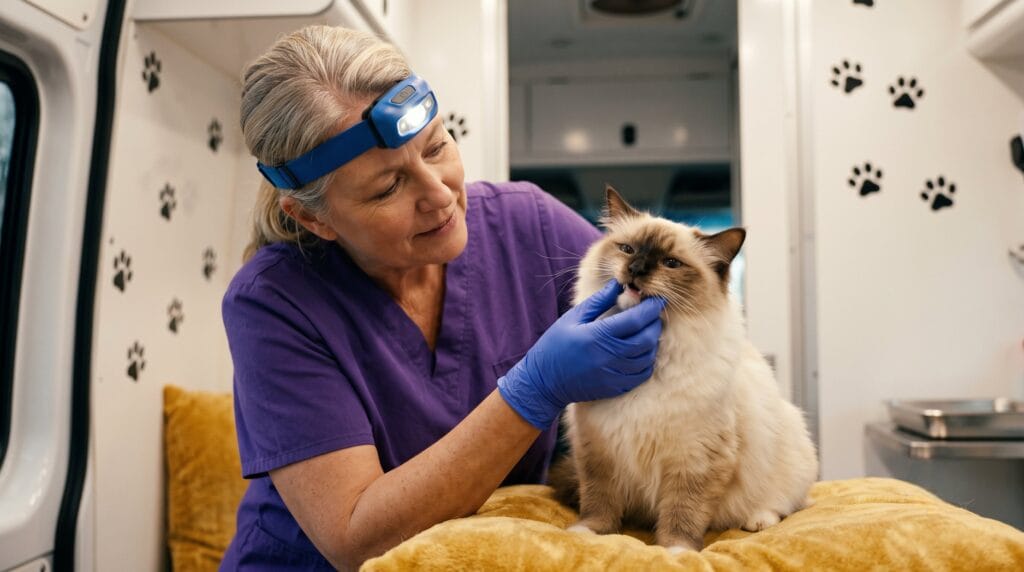
The Magic Paws operates within a professional preventive protocol, not as a substitute for veterinary care. The cat dental cleaning service is designed to maintain oral health in cats who are in good condition, reducing the accumulation that eventually leads to disease. It is the dental equivalent of consistent at-home care paired with a professional hygiene appointment: it preserves health rather than treats existing damage.
Illana Reisner, the licensed dental professional and founder of The Magic Paws, built the protocol with a clinician’s understanding of how preventive frequency affects long-term outcomes. To make the experience calm for cats without sedation, the service uses Senses Therapy: a proprietary calming protocol that combines aromatherapy, music therapy, chromotherapy, and massage. The result is a stress-free visit that the animal can return to regularly without the physical demands of general anesthesia.
For owners researching dentist for cats who want to understand what a professional preventive service actually involves, the scope difference between anesthesia-free maintenance and a full veterinary cleaning is the starting point.
What are the signs that your cat needs a dental cleaning?
A cat that requires professional dental attention will typically show one or more of the following: persistent halitosis that is noticeably different from normal breath, visible tartar or discoloration along the gumline, red or swollen gum tissue, difficulty chewing or tilting the head to one side while eating, excessive drooling, or a reduction in appetite.
Cats are particularly skilled at concealing discomfort. An animal with significant oral pain may continue eating normally until the condition becomes severe, which is part of why the signs your pet might have dental problems are easy to miss without a systematic check.
Gum disease in cats follows a progression: plaque hardens into tartar, tartar irritates the gum tissue, and inflammation advances toward the bone. By the time an owner notices the change in behavior, the underlying condition may be further along than the visible signs suggest. Understanding the silent threat to your cat’s health from oral bacteria helps explain why routine monitoring is relevant even for cats that appear healthy and comfortable.
If the animal shows any of the signs listed above, a veterinary examination is the appropriate next step before booking any professional cleaning service.
How often do cats need professional dental cleaning?
Most healthy adult cats benefit from a professional dental cleaning once a year. Cats with a history of periodontal disease, senior animals, or breeds with known dental predispositions generally do better with appointments every six months.
Frequency is not cosmetic. It’s a biological strategy. The importance of regular dental check-ups lies in the fact that consistent removal of plaque and early tartar slows the disease progression cycle. A cat that receives preventive care on schedule is significantly less likely to reach the point where extractions or specialist intervention become necessary.
The cost comparison between preventive and reactive care is straightforward. A single full procedure with extractions, X-rays, and extended anesthesia monitoring can cost three to five times what a series of annual preventive cleanings would have cost over the same period. Reading about the 6 essential reasons to schedule your pet’s dental cleaning reinforce why waiting is typically the more expensive choice, not the more cautious one.
How can you reduce the long-term cost of cat dental cleaning?
The most effective way to reduce cumulative dental costs is preventive frequency. Consistent appointments, whether anesthesia-free maintenance cleanings or full veterinary procedures, interrupt the disease cycle before it reaches the point that requires costly intervention.
Pet insurance is a practical option for owners who want to manage the unpredictability of a dental bill that grows mid-procedure. Most policies cover dental disease treatment, though routine cleaning coverage varies by plan. Verifying what your specific policy covers before booking a veterinary dental appointment avoids surprises at checkout.
Maintenance plans designed around recurring preventive care represent another form of cost management. The Dental Clean Club at The Magic Paws was built on this principle: discounted recurring cleanings that make preventive frequency accessible and consistent for cats across Florida. Owners who schedule regularly tend to avoid the large one-time bills that result from years of deferred care.
For those looking specifically at cat dental cleanings in Florida, the range of options available statewide means that the right combination of veterinary oversight and preventive maintenance can be built into a plan that fits both the animal’s health needs and the owner’s budget.
Prevention costs less than treatment. See our pricing and book today.
Is professional cat dental cleaning worth the cost?
Yes. The economic case for professional dental cleaning is straightforward: the cost of preventive care is consistently lower than the cost of treating advanced disease.
A single dental procedure involving multiple extractions, specialist referral, and post-operative medication can easily reach $1,500 to $2,500. A cat that receives consistent preventive attention is far less likely to need that level of intervention. The financial argument aligns with the health argument: earlier care produces better outcomes at lower cost.
The Magic Paws exists at this intersection of prevention and accessibility. With over 10,000 cats and dogs served across Florida and a protocol developed by Illana Reisner, a licensed dental professional, the service is designed for owners who want to maintain their cat’s oral health consistently. Without the stress of sedation and without waiting until a problem becomes unavoidable.
The Senses Therapy protocol, which combines aromatherapy, music therapy, chromotherapy, and massage, was developed specifically to keep cats calm during the procedure. The result is a visit the animal tolerates well, which makes it one that owners are more likely to repeat on the recommended schedule.
Your cat deserves a clean mouth without the stress of sedation. Book now!
Frequently asked questions about cat dental cleaning cost
How much does cat dental cleaning cost without anesthesia?
Anesthesia-free cat teeth cleaning typically ranges from $150 to $250. This service focuses on preventive maintenance: removing surface plaque and tartar buildup before it progresses to disease. It is a different scope from a full veterinary cleaning under anesthesia, which can range from $300 to over $1,500 depending on what the procedure uncovers.
What is included in a cat dental cleaning?
A full cat dental cleaning under anesthesia generally includes: a pre-anesthetic exam, bloodwork to evaluate organ function, IV catheter and fluid administration, anesthesia induction and maintenance, scaling to remove plaque and tartar, polishing, and dental X-rays. Tooth extraction is added if needed and billed separately. An anesthesia-free preventive cleaning covers surface scaling and polishing without the anesthesia components.
How much does cat tooth extraction cost?
Each extracted tooth typically adds $50 to $130 to the total bill. In cases involving multiple removals, anesthesia time, X-rays, and post-operative pain medication, the extraction portion alone can reach $500 to $1,150 or more. Feline Odontoclastic Resorption Lesions (FORL) are a frequent cause of unexpected extractions in cats, as the condition is only reliably detected through dental X-rays taken under anesthesia.
Does pet insurance cover cat dental cleaning cost?
Coverage depends on the specific plan. Most pet insurance policies cover the treatment of dental disease, including extractions and periodontal procedures. Routine or preventive cleaning is less consistently covered. Reviewing your policy before booking any dental appointment is the most reliable way to confirm what will and will not be reimbursed.
How often should cats get their teeth cleaned professionally?
Most healthy adult cats benefit from a professional cleaning once a year. Senior cats and those with a prior diagnosis of periodontal disease generally do better with an appointment every six months. Consistent preventive frequency reduces cumulative cost by interrupting disease progression before it reaches the stage requiring surgical intervention.
What happens if I don’t get my cat’s teeth cleaned?
Untreated oral disease in cats follows a predictable progression. Plaque hardens into tartar, tartar irritates the gums, and gingivitis advances to periodontal disease. At that stage, the bone and connective tissue supporting the teeth begin to deteriorate, leading to tooth loss and chronic pain.
Is anesthesia-free cat teeth cleaning safe?
Safety depends on the clinical context and the protocol used. The cautions that anesthesia-free procedures performed without a structured clinical protocol address only visible surface buildup and do not reach subgingival disease. A professional preventive service performed within a structured protocol, like the one used by The Magic Paws, is appropriate for cats in good oral health who are not exhibiting signs of active disease.
How can I tell if my cat needs a dental cleaning now?
Common indicators include persistent bad breath noticeably different from baseline, visible tartar or yellowing at the gumline, red or inflamed gum tissue, reluctance to chew on one side, excessive drooling, or a reduction in appetite. Because cats conceal pain effectively, waiting for behavioral changes to become obvious means the condition may already be advanced.
Why does cat dental cleaning cost so much compared to dogs?
The costs are broadly comparable. Cats can require more careful anesthesia management because of their stress sensitivity and smaller body size, which affects drug dosing and monitoring precision. Feline Odontoclastic Resorption Lesions (FORL) are also a condition specific to cats that frequently results in multiple extractions, raising the total cost of individual appointments.
How do I find affordable cat dental cleaning near me in Florida?
Comparing clinics is a reasonable starting point, but price alone does not reflect the full scope of what will be included. A lower quote that excludes bloodwork or X-rays may cost more once those are added mid-procedure. Preventive anesthesia-free services, used consistently between veterinary appointments, help maintain oral health and reduce the risk of reaching the point where costly intervention is unavoidable. The Magic Paws provides preventive cat dental cleaning service across Florida with flat-rate transparent pricing and no hidden fees.