A dog dental water additive has become one of the most popular pet care products on the market, and for a reason that is easy to understand: you add a small amount to the water bowl every day, your dog drinks without noticing, and oral hygiene happens in the background. No toothbrush. No struggle.
That appeal is real, and so are some benefits. But what these products can and cannot do is frequently misunderstood. Many owners use a water additive and assume their dog’s dental care is covered. Some skip professional checkups because the product exists. Others choose based on packaging alone, without knowing which ingredients matter or which ones to avoid.
This article covers all of it: how water additives work, what the research says about their effectiveness, which ingredients indicate quality, and where the product fits in a dog dental routine that actually protects long-term oral health. If you have ever wondered whether your dog’s water additive is doing anything, you are about to find out.
Understanding the limits of the product is not a reason to abandon it. It is a reason to use it correctly.
What is a dog dental water additive?
A dog dental water additive is a liquid solution added to your pet’s drinking water daily, formulated to reduce plaque accumulation, slow tartar formation, and control bad breath through enzymatic or antimicrobial action. The product requires no mechanical effort: the active ingredients reach the dog’s mouth each time the animal drinks.
How does it work in the water bowl
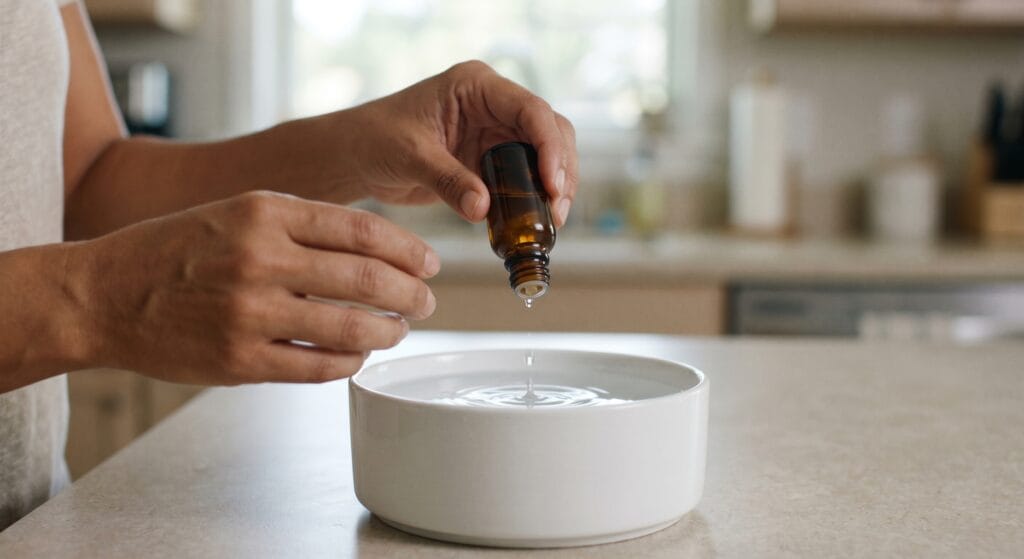
The mechanism is passive by design. Each time your dog drinks, the water carries active compounds into contact with the teeth and gum line. Common ingredients include enzymes (such as lactoperoxidase and glucose oxidase), which disrupt the bacterial film responsible for plaque; zinc chloride, which inhibits bacterial activity and reduces volatile sulfur compounds that cause bad breath; and sodium citrate, which interferes with the mineralization process that turns soft plaque into hard tartar.
What water additives do not do is physically remove anything. There is no scrubbing, no abrasion, no mechanical disruption of biofilm. The product slows bacterial growth and interferes with mineral deposits forming on the tooth surface, but it cannot dislodge material that has already adhered and hardened.
The table below lists the most common ingredients in dental water additives, their function, and what to watch for on the label.
| Ingredient | Function | Notes |
| Lactoperoxidase | Enzyme that disrupts bacterial metabolism | Common in VOHC-approved formulations |
| Zinc chloride | Inhibits bacterial growth, reduces bad breath compounds | Generally well-tolerated |
| Sodium citrate | Interferes with tartar mineralization | Safe for most dogs |
| Chlorhexidine | Antimicrobial, used in some veterinary formulas | Consult vet before use; not recommended long-term without guidance |
| Xylitol | Sweetener, no dental benefit | Toxic to dogs. Avoid any product containing it. |
| Artificial dyes | No dental function | May cause reactions in sensitive animals |
| Sorbitol (high dose) | Sweetener used for palatability | Laxative effect in sensitive dogs at high doses |
Do dental water additives actually work for dogs?
Yes, dental water additives work for dogs, but with important conditions. Products that carry the Veterinary Oral Health Council (VOHC) seal have been evaluated in at least two independent clinical trials and demonstrated measurable reduction in plaque or tartar. Products without the seal may offer only superficial benefits.
The VOHC does not approve products based on marketing claims or ingredient lists alone. Approval requires controlled studies with quantifiable results. When choosing a dental water additive for dogs, the VOHC seal is the most reliable quality indicator available. You can check the current list of approved products directly on the Veterinary Oral Health Council website.
What the research says about plaque and tartar control
A study published in Frontiers in Veterinary Science (Gawor et al., 2023) found that dogs using a water additive containing pomegranate extract had their plaque accumulation reduced by over 40% compared to a control group. The finding is significant, but so is the context: the reduction was measured in dogs that had undergone dog teeth cleaning before the study period, meaning they started with clean teeth.
The clinical data from the Gawor et al. study on PubMed makes the mechanism clear: the additive slowed the return of plaque after professional cleaning. It did not reverse existing buildup in dogs that had not had a prophylaxis. This is one of the most important distinctions in the research on water additives, and it rarely appears in product descriptions.
What ingredients should you look for (and avoid)?
Prioritize VOHC-approved products and read the label before buying. The seal is the clearest indicator that the formulation has been tested for actual plaque or tartar reduction, not just for palatability or freshness.
Ingredients that indicate quality:
- Lactoperoxidase or glucose oxidase (enzymatic action on oral bacteria)
- Zinc chloride or zinc gluconate (antimicrobial, breath control)
- Sodium citrate (anti-tartar)
- Chlorhexidine at low concentration in veterinary-formulated products (check with your vet)
Ingredients to avoid:
- Xylitol: toxic to dogs. Even small amounts can cause severe hypoglycemia and liver failure. There is no acceptable threshold.
- Artificial dyes: add no dental benefit and may cause adverse reactions in sensitive animals.
- High-dose sorbitol: used as a sweetener in some formulas, but can cause digestive upset and loose stools in dogs with sensitive stomachs.
Some products reference brands such as TropiClean, Oxyfresh, or Dechra Vetradent on review sites and buyer’s guides. Regardless of brand, the criteria above are what determine whether a product is worth using.
Can a water additive replace brushing your dog’s teeth?
No. A water additive cannot replace brushing your dog’s teeth. Brushing provides mechanical action, physically disrupting the soft biofilm before it mineralizes. Water additives slow bacterial activity between brushings but have no equivalent scrubbing effect on plaque that has already adhered to the tooth surface.
Think of it as the difference between using mouthwash and brushing. Mouthwash reduces bacteria and freshens breath, but no dentist recommends it as a standalone practice. The same logic applies here. Information about what dog teeth cleaning involves at a professional level helps clarify why no single home product replicates that baseline reset.
See how anesthesia-free dental cleaning works!
What happens when a water additive isn’t enough?
When tartar has already formed, a water additive can’t reverse the condition. Tartar is mineralized plaque, and once it has hardened onto the tooth surface and below the gum line, only physical removal by a trained professional can address it.
Signs that indicate your dog needs professional evaluation, not just a product adjustment:
- Persistent bad breath that does not improve with daily additive use
- Red, swollen, or bleeding gums
- Visible brown or yellow deposits on the teeth, especially near the gum line
- Difficulty chewing, reluctance to eat hard food, or excessive pawing at the mouth
- Loose teeth
Understanding how many dogs die from teeth cleaning done under anesthesia is a question many owners search when they notice these symptoms. The concern is valid, and the answer matters for making an informed decision about which professional option to pursue.
Why professional cleaning improves the additive work
The Gawor et al. (2023) research offers a clear practical takeaway: water additives perform significantly better when the starting point is an already-clean mouth. Plaque reduction of over 40% was achieved in dogs post-prophylaxis, not in dogs with existing tartar. This means professional cleaning does not just address a current problem. It also activates the preventive potential of the daily products you are already using.
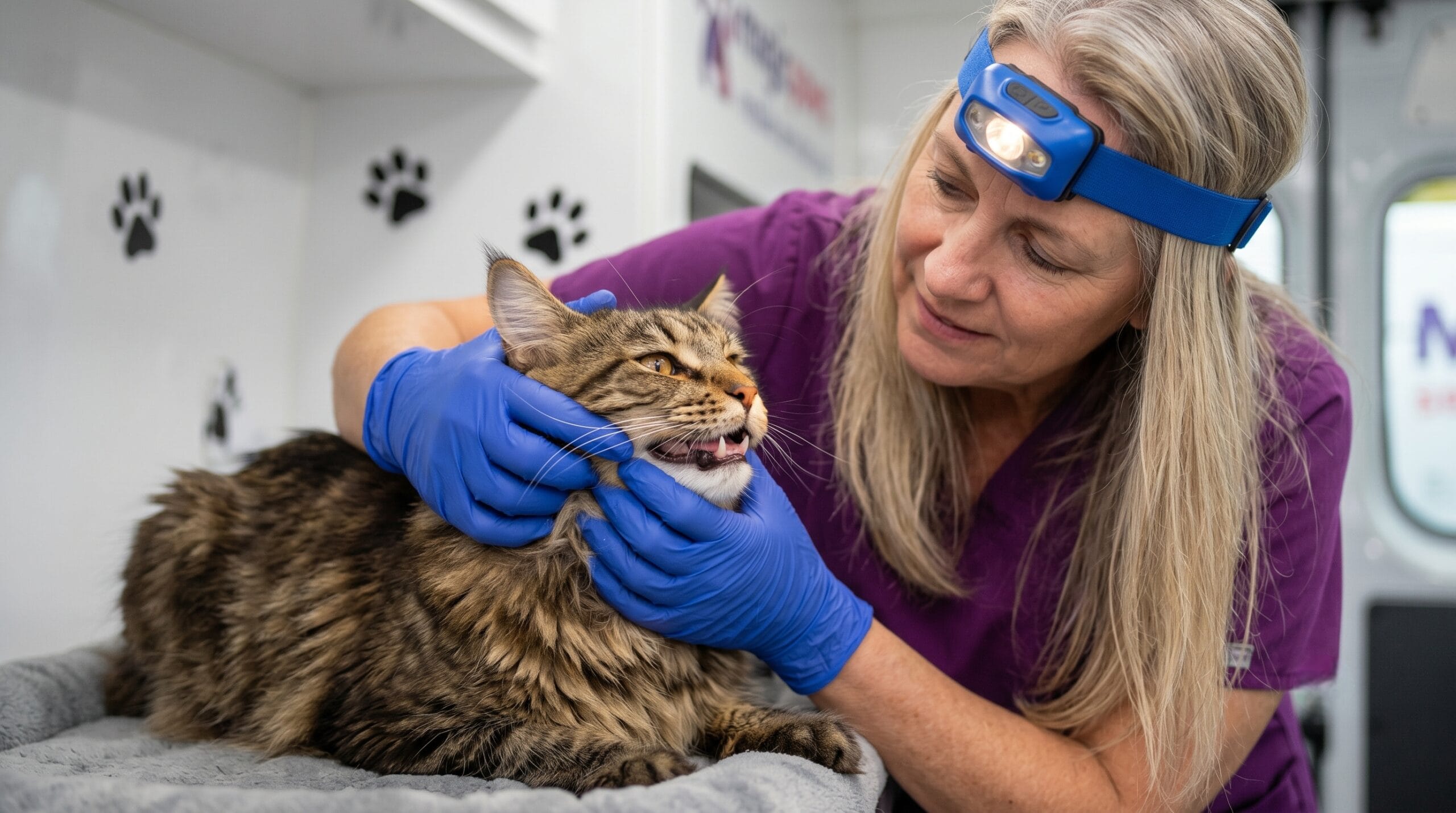
The Magic Paws offers no anesthesia dog teeth cleaning through a structured protocol that makes regular professional care accessible without the risks associated with general anesthesia. Each appointment includes Senses Therapy, a proprietary approach combining aromatherapy, music therapy, chromotherapy, and massage to keep the animal calm and cooperative throughout the procedure.
How do you build a complete dog dental water routine?
A complete dog dental routine combines three elements: regular brushing at home, a daily dental water additive, and periodic professional cleaning. Each component addresses a different part of the problem, and none of them replaces the others.
Here is how the three pillars work together in practice:
1. Daily brushing
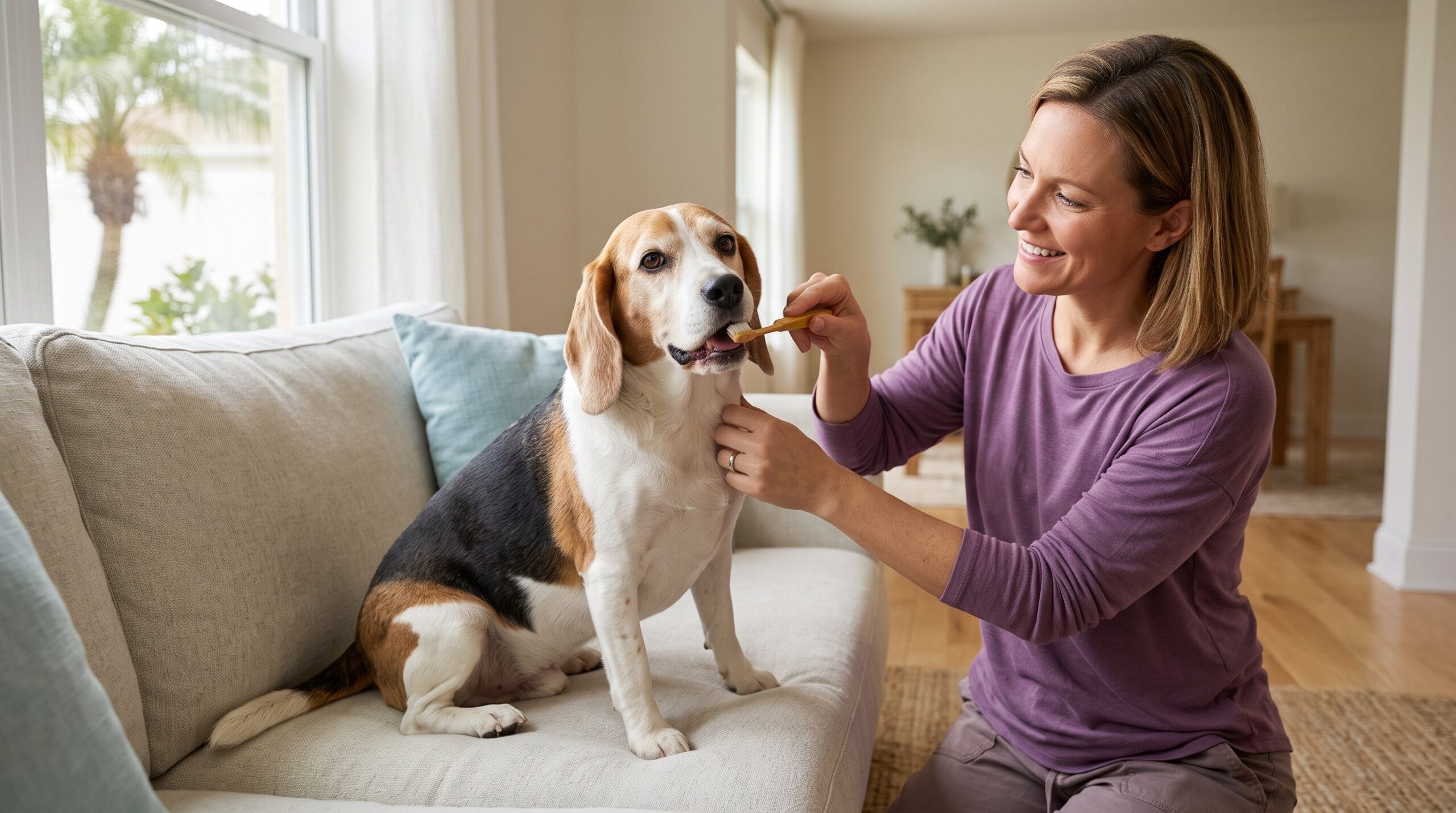
This is the most effective home practice for removing soft plaque before it hardens. Even two to three times a week provides a meaningful reduction in biofilm accumulation.
Dog-specific toothpaste is required: human formulas contain fluoride and other compounds that are unsafe for animals.
2. Dental water additive
Added to the water bowl daily, a VOHC-approved additive slows bacterial growth and tartar formation between brushings. It extends the protective effect of each brushing session and helps control oral bacteria in the hours when no mechanical action is happening.
This is the role it is designed to play, and it plays it well when the dog already has a clean baseline.
3. Professional cleaning
Periodic professional dental cleaning removes tartar that home care cannot reach, resets the bacterial load, and allows a trained specialist to assess the full condition of the gums and teeth. Most dogs benefit from at least one professional cleaning per year. Knowing how long does a dog dental cleaning take helps owners plan around the appointment without disrupting daily routines.
A mobile dog dentist service like The Magic Paws makes that professional step easier to maintain by bringing the appointment to your door, reducing the stress that causes some owners to delay care indefinitely.
Is a dog dental water additive worth it?
Yes, a dental water additive is worth it for your dog when used as part of a routine, not as a standalone solution. The product delivers consistent support for plaque control and bad breath management, particularly when the dog starts from a clean baseline. Used alongside regular brushing and periodic professional care, it extends the window between cleanings and reduces the rate of tartar return.
When choosing a product, stick to the criteria that matter: VOHC approval, ingredient safety, and your dog’s palatability preferences. A product that your dog refuses to drink is not working regardless of how good the formula is.
For owners who want to make that routine complete, dog dental cleaning with The Magic Paws is the professional step that makes home products more effective. And with mobile teeth cleaning for dogs available across Florida, there is no need to drive to a clinic or postpone care because of scheduling constraints.
Your dog’s water additive works harder when their mouth starts clean. Book an anesthesia-free dental cleaning with The Magic Paws and give your daily routine a real foundation. Book your dog’s anesthesia-free dental cleaning today!
Frequently asked questions about dog dental water additives
What is a dog dental water additive?
A dog dental water additive is a liquid solution added to your pet’s drinking bowl daily to reduce plaque, slow tartar formation, and control bad breath. It works through enzymatic or antimicrobial action each time the dog drinks, without requiring any mechanical effort from the animal or the owner.
Do dental water additives actually work for dogs?
They work as a support tool, not as a complete solution. VOHC-approved products have passed at least two independent clinical trials with measurable plaque or tartar reduction. Non-approved products may only offer temporary breath freshening without addressing underlying bacterial buildup.
Are water additives safe for dogs?
Yes, provided the product is formulated specifically for dogs and does not contain xylitol, artificial dyes, or high-dose sorbitol. If your dog has a history of digestive sensitivity or kidney issues, consult your veterinarian before starting any oral supplement.
What ingredients should I avoid in dog dental water additives?
Avoid xylitol (toxic to dogs at any dose), artificial dyes (no dental benefit, potential for reactions), and high-dose sorbitol (laxative effect in sensitive animals). Check the label carefully before purchasing, and prioritize products with the VOHC seal.
How long does it take for a water additive to work on dogs?
Most owners notice improvement in bad breath within 14 to 30 days of consistent daily use. Plaque control effects accumulate over time. Results depend on the dog’s starting oral condition: animals with existing tartar will see less benefit until professional cleaning addresses the buildup.
Can I use a water additive instead of brushing my dog’s teeth?
No. Water additives have no mechanical action and cannot remove biofilm that has already adhered to the tooth surface. They work best as a complement to regular brushing and periodic professional cleaning, not as a replacement for either.
What does VOHC approved mean for dog dental products?
The Veterinary Oral Health Council (VOHC) approves products that have demonstrated measurable plaque or tartar reduction in at least two independent clinical trials. The seal appears on the approved product label and is the most reliable quality indicator when choosing a dental water additive.
Do dogs notice the water additive in their bowl?
Most VOHC-approved additives are odorless and tasteless by design. Flavored variants exist and some animals detect them, particularly dogs with strong preferences. If your pet hesitates at first, try starting with half the recommended dose and increase gradually over a week.
Can a dog dental water additive help with bad breath?
Yes, when bad breath comes from surface bacteria and early plaque accumulation. If the odor is persistent, intense, or accompanied by visible gum changes, it may indicate periodontal disease, which requires professional evaluation rather than a product adjustment.
How often should dogs get a professional dental cleaning?
Frequency varies by breed, age, and oral condition. As a general baseline, one professional cleaning per year is a reasonable starting point for most adult dogs. Breeds with crowded or small teeth, such as French Bulldogs or Yorkshire Terriers, may benefit from more frequent intervals. Dogs with a history of periodontal disease typically require shorter cycles determined by a dental professional.