Senior cat dental care is one of those areas where the gap between what owners assume and what is actually happening inside the mouth is consistently wide. A cat that eats without complaint, grooms normally, and shows no visible distress can still have significant dental disease progressing below the gumline.
This is not a failure of observation: cats are instinctively reluctant to show pain, and oral disease in this species tends to develop quietly over months before any behavioral change appears.
The transition into the senior life stage begins around age 7. At this point, several biological changes combine to accelerate the rate at which dental problems develop. The immune system becomes less efficient at containing bacterial activity. Saliva composition shifts in ways that affect how quickly plaque forms. Years of accumulated tartar, if never professionally addressed, have already begun impacting the tissue supporting the teeth.
Most owners have never had a reason to think about their cat’s dental health in age-specific terms. Veterinary guidance on the subject tends to treat all adult cats as a single category, which misses an important distinction: the care needs of a 4-year-old cat and a 10-year-old cat are not the same.
The medical conditions that become most prevalent in senior felines, including periodontal disease, tooth resorption, and feline stomatitis, require a different level of attention and a more consistent preventive schedule.
Understanding what changes from age 7 onward, what conditions are most common, and what prevention actually involves is the starting point for making decisions that protect your cat’s health at this life stage.
Your senior cat’s teeth need more attention than you think
Senior cat dental care is one of those areas where the gap between what owners assume and what is actually happening inside the mouth is consistently wide. A cat that eats without complaint, grooms normally, and shows no visible distress can still have significant dental disease progressing below the gumline. This is not a failure of observation: cats are instinctively reluctant to show pain, and oral disease in this species tends to develop quietly over months before any behavioral change appears.
The transition into the senior life stage begins around age 7. At this point, several biological changes combine to accelerate the rate at which dental problems develop. The immune system becomes less efficient at containing bacterial activity. Saliva composition shifts in ways that affect how quickly plaque forms. Years of accumulated tartar, if never professionally addressed, have already begun affecting the tissue supporting the teeth.
Most owners have never had a reason to think about their cat’s dental health in age-specific terms. Veterinary guidance on the subject tends to treat all adult cats as a single category, which misses an important distinction: the care needs of a 4-year-old cat and a 10-year-old cat are not the same. The conditions that become most prevalent in senior felines, including periodontal disease, tooth resorption, and feline stomatitis, require a different level of attention and a more consistent preventive schedule.
Understanding what changes from age 7 onward, what conditions are most common, and what prevention actually involves is the starting point for making decisions that protect your cat’s health at this life stage.
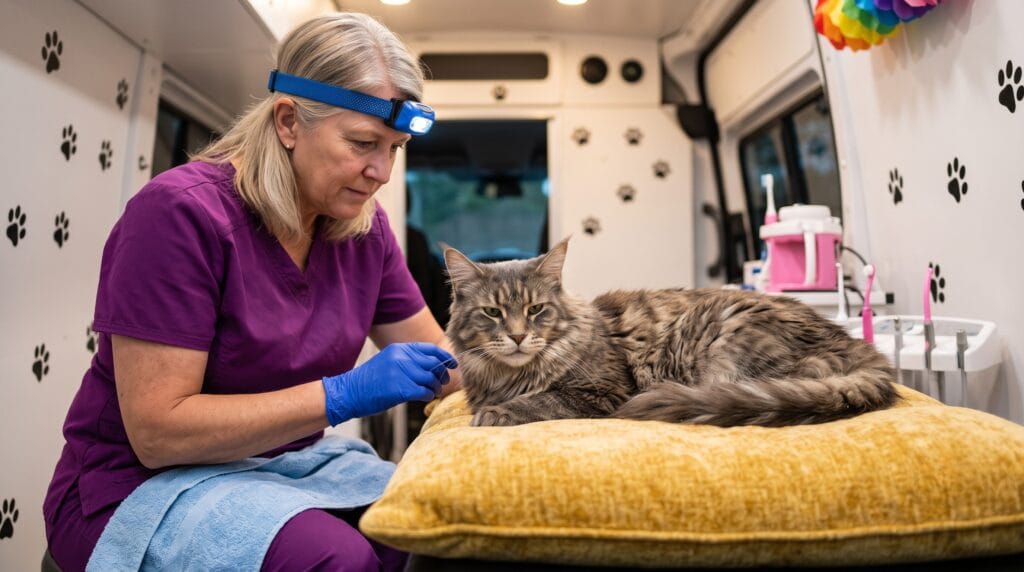
What changes in your senior cat’s dental health after age 7?
From age 7 onward, a cat’s dental health changes in three measurable ways: tartar accumulates faster, the tissue supporting the teeth becomes more vulnerable to bacterial damage, and systemic conditions become more directly linked to what is happening in the mouth. The distinction between senior cats (7 to 10 years) and geriatric cats (11 and older) matters here, because risk scales at each transition.
Understanding what a complete cat dental cleaning involves gives you a clearer picture of why this preventive step becomes more necessary, not less, as a cat moves through its senior years.
The most common dental conditions in aging cats
Senior cats are disproportionately affected by three conditions that rarely resolve on their own and tend to progress faster without intervention.
According to the Cornell Feline Health Center, between 50 and 90 percent of cats over four years old have some form of dental disease. By the senior stage, that prevalence only increases.
| Condition | What it is | Common visible sign |
| Feline gingivitis | Inflammation of the gum tissue caused by bacterial plaque accumulation at and below the gumline | Red or swollen gum margins, bleeding during eating |
| Periodontal disease | Progressive destruction of the tissue, ligament, and bone that anchor the tooth | Gum recession, loose teeth, bad breath |
| Tooth resorption | A process where the body breaks down the tooth structure itself, often starting at the root | Tooth appears fractured or has pink lesions at the gumline |
Feline stomatitis, a more severe immune-mediated inflammation affecting the entire oral cavity, also becomes more common in senior animals. The hidden dangers in a cat’s mouth often go unnoticed precisely because this species does not signal pain the way dogs or humans do. Regular dental exams for pets allow a trained provider to identify these conditions before they advance to a stage that limits treatment options.
Classification of these conditions follows the nomenclature established by the AVDC, which provides standardized terminology for periodontal staging and tooth resorption categories.
How dental bacteria affect your senior cat’s organs
Oral bacteria in cats enter the bloodstream through inflamed gum tissue and travel to distant organs. In senior cats, the kidneys and heart are the primary targets, and both are already under greater physiological demand as the animal ages.
The connection between gum inflammation and kidney strain is particularly relevant for older cats. Chronic low-grade oral infection increases the workload on organs that filter bacterial byproducts from the blood. A cat with untreated periodontal pockets is continuously reintroducing bacteria into its circulatory system, which places sustained pressure on the immune and renal systems. This is not a theoretical risk: it is a documented mechanism that gives preventive dental care a purpose well beyond clean teeth and fresh breath.
What are the signs of dental disease in senior cats?
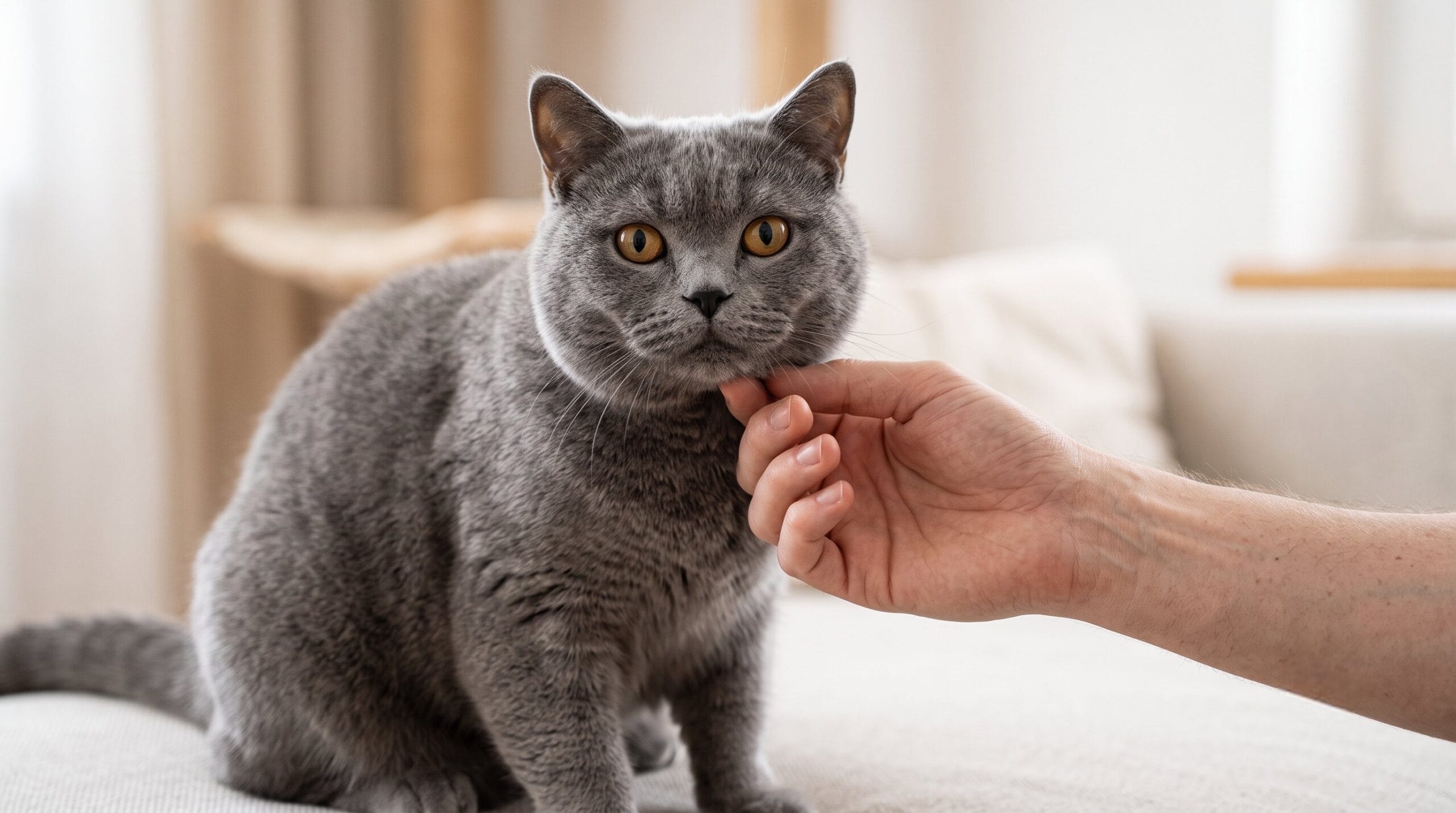
The most reliable early indicator of dental disease in senior cats is bad breath that carries a distinct decay or sulfur smell, rather than the mild odor most owners consider normal. Beyond that, signs appear inconsistently and often only when the condition is already intermediate or advanced.
Because cats naturally conceal discomfort, the signs your pet might have dental problems are worth knowing before you are looking for them. A cat in pain will often adapt its behavior rather than signal it directly.
This adaptation is what makes dental disease in older cats a silent threat in your cat’s mouth: the absence of obvious symptoms does not indicate the absence of disease. It often indicates the opposite.
Warning signs to watch for at home:
- Persistent bad breath with a decay or sulfur quality
- Drooling, especially if new or increased
- Pawing at the mouth or rubbing the face on surfaces
- Changes in eating behavior: dropping food, chewing on one side only, avoiding hard kibble
- Tooth discoloration: yellow or brown buildup along the gumline
- Weight loss with no apparent cause, which can indicate that eating has become painful
How often does senior cat dental care need to happen?
Senior cats benefit from professional dental cleaning every six months. This frequency reflects both the faster rate of plaque accumulation in older animals and the greater potential for tartar to affect already-vulnerable gum tissue. Combining this schedule with daily brushing at home gives your cat the most complete preventive coverage available. Understanding the importance of regular dental check-ups makes it easier to approach this as a routine rather than a reaction to a problem.
There are six sound reasons to schedule your pet’s dental cleaning that apply year-round, and for senior animals, each one carries more weight than it does for younger pets.
Home care habits that support senior cat oral health
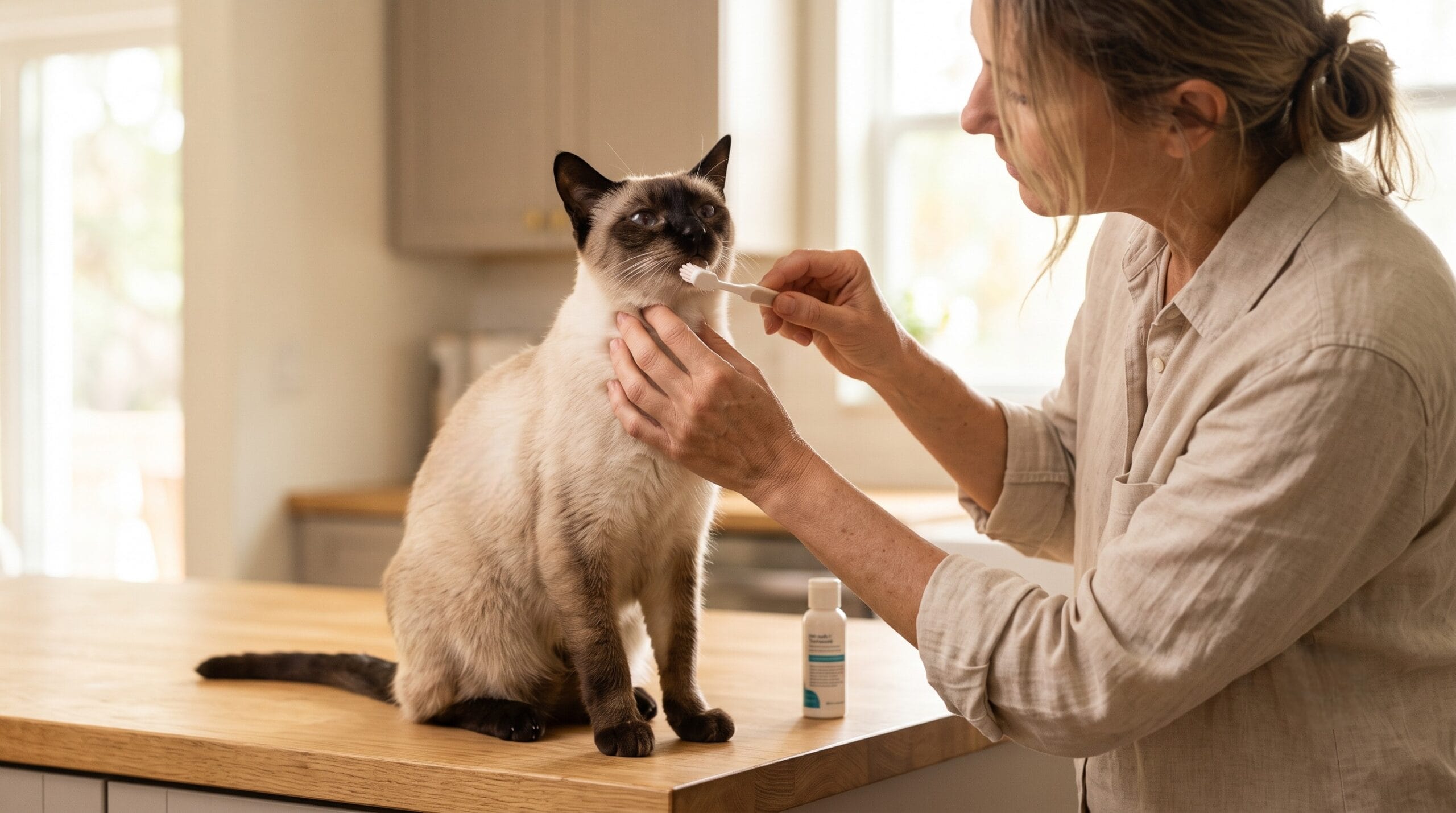
Brushing is the most effective daily tool available for managing plaque before it hardens into tartar. A consistent toothbrushing routine for your pet does not replace professional cleaning, but it meaningfully slows the rate at which tartar forms between appointments.
For senior cats, a few practical adjustments make home care more sustainable. Use a soft brush or a finger brush designed for cats, apply a pet-safe enzymatic toothpaste, and aim for the outer surfaces of the back teeth where tartar accumulates fastest. If your cat resists brushing, shorter sessions done more frequently are more productive than one long session that increases stress.
Diet also plays a role. Dental diets formulated for tartar control use a specific kibble texture to mechanically reduce plaque at the tooth surface. These are not a substitute for brushing, but they are a useful complement, particularly for cats that tolerate dental care poorly.
The AVDC guidelines for preventive home care in cats recommend daily mechanical plaque removal as the standard, with professional cleaning at intervals appropriate to the individual animal’s risk profile.
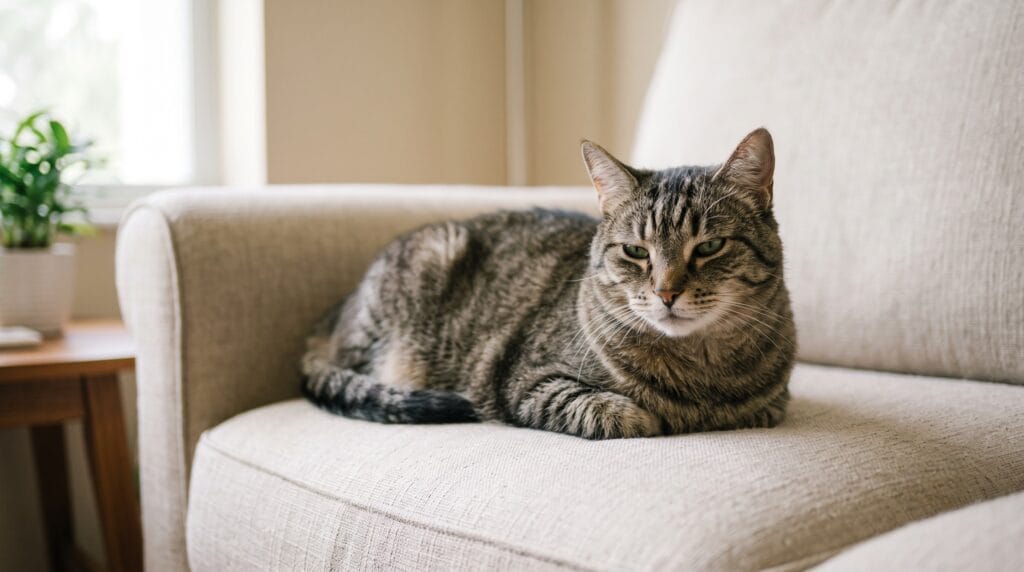
Is anesthesia-free cleaning safe for senior cats?
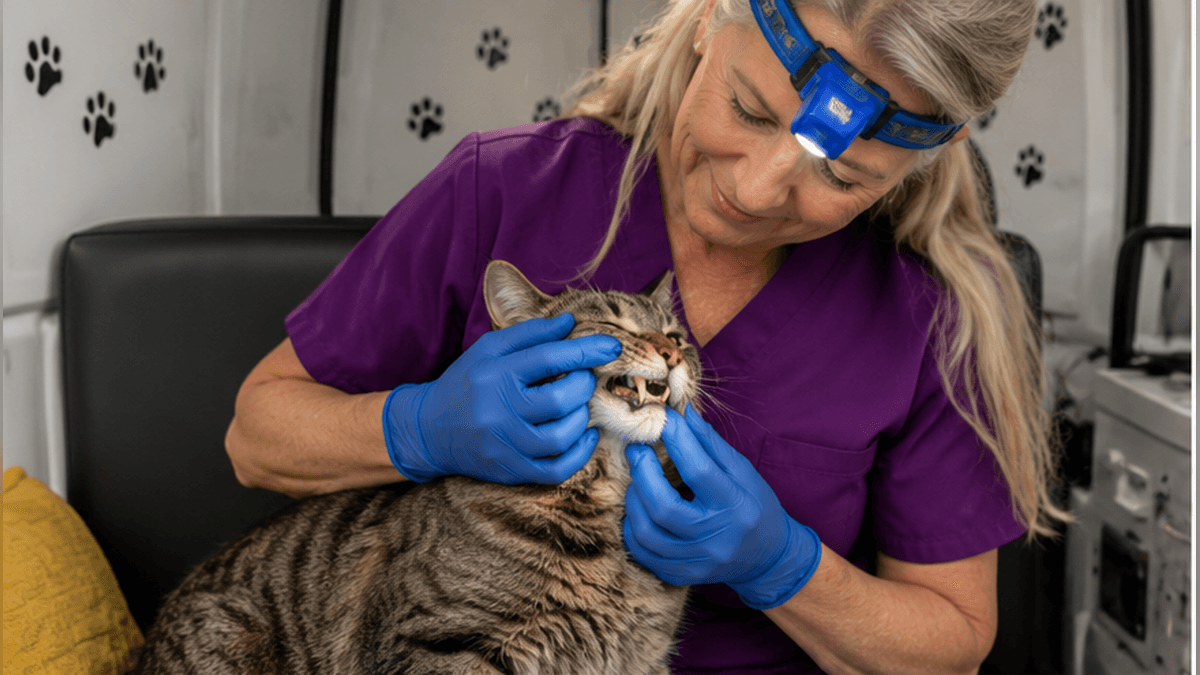
Anesthesia-free dental cleaning is a safe and appropriate preventive option for eligible senior cats, and eligibility is assessed individually before every appointment. The key factor is condition: cats in the early to moderate stages of tartar accumulation and gum disease, without advanced structural damage, are typically good candidates for this approach. A dentist for cats who specializes in feline oral health can evaluate whether your cat fits that profile.
The most important argument for starting preventive care early is that it reduces the probability that your cat will ever need anesthesia. A senior cat that has received consistent professional cleaning every six months carries significantly less tartar burden than one that has never had a cleaning. Less disease means less intervention, and less intervention means fewer situations where anesthesia becomes necessary in the first place.
Anesthesia carries real risks in senior cats. These risks are manageable when the procedure is genuinely needed, but they are not trivial. Choosing preventive care now is a direct way of reducing the likelihood that your cat will face those risks later.
How The Magic Paws approaches senior cat dental care in Florida
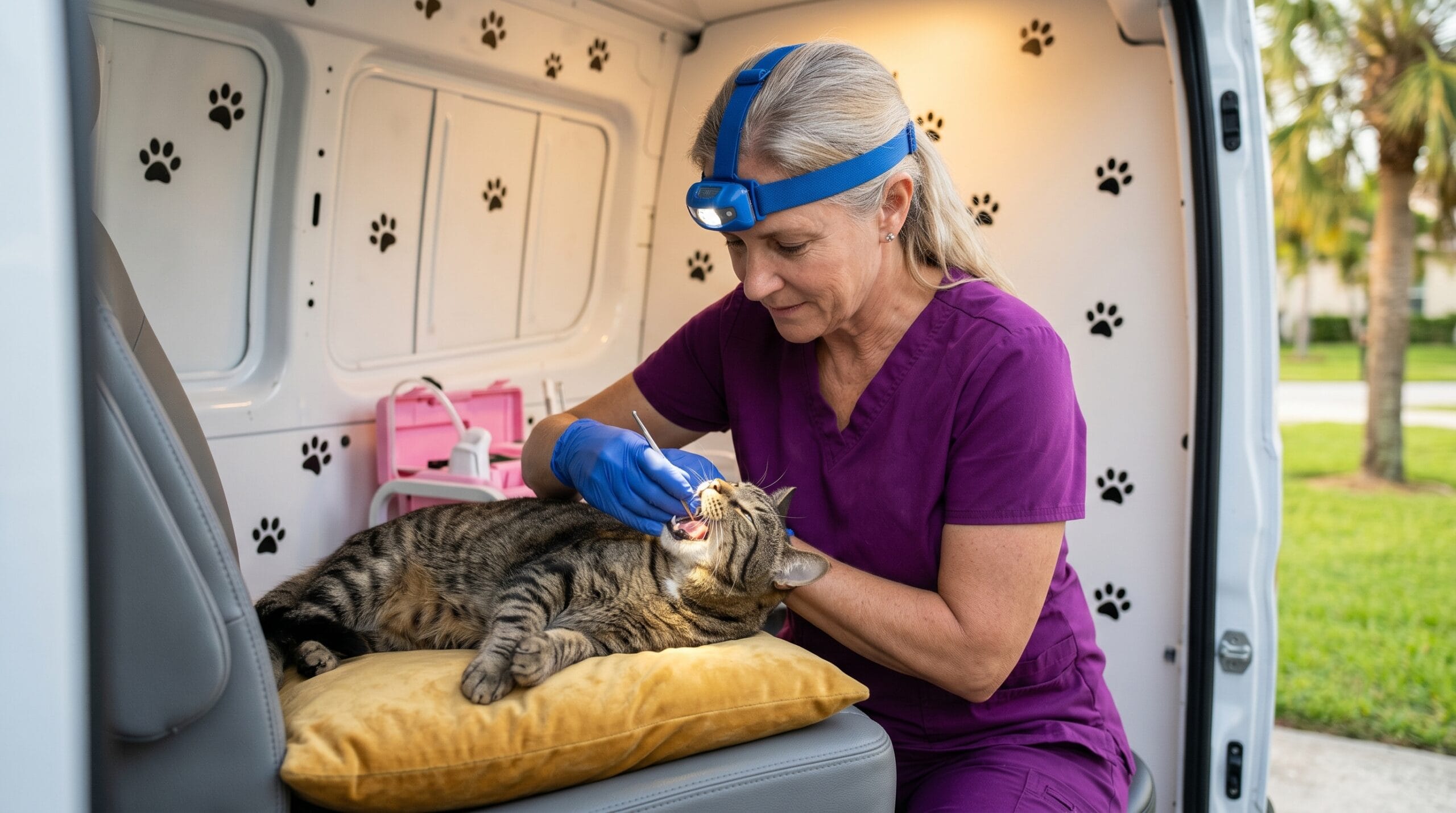
The Magic Paws provides anesthesia-free dental cleaning for cats across Florida, including Central Florida and South Florida, with individual eligibility assessed before each appointment. No two senior cats are at the same stage of oral health, and the service reflects that.
Every session incorporates Senses Therapy, the proprietary protocol that supports calm throughout the procedure using four components: aromatherapy, music therapy, chromotherapy, and massage. This approach reduces stress for the animal during cat teeth cleaning, which is particularly relevant for older cats that may be less adaptable to unfamiliar situations. The entire procedure takes place inside the branded mobile van, which comes directly to the owner’s home, so your cat avoids the stress of travel and clinic environments entirely.
Does dental disease in senior cats affect their overall health?
Dental disease in senior cats affects far more than the mouth. Cats with advanced periodontal disease frequently lose weight, eat less, and show behavioral changes that owners attribute to aging rather than pain. Quality of life declines before most owners recognize that a dental problem is the underlying cause.
The connection between oral health and systemic health in senior cats mirrors what is observed in dental disease in dogs and cats more broadly: chronic oral infection creates a sustained bacterial load that affects the heart, kidneys, and liver over time. For senior animals, whose organs are already less resilient, this connection is more consequential.
Changes in appetite are often the first sign owners notice, but they rarely connect it to the mouth. A cat that picks at food, loses interest in meals it previously enjoyed, or drops food while eating is frequently dealing with oral pain it has no way to communicate directly.

Is it too late to start senior cat dental care?
It is never too late to begin preventive dental care for a senior cat. The earlier you start, the less disease accumulates between cleanings, and the simpler each appointment becomes. But starting at age 9 or 11 still interrupts the cycle of progression and reduces the total impact of dental disease on your cat’s health.
The practical reality is that any cleaning removes tartar, controls bacterial load, and gives the gum tissue a chance to recover. A cat that has never had professional dental care still benefits significantly from a first appointment, regardless of age. What changes with a later start is the baseline condition your cat brings to that first session, not the value of beginning.
Your cat is already in their senior years. Don’t let dental disease catch up. Schedule an anesthesia-free cleaning with The Magic Paws today and give them the preventive care they deserve.
Frequently asked questions about senior cat dental care
At what age is a cat considered senior?
Cats are generally considered senior from age 7 onward. The geriatric phase begins around age 11. Dental risks scale at each transition: a 7-year-old cat accumulates tartar faster than a 3-year-old, and an 11-year-old has a less efficient immune response to oral bacteria than a 7-year-old. Treating all adult cats as a single category misses these differences.
How often should a senior cat get a dental cleaning?
Professional cleaning every six months is the standard recommendation for senior cats with a moderate to high history of tartar buildup. Cats with lower accumulation rates may manage well at one cleaning per year, but this should be determined after an individual assessment, not assumed. The right frequency is the one that keeps disease from progressing between appointments.
What are the early signs of dental disease in older cats?
Early signs include bad breath with a decay smell, mild gum redness at the margins, and slight behavioral shifts like less enthusiasm for dry food. More subtle indicators include increased grooming of the face, mild drooling, and a preference for softer surfaces when resting the face. Cats do not display dental pain openly, so these small behavioral changes are often the only early window available.
Can senior cat dental disease affect the kidneys and heart?
Oral bacteria enter the bloodstream through inflamed gum tissue and reach the kidneys and heart. Senior cats have a less efficient immune system, which means the bacterial load from periodontal disease circulates longer and places greater demand on organs that are already more vulnerable at this life stage. The mechanism is well documented in veterinary literature.
Is anesthesia safe for senior cats during dental procedures?
Anesthesia is a managed risk in senior cats, not an automatic danger. When a procedure genuinely requires it, qualified veterinary teams take careful precautions to reduce that risk. The stronger argument, though, is that consistent preventive cleaning reduces the likelihood that anesthesia will ever be necessary. A cat that receives regular cleanings rarely develops the level of disease that requires surgical intervention.
What is tooth resorption in cats and how common is it in senior cats?
Tooth resorption is a process where the body’s own cells begin breaking down the tooth structure, typically starting at the root or the gumline. It is not caused by bacteria in the same way as periodontal disease: it appears to involve an immune-mediated response to tissue damage. Prevalence increases with age, affecting a substantial portion of cats over five years. The condition is often silent until the tooth is significantly compromised, which is one reason regular professional evaluation matters in older animals.
How does senior cat dental care differ from care for younger cats?
Senior cats require higher cleaning frequency, are more susceptible to conditions like tooth resorption and stomatitis, and have a less effective immune response to control the spread of oral bacteria. Younger cats accumulate plaque at a slower rate and face fewer systemic consequences from mild gum inflammation. The dental care protocol that works for a 3-year-old cat is genuinely insufficient for a 9-year-old.
Can I clean my senior cat’s teeth at home?
Home brushing is a valuable complement to professional cleaning and is recommended as part of any senior cat dental care routine. It is not a substitute for professional care. Brushing removes surface plaque before it hardens, but it cannot address tartar that has already mineralized or reach the subgingival space where the most destructive bacterial activity occurs. Senior cats accumulate tartar faster than younger animals, which makes the professional component even more necessary.
Does The Magic Paws serve senior cats in Florida?
The Magic Paws serves senior cats across Florida, with individual eligibility assessed before each appointment to confirm that anesthesia-free cleaning is appropriate for your cat’s specific condition. Service covers Central Florida and South Florida. To check availability and book an appointment, visit themagicpaws.com/#pricing.
What happens if senior cat dental disease is left untreated?
Plaque becomes tartar, tartar causes gingivitis, gingivitis advances to periodontal disease, and periodontal disease leads to bone loss, tooth loss, and systemic infection. At each stage, treatment becomes more complex and more likely to require anesthesia. Regular preventive care interrupts this cycle before it reaches the stages where options narrow and risks increase.