Your cat’s teeth are not designed to self-clean. Without regular professional care, plaque hardens into tartar, bacteria settle below the gum line, and what starts as a cosmetic issue becomes a structural one. Understanding cat dental cleaning before and after the procedure helps you know what to watch for, what to expect when the session ends, and why the changes matter beyond a fresher smell.
Most owners notice something is off before they know what it is: the cat turns away from dry food, flinches when touched near the cheeks, or develops breath strong enough to notice from across the room.
These are not isolated quirks. They are signals that the mouth has been working harder than it should for longer than is comfortable.
A professional cleaning addresses what brushing at home cannot reach on its own: hardened deposits on the tooth surfaces, buildup along the gum line, and bacteria that have had time to settle.
The difference before and after is visible in the mouth, but it also shows up in behavior, appetite, and the way your cat carries itself in the days that follow.
This article walks through each stage: what a cat’s mouth typically looks like before a cleaning, what happens during the procedure, what changes immediately after, and how to keep those results going at home.
What does a cat’s mouth look like before a cleaning?
Before a professional cleaning, most cats show visible tartar buildup on the upper molars and canines, inflamed or pale gums, and breath with a sharp bacterial odor that persists regardless of diet.
Tartar appears as a yellow or brownish deposit that adheres to the enamel and cannot be removed by brushing alone. It concentrates near the gum line first, then spreads toward the crown of the tooth.
Below the surface, plaque accumulates in periodontal pockets, which are small spaces between the tooth root and the surrounding tissue. As these pockets deepen, they become a site for infection, which is what connects untreated feline dental disease to organ-level complications over time.
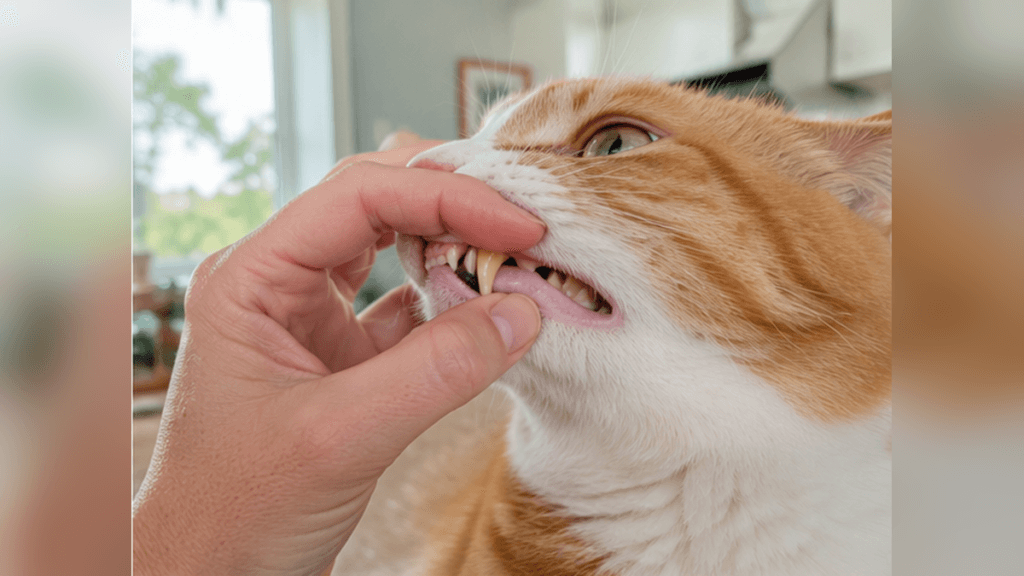
If you inspect your cat’s mouth at home and notice any of the following, a cleaning is likely overdue. You can check the signs of dental disease in cats for a detailed breakdown, but the most common ones to look for include:
- Yellow or brown crust along the gum line, especially on the upper back teeth
- Gums that look red, swollen, or that bleed when the cat chews on something firm
- Cat bad breath with a sharp, persistent odor that differs from normal food smell
- Visible recession of the gum tissue, making teeth appear longer than usual
- Brown staining at the base of the canines.
The silent threat to your cat’s health is that most cats mask discomfort well. By the time behavioral signs appear, the condition has usually been developing for months. Similarly, understanding the hidden dangers in your cat’s mouth starts with knowing what normal tissue looks like before you can recognize what has changed.
The signs that tell you a cleaning is overdue
Beyond what you can see, behavioral cues often appear before the visual ones become obvious. Cats with significant oral discomfort frequently chew on one side of the mouth, which leaves food residue concentrated on the other side and causes uneven tartar buildup over time.
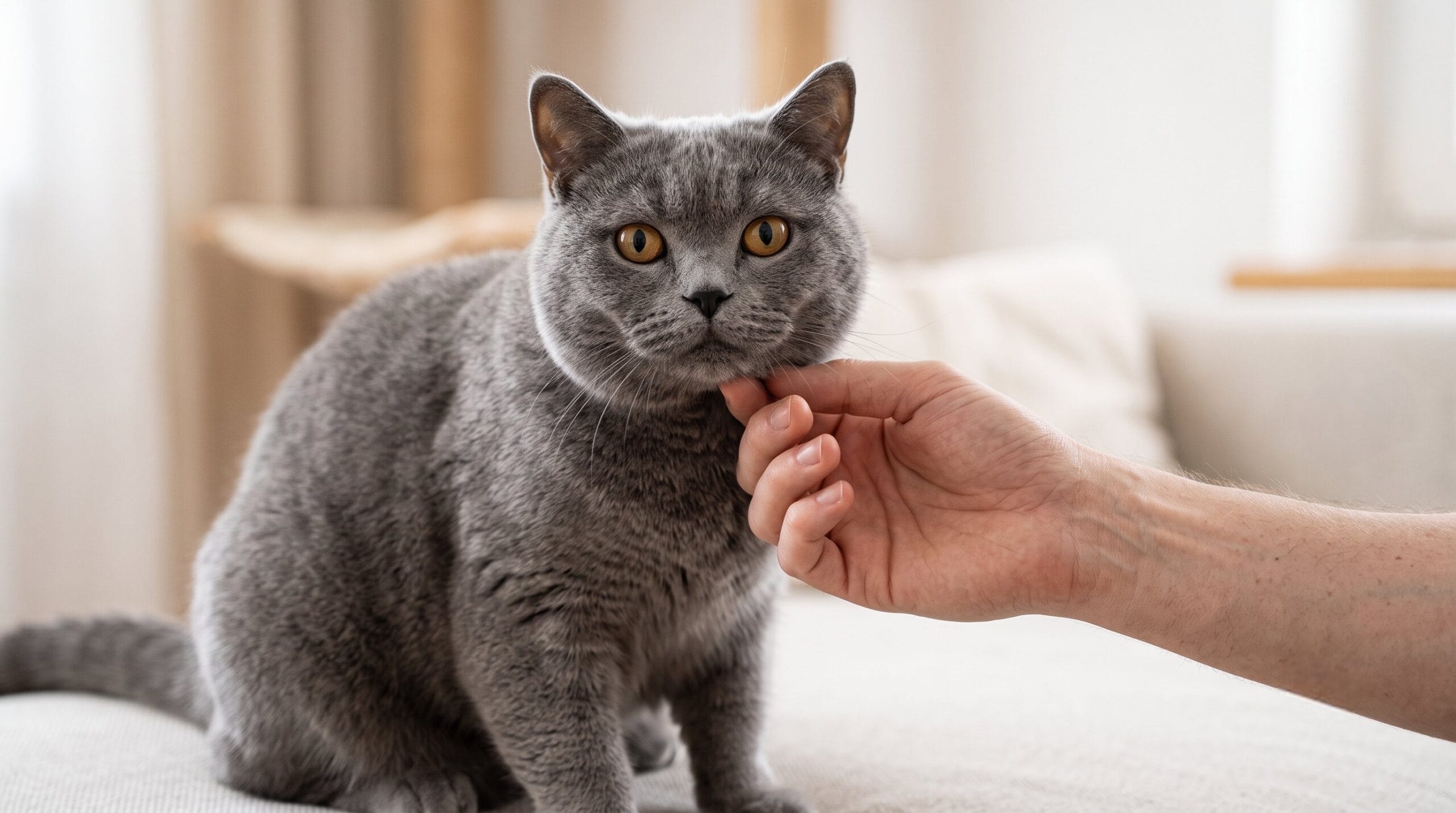
Dropping food mid-chew, or picking up a piece only to set it down without swallowing, is another indicator. The cat is hungry, but the act of biting has become uncomfortable enough to interrupt. Reluctance to be touched near the muzzle, pulling away when you stroke the cheeks, or reacting to face contact that previously caused no response: these are all signs the mouth deserves closer attention.
Changes in grooming behavior can also signal oral pain. Cats that stop grooming the face entirely, or that groom less thoroughly than usual, are often avoiding contact with a sensitive area. These behavioral patterns do not resolve on their own once tartar and gum inflammation are established.
What happens during a professional cat dental cleaning?
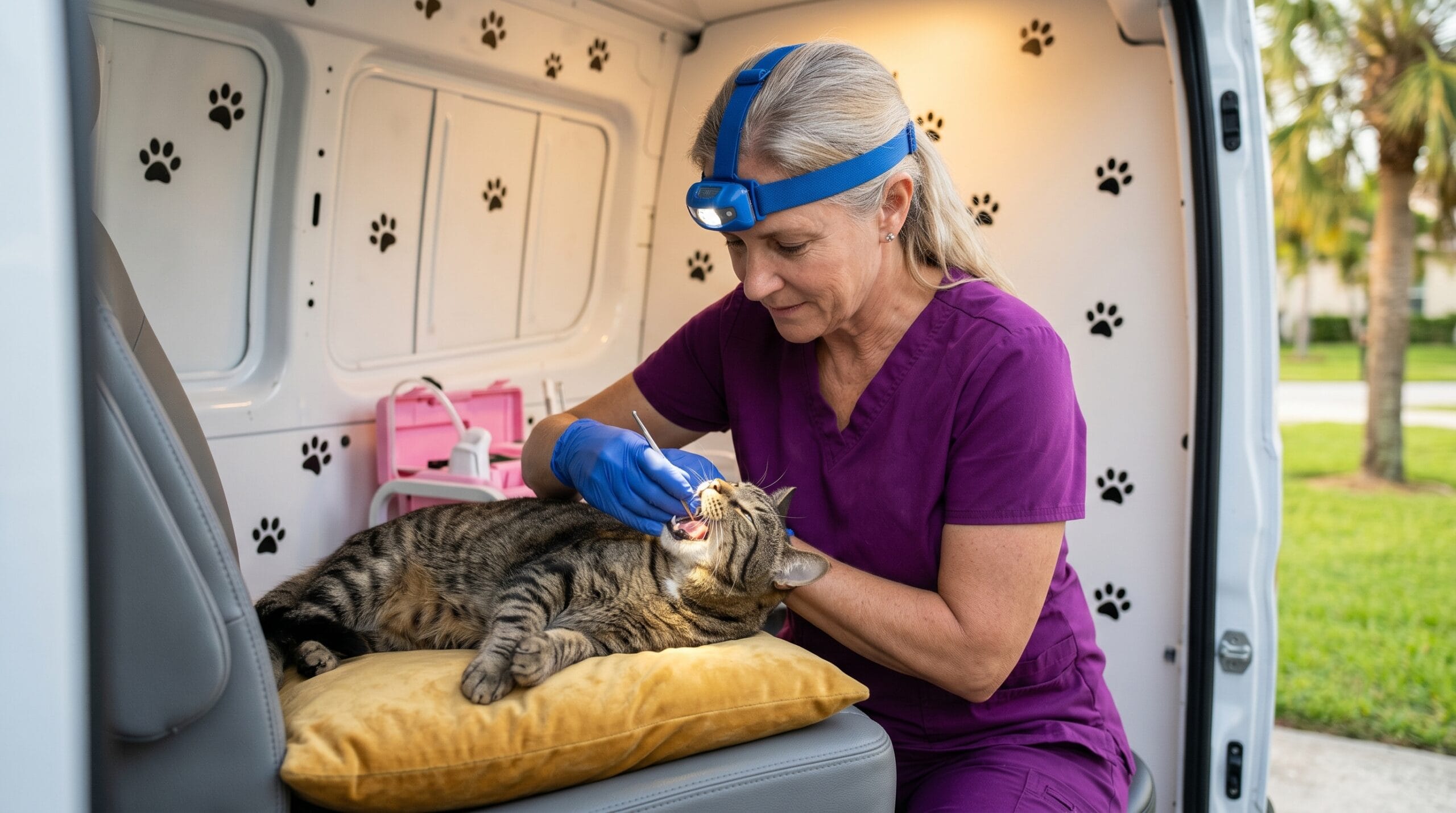
A professional anesthesia-free cat dental cleaning involves manual removal of plaque and tartar above the gum line, scaling of the tooth surface, and polishing of the enamel to reduce future buildup.
The session typically begins with a visual assessment of how many teeth cats have and which surfaces need the most attention. Adult cats have 30 teeth, and each one is evaluated individually for buildup, gum contact, and surface condition.
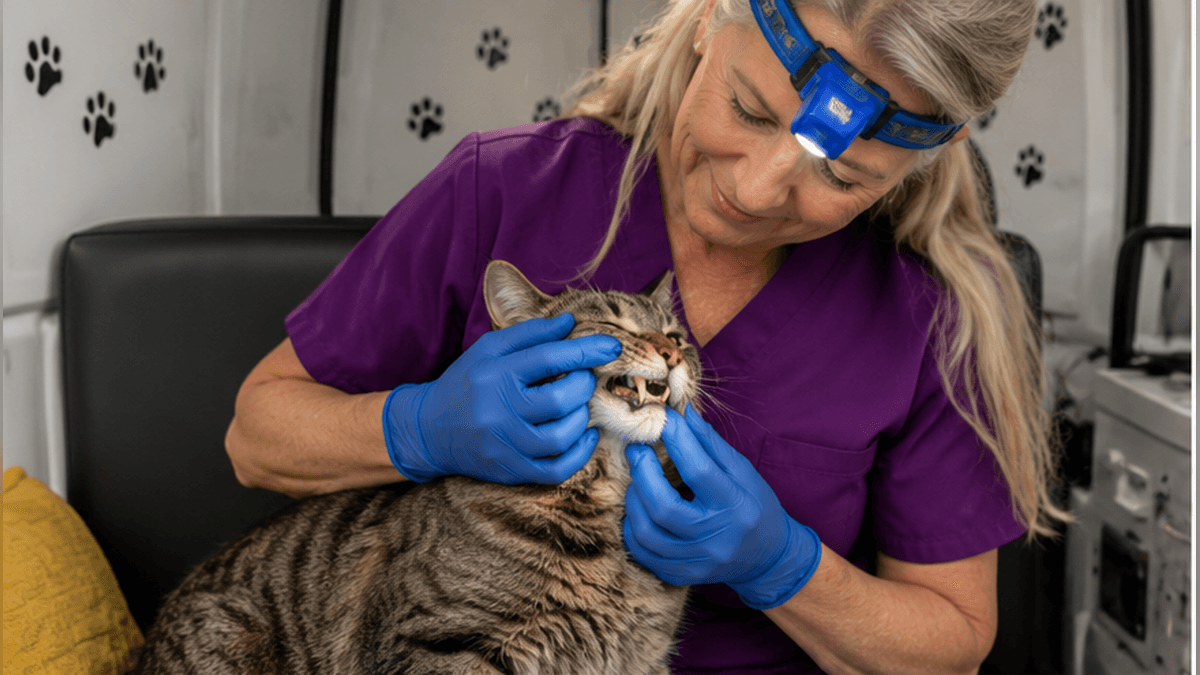
A technician examines the gingival tissue, checks for obvious signs of periodontal disease, and identifies any areas that may require veterinary referral before or after the cleaning proceeds.
Scaling removes the hardened deposits that have bonded to the enamel. Tooth scaling uses hand instruments calibrated for feline mouth anatomy: smaller, and more precise than the tools used in canine procedures.
After scaling, tooth polishing smooths the surface of each tooth, which matters because a rough enamel surface accumulates plaque faster than a polished one. The final step is a rinse to flush residual debris from the gingival margin.
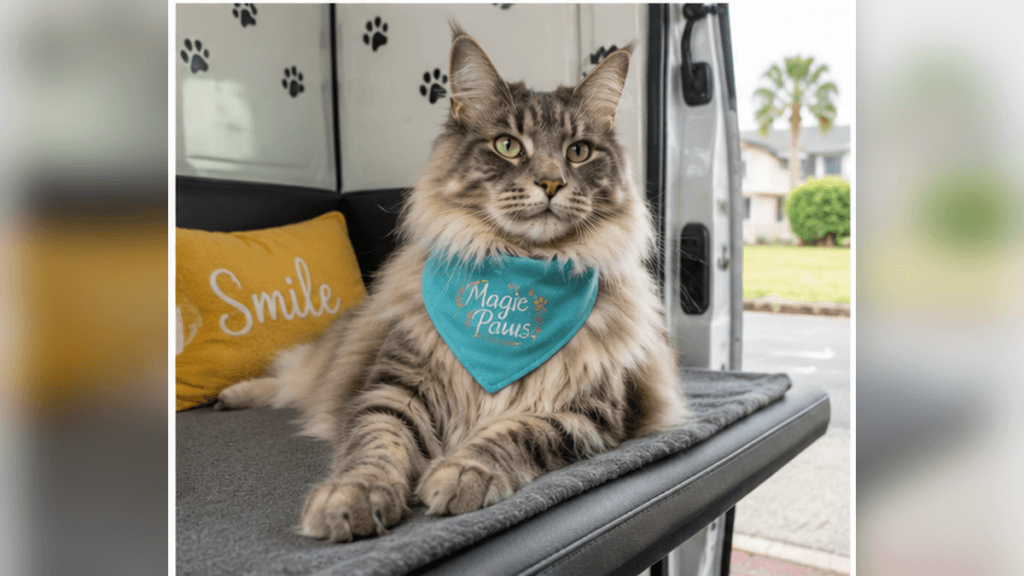
For cats that are eligible for this type of care, the cat dental cleaning service at The Magic Paws is performed inside a fully equipped mobile unit that travels directly to the owner’s address throughout Florida.
The entire appointment takes place without sedation. No pre-procedure fasting is required for anesthesia-free cleaning, though a one-hour food pause before the session helps avoid any nausea during transport or handling.
What changes right after a cat dental cleaning?
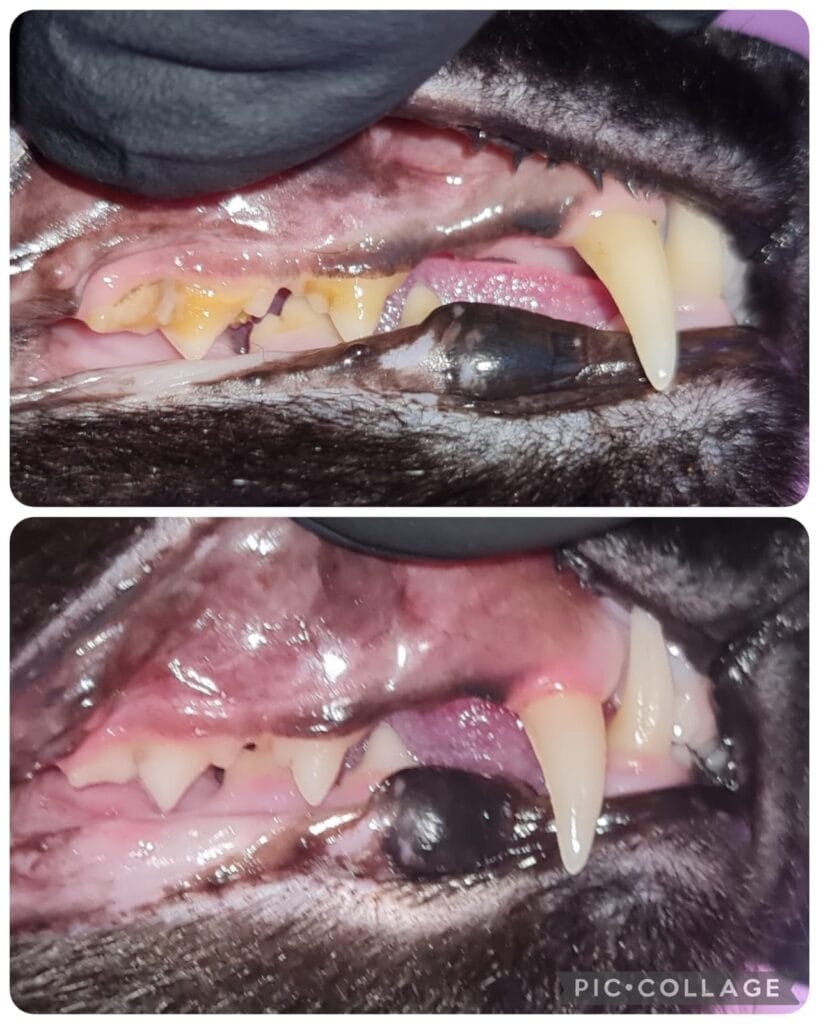
Immediately after a professional cleaning, the most visible changes are cleaner tooth surfaces, reduced gum redness, and noticeably fresher breath. Because no anesthesia is used, the cat is alert and active as soon as the appointment ends.
This last point matters for owners comparing options. With general anesthesia, recovery takes several hours: the animal is groggy, unsteady, and requires monitoring. With anesthesia-free cleaning, there is no sedation recovery period. The cat returns home in the same state it left: calm, aware, and ready to eat. That immediate return to normal behavior is one of the most consistent things owners report after the session.
On the oral side, the changes are equally direct. The tooth surfaces feel smoother, which you can confirm by gently running a clean finger along the outer edge of the canines.
Gum color shifts from inflamed red toward a healthier pale pink within the first day. Bacterial odor, the sharp smell linked to subgingival bacteria, is significantly reduced once the source of that bacterial load has been removed from the tooth surface and gum margin.
Cat gum health after cleaning improves noticeably in the first 24 to 48 hours, especially in cats that had visible inflammation before the session. The tissue was irritated by constant bacterial contact; once that contact is reduced, the swelling begins to resolve on its own.
How your cat may act differently in the days after?
In the first few days after cleaning, most cats eat more willingly, show less hesitation when picking up food, and appear more comfortable overall. These shifts are behavioral indicators of reduced oral pain, not just cosmetic improvement.
Cats that were chewing on one side often return to using both sides of the mouth within 48 hours. Those that had been reluctant to be touched near the face typically tolerate grooming and handling more easily.
Some owners describe a visible increase in energy: the cat moves more freely, seeks interaction, and behaves more like it did when younger. This is not unusual. Chronic oral discomfort suppresses activity, and its removal allows the animal to return to its baseline.
Occasional mild sensitivity at the gum line is normal in the first day, particularly if the cat had significant buildup prior to the session. Offering soft food during this period reduces friction against newly cleaned tissue. Within 48 to 72 hours, most felines return to their regular diet without any additional adjustment.
How long do the results of a cat dental cleaning last?
The immediate results of cat dental cleaning, including cleaner tooth surfaces and improved gum health, are visible right after the session, but how long they last depends on home hygiene and cleaning frequency.
Plaque begins forming again within 6 to 8 hours of cleaning, according to VCA Animal Hospitals. Left unmanaged, that plaque mineralizes into tartar within days. This is not a failure of the cleaning; it is the nature of the oral environment. It means that home care, started as soon as possible after the appointment, directly affects how quickly the next professional session becomes necessary.
Cat teeth cleaning results hold longer in animals that receive daily or near-daily tooth brushing, benefit from VOHC-accepted dental products between appointments, and return for professional cleaning on a consistent schedule. Cats with higher tartar formation rates, often seen in certain breeds or older animals, may need sessions more frequently than once per year.
What should you do at home after a cat dental cleaning?
After a professional cleaning, the most effective home care steps are starting a toothbrushing routine, offering soft food for the first 24 to 48 hours if there is any gum sensitivity, and introducing a dental hygiene product appropriate for cats.
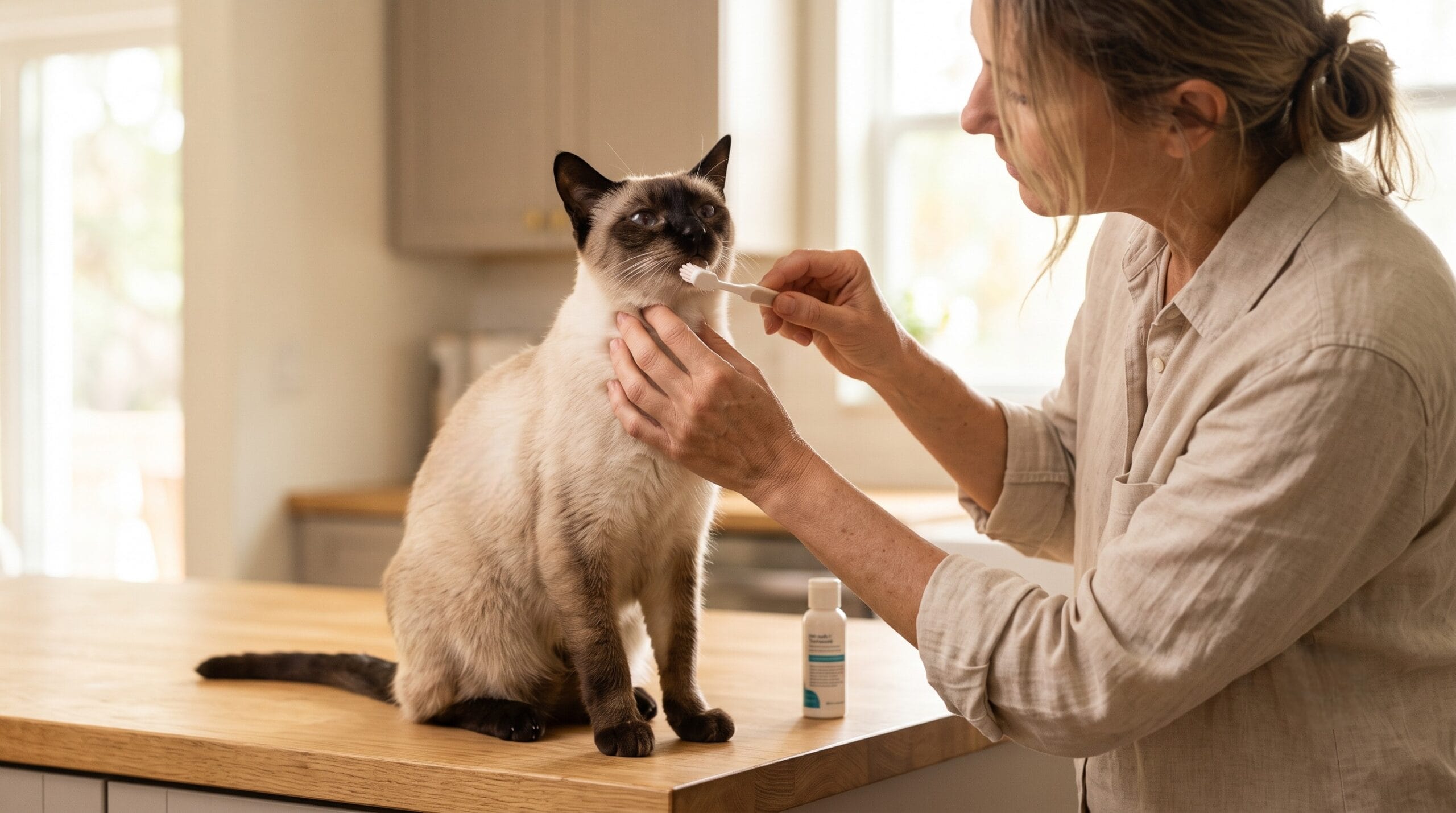
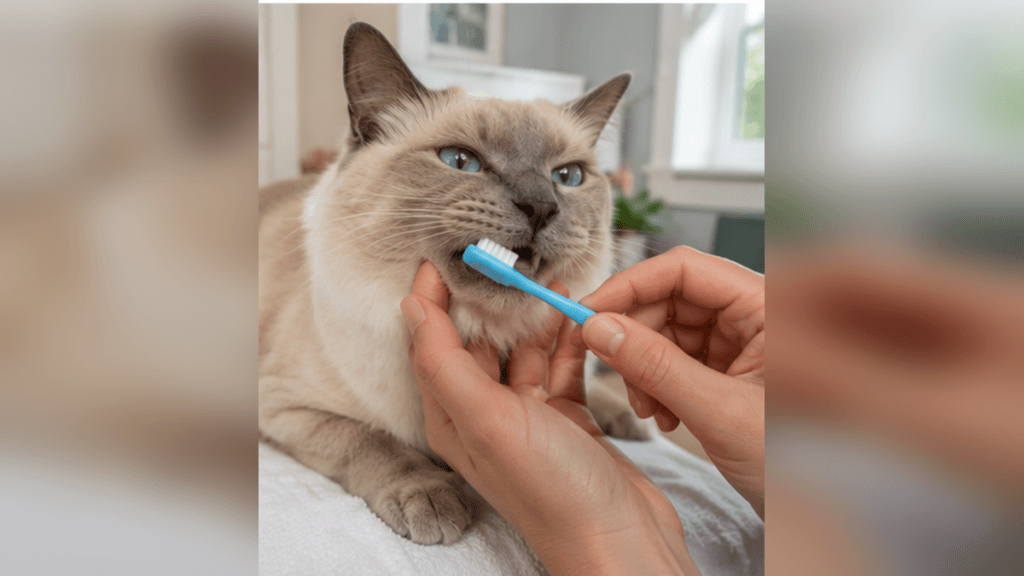
The cleaning removes what has built up. Home hygiene determines how quickly it returns. Starting a brushing routine within a few days of the appointment gives the best results: the gum tissue is less inflamed, making early contact with a brush more tolerable than it would have been before cleaning. Use a toothpaste formulated for cats, never human toothpaste, and introduce the routine gradually.
Between brushing sessions, cat dental chews and cat dental treats can contribute to plaque control as part of a broader routine. For products that have been independently tested for effectiveness, the VOHC-accepted dental products for cats list is a reliable starting point.
Avoid hard chews or toys that require significant force to bite in the first few days after cleaning. Once the gum tissue has settled, returning to a normal routine is generally fine.
How often should cats get a professional dental cleaning?
Most cats benefit from professional dental cleaning once or twice a year, with frequency adjusted based on age, breed, diet, and individual plaque formation rate.
Younger cats with minimal buildup and an established home hygiene routine may do well with annual appointments. Senior cats, cats with a history of periodontal disease, or those whose owners report rapid tartar return often need sessions every six months.
The American Veterinary Dental College recommends regular professional dental assessment for all companion animals, with frequency determined by the individual animal’s oral health status.
The cat teeth cleaning cost varies based on provider, location, and the level of care required. For owners managing a preventive schedule, knowing the full-cost picture before committing to a frequency helps with planning.
Preventive cleaning at regular intervals typically costs less over time than waiting until advanced disease requires veterinary-level intervention.
Is a cat dental cleaning without anesthesia a real option?
Anesthesia-free cat dental cleaning is a real and effective option for eligible cats. It allows preventive maintenance, including scaling and polishing, to be performed on a conscious animal that remains calm throughout the session.
Not every cat qualifies. Animals with advanced periodontal disease, fractured teeth, or significant gingival recession may require general anesthesia for safe treatment. The eligibility assessment happens before the session begins: the technician evaluates the cat’s behavior, health history, and current oral condition to determine whether the appointment can proceed safely.
For cats that do qualify, sedation-free cleaning removes the risks associated with general anesthesia: cardiac stress, hypothermia during recovery, and post-sedation disorientation.
These risks are not theoretical. They are the reason many owners, particularly those with older cats or felines with underlying health conditions, seek anesthesia-free alternatives specifically.
The Magic Paws specializes in professional anesthesia-free cat dental cleaning across Florida. Each appointment is performed by trained technicians following a structured protocol, and eligibility is confirmed individually before any session begins. Owners across South Florida and Central Florida can schedule directly through the website.
Is your cat’s mouth telling you something?
By the time tartar is visible and breath has changed, the process has been developing for a while. Cat dental cleaning before and after a professional session shows that the mouth can shift quickly: cleaner surfaces, less inflamed tissue, and a cat that eats and moves with noticeably more ease.
The changes are not just cosmetic. They reflect a reduction in the bacterial load that drives periodontal disease, and that reduction has a direct effect on how comfortable your cat feels day to day.
Acting on the signs early, rather than waiting until the condition forces a decision, is what keeps the cleaning preventive rather than corrective.
Schedule your cat’s dental cleaning today. Book your appointment and see the difference at your doorstep, across Florida.
FAQ about cat dental cleaning before and after
Do cats feel better after a dental cleaning?
Yes, most cats show visible improvement within 24 to 48 hours after a professional dental cleaning. Behavioral changes are the clearest indicator: cats that were eating hesitantly begin to pick up food more willingly, those that avoided face contact become more tolerant of handling, and general energy levels often increase noticeably. The shift reflects reduced oral discomfort, not just surface-level improvement.
Is it normal for a cat to be lethargic after dental cleaning?
With anesthesia-free cleaning, the cat is alert and behaving normally as soon as the session ends. There is no sedation recovery period. With general anesthesia, some grogginess is expected in the first few hours: the cat may be unsteady, slow to respond, or less interested in food until the sedative clears. If lethargy extends beyond 24 hours after an anesthesia-based procedure, contact the treating veterinarian.
What can cats eat after a dental cleaning?
Soft food is recommended for the first 24 to 48 hours if there is any gum sensitivity after cleaning. This reduces friction against the tissue while it settles. Water is fine throughout. As soon as the cat is eating without hesitation, returning to the regular diet is generally appropriate. No specific brands are required: the goal is consistency and avoiding anything that requires significant biting force in the first day or two.
How long does it take a cat to recover from dental cleaning?
With anesthesia-free cleaning, there is no recovery period. The cat returns to normal activity immediately after the session. With general anesthesia, recovery typically takes a few hours to one full day, depending on the individual animal and the duration of sedation. The absence of a recovery period is one of the primary practical advantages of anesthesia-free professional cleaning for eligible cats.
Can you see a difference in cat teeth after cleaning?
Yes. The most visible changes are the removal of yellow or brown tartar from the tooth surfaces, a reduction in gum redness along the margin, and a smoother enamel surface that you can detect by gently touching the outer edge of the canine teeth. Owners who inspect the cat’s mouth the day after the session consistently report a visible contrast to what they saw before the appointment.
Why does my cat’s breath still smell after dental cleaning?
Plaque begins forming again within hours of cleaning, and if home hygiene is not started promptly, bacterial odor can return before the next appointment. In some cases, persistent bad breath after cleaning indicates an underlying condition that the surface cleaning did not fully address, such as a tooth root infection or subgingival disease. If the odor returns within days and does not improve with home care, a veterinary assessment is the appropriate next step.
How do I know if my cat needs a dental cleaning?
The most common signs include visible tartar on the back teeth, red or swollen gums, persistent bad breath, food dropping during meals, chewing on one side, and reluctance to be touched near the face. Not all cats show obvious signs of discomfort even when dental disease is present, which is why periodic professional assessment matters regardless of visible symptoms.
What is the difference between scaling and polishing in cat dental cleaning?
Scaling is the removal of hardened tartar from the tooth surface using specialized instruments. It addresses the buildup that cannot be removed by brushing. Polishing follows scaling: it smooths the enamel surface, which matters because rough enamel accumulates plaque more quickly than polished enamel. The two steps work together. Scaling removes what is already there; polishing slows how fast it returns.
How much does a cat dental cleaning cost?
Costs vary by location, provider, and the cat’s individual oral health condition. Cats requiring more extensive cleaning before results stabilize may need more frequent appointments, which affects the total investment over time. For a full breakdown of what to expect, the cat teeth cleaning cost guide covers the variables that affect pricing and how to evaluate options.
Do cats need anesthesia for dental cleaning?
Not necessarily. Preventive dental cleaning, including scaling and polishing, can be performed without sedation on cats that meet the eligibility criteria. Cats with advanced periodontal disease, fractured teeth, or conditions requiring surgical intervention will need general anesthesia for safe treatment. For cats in good health with manageable buildup, anesthesia-free cleaning is a safe and effective option. The Magic Paws specializes in sedation-free professional cat dental cleaning across South Florida and Central Florida, with individual eligibility confirmed before each session.