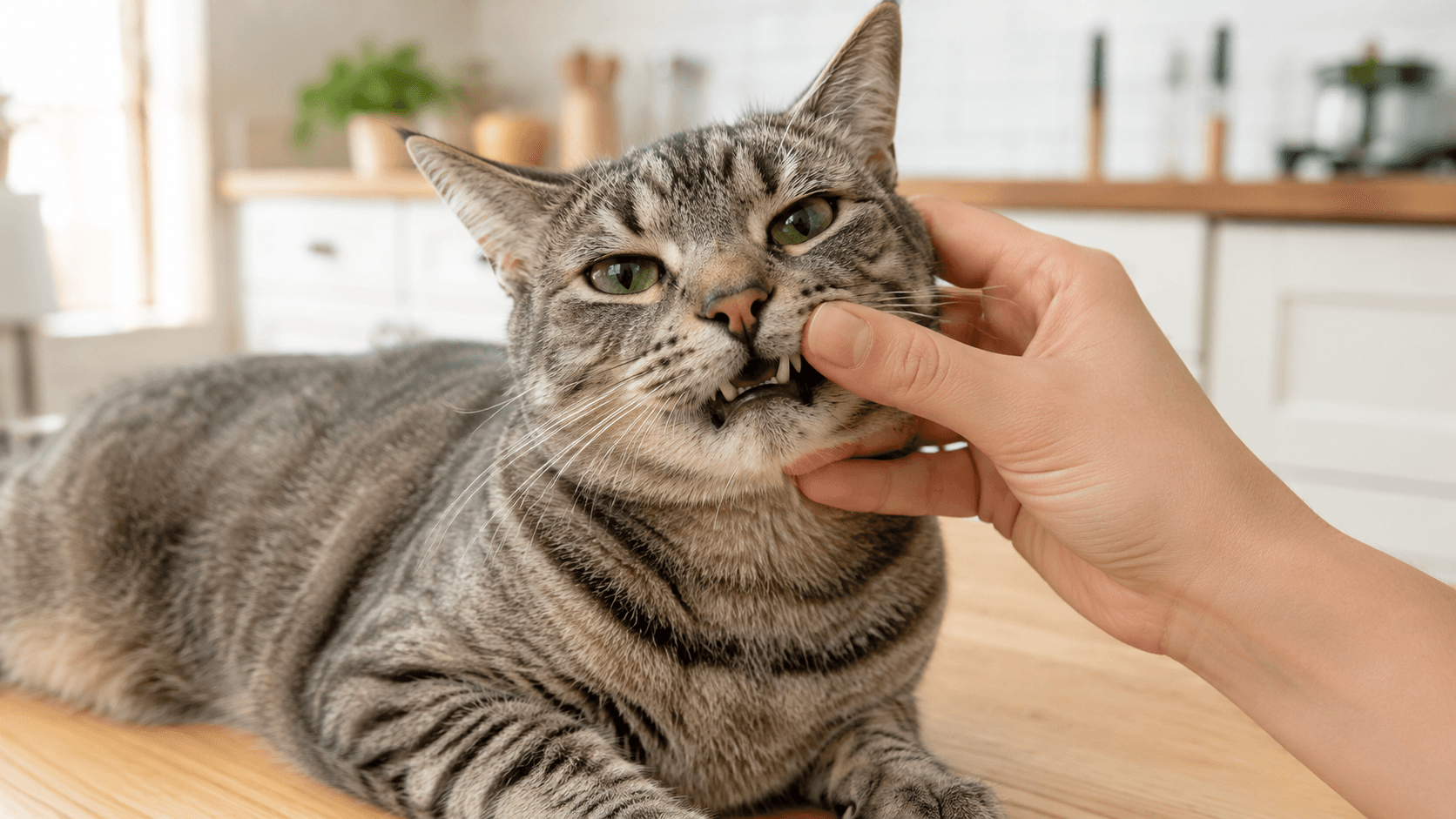

Dog tooth pain symptoms are easy to miss because dogs do not express pain the way humans do. A dog with a chronic toothache may continue eating, playing, and following its daily routine while the underlying condition quietly progresses beneath the gumline.
That ability to mask discomfort is not stubbornness or stoicism. It is a survival instinct inherited from wild ancestors for whom showing weakness meant vulnerability. A dog in dental pain adapts its behavior rather than stopping, which is precisely what makes oral health problems so difficult for owners to detect in time.
Most pet owners notice something is wrong only when a symptom becomes impossible to ignore: a visible swelling on the face, food suddenly falling from the mouth, or an unusual reluctance to be touched near the jaw. By that point, the condition has often been building for months.
Understanding which behavioral and physical changes signal oral discomfort gives you an earlier entry point. The sooner a difficulty is identified, the more options remain available before a sedated veterinary procedure becomes the only path forward.
What are the most common dog tooth pain symptoms?
Dog tooth pain symptoms range from subtle behavioral shifts to visible physical changes, and most fall into patterns that owners can recognize with attention. The earliest signs are behavioral: a dog adjusts how it eats, avoids certain textures, or becomes less interested in activities it once enjoyed.
The following are the most documented signs of tooth pain in dogs, ordered roughly from earliest to most advanced:
- Pawing at the mouth or rubbing the face: a dog experiencing oral discomfort may repeatedly paw at its muzzle or drag its face along surfaces, trying to relieve pressure or pain it cannot otherwise communicate.
- Dropping food while eating: if a pet picks up food and immediately lets it fall, or chews hesitantly before spitting pieces out, the mouth may be too painful to apply normal pressure.
- Chewing exclusively on one side: switching to one side to avoid putting pressure on a painful area is one of the most consistent early signs of dog toothache symptoms.
- Reluctance to eat hard food or treats: an animal that previously ate kibble or chews without difficulty and suddenly avoids them may be protecting a sensitive tooth or inflamed gum.
- Reduced appetite: not all dogs stop eating entirely. Many continue eating but take longer, eat less, or show clear hesitation, especially around food that requires effort to chew.
- Bad breath beyond normal: while some degree of dog breath is expected, a noticeably stronger or different odor, particularly one that is sharp or foul, often indicates bacterial activity from gum inflammation or tooth root involvement.
- Reluctance to be touched near the face or jaw: a dog that pulls away, flinches, or becomes tense when its face is handled may be protecting a painful area.
- Facial swelling: visible swelling below the eye or along the jaw typically signals a tooth root abscess, which is a more advanced stage requiring immediate veterinary attention.
For a broader look at the physical changes that accompany these behavioral patterns, the guide on signs your pet might have dental problems covers the visible indicators in more detail. Scheduling preventive dog teeth cleaning before symptoms reach this stage remains the most reliable strategy for keeping dental disease from reaching a critical point.
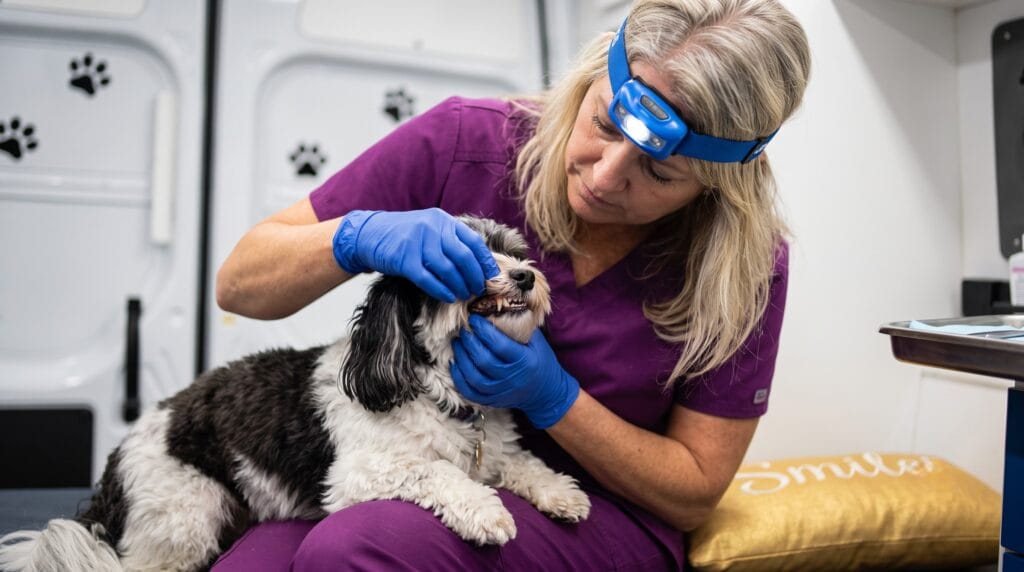
Behavioral changes that signal oral discomfort
Beyond eating habits, dog dental pain behavior extends into how a pet interacts with its environment and with people. These changes are easy to attribute to mood, aging, or other causes, which is why they so often go unaddressed.
Dogs in chronic oral pain frequently become less interested in play, particularly with hard rubber toys, rope toys, or any object that requires gripping and pulling. A dog that used to carry a ball everywhere and now drops it immediately may be avoiding contact with a specific tooth. Irritability when approached, especially around the head, and a general reduction in social engagement are also patterns worth noting.
According to the American Kennel Club, changes in eating behavior and activity levels are recognized clinical indicators of dental pain. These shifts are often subtle enough that they register as a general sense that the animal “seems off” rather than a clear signal that something is wrong with its mouth. Connecting the behavioral change to no anesthesia dog teeth cleaning as a preventive step early in this process can interrupt the cycle before it advances.
What does a dog in dental pain act like?
A dog in dental pain does not usually cry, whimper, or stop functioning. Most animals adapt their behavior around the discomfort, making the condition harder to identify and easier to overlook in daily life.
The behavioral presentation changes depending on whether the pain is acute or chronic. Acute pain from a broken dog tooth or a newly developed abscess tends to produce a sudden and visible reaction: the animal may yelp when eating, paw at its mouth insistently, refuse food entirely, or show rapid behavioral change over hours or a day.
Chronic pain, on the other hand, develops so gradually that neither the dog nor the owner registers the shift clearly.
A pet dealing with progressive tartar buildup and gum inflammation may take months to display any detectable sign. When the sign does appear, it is typically behavioral rather than physical: eating more slowly, becoming selective about texture, or showing occasional hesitation before picking up food.
Owners who know how to tell if their dog has a toothache will recognize that sudden changes suggest acute causes, while slow-building changes suggest a condition that has been developing for longer than anyone realized. The article on how to tell if your dog needs a dental cleaning outlines three specific behavioral markers that indicate it is time for professional intervention.
How does dog tooth pain progress if left untreated?
Untreated dog tooth pain follows a predictable biological path: plaque accumulates on tooth surfaces, calcifies into tartar, triggers gum inflammation, and eventually leads to the destruction of tissue and bone around the root. Each stage causes more damage than the last, and none of them resolve on their own.
The progression typically moves from surface plaque to gingivitis to full periodontal disease in dogs. At the periodontal stage, bacteria have migrated below the gumline and begun breaking down the structures that hold the tooth in place. According to the American Veterinary Dental College (AVDC), periodontal disease is the most common health condition diagnosed in adult dogs, with most animals showing some degree of disease by the age of three.
Left further unaddressed, this stage can progress to a tooth root abscess, where infection accumulates at the base of the tooth and may eventually affect surrounding tissue. From a dental professional’s perspective, the progression from surface plaque to in-depth tissue involvement follows the same biological pattern in dogs and humans. Illana Reisner, founder of The Magic Paws and a licensed dentist with a human dental degree, sees this parallel consistently: structures respond to chronic bacterial presence in predictable ways, regardless of species.
The systemic consequences extend beyond the mouth. Bacteria from advanced periodontal disease can enter the bloodstream and place stress on the heart and kidneys, two organs already at risk in older animals. For dogs already showing signs of dog dental disease, the guide on dog dental disease explains the stages of progression and what each one means for the animal’s overall health.
Your dog’s behavior may be saying what words can’t. Schedule an anesthesia-free cleaning before the problem advances. Book now at The Magic Paws.
How do I know if my dog has a tooth infection?
A tooth infection in dogs, typically caused by a tooth root abscess, produces signs that are more specific and more urgent than standard dental pain. The most reliable indicator is facial swelling, usually appearing below the eye on the same side as the affected tooth.
Other signs that point toward infection rather than generalized oral discomfort include a draining fistula (a small opening on the skin below the eye where the abscess has created an exit point), persistent lethargy that goes beyond the animal’s normal low-energy days, fever, and severe halitosis that has worsened noticeably in a short period. A dog not eating due to tooth pain at this stage is common because the combination of swelling and infection makes any jaw movement painful.
These signs require immediate veterinary attention. A tooth root abscess is not a condition that resolves without intervention, and delay allows the infection to spread. For owners trying to understand what to do after identifying these signs, the article on dental exams for pets outlines what a professional evaluation typically involves.

Can dog tooth pain go away on its own?
No, because dog tooth pain doesn’t resolve without addressing its cause. The underlying source of the pain, whether plaque and tartar buildup, gum inflammation, periodontal disease, or a tooth root abscess, requires professional intervention.
What often happens instead is that the animal stops showing obvious signs while the condition continues to advance. Dogs adapt their behavior around chronic discomfort: they adjust their chewing, eat more slowly, and stop reacting in ways that signal pain. This behavioral adaptation leads owners to believe the problem has passed. The pain has not gone away. The animal has simply learned to work around it.
Delayed treatment increases the complexity and risk of any eventual procedure. A pet that requires sedation for an extraction or dental surgery because the disease was allowed to progress carries a higher procedural risk than one that received preventive maintenance at an earlier stage.
Understanding the risks of dental cleaning under anesthesia in late-stage disease reinforces why early preventive cleaning, without sedation, is the more responsible path when the condition allows for it.
How can I prevent tooth pain in my dog before it starts?
Preventing dog tooth pain starts with removing the source before it causes damage: plaque, which accumulates on tooth surfaces every day and calcifies into tartar if left in place. A combination of home care and professional cleaning address both the daily buildup and the hardened deposits that brushing cannot reach.
Professional cleaning should happen every six to 12 months for most dogs, with frequency adjusted based on breed, age, and individual buildup rate. Small breeds and brachycephalic animals tend to accumulate tartar faster due to tooth crowding, so they often benefit from more frequent attention.
At home, daily brushing is the most effective maintenance tool available to owners, and dog dental chews can provide supplementary mechanical action between sessions, though they do not substitute for brushing or professional cleaning.
For dogs in the early-to-intermediate stages of tartar accumulation, anesthesia-free dental cleaning offers a practical, low-stress alternative to sedated procedures. The Magic Paws operates across Florida as a mobile dog dentist service, bringing professional preventive cleaning directly to the owner’s home.
Each session includes the full Senses Therapy protocol, which combines aromatherapy, music therapy, chromotherapy, and massage to keep pets calm throughout the procedure without any sedation required.

When should I take my dog to a professional for dental pain?
Take your dog to a veterinarian immediately if you observe facial swelling, a draining fistula below the eye, fever, or complete refusal to eat. These signs indicate infection or acute structural damage that requires diagnosis and likely antibiotic treatment or surgical intervention before anything else.
For signs that fall short of that threshold, such as changes in chewing behavior, mild bad breath, food dropping, or reluctance around hard toys, professional preventive cleaning is the appropriate next step.
The Magic Paws evaluates each animal’s eligibility before every session, and dogs showing early-stage buildup without active infection are typically good candidates for anesthesia-free care.
Understanding the distinction between what requires immediate veterinary involvement and what responds well to preventive maintenance is precisely what the article on reasons to schedule your pet’s dental cleaning addresses.
Most of the conditions that eventually require sedated procedures start as early-stage buildup that could have been managed preventively. The sooner that window is used, the more options remain available.
Your dog can’t ask for help. You can act before the pain gets worse. Book an anesthesia-free cleaning with The Magic Paws today.
Frequently asked questions about dog tooth pain symptoms
What are the first signs of tooth pain in dogs?
The earliest signs of tooth pain in dogs are behavioral and easy to miss. A change in chewing side, reluctance to pick up hard toys, and a gradual reduction in appetite are the three most common early indicators. These signs frequently go unnoticed because they develop slowly and can be attributed to other causes.
Can a dog live with tooth pain?
Technically yes, but not without consequences. A dog living with chronic tooth pain adapts its behavior around the discomfort while the underlying condition continues to worsen. Over time, untreated dental disease affects quality of life, eating function, and, in advanced cases, systemic organ health through bacterial spread from the mouth.
How do I know if my dog has a tooth infection?
The clearest signs of a tooth infection are visible facial swelling (typically below the eye on the affected side), a draining fistula on the skin, worsening lethargy, and severe halitosis that appeared or intensified quickly. These signs are distinct from general dental pain and require veterinary attention without delay.
Do dogs hide tooth pain?
Yes. Dogs suppress pain signals by instinct, a behavioral trait inherited from wild ancestors for whom showing weakness meant vulnerability. A dog with significant dental disease may continue eating and behaving relatively normally while the condition advances, making professional evaluation the only reliable way to assess what is actually happening in the mouth.
What dog tooth pain symptoms show up in eating habits?
Dental pain commonly changes how a dog eats before it changes how much. Signs that show up in eating habits include:
- Dropping food while chewing
- Preferring soft food over kibble
- Chewing exclusively on one side of the mouth
- Taking noticeably longer to finish a meal
- Reduced appetite or hesitation before approaching the bowl
Can dog tooth pain symptoms be confused with other conditions?
Yes, and this is one reason dental pain often goes undiagnosed. Pawing at the face can resemble behavior associated with ear infections. Appetite loss overlaps with gastrointestinal issues. Behavioral withdrawal and reduced playfulness are typically attributed to aging. A professional evaluation is the only way to determine whether the source is oral or something else entirely.
How often should I have my dog’s teeth professionally cleaned to avoid tooth pain?
Most dogs benefit from professional preventive cleaning every six to 12 months. The appropriate frequency depends on breed, age, and individual tartar accumulation rate. No anesthesia dog teeth cleaning is a viable maintenance option for dogs without active infection or advanced disease, and can be repeated on a regular schedule without the recovery time associated with sedated procedures.
Is anesthesia-free dental cleaning safe for dogs showing tooth pain symptoms?
It depends on the stage. For dogs showing early behavioral signs of oral discomfort, such as mild chewing changes or reduced interest in hard toys, without visible swelling or infection, anesthesia-free cleaning is appropriate and can address surface buildup before it advances. For dogs with suspected abscesses, fractures, or active infection, veterinary diagnosis comes first. The Magic Paws evaluates eligibility before every session and refers animals showing signs beyond the scope of preventive care directly to a veterinarian.
What happens if dog tooth pain symptoms are ignored for too long?
Ignored dental pain allows plaque to progress to tartar, tartar to gingivitis, and gingivitis to periodontal disease. At the advanced stage, tissue, and bone loss around the tooth root become irreversible, and tooth extraction may be required. In severe cases, bacteria from periodontal disease enter the bloodstream and affect the heart and kidneys. The condition does not plateau; it compounds.
How do I book an anesthesia-free dental cleaning for my dog in Florida?
The Magic Paws offers mobile, anesthesia-free dental cleaning for dogs across Florida. The service comes directly to the owner’s home, requires no sedation, and includes a full eligibility evaluation before the session begins. To see pricing and book an appointment, visit themagicpaws.com/#pricing.