Cat dental care at home is one of those topics most owners only start researching after something goes wrong. The cat stops eating as enthusiastically. The breath gets noticeably worse. Or a vet mentions during a checkup that there is significant tartar buildup and recommends a cleaning under anesthesia. By that point, months or years of preventable progression have already happened.
The biology moves faster than most people expect. Plaque, the soft bacterial film that coats teeth after eating, starts forming within 12 to 24 hours. Left undisturbed, it mineralizes into tartar in 48 to 72 hours. Tartar cannot be brushed off. It bonds to the tooth surface and, over time, pushes below the gumline, creating the conditions for gingivitis, periodontal disease, and eventually tooth loss.
Cats are particularly difficult to read when it comes to dental pain. Unlike dogs, who often show clear behavioral changes, felines tend to keep eating and behaving normally even when their mouths are sore. This adaptation, useful in the wild, means dental problems in domestic cats frequently go undetected until they are already advanced.
What makes cat dental care at home work is consistency, not complexity. The practices are accessible. The gap between knowing what to do and actually doing it regularly is where most prevention breaks down, and that gap is smaller than owners tend to assume.
Why does cat dental care at home even matter?
Feline periodontal disease is not a rare condition. It is the most common dental issue in cats, and it progresses silently. According to the American Veterinary Medical Association, by age three most cats will already show some early evidence of periodontal disease. The progression from early gingivitis to irreversible periodontal damage happens on a timeline that home care can meaningfully slow, but only if it starts early and stays consistent.
What home care actually does is control the bacterial environment in the cat’s mouth. Brushing removes plaque before it calcifies. Dental treats, water additives, and gels reduce the bacterial load between brushings. None of these methods reverses existing tartar or heals tissue already affected by infection. Their value is in prevention, not treatment.
The practical consequence is that every week without some form of cat dental care at home is a week during which plaque accumulates undisturbed. For an animal with a 12-to-24-hour plaque window, that adds up quickly. Owners who want to understand everything you need to know about cat dental cleaning will find that professional cleaning and home care address different stages of the same problem.
What can you actually do at home to clean your cat’s teeth?
Home methods for cat teeth cleaning at home fall into two categories: those that work mechanically (physically removing or disrupting plaque) and those that work chemically (reducing bacterial load through enzymatic or antimicrobial action). Brushing belongs to the first category. Everything else, with rare exceptions, belongs to the second.
The table below shows the main options available for cat oral hygiene at home, ranked by effectiveness and practical use. VOHC (Veterinary Oral Health Council) approval is the most reliable public indicator that a product has been tested and shown to reduce plaque or tartar in controlled conditions.
| Method | Effectiveness | Ease of adoption | Role in routine |
| Brushing | High | Low to moderate (requires training) | Gold standard, primary tool |
| Dental treats | Moderate | High | Complement to brushing |
| Water additives | Low to moderate | Very high | Complement, especially for resistant cats |
| Dental gels | Moderate | Moderate | Complement, used directly on gums and teeth |
| Dental toys | Low | High | Minor complement, texture-based action |
| Dental diet (dry) | Low to moderate | High (if diet transition is smooth) | Structural complement |
For guidance on building a pet oral hygiene routine that works across multiple tools, the key is starting with the most effective method and adding complements around it, not the other way around.
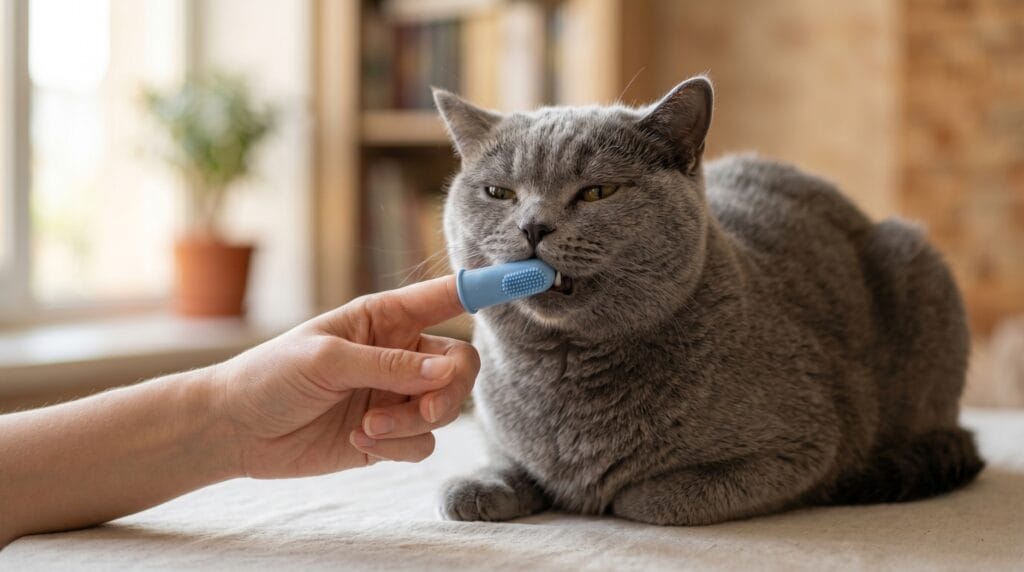
Brushing: still the most effective option
Brushing is the only home method that physically removes plaque before it calcifies. For cats, technique matters more than frequency in the early stages of training: a 30-second session done correctly three times a week produces better outcomes than a rushed daily attempt that causes the animal to associate the brush with stress.
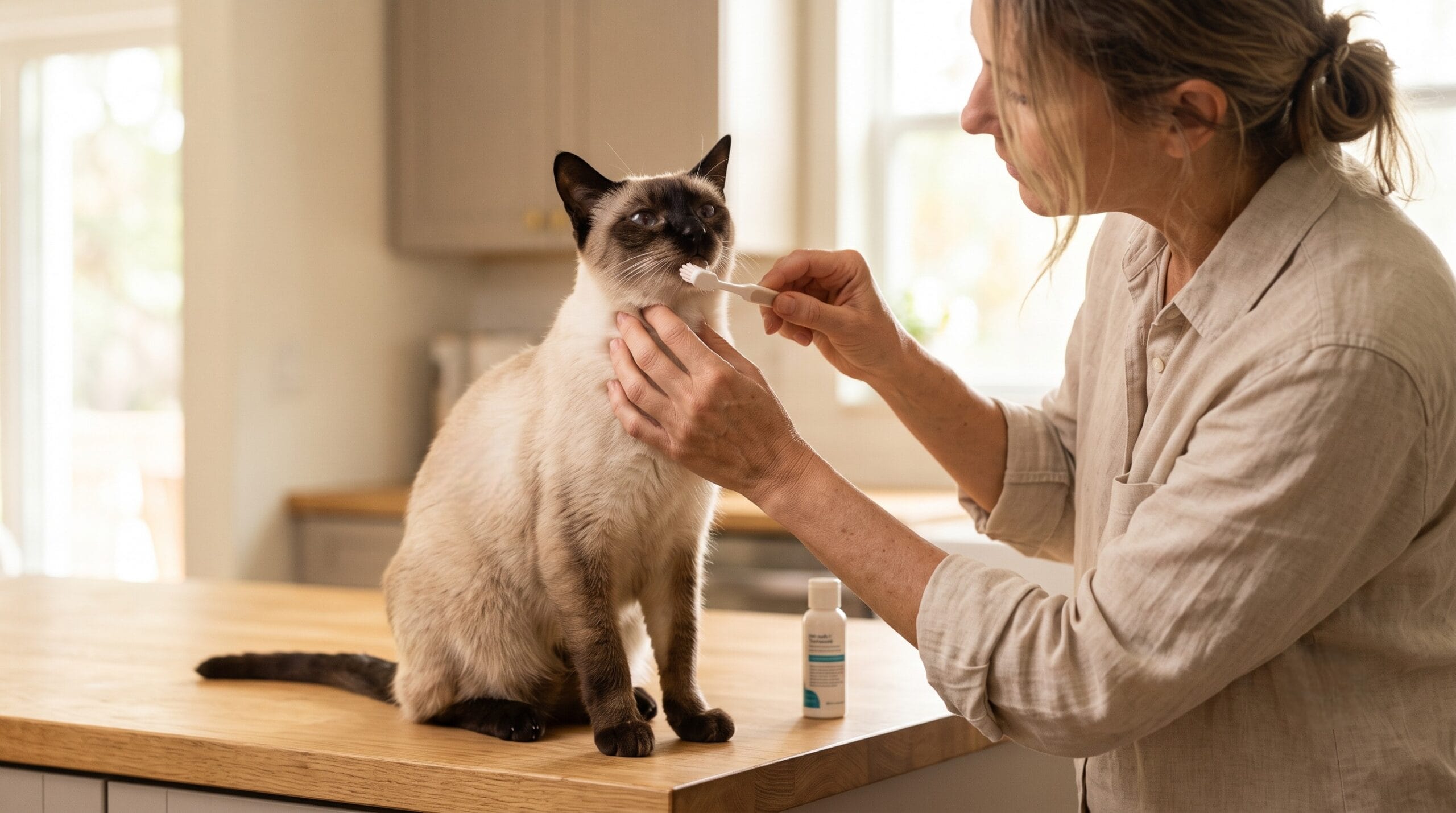
Use a finger brush or a small cat-specific toothbrush with soft bristles. Human toothbrushes are too large for feline mouths, and the bristles are too stiff for sensitive gum tissue. Cat-safe toothpaste is mandatory: human formulations contain fluoride and xylitol, both toxic to cats.
Enzymatic toothpaste for cats, available in flavors like chicken or seafood, serves double duty: it makes the process more acceptable to the animal and adds a chemical layer of bacterial control alongside the mechanical scraping.
Frequency goal: daily is ideal, minimum three times per week. At that interval, you interrupt the plaque-to-tartar cycle before calcification completes. For owners who want a deeper guide on gradual introduction and technique, the article on toothbrushing routine for your pet covers the behavioral steps in detail without duplicating the cat-specific content here.
Dental treats, water additives, and gels: what they can and can’t do
Best cat dental treats are those carrying the VOHC Accepted seal, which indicates tested efficacy in reducing plaque or tartar. The mechanical action comes from the treat’s texture: as the cat chews, the surface of the treat scrapes against the tooth.
This works mainly on the outer upper surface of the teeth, which is a fraction of the area where plaque accumulates. Treats are not a substitute for brushing; they are a useful addition, particularly on days when brushing is not possible. Keep calorie content in mind: dental snacks carry real caloric weight, and frequency should be factored into the cat’s total daily intake.
Cat dental water additive works differently. Added to the drinking bowl daily, it reduces the bacterial population in the mouth through antimicrobial or enzymatic action. It requires no cooperation from the animal beyond drinking normally, which makes it the most accessible option for cats that resist any direct oral contact. Its limitation is the same as any chemical-only approach: it does not remove existing plaque or tartar mechanically. VOHC-approved formulations exist and are the only ones worth using.
Cat dental gel is applied directly to the gums and tooth surfaces, typically with a finger or a small brush. Enzymatic gels work by breaking down the bacterial matrix in plaque.
They are more targeted than water additives and easier to use than a toothbrush for some felines, particularly those that tolerate mouth contact but not the brushing motion. When used consistently alongside other methods, gels add meaningful bacterial control without replacing the mechanical action of brushing.
Cat dental toys rely on texture and chewing action to produce a minor scraping effect on tooth surfaces. They occupy the lowest tier of effectiveness among available options, but they carry no drawbacks. A cat that chews regularly on appropriately textured toys is doing slightly better than one that does not, and the behavioral enrichment has value beyond dental health.
Does your cat’s diet affect their dental health?
Diet directly influences how quickly plaque accumulates on feline teeth. Dry food, specifically kibble designed with a larger-than-standard kibble size and a texture that does not crumble on contact, creates a mild mechanical scraping effect as the animal chews. Wet food, by contrast, tends to coat tooth surfaces and offers no mechanical action at all, which means a cat eating exclusively wet food typically accumulates plaque faster.
VOHC-approved dental diets are the most structured option in this category. These are formulations tested to reduce plaque or tartar in clinical conditions, and they meet a standard that generic claims of “dental benefit” do not. They are not a replacement for brushing but for cats that eat dry food anyway, switching to a VOHC-accepted dental diet is a practical upgrade with no additional effort from the owner.
The relevant distinction is that diet affects the rate of plaque accumulation, not the need for cleaning. Even a feline on an optimal dental diet will still form plaque and will still benefit from brushing and annual professional cleaning. Diet is one variable in a system with multiple moving parts.
What should you look for when choosing dental products for your cat?
The most useful single filter for cat dental products is VOHC approval. The Veterinary Oral Health Council evaluates products through clinical trials and grants its Accepted seal only to those that demonstrate a meaningful reduction in plaque or tartar under standardized conditions.
Any product that claims dental benefits without that seal may still be useful, but its effectiveness has not been independently verified.
Beyond certification, consider these criteria when selecting products for your pet:
- Treat consistency: treats that crumble on contact provide no mechanical action. Look for those that require active chewing across multiple bites.
- Ingredient safety: all formulations must be free of fluoride, xylitol, and essential oils toxic to cats. Verify before purchasing, particularly with products not specifically labeled for feline use.
- Age and size appropriateness: senior cats with compromised teeth may not tolerate the texture of firmer dental treats. Smaller animals may need smaller portions.
- Palatability: the most effective product is the one the cat will actually use. Introduce new treats or additives gradually and observe acceptance before committing.
- Stackability: choose products that complement each other rather than overlap. A VOHC-accepted additive and VOHC-accepted treats used alongside brushing produce better outcomes than three products that all operate through the same mechanism.
How do you start a dental care routine if your cat hates having their mouth touched?
Most cats that resist dental care have not been gradually introduced to it. Resistance is learned, and it can also be unlearned with a patient, stepwise approach. The goal is to change the cat’s emotional response to mouth handling before introducing any dental tool.
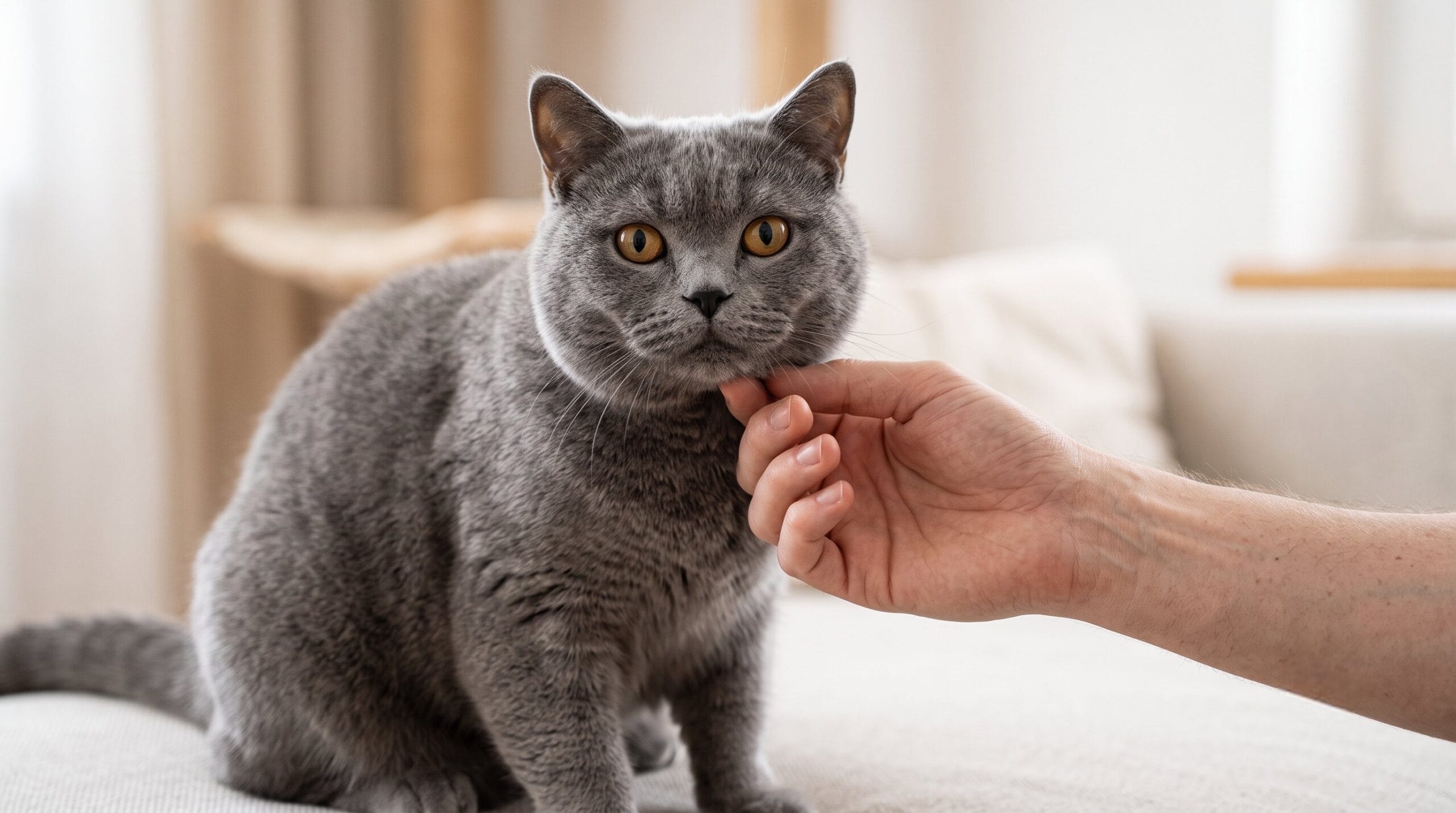
Start with the cat’s face, not the mouth. Spend a few days gently touching the muzzle and lips during calm moments, always pairing the contact with something positive: a preferred treat, soft verbal cues, or a short play session afterward.
Once the animal tolerates lip contact without pulling away, introduce the smell and taste of cat-safe toothpaste by letting the pet lick a small amount from your finger. This phase can last several days without any pressure to accelerate.
The next step is gentle contact with the outer gum surface using a finger, again paired with positive reinforcement. Only after the cat accepts this consistently should a finger brush or small toothbrush enter the routine. Start with a few seconds of contact, then gradually increase duration over several weeks.
Cats that will never fully accept brushing can still benefit from dental gels applied with a finger, VOHC-approved treats, and water additives. A partial routine maintained consistently outperforms an ideal routine applied occasionally under protest.
How do you know if your cat has a dental problem?
Cats with dental disease often show no dramatic signs until the condition is advanced. The earliest signals are easy to miss, but they become apparent if you know what to look for.
Watch for these warning indicators in your cat’s daily behavior and appearance:
- Persistent bad breath that does not improve after eating
- Red, swollen, or bleeding gums visible when the mouth is open
- Drooling more than usual, or drool with traces of blood
- Pawing at the face or rubbing the muzzle on surfaces
- Dropping food while chewing, or preferring to chew on one side
- Reduced interest in eating, particularly dry food
- Behavioral changes: increased irritability, withdrawal, or reluctance to be touched around the face
Any of these signs warrants a veterinary evaluation. For a more complete breakdown, the article on signs your pet might have dental problems covers the full range of indicators across species, including what each sign typically points to clinically.
How often should cats have their teeth professionally cleaned?
Annual professional cleaning is the standard baseline for most adult cats. Felines with a history of rapid tartar accumulation, a wet-food-only diet, specific anatomical characteristics such as crowded teeth, or early signs of periodontal disease may benefit from cleaning every six months. Kittens should have their first dental evaluation before their permanent teeth are fully erupted.
Home care reduces the rate at which tartar accumulates between appointments, but it does not eliminate the need for professional cleaning.
A cat with an excellent brushing routine at home will arrive at each appointment with less buildup than one with no routine at all, which directly affects what the cleaning session needs to address. Understanding regular dental check-ups for your pet explains the clinical rationale behind appointment frequency in detail.
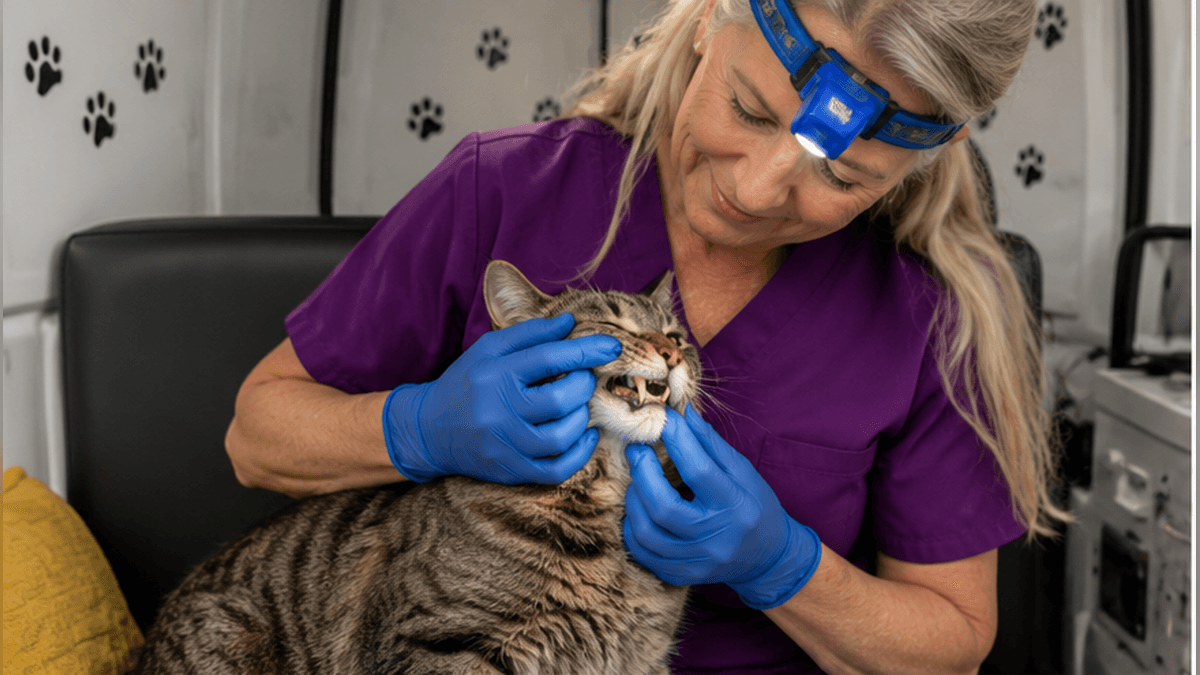
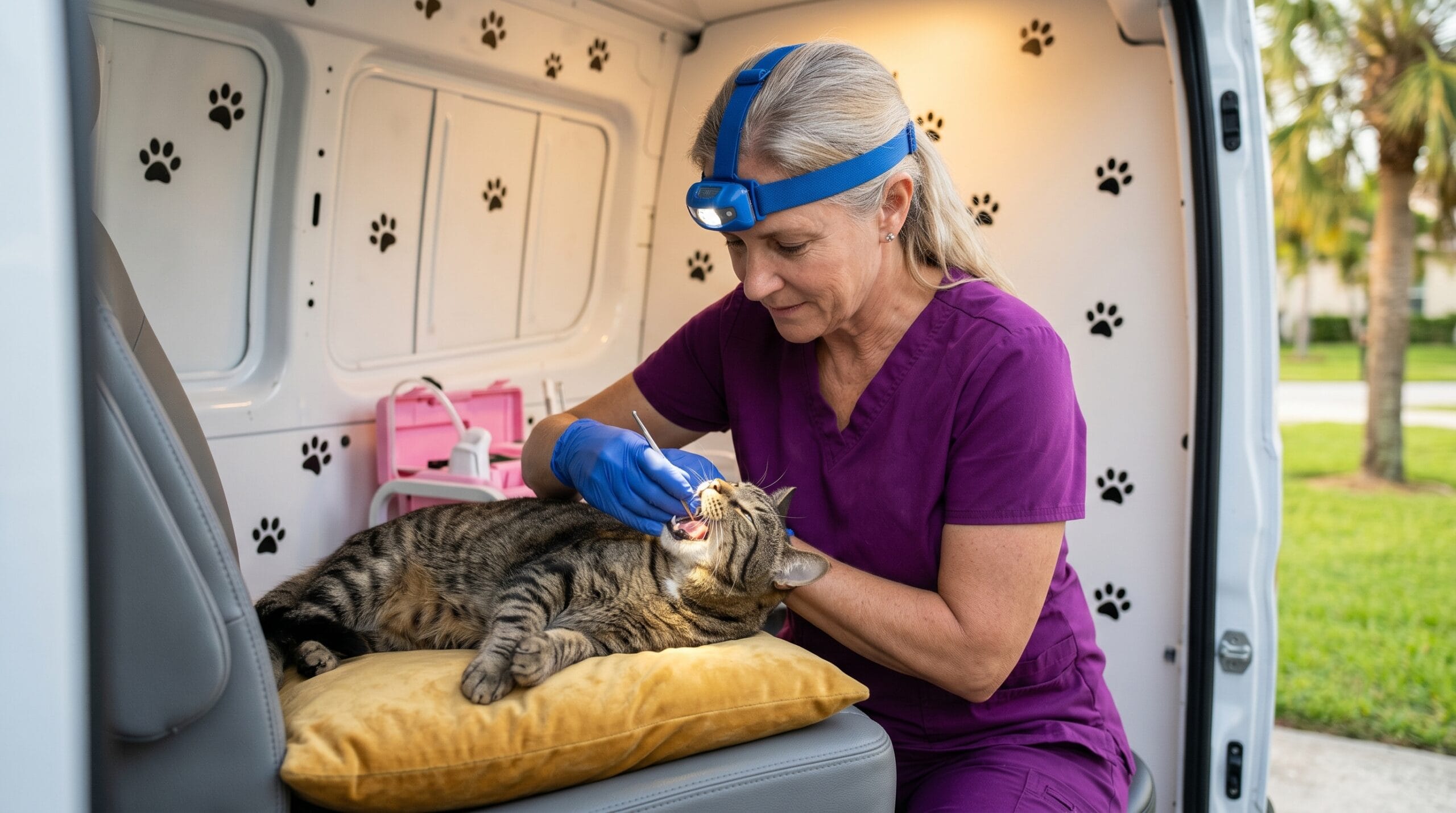
At The Magic Paws, cats receive anesthesia-free dental cleaning in a mobile service that comes directly to the owner’s home in Florida.
The session uses the Senses Therapy protocol, which incorporates aromatherapy, music therapy, chromotherapy, and massage to keep the animal calm throughout the procedure without sedation. For cats that are anxious about handling or unfamiliar environments, this format removes the stress of transport and a clinic waiting room entirely.
Owners who want to understand the professional side of the routine can read about professional cat dental cleaning or book directly through the cat dental cleaning service page.

Want to understand everything about professional cat dental cleaning? Read our complete guide.
What happens when home care is not enough?
Home care works at the surface and above the gumline. Professional cleaning addresses what home methods physically cannot reach: tartar that has already mineralized onto tooth surfaces, bacterial deposits below the gumline, and structural changes to the gum tissue that result from chronic inflammation.
Tooth resorption is the clearest example of a condition that no home routine prevents or treats. It is the most common dental disease specific to cats, affecting an estimated 30% to 70% of adult felines, and it involves the progressive breakdown of tooth structure from the inside out. It is painful, it is not visible without probing or radiography, and it requires clinical assessment. Regular professional evaluation catches it earlier, when intervention is less complex.
Advanced gingivitis and early periodontitis present similarly: home care slows progression but cannot reverse tissue already impacted. Professional cleaning removes the calculus that irritates gum tissue and allows the inflammatory cycle to reset. Without it, tissue damage continues regardless of how consistent the home routine is.
Joining the Dental Clean Club is the practical option for owners who want to make professional cleaning a recurring part of their cat’s preventive care, rather than a reactive measure after symptoms appear.
Is it too late to start caring for your cat’s teeth at home?
It is never too late to start, but the starting point changes depending on your cat’s current dental condition. For a young adult feline with no existing disease, beginning a brushing routine now will meaningfully reduce the risk of significant problems by middle age. The earlier the routine starts, the more of the damage timeline it intercepts.
For an older cat or one with existing tartar buildup, the first step is a veterinary dental evaluation, not an attempt to scrub away calculus at home. Brushing over already-inflamed tissue causes pain and may worsen the situation.
Once the mouth has been professionally cleaned and the tissue has healed, a home routine becomes genuinely effective rather than counterproductive.
Senior cats often need a modified approach. Firmer treats may be uncomfortable if teeth are sensitive or worn. Brushing pressure needs to be lighter. Water additives and gels become more central to the routine when mechanical tolerance decreases.
The goal is the same regardless of age: reduce bacterial load, slow plaque accumulation, and arrive at each professional appointment with the healthiest possible baseline.
Starting imperfectly is better than not starting. A twice-weekly brushing routine is less than daily, but it is categorically better than nothing. Build the habit around what is sustainable for both the owner and the animal, then adjust as tolerance improves.
Your cat’s teeth deserve more than home care alone. Book a professional anesthesia-free cleaning with The Magic Paws today. Book your cat’s dental cleaning.
FAQ about cat dental care at home
Can I brush my cat’s teeth with a regular toothbrush?
Not recommended. Human toothbrushes are too large for the feline mouth and have bristles that are too stiff for cat gum tissue. A finger brush or a small toothbrush designed specifically for cats gives you better control, less pressure, and a size that fits comfortably against the tooth surface without causing discomfort.
Is it safe to use human toothpaste on cats?
No. Human toothpaste contains fluoride and often xylitol, both of which are toxic to cats. Always use a toothpaste formulated specifically for feline use, available in cat-friendly flavors like chicken or seafood. These products are safe to swallow and typically contain enzymatic ingredients that add a layer of bacterial control.
How often should I brush my cat’s teeth?
Daily is the ideal target. A minimum of three times per week is the practical threshold that keeps the plaque-to-tartar cycle from completing. Plaque forms within 12 to 24 hours and hardens into tartar in 48 to 72 hours, so the frequency of brushing directly determines how much of that cycle you interrupt before calcification occurs
Do dental treats really clean cats’ teeth?
Partially. VOHC-accepted dental treats produce a mild mechanical scraping effect as the cat chews, which helps reduce plaque on the outer tooth surfaces. They are a useful addition to a home routine, but they do not reach the full tooth surface, do not penetrate below the gumline, and should not replace brushing as the primary method.
Can water additives replace brushing for cats?
No. Cat dental water additive reduces the bacterial population in the mouth through enzymatic or antimicrobial action, but it does not physically remove plaque from tooth surfaces. It is most useful for cats that tolerate no direct oral contact, functioning as a background layer of bacterial control rather than a standalone cleaning method.
What are the signs of dental disease in cats?
Dental disease in cats often goes unnoticed until it is advanced. The most common signs include:
- Persistent bad breath
- Red or swollen gums
- Drooling, with or without traces of blood
- Pawing at the face
- Difficulty chewing or dropping food
- Preference for one side of the mouth
- Behavioral changes such as irritability or withdrawal
At what age should I start caring for my cat’s teeth?
As early as possible. Kittens tolerate handling more readily than adult cats, making it easier to establish the tactile familiarity that brushing requires. For adult cats with no prior dental routine, begin with a veterinary evaluation to rule out existing disease, then introduce home practices gradually using the desensitization steps described above.
Is anesthesia-free dental cleaning safe for cats?
Anesthesia-free cleaning is a preventive service, indicated for cats without advanced periodontal disease, tooth resorption, or conditions that require veterinary surgical intervention. At The Magic Paws, the procedure uses the Senses Therapy protocol, which incorporates aromatherapy, music therapy, chromotherapy, and massage to keep the animal calm throughout. It is not a replacement for anesthesia when anesthesia is medically necessary; it is a prevention-first option for cats within the eligible health range.
How much does professional cat dental cleaning cost?
Cost varies depending on the provider, location, and whether anesthesia is involved. Anesthesia-free preventive cleaning is generally less expensive than a veterinary cleaning under general anesthesia, and it is accessible more frequently as a result. The Dental Clean Club offers a recurring care plan with scheduled visits and predictable pricing for owners who want to make professional cleaning part of a regular routine rather than a one-time expense.
Can cats get cavities?
Cavities in the human sense, which involve acid erosion of enamel from sugar exposure, are rare in cats. The condition that most closely resembles cavities in felines is tooth resorption: a painful process in which the tooth structure breaks down from within, often starting at the gumline. It affects an estimated 30% to 70% of adult cats, is not visible to the naked eye, and requires clinical probing or radiography to identify. Unlike cavities, it cannot be prevented through diet or brushing alone.