Cat dental treats are one of the most common products cat owners reach for when they want to do something about their pet’s oral health. They’re easy to use, cats tend to accept them, and the packaging usually makes confident claims about plaque and tartar control. The problem is that most owners don’t know exactly how far those claims go, and where they stop.
This article isn’t a product guide. You won’t find brand recommendations here. What you will find is a clear explanation of how cat dental treats actually work, what the science behind them says, why feline anatomy limits their reach, and what that means for any cat owner who wants to take oral health seriously.
Understanding these limits isn’t discouraging. It’s useful. Cat owners who know what treats can and cannot do are better positioned to build a care routine that actually protects their cat’s mouth over time. That’s the goal here.
By the end of this article, you’ll know how to evaluate a dental treat, what signs tell you it’s time to go beyond treats, and what professional cleaning adds to the picture.
What are cat dental treats and how do they work?
Cat dental treats are edible products formulated to reduce plaque and tartar buildup through two mechanisms: the physical abrasion of chewing and the action of enzymatic or antibacterial ingredients.
Their effectiveness depends on how long and how consistently the treat stays in contact with the tooth surface during each use.
The mechanical action works similarly to how crunchy food scrapes the outer surface of teeth. As the cat bites and chews the treat, the texture rubs against the visible part of the tooth and disrupts plaque before it has time to harden into tartar.
Although it is limited, this effect is real. It only reaches the teeth that are actually doing the chewing, and only for as long as contact is maintained.
The enzymatic component works differently. Ingredients like glucose oxidase and lactoperoxidase generate compounds that inhibit the growth of oral bacteria, reducing the rate at which plaque forms between uses.
Enzymatic treats have an advantage over products that are solely based on texture because they continue to influence the bacterial environment even after the cat has finished eating.
Together, these two mechanisms can meaningfully slow the progression of plaque accumulation. According to VCA Hospitals, dental treats used alongside brushing contribute to better oral hygiene outcomes than either approach used alone. The key word is alongside. Neither mechanism addresses what’s already below the gum line.
Why do cats have such a high rate of dental disease?
Dental disease affects the majority of cats before they reach middle age. According to the Cornell University College of Veterinary Medicine, between 50% and 90% of cats over age 4 develop some form of dental disease. That’s not a minor risk. It’s the expected outcome when oral hygiene is left unmanaged.
The main reason this goes undetected so often is that cats are highly efficient at masking pain. In the wild, showing vulnerability is dangerous, so the behavioral instinct is to continue eating and acting normally even when the mouth is uncomfortable. By the time an owner notices something is wrong, the condition is usually already advanced.
Periodontal disease is the most common form. It begins with plaque, progresses to tartar, and then inflames the gum tissue. Left untreated, it causes gum recession, bone loss around the roots, and eventually tooth loss.
The American Veterinary Medical Association identifies periodontal disease as the most common clinical condition in adult cats, with most cases going undetected until a professional examination is performed.
So, cat dental treats and a consistent home-care routine help interrupt this progression at the earliest stage: keeping plaque soft and removable before it has a chance to mineralize.
How does plaque become tartar and why does that matter?
Plaque is a soft, sticky film of bacteria that forms continuously on tooth surfaces. It’s colorless, which is why it’s difficult to spot, and it starts forming within hours of eating. At this stage, it’s removable by mechanical action: brushing, chewing, or the abrasive contact of a dental treat.
The problem starts when plaque isn’t removed consistently. Within a few days, minerals from saliva bind to the bacterial film and begin hardening it. Once that process completes, the result is tartar, also called calculus. Tartar is mineralized and cannot be removed by any home-care product, including treats, brushing, or dental wipes.
As tartar accumulates, it pushes below the gum line and creates an environment where bacteria thrive in a protected space that nothing topical can reach.
This is when periodontal disease begins in earnest. Gum tissue becomes inflamed, then infected, then recedes. The damage that follows is structural and irreversible without professional intervention.
To understand cat dental health at home, this cycle is important. Dental treats slow the early part of the process. They reduce how quickly plaque forms and builds up on the surfaces they reach. But they don’t stop the cycle once tartar has already formed, and they have no effect on anything below the gum line.
Do cat dental treats actually work?
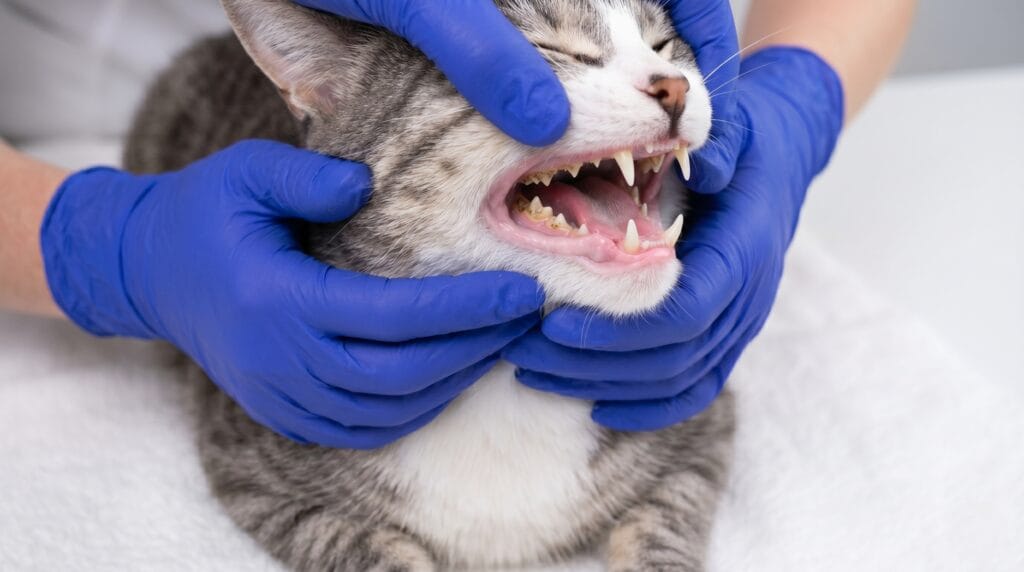
At least two independent clinical trials have tested cat dental treats that have shown a minimum 20% reduction in tartar, plaque, or both. That is a measurable effect and a meaningful one when the goal is prevention.
Products can earn the seal for plaque control, tartar control, or both. The distinction matters: a treat that reduces tartar formation is addressing a more advanced stage of accumulation than one that only targets plaque, though both are valuable.
When a product carries that seal, the benefit is verified. When it doesn’t, there’s no independent confirmation that the claims on the packaging reflect real clinical outcomes.
It’s also worth noting what VOHC approval doesn’t mean. It doesn’t mean the product eliminates the need for brushing or professional cleaning. Not only that, but it means the product works as a preventive support tool, within the limits of what any oral-use treatment can do.
Why do cats often swallow dental treats without chewing?
This is one of the least discussed limitations of cat dental treats and one of the most important. Cats are obligate carnivores with a dental structure designed for capturing and processing prey, not for grinding or prolonged chewing. Shearing is a function of their molars and premolars. Their incisors and canines are pointed and narrow.
When a cat eats, the natural tendency is to use the back teeth to break food apart and swallow quickly. With small treats, many cats bypass the chewing process entirely and swallow them whole. In that case, neither the mechanical nor the enzymatic benefit takes place, and the treat never comes into contact with the tooth surface.
This isn’t a product failure. It’s anatomy. The practical implication is that treat size and texture matter. A treat that’s too small is swallowed before it can do anything. A treat that’s too large may be avoided. The goal is a size that encourages the cat to actually chew and a texture firm enough to create abrasive contact during chewing.
Even with the ideal size and texture, this limitation means that the mechanical benefit of cat dental treats is less consistent in cats than in dogs. It’s a technical fact that should inform expectations without dismissing treats as useless. Used correctly, they still contribute.
Which teeth do dental treats actually clean?
The honest answer is: mostly the premolars and molars. These are the back teeth that cats use for chewing, and they’re the ones that actually come into contact with the treat during the chewing motion. The abrasive effect happens there, on the tooth surfaces that are doing the work.
Incisors and canines, the front teeth and the prominent pointed teeth on either side, are not reached by mechanical action during chewing. They don’t contact the treat in any meaningful way. Plaque accumulates on these surfaces just as it does everywhere else, but dental treats don’t address it.
For anyone evaluating the removal of cat plaque and tartar using treats alone, this is a serious limitation. The front teeth are some of the most visible in the cat’s mouth and also among the most commonly affected by periodontal disease. And gingivitis in cats frequently begins at the gumline of canines, which treats never touch.
Brushing is the only home-care method that reaches all tooth surfaces. It’s also the one most cats resist. This is why a complete oral care routine combines multiple tools rather than relying on any single approach.
What should you look for in a cat dental treat?
Not all dental treats are formulated equally; the market includes products ranging from clinically tested options with verified efficacy to treats marketed with vague dental claims but no independent confirmation. Knowing what to look for makes the difference.
Before reviewing specific criteria, one rule applies to everything: if a product hasn’t been tested and certified, there’s no reliable way to know whether the dental claims on the label reflect actual outcomes. Start with certification, then evaluate the rest.
| Criterion | What to look for |
| VOHC Seal of Acceptance | Independent certification of minimum 20% plaque or tartar reduction |
| Texture | Firm and crunchy, not soft. Soft treats don’t create abrasive contact |
| Size | Large enough to require chewing before swallowing |
| Enzymatic ingredients | Glucose oxidase, lactoperoxidase, or zinc for antibacterial action |
| Ingredient quality | No artificial colors, preservatives, or added sugars |
| Caloric value | Treats should not exceed 10% of the cat’s total daily caloric intake |
| Formulation | Adult cats from 1 year of age. Kitten-specific products exist separately |
Cats with food sensitivities have more options available than many owners realize. Grain-free, gluten-free, soy-free, and dairy-free formulations exist. For cats with confirmed food allergies, the safest approach is to confirm suitability with a veterinarian before introducing any new product.
When do dental treats stop being enough?
Cat dental treats stop being enough the moment tartar has already hardened and is sitting below the gum line. At that point, no treat, toothbrush, or dental wipe can reach it. The condition has moved past what home care can address.
The signs that indicate this threshold has been crossed are specific:
- Persistent bad breath that doesn’t improve with regular treat use
- Gums that appear red, swollen, or that bleed when touched
- Visible yellow or brown deposits along the base of the teeth
- Difficulty chewing, reluctance to eat, or preference for soft food
- Excessive drooling without an obvious cause
These are not signs that a different treat is needed. They are signs that plaque control has already failed at some earlier point and that established tartar and gum inflammation are now present.
Cat bad breath, in particular, is not a cosmetic issue. Persistent halitosis is a reliable indicator of active bacterial disease in the mouth.
Just as the name implies, cat periodontal disease prevention works. It is not reversible, and a professional cleaning is necessary for treatment once the disease is established to remove any accumulations beneath the gingiva and to give the gum tissue time to heal.
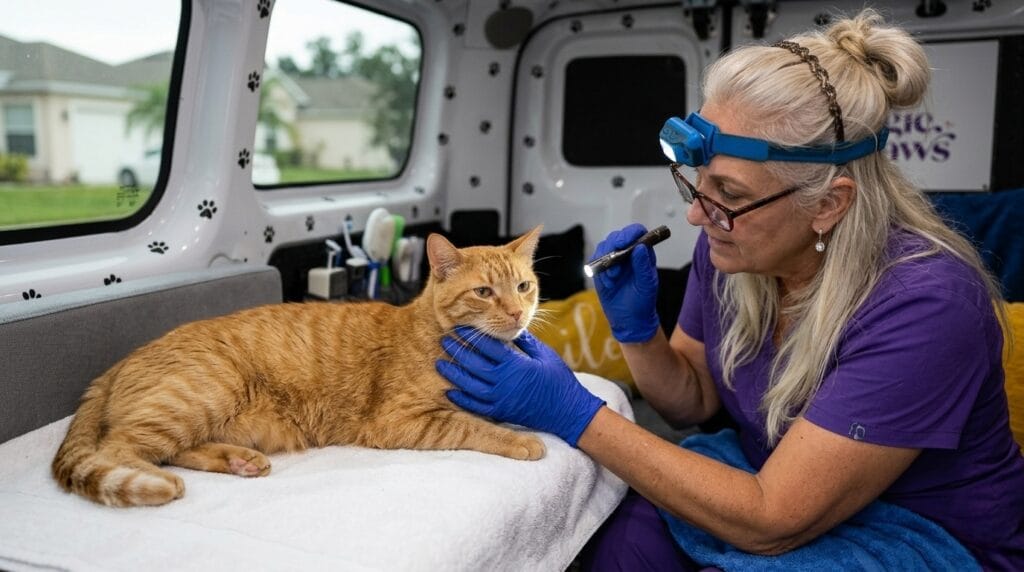
Professional cleaning completes what treats cannot
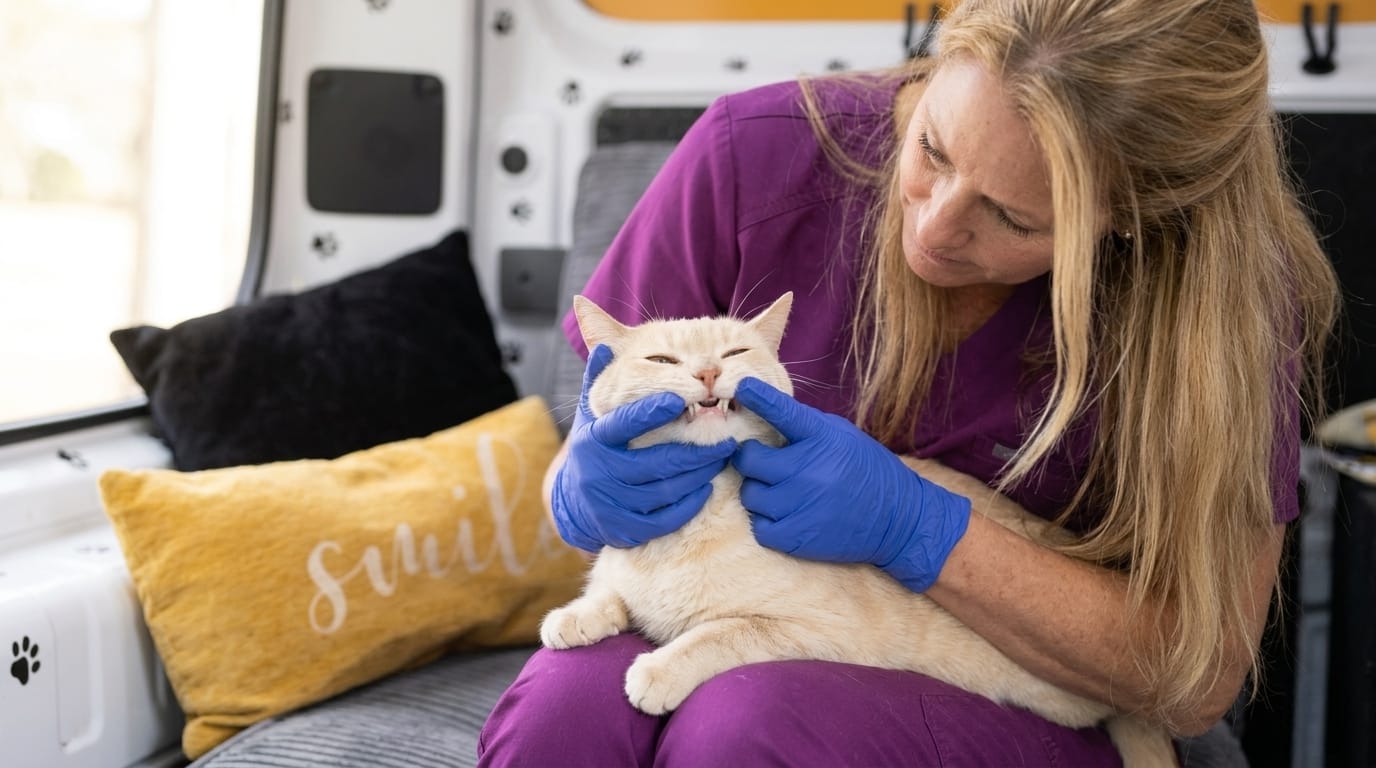
Professional cleaning removes subgingival tartar through scaling of tooth surfaces both above and below the gum line. It’s the only method that addresses the mineralized deposits that accumulate in the space between the tooth and gum, where bacteria cause the most structural damage.
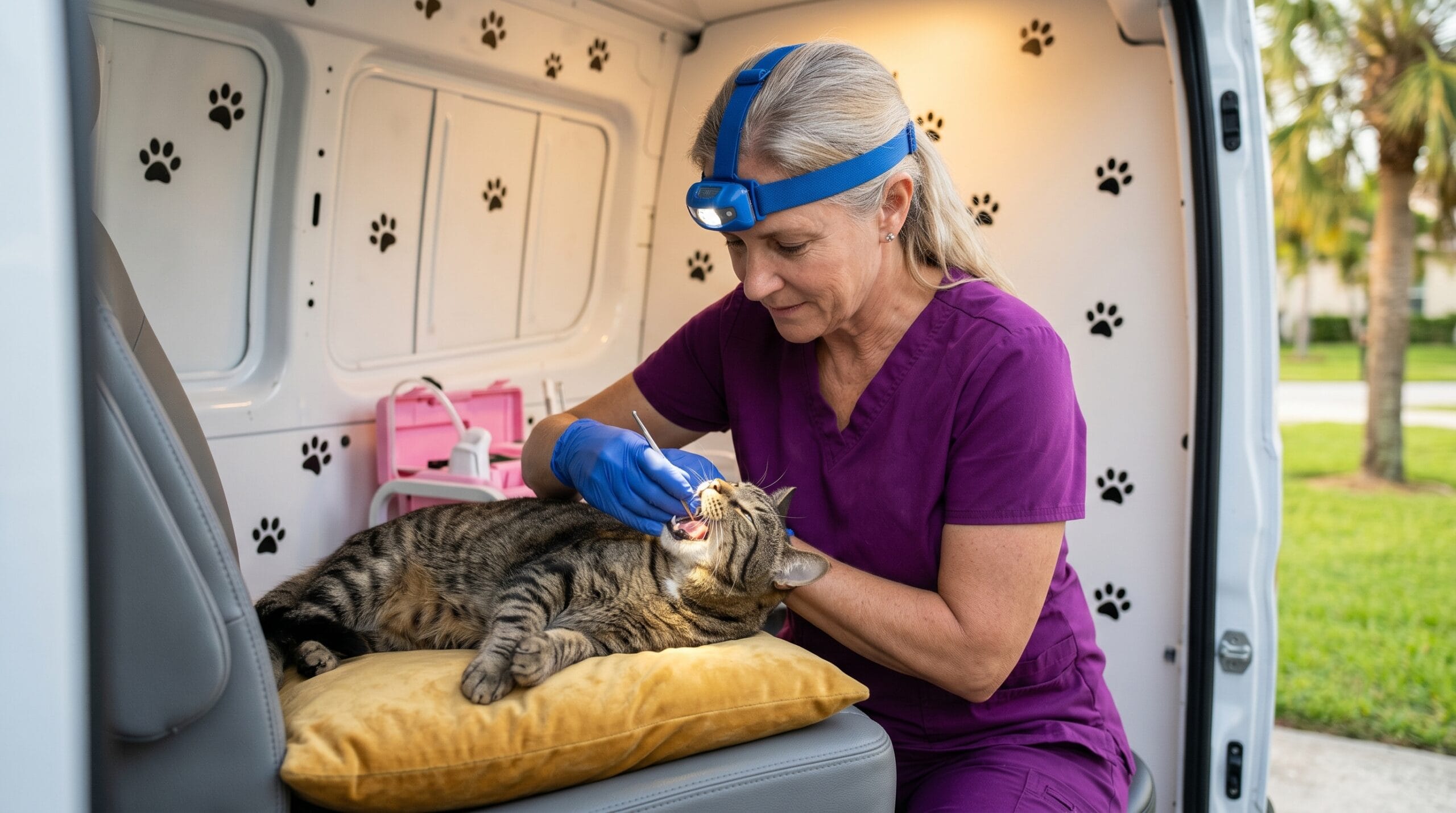
For cat owners in South and Central Florida, anesthesia-free professional cleaning is an accessible option that reaches exactly what treats leave behind. The Magic Paws performs cat dental cleanings in Florida using a proprietary protocol called Senses Therapy, which combines aromatherapy, music therapy, chromotherapy, and massage to keep the cat calm and comfortable throughout the procedure, without sedation.
The procedure is performed inside a dedicated mobile unit by a trained technician. The cat remains awake and unstressed, and the cleaning reaches the surfaces that no home-care product touches.
For cat owners who have already established a treat routine, professional cleaning completes the protection that treats begin.
📣 Learn more about cat dental cleaning in Central Florida and how The Magic Paws makes it stress-free for your cat.
How to build a complete oral care routine for your cat
A complete oral care routine has three components, and each one does something the others cannot. Removing any one of them leaves a gap.
Cat dental treats
Reduce plaque accumulation between cleanings. Used daily, they slow the bacterial buildup on chewing surfaces and, when enzymatic ingredients are present, create an environment that’s less hospitable to the bacteria responsible for plaque formation.
They’re the most accessible part of the routine and the easiest to maintain consistently.
Brushing
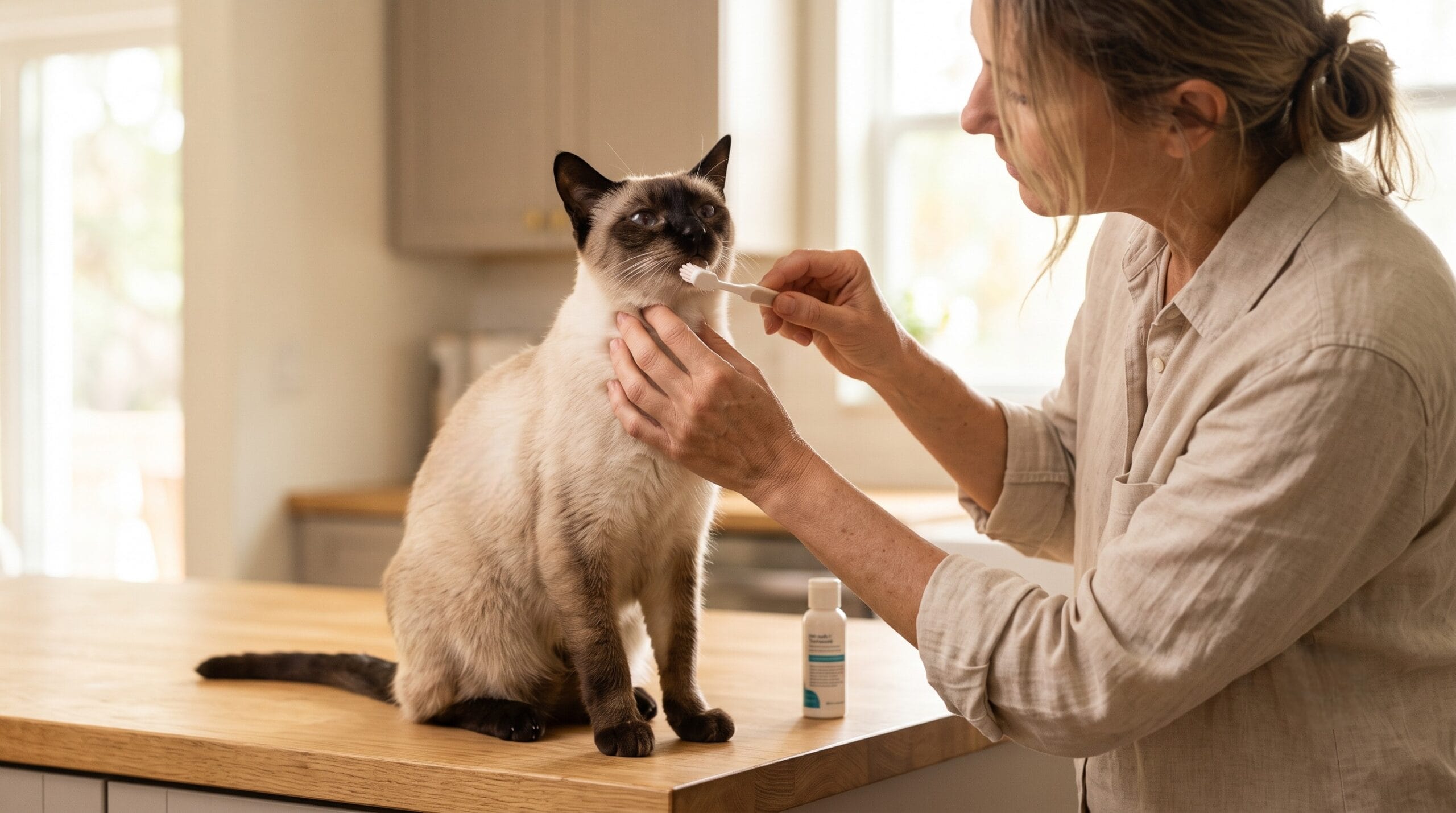
It’s the only at-home technique that can reach all tooth surfaces, including canines and incisors, if the cat is able to tolerate it. It’s also the most effective way to disrupt plaque before it hardens.
Not every cat will accept brushing, but even partial or occasional brushing adds meaningful coverage to a treat-only routine.
Cat dental health at home improves significantly when brushing and treats are combined rather than used as alternatives to each other.
Professional cleaning
Removes what has already formed below the gum line and what home care has not been able to prevent. It also allows a trained professional to examine the full oral cavity and identify issues that are not visible from the outside.
One annual cleaning is a fair maintenance frequency for healthy cats. For cats with existing conditions, the appropriate interval depends on the veterinarian’s assessment.
The silent threat in your cat’s mouth is exactly this: the accumulation that happens gradually, invisibly, and without obvious symptoms until the damage is already done. A consistent routine with all three components is the most effective way to interrupt that progression early.
What your cat’s dental treats are telling you about their oral health
The cat owner who gives dental treats every day is already doing something right. That consistency reflects care, and it has a real effect on how quickly plaque accumulates and how the cat’s oral environment is maintained between professional cleanings. That’s not a small thing.
What treats can’t tell you is what’s happening below the gum line. They don’t reveal whether tartar has already formed in areas they can’t reach, and they don’t signal when the situation has moved past what home care can address. That part requires someone who can look.
A cat that accepts treats easily, has no visible gum redness, and shows no signs of discomfort is a good candidate for routine professional cleaning as a purely preventive measure.
The professional pet dental cleaning guide covers what to expect from the procedure and how to prepare. For cat owners in South Florida and Central Florida, the premier mobile pet dental care option brings that professional care directly to you, without the stress of a clinic visit for your cat.
Treats are a good starting point. Professional cleaning is what turns that starting point into a complete strategy.
Schedule your cat’s professional dental cleaning today and keep their mouth healthy between treats.
FAQ
Are cat dental treats safe to give every day?
Yes, as long as the product is formulated for daily use and the caloric content of treats doesn’t exceed 10% of the cat’s total daily intake. Always check the packaging for usage instructions and consult a veterinarian for cats with kidney disease, diabetes, or other conditions that affect diet.
Can cat dental treats replace brushing?
No. Treats reduce surface plaque on the teeth that are actively chewing them, but brushing reaches surfaces treats cannot cover, including incisors, canines, and the inner faces of all teeth. Both have distinct roles in a complete oral hygiene routine.
Do cat dental treats remove tartar?
Only surface tartar in very early formation. Tartar that has already mineralized below the gum line cannot be removed by any home-use product, including treats, dental wipes, or water additives. Once hardened subgingival tartar is present, only professional cleaning can address it.
What ingredients should I look for in cat dental treats?
Look for enzymatic ingredients such as glucose oxidase and lactoperoxidase, which reduce oral bacteria between uses. Zinc supports gum tissue health. The texture should be firm and naturally abrasive. Avoid products with artificial colors, preservatives, or added sugars, and prioritize VOHC-approved formulations.
How often should I give my cat dental treats?
Most dental treats are formulated for daily use, and daily use is what the clinical studies behind VOHC-certified products are based on. Always follow the manufacturer’s instructions and adjust for the cat’s total caloric intake if treats are being combined with other foods.
Are there dental treats for cats with food sensitivities?
Yes. Options formulated without grains, gluten, soy, and dairy are available. For cats with confirmed food allergies or intolerances, a veterinarian should review the ingredient list before the product is introduced.
At what age can cats start eating dental treats?
Most dental treats are intended for adult cats from 1 year of age, when permanent dentition is fully established. Kittens should not receive treats formulated for adults. Kitten-specific products exist and should be used instead.
Can dental treats help with cat bad breath?
Partially. Bad breath caused by surface bacterial buildup may improve with consistent use of enzymatic treats. Persistent bad breath, particularly if it doesn’t respond to regular treat use, is a sign of established periodontal disease and requires professional cleaning to address the underlying cause.
How do I know if my cat needs a professional dental cleaning?
Signs include persistent bad breath, red or swollen gums, visible tartar deposits at the gum line, difficulty chewing, or loss of appetite. Dental treats do not resolve these signs. Anesthesia-free cat teeth cleaning without anesthesia, available in Florida and Central Florida, addresses what treats cannot reach.
What is the VOHC seal and why does it matter for cat dental treats?
The Veterinary Oral Health Council (VOHC) is an independent organization that certifies pet oral health products based on clinical trial data. To earn the seal, a product must demonstrate at least 20% reduction in plaque, tartar, or both across a minimum of two independent trials. It’s the most reliable standard available for evaluating whether a cat dental treat actually works as claimed.