If you’ve ever watched your cat stop mid-meal, drop a piece of food, and walk away, you may have assumed it was just being picky. That moment, easy to dismiss, can be one of the clearest signs of dental disease in cats that an owner will ever see.
Cats are hardwired to hide discomfort. As prey animals, showing vulnerability in the wild meant becoming a target, so over thousands of years they developed a near-perfect ability to mask pain and keep functioning. That survival instinct doesn’t disappear in a domestic setting. Your cat can be living with significant oral pain and still eat, groom, and behave in ways that look completely normal to you.
This is precisely what makes feline oral disease so easy to miss. Most owners don’t discover there’s a problem until a veterinarian mentions it during a routine checkup or until the condition has progressed to a point where it’s causing visible, undeniable symptoms. By then, the damage to the gums, teeth, and surrounding structures is often already substantial.
Understanding what to look for and knowing why those signs appear in the first place puts you in a much better position to act before a manageable difficulty becomes a complicated one.
What are the most common signs of dental disease in cats?
The most common signs of dental disease in cats fall into two categories: behavioral and physical. Bad breath, excessive drooling, pawing at the mouth, refusing food or eating only on one side, dropping kibble mid-chew, and reduced grooming are the behavioral signals owners are most likely to notice at home. Physical signs include reddened gums, visible yellow-brown buildup on the teeth, bleeding when the cat eats, and loose or missing teeth.
Recognizing these signals early matters because feline oral disease rarely improves on its own. The progression from early-stage gum inflammation to structural damage around the tooth is quiet, consistent, and almost always faster than owners expect.
Behavioral changes that signal oral pain
Behavioral shifts are often the first indication that something is wrong, and they tend to appear before any visible change in the mouth.
A cat avoiding hard food, chewing exclusively on one side, or taking longer than usual to finish a meal is adapting its behavior to reduce oral discomfort. Vocalization while eating, or stopping abruptly after the first few bites, points in the same direction. Reduced grooming, particularly around the face, is another signal: grooming requires the cat to use its mouth and tongue, and a feline in pain will naturally do less of it.
These changes connect directly back to the instinct to mask pain. A cat that is suffering won’t announce it through crying or visible distress. It will quietly reroute its behavior, which is exactly why paying attention to small departures from your pet’s normal routine matters more than waiting for something obvious.
Physical signs you can see at home
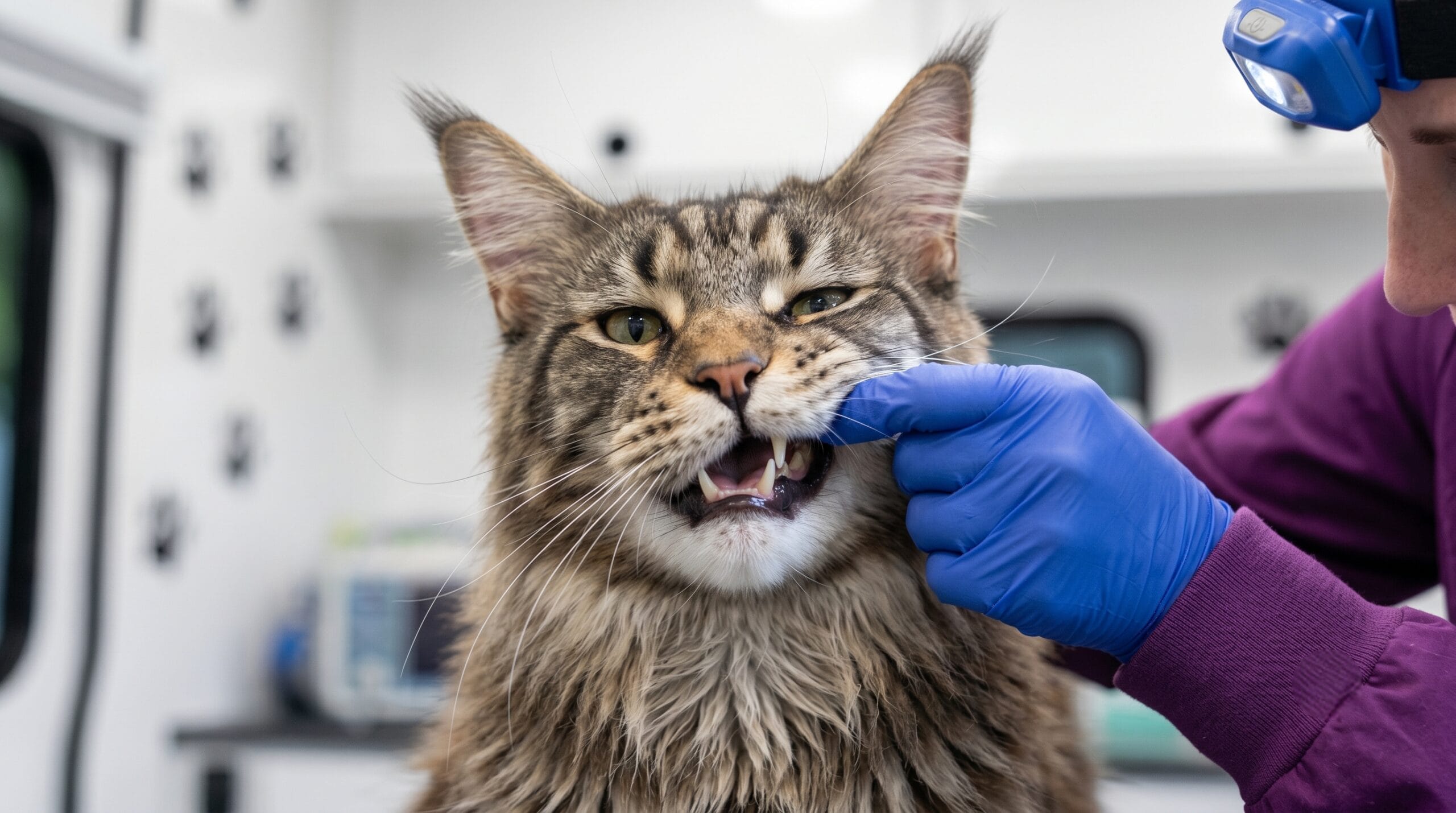
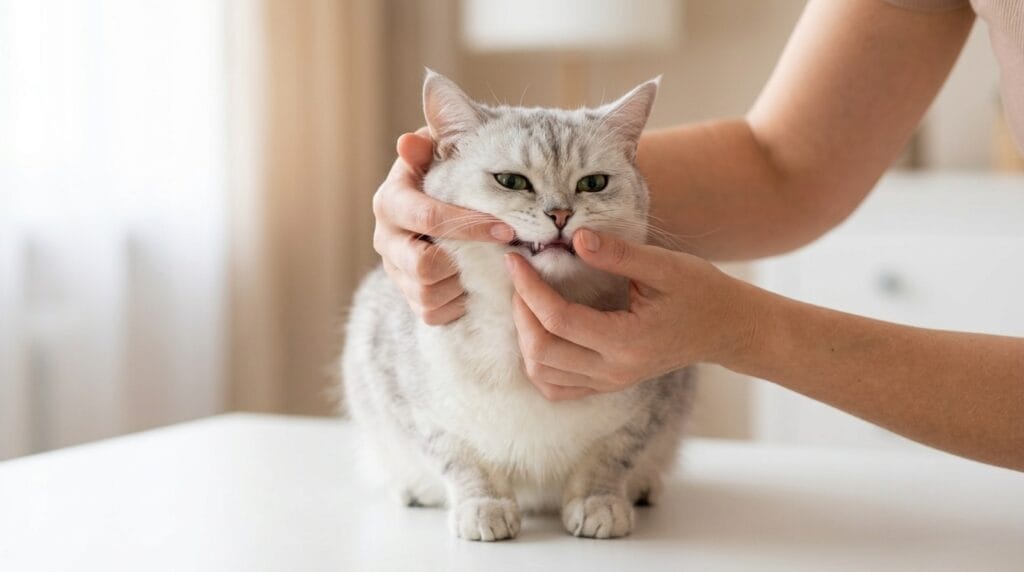
A brief visual check of your cat’s mouth once or twice a month can reveal a great deal.
Lift the lip gently on each side and look at the gum line. Healthy gums are pink and firm. Gums that appear red, swollen, or that bleed when lightly touched are telling you that inflammation is already underway. Yellow or brown accumulation at the base of the teeth is calculus buildup, a hardened deposit that forms when plaque is not removed and that cannot be cleared with brushing at home.
Loose teeth, receding gums, and teeth that look shorter than usual are signs of more advanced stages, where the structures holding the tooth in place have already started to break down. Any of these findings, spotted at home, are a reason to book a professional evaluation.
What causes dental disease in cats?
Dental disease in cats begins with plaque, a soft, sticky film of bacteria that forms on the tooth surface after every meal. Plaque is the starting point of virtually every feline oral health problem.
When plaque is not regularly removed, it mineralizes into calculus (tartar), a hard deposit that bonds to the tooth surface and can no longer be cleared by brushing.
Calculus creates a rough surface where bacteria accumulate more easily, triggering the gum inflammation known as gingivitis. As the process continues, bacteria migrate below the gum line, affecting the deeper structures of the periodontium and setting the stage for cat periodontal disease.
Cat plaque production is continuous. Saliva, food particles, and oral bacteria interact throughout the day, and without intervention the cycle moves steadily in one direction.
Diet, genetics, and mouth anatomy all influence how quickly this happens in any individual cat, which is why some develop serious oral issues by age three while others show minimal signs well into their senior years.
Cat teeth anatomy also plays a role: the shape of the teeth, particularly the carnassial teeth used for shearing, creates surfaces and angles where plaque tends to accumulate even with regular home care.
What is cat gingivitis and how does it progress?
Cat gingivitis is inflammation of the gingiva, the soft tissue that surrounds and supports the base of the teeth. It is the earliest stage of dental disease and the only one that is fully reversible with appropriate treatment. At this stage, the damage is limited to the soft tissue, and the structures beneath the gum line remain intact.
According to VCA Animal Hospitals, dental disease affects the majority of cats over three years of age, making gingivitis one of the most common conditions veterinarians identify during routine exams.
Left without treatment, it progresses to cat periodontal disease, where the infection extends to the periodontal ligament, the cementum, and the alveolar bone supporting each tooth. Once the bone is involved, the damage is irreversible.
Cat dental disease stages: from gingivitis to tooth loss
The progression of feline dental disease follows a consistent path, moving through four stages as the infection advances from the surface tissue into the deeper support structures.
1. Stage 1 (Early gingivitis): Mild inflammation of the gum tissue with no bone involvement. Gums appear slightly red at the margin but remain attached. Fully reversible with professional cleaning and consistent home care.
2. Stage 2 (Mild periodontitis): Inflammation extends below the gum line. Early bone loss begins, up to 25%. Some attachment between the tooth and surrounding tissue is compromised. Treatment can stop progression but cannot reverse existing bone loss.
3. Stage 3 (Moderate periodontitis): Bone loss between 25% and 50%. Periodontal pockets deepen, creating protected spaces for bacterial growth. Tooth mobility may begin. Extraction is considered for severely affected teeth.
4. Stage 4 (Severe periodontitis): Bone loss exceeds 50%. Teeth are visibly mobile or already lost. Systemic involvement becomes a real risk, as oral bacteria can enter the bloodstream and affect the heart, kidneys, and liver. Extraction of affected teeth is typically necessary to eliminate the source of infection.
What is tooth resorption in cats?
Tooth resorption is a condition where the structure of the tooth begins to break down from the inside out, progressively destroying the hard tissue that makes up the tooth. It is the most common dental condition in cats and one of the most frequently missed because the early lesions form below or at the gum line and are not visible without probing or dental radiographs.
As the MSD Veterinary Manual describes, these resorptive lesions occur when specialized cells begin to erode the tooth material, often starting at the root surface.
In the later stages, the lesion extends through the outer layer of the tooth, creating a painful cavity at or near the gum margin. A cat with an active resorptive lesion may flinch or chatter the jaw when the area is touched, even briefly.
Because the condition is painful and not visible to the naked eye in early stages, many owners only become aware of it after a veterinary examination that includes dental radiography. There is no conservative treatment: teeth affected by advanced resorption require extraction to relieve the pain.
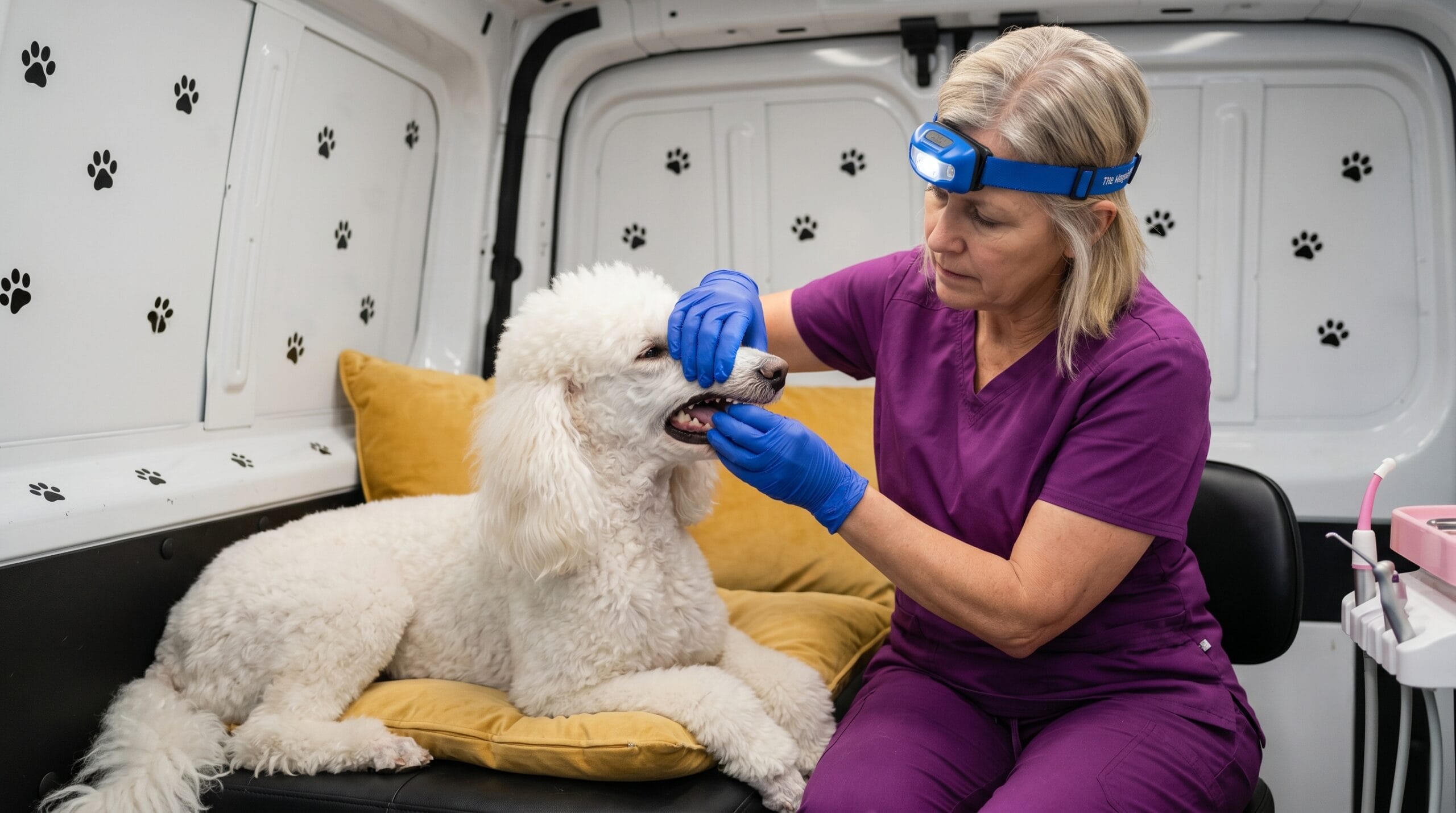
See how The Magic Paws performs anesthesia-free cat dental cleanings in Florida.
What is feline stomatitis and why is it so painful?
Feline stomatitis is a severe inflammatory condition affecting the entire oral mucosa, the tissue lining the inside of the mouth. Unlike cat gingivitis, which is localized to the gum tissue surrounding the teeth, stomatitis extends to the back of the mouth, the tongue, and the throat, producing painful ulcers across a wide area.
The MSD Veterinary Manual classifies feline chronic gingivostomatitis as distinct from ordinary gum disease in both extent and cause.
The condition appears to involve an exaggerated immune response to oral bacteria, plaque, and potentially viral triggers, which is why some cats develop it despite having relatively modest plaque accumulation. The resulting inflammation is intense, and many affected animals find eating so painful that they lose significant body weight even when food is available.
Treatment is demanding and does not always produce full remission. Many cats require extraction of all teeth behind the canines to remove the surfaces where bacteria trigger the immune response. In a portion of cases, this leads to substantial improvement; in others, the inflammation persists and requires ongoing management.

Can cats hide dental pain even when it is severe?
Yes, cats can and do continue functioning with significant oral pain, sometimes for months or years, without showing signs that are obvious to the people around them.
This goes back to the instinct established over generations. A cat that signals weakness, whether through limping, vocalizing, or withdrawing from normal activities, is a cat that would not have survived long in a wild environment.
So the nervous system learned to suppress and compensate: eating from one side, avoiding certain textures, reducing facial grooming. These are not signs of a cat that is coping well. They are adaptations that allow the animal to keep functioning despite a serious problem.
The practical implication for owners is that the absence of crying, obvious distress, or a refusal to eat does not mean the mouth is healthy. Feline pain signs are subtle by design. A change in how your cat approaches food, how much it grooms, or how it interacts with its toys can carry more diagnostic weight than any dramatic behavioral shift.
How can you prevent dental disease in cats?
Prevention works on two levels: what you do at home between professional visits, and how consistently you schedule professional care as part of your cat’s routine.
At home, daily brushing with a toothbrush and toothpaste formulated for cats is the most effective way to disrupt plaque before it mineralizes.
Most adult cats can be trained to tolerate brushing with gradual introduction, starting with letting the animal lick the toothpaste and progressing slowly over days or weeks.
Diet also plays a role: dry food that encourages chewing produces mild mechanical friction on the tooth surface, and some therapeutic dental diets carry a seal from the Veterinary Oral Health Council (VOHC), meaning they have been validated to reduce plaque or calculus in clinical trials.
Professional cat dental cleanings are the part of prevention that home care cannot replace. A thorough cleaning removes calculus that has already bonded to the tooth surface, and scales below the gum line where a toothbrush cannot reach, and gives the veterinary team an opportunity to identify early-stage problems before they advance.
For owners in the region, cat dental cleaning in Orlando and cat dental cleaning in Central Florida are available as part of a preventive care plan that addresses both routine maintenance and early intervention.
Pets that resist traditional procedures are often good candidates for dental cleaning without anesthesia, an approach that focuses on surface cleaning and is particularly useful for senior cats or those with health conditions that make sedation a concern.
When should you schedule a professional cat dental cleaning?
The right time to schedule a professional cleaning is before visible symptoms appear, not after.
Most cats benefit from at least one professional cleaning per year beginning in early adulthood, with higher frequency for breeds prone to rapid plaque accumulation or for animals with a documented history of dental disease.
Waiting until bad breath becomes strong, until gums are visibly inflamed, or until a feline starts dropping food means the disease has already advanced past the point where simple cleaning is the full answer.
If your cat is showing any of the behavioral or physical signs described in this article, including subtle ones like a preference for softer food or less facial grooming, a professional evaluation is the right next step.
Radiographs taken during a professional visit will reveal what a visual examination at home cannot: what is happening below the gum line, whether resorptive lesions are forming, and what stage of disease the animal is actually at.
For owners across South Florida, scheduling cat dental cleanings in Florida through a qualified provider means getting a complete picture of your cat’s oral health, not just the surface.
Schedule your cat’s dental cleaning today and catch problems before they become painful. Book a professional cleaning.
FAQ about signs of dental disease in cats
How do I know if my cat has dental disease?
The most common signs include persistent bad breath, drooling, pawing at the mouth, dropping food while eating, chewing on one side, and reduced grooming. Visible changes such as red or swollen gums, yellow-brown tartar, and loose teeth also indicate a problem. Because cats hide discomfort by instinct, even subtle behavioral shifts are worth discussing with your veterinarian.
What does cat periodontal disease look like?
Cat periodontal disease presents with red, swollen, or bleeding gums, visible tartar at the gum line, receding gum tissue that exposes more of the tooth surface, and loose teeth in advanced cases. The gum margins may appear darker red than normal and bleed with minimal contact. In severe stages, pockets form between the gum and tooth where bacteria accumulate beneath the surface.
Can dental disease in cats cause pain?
Yes. Dental disease is one of the main sources of chronic pain in cats, and many animals continue eating and functioning even with severe oral conditions due to their survival instinct. A cat that appears to be managing normally may still be experiencing significant discomfort. Pain is often only recognized in retrospect, after treatment, when the owner observes how much more relaxed and engaged the animal becomes.
How common is dental disease in cats?
The majority of cats show signs of dental disease by age three. The risk increases with age, and senior cats are particularly susceptible. Some breeds, including Persians and Siamese, are more genetically predisposed to rapid plaque accumulation and early onset of gum disease.
What is tooth resorption in cats?
Tooth resorption is a condition in which the tooth structure breaks down progressively, beginning at the root and often extending to the visible surface. It is the most common dental condition in cats and frequently goes unnoticed until the lesion is already advanced, because early-stage resorption occurs below the gum line and is not visible without dental radiographs.
Is cat gingivitis reversible?
Cat gingivitis in its early stages is reversible with appropriate professional treatment and consistent home care. The inflammation is limited to the soft tissue at this point, and the structures beneath the gum line remain intact. Without intervention, gingivitis progresses to periodontitis, which causes irreversible bone loss. Early treatment is the only window in which full gum health can be restored.
What are the stages of dental disease in cats?
Feline dental disease progresses through four stages:
1. Stage 1: Mild gingivitis, no bone involvement, fully reversible.
2. Stage 2: Early periodontitis, up to 25% bone loss, progression can be stopped.
3. Stage 3: Moderate periodontitis, 25% to 50% bone loss, tooth mobility begins.
4. Stage 4: Severe periodontitis, more than 50% bone loss, systemic risk increases, extraction typically required.
How often should cats have their teeth cleaned professionally?
Most cats benefit from one professional cleaning per year. Animals with a history of rapid plaque accumulation, existing periodontal disease, or breeds predisposed to oral health problems may need more frequent care. Your veterinarian is best positioned to recommend the right interval based on your cat’s individual oral health status.
Can dental disease in cats affect other organs?
Yes. Oral bacteria can enter the bloodstream through inflamed gum tissue and travel to other organs. This is one of the reasons veterinarians treat advanced oral disease as a whole-body health issue, not just a dental problem.
What is feline stomatitis?
Feline stomatitis is a severe inflammatory condition impacting the entire oral mucosa, including the gums, the inside of the cheeks, the tongue, and the back of the throat. It differs from common gingivitis in both extent and intensity and is associated with an exaggerated immune response to oral bacteria. Affected cats experience significant pain and often require extraction of multiple teeth to achieve remission.