How long do puppies teethe is a question most owners start asking around the three-month mark, when the chewing suddenly gets aggressive and a tooth or two shows up on the couch cushion. The honest answer: the process starts earlier than most people realize, and it ends later than they expect.
Puppies go through two distinct teething phases. The first begins within weeks of birth, when baby teeth break through the gums.
The second starts around three months, when those same teeth fall out and permanent adult teeth take their place. It’s the second phase that typically catches owners off guard, partly because of the timing and partly because of how much it affects a puppy’s behavior.
The signs vary by dog. Some puppies are vocal about the discomfort. Others go through the entire process quietly, with only increased chewing as a clue. What the behavior tells you matters less than understanding the structure of what’s happening physically and knowing what to do at each stage.
What most sources don’t address is what comes next. Teething ends. Dental health doesn’t take care of itself after that. Understanding the teething timeline is the first step, but the decisions made once the adult teeth are in determine the condition of those teeth five, eight, and ten years down the road.
What are the two stages of puppy teething?
Puppy teething happens in two stages separated by several weeks: the first is the eruption of 28 baby teeth, which begins around 2 to 3 weeks of age; the second is the replacement of those teeth by 42 permanent adult teeth, starting around 12 to 16 weeks.
Each stage has its set of physical and behavioral signals. Knowing which one your puppy is in helps you respond appropriately and avoid mistaking a normal part of development for a problem.
Stage 1: Baby teeth
The first baby teeth, often called deciduous teeth, milk teeth, or needle teeth, begin erupting around 2 to 3 weeks of age. By 6 to 8 weeks, most puppies have their full set of 28 deciduous teeth: 12 incisors, 4 canines, and 12 premolars. During this stage, puppies are typically still with their mother, and the eruption of those sharp little teeth is one of the reasons weaning begins.
Owners who bring home a puppy at 8 weeks are usually receiving a dog that has already completed this first phase entirely. The teeth are in, the gums have largely settled, and the puppy is transitioning into a period of relative calm before the second phase begins.
Stage 2: Adult teeth
The second phase starts around 12 to 16 weeks and runs through approximately 6 to 7 months. This is when the 28 baby teeth fall out and 42 permanent adult teeth push through.
The order is fairly consistent: incisors first, then canines, then premolars, and finally molars, which have no baby tooth counterpart and appear for the first time during this phase.
Breed and size affect the timeline noticeably. Smaller breeds, particularly toy and miniature breeds, often experience a slower, less predictable transition. Some take longer to lose baby teeth, which can create crowding and lead to complications. Large breeds tend to move through the phase more quickly and with fewer complications.
How long does puppy teething last?
The full puppy teething process lasts approximately 5 to 6 months, from the first baby teeth appearing around 2 to 3 weeks to the last adult teeth settling in around 6 to 7 months.
When permanent teeth erupt and baby teeth fall out, the most intense and obvious phase lasts from about 12 to 16 weeks to 6 months.
The table below covers the complete timeline from birth to adult dentition:
| Age | Stage | What to expect |
| 2 to 3 weeks | Baby teeth begin erupting | First incisors break through; puppy still nursing |
| 3 to 6 weeks | Full baby set erupting | Canines and premolars come in; 28 teeth total by week 6 to 8 |
| 6 to 8 weeks | Baby teeth complete | Full deciduous set in place; puppy weaning from mother |
| 12 to 16 weeks | Second phase begins | Baby teeth start falling out; adult incisors push through |
| 4 to 5 months | Active replacement | Canines and premolars being replaced; chewing peaks |
| 6 to 7 months | Adult set complete | All 42 permanent teeth in; teething phase ends |
Breed size matters here. A Chihuahua and a German Shepherd may both be 5 months old, but the Chihuahua is more likely to still have some retained baby teeth while the larger dog has already finished the transition. If you’re not sure whether your puppy is on track, a quick visual check at the vet visit around 4 months covers this well.
What are the signs that a puppy is teething?
Puppy teething symptoms range from barely noticeable to disruptive, and the same puppy can behave differently in each phase.
The most consistent sign is increased chewing, but there are several others worth knowing. VCA Animal Hospitals notes that some puppies go through teething with minimal visible signs, while others show clear discomfort throughout.
So, the most common signs include:
- Increased chewing on furniture, shoes, and hands, often more intense than typical puppy mouthiness
- Drooling beyond the puppy’s normal baseline, particularly during the active replacement phase
- Red or swollen gums at the site where a new tooth is pushing through
- Fussiness or irritability, especially around meal times or when the mouth is touched
- Finding tiny teeth around the house, usually on hard floors or in bedding
- Light bleeding on chew toys, which is normal in small amounts during active tooth loss
- Reduced appetite, in some cases, when gum soreness makes eating uncomfortable
But not every puppy shows all of these. A Labrador Retriever going through the active phase at 4 months may chew everything in sight without any fussiness, while a smaller breed like a Maltese may show gum inflammation and lose interest in food for a few days.
How can I help my teething puppy?

The most effective way to help a teething puppy is to give them appropriate outlets for the chewing they need to do and to make the process less uncomfortable when possible. The goal is not to stop the chewing; it’s to redirect it safely.
Options that work well:
- Rubber chew toys designed for puppies, which offer resistance without the risk of cracking teeth
- Frozen carrots or chew toys chilled in the freezer for 30 to 60 minutes before giving, which help numb sore gums
- Rope toys that allow the puppy to work their jaw with less pressure on emerging teeth
What to avoid is equally important. Hard bones, antlers, and nylon toys marketed as “tough chewers” are too dense for developing puppy teeth and can cause fractures on teeth that haven’t fully calcified yet.
The rule of thumb used in veterinary dentistry is straightforward: if you press your thumbnail into the item and it doesn’t give at all, it’s too hard for a teething puppy.
Introducing mouth handling during this phase has long-term value beyond teething. Puppies that get comfortable with someone touching their muzzle, lifting their lips, and examining their teeth during the teething period are significantly easier to handle for brushing and professional dental care in adulthood. A Pomeranian that learned to tolerate mouth handling at 14 weeks will accept a toothbrush at age three. One that was never handled that way often won’t.
📣 Is your puppy already showing signs of teething? The Magic Paws is available for professional, anesthesia-free mobile dental cleaning across South Florida and Orlando. Schedule a dog teeth cleaning near you
What happens to your dog’s teeth after teething ends?
Once the adult teeth are in, the teething phase is over, but active dental care is just beginning. Adult teeth start accumulating plaque within days of eruption. Without a preventive routine in place, that plaque mineralizes into tartar, and tartar buildup is the leading cause of periodontal disease in dogs.
This is the part of the conversation that most puppy content leaves out entirely. The focus is always on surviving the teething phase, not on what to do the week after the last tooth settles in. That gap in awareness is where preventive dental health either starts or gets delayed for years.
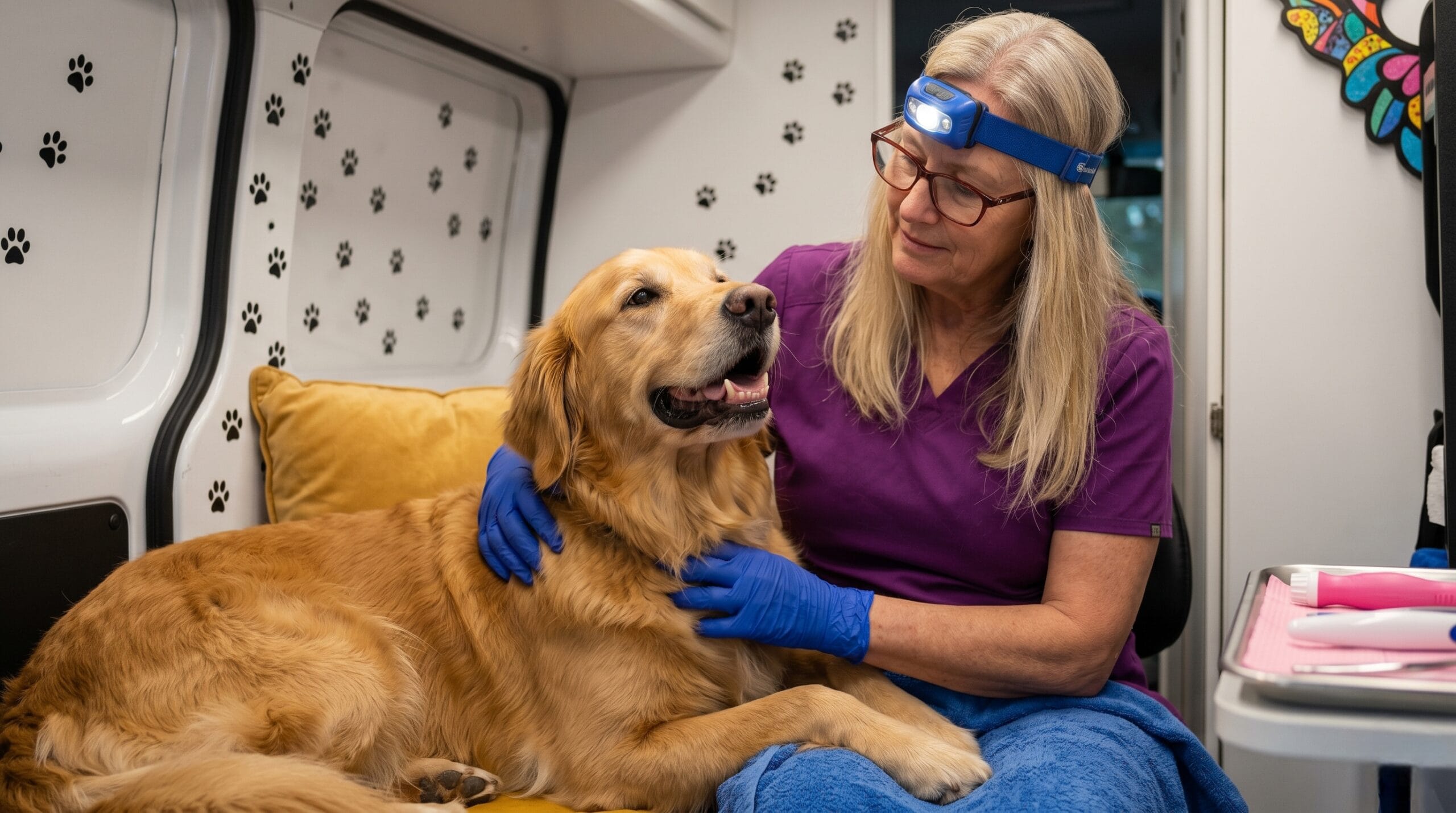
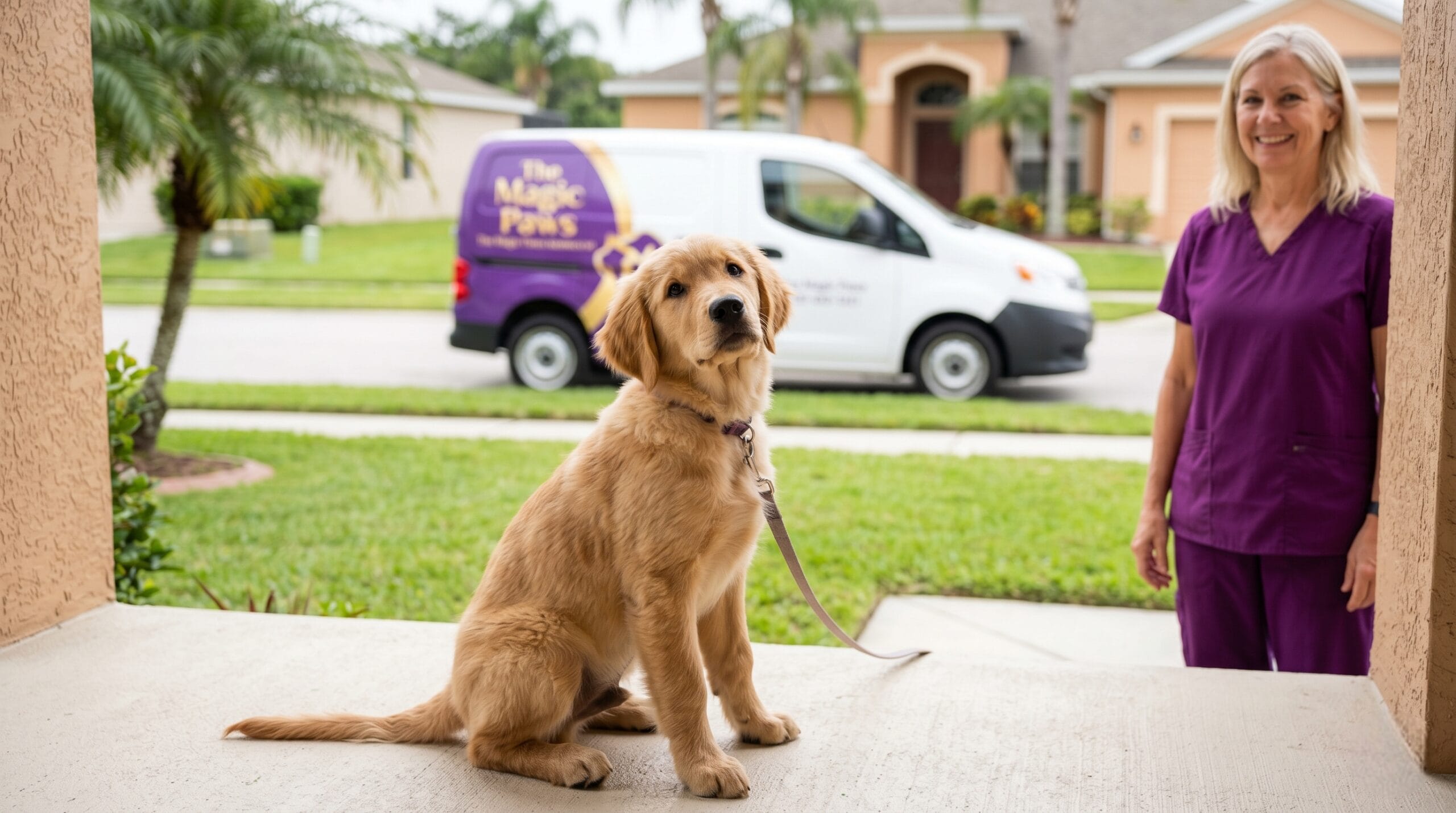
For owners in South Florida and Central Florida, starting professional preventive care early is straightforward. The Magic Paws offers a mobile pet dental care in Central Florida and South Florida through a service that comes to the owner’s home. This way, a young dog who hasn’t established a routine won’t have to worry about going to the clinic.
Every cleaning with The Magic Paws is performed using the Senses Therapy protocol, a proprietary approach designed to reduce anxiety during the procedure. It combines aromatherapy, music therapy, chromotherapy, and massage to keep the animal calm from the moment the technician arrives.
For a dog experiencing professional dental care for the first time, that environment matters. It shapes how the dog responds to future cleanings throughout its life.
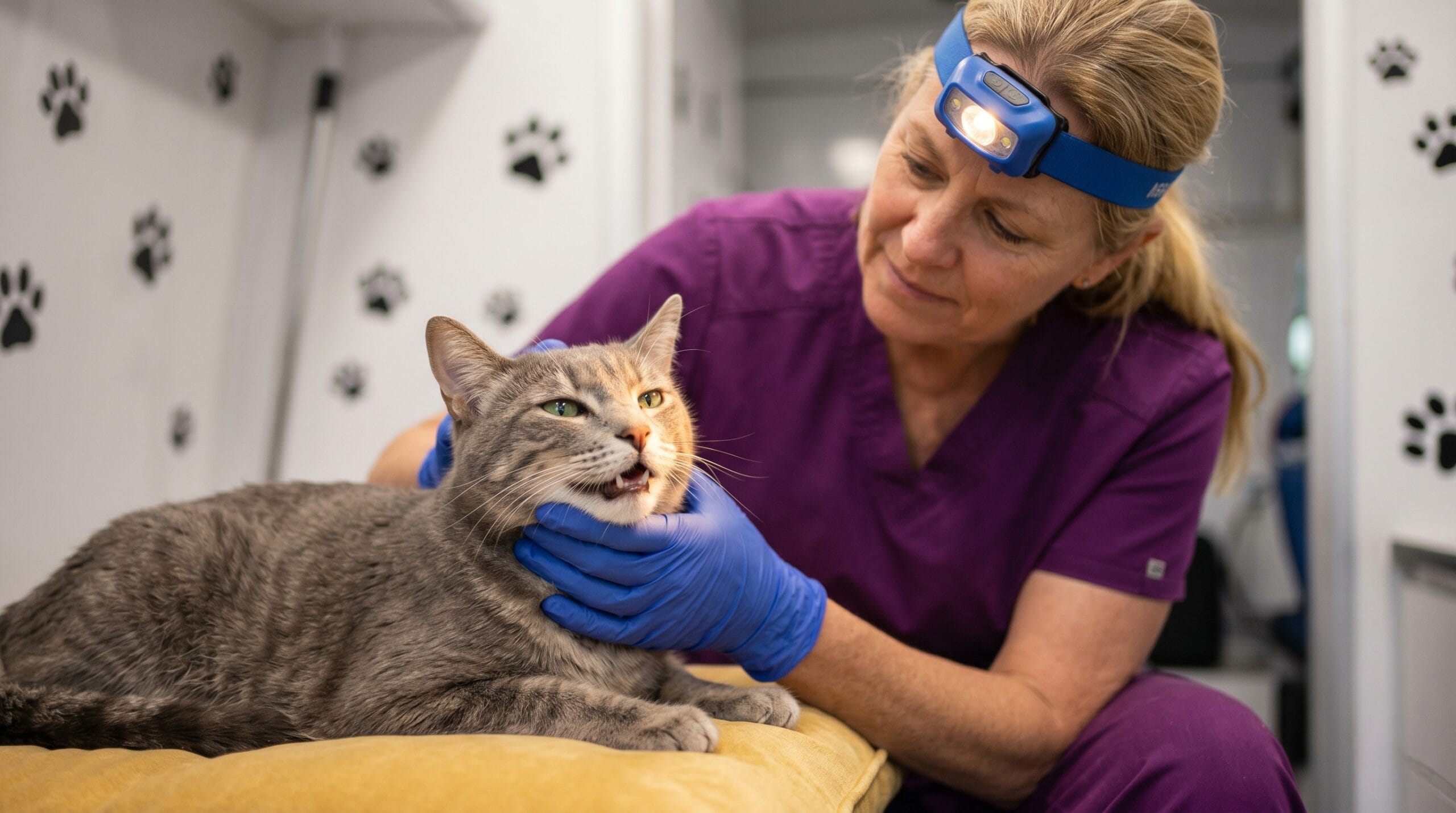
Understanding the full professional pet dental cleaning process helps owners set realistic expectations about what a first cleaning looks like and what it accomplishes, including what a visual exam can catch that brushing at home can’t.
Is your puppy’s dental health already at risk?
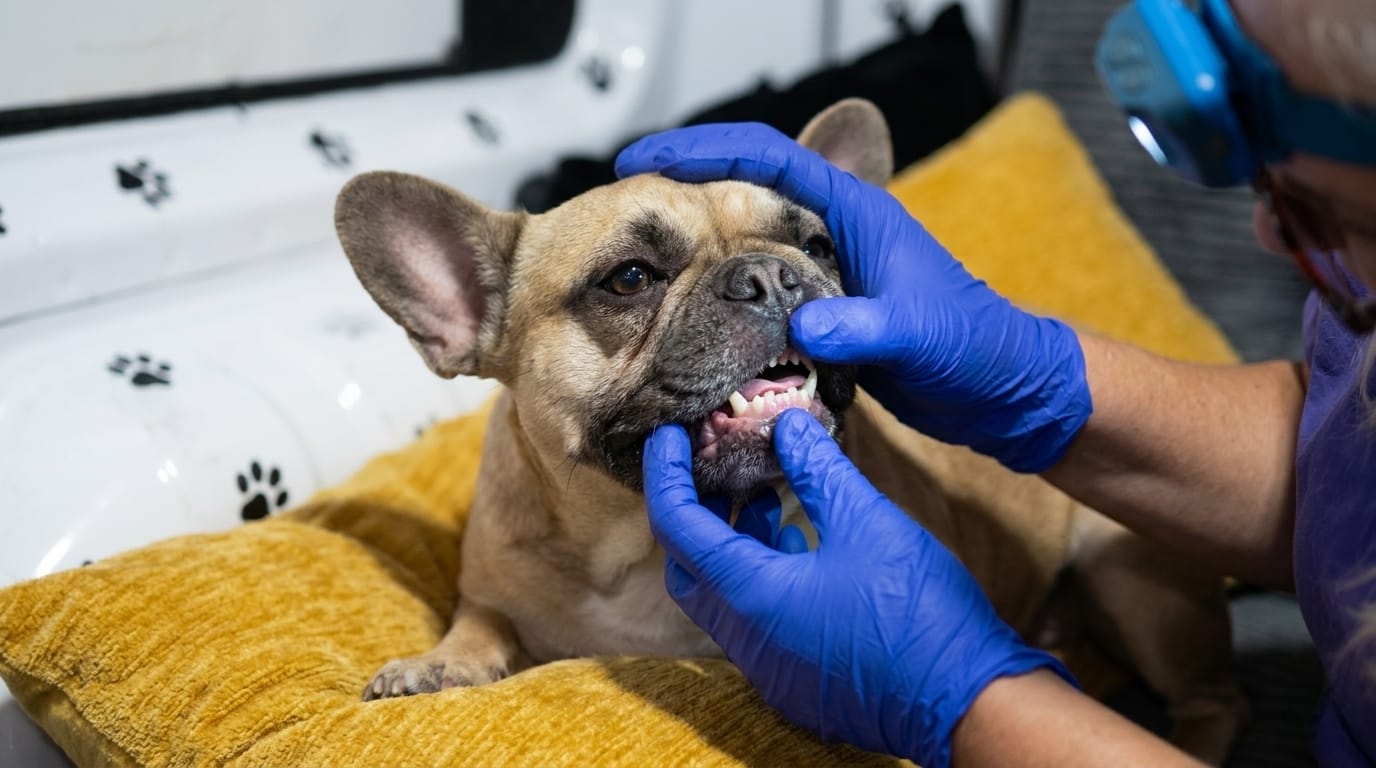
If your puppy has most of its adult teeth but baby teeth are still visible in the mouth, that’s not a reason to wait and see. Retained deciduous teeth are one of the most common dental complications in puppies, and the window to address them is short.
A retained baby tooth is one that stays in place after the adult tooth has begun erupting beside it. The two teeth end up sharing space the jaw wasn’t designed to accommodate for both. This traps food and bacteria in the gap between them, accelerates plaque buildup, and pushes the adult tooth out of its natural alignment. This is most common in smaller and flat-faced breeds, including:
- French Bulldogs;
- Yorkies;
- Shih Tzus;
- Pomeranians.
Malocclusion, meaning misalignment between upper and lower teeth, can also appear as an indirect result of retained teeth or simply as a breed characteristic.
When upper and lower teeth don’t meet correctly, the wear pattern changes, certain teeth take on more pressure than they’re built for, and the risk of fracture increases over time.
The signs that justify a vet visit during or shortly after teething include:
- Two teeth occupying the same socket position
- Visible crowding in the front teeth or along the premolar row
- Persistent bad breath in a puppy under 6 months old, beyond normal puppy breath
- Gum bleeding that doesn’t correspond to active tooth loss
- Adult tooth erupting at an unusual angle
The dog dental cleaning cost associated with addressing these issues early is far lower than treating the periodontal disease that develops when they’re ignored. Prevention is not a premium option. It’s the lower-cost path, almost always.
For owners in Orlando, the dog dentist in Orlando resource covers local professional options alongside what to expect at a first appointment. Starting that conversation while the dog is still young, before problems have had time to develop, is the most effective position a pet owner can be in.
Your puppy’s adult teeth are in. Now is the time to build the habit that protects them for life. Schedule a professional, anesthesia-free cleaning with The Magic Paws and start prevention before problems begin. Book a dog teeth cleaning near you
1. How long do puppies teethe?
Puppies teethe from around 2 weeks of age through about 6 to 7 months, when their full set of 42 adult teeth is in place. The most intense phase typically lasts 4 to 5 months, starting around 3 to 4 months of age.
2. How many teeth do puppies have?
Puppies have 28 baby teeth (deciduous/milk teeth), erupting around 2 to 3 weeks. These are gradually replaced by 42 permanent adult teeth between 3 and 7 months. Adult dogs end up with 14 more teeth than they had as puppies.
3. When do puppies start teething?
Puppies begin their first teething phase at around 2 to 3 weeks. The second, more noticeable phase starts around 12 to 16 weeks, when baby teeth fall out and adult teeth begin to push through. This is typically when new owners notice a significant increase in chewing behavior.
4. How long does puppy teething last?
The full teething process lasts roughly 5 to 6 months. The intense phase spans about 4 to 5 months. Most puppies have a complete adult set by 6 to 7 months of age.
5. Do puppies feel pain when teething?
Yes, many puppies experience discomfort during teething, especially when adult teeth push through the gums. Signs include increased chewing, drooling, fussiness and occasional loss of appetite. The intensity varies by puppy and breed.
6. What can I give my puppy for teething pain?
Safe options include rubber chew toys, frozen carrots, or toys chilled in the freezer. Avoid hard items like real bones, antlers, or nylon toys — these can crack developing teeth. Always supervise your puppy with any chew item.
7. What are the signs of teething in puppies?
The most common signs are increased chewing, drooling, red or swollen gums, fussiness, and occasionally finding tiny teeth around the house. Some puppies may eat less. A small amount of blood on chew toys is normal. If symptoms are excessive, contact your vet.
8. What happens if puppy teeth don’t fall out?
If baby teeth don’t fall out on schedule, they are called retained deciduous teeth. This is most common in smaller and flat-faced breeds. Retained teeth can crowd adult teeth, trap bacteria, and lead to early periodontal disease. A vet should evaluate them — removal is typically done at the time of spaying or neutering.
9. When should I start brushing my puppy’s teeth?
You can start introducing tooth brushing as soon as your puppy is comfortable with you touching their mouth, ideally during the teething phase. Start by letting them lick dog-safe toothpaste off the brush, then begin brushing once most adult teeth are in.
10. When should dogs get their first professional dental cleaning?
Most veterinarians recommend scheduling a professional dental cleaning once a dog has their full set of adult teeth, typically around 6 to 12 months. The Magic Paws offers anesthesia-free mobile dental cleaning for dogs across South Florida and Orlando — a stress-free way to start prevention early.