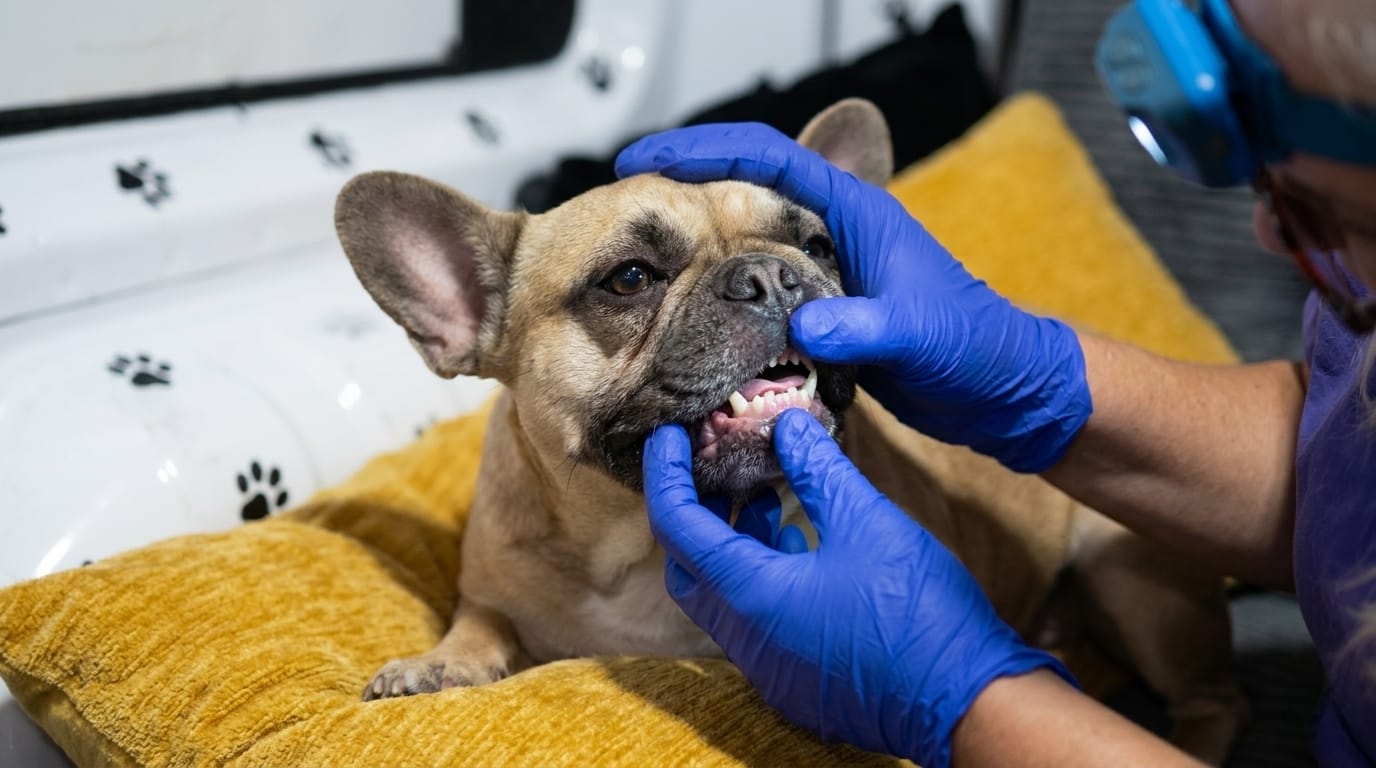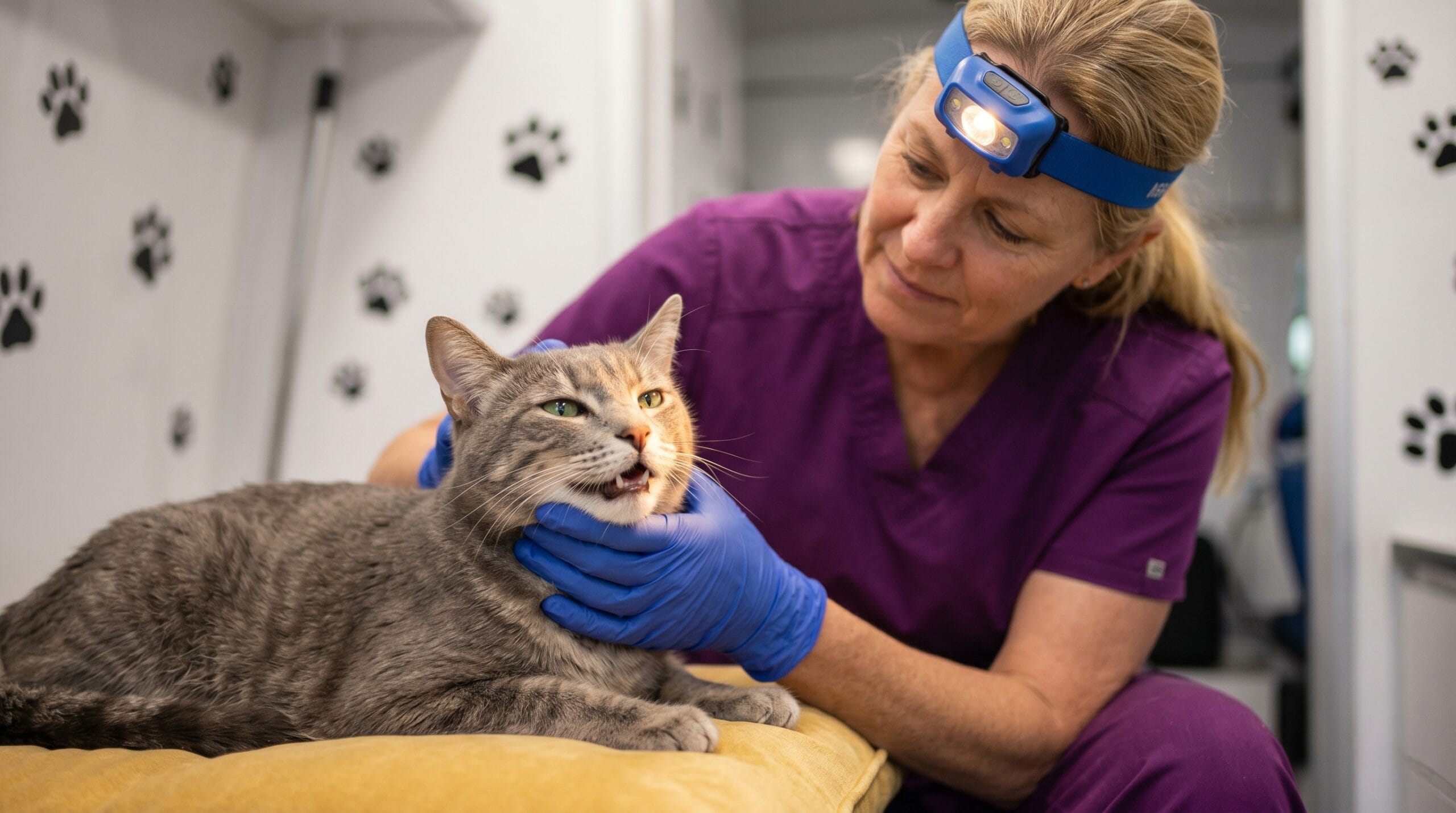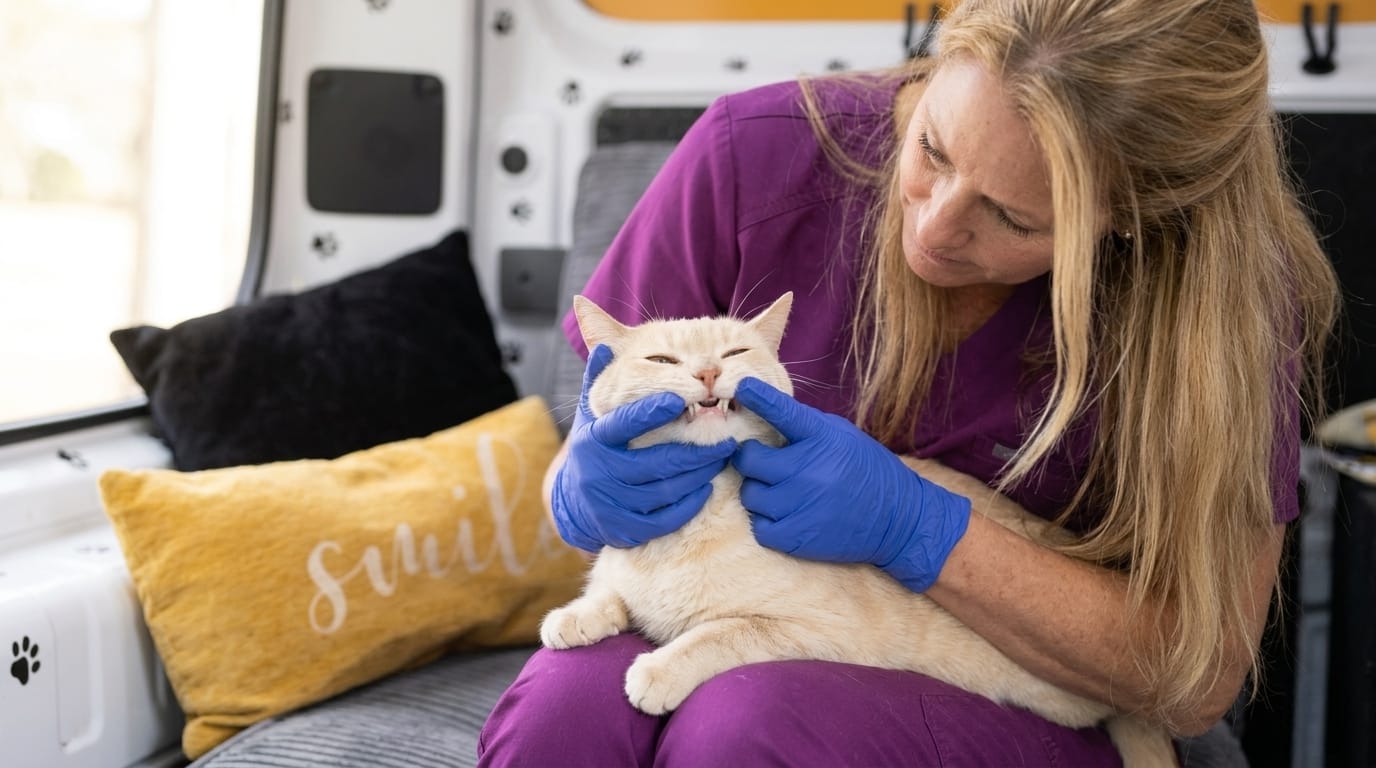
Dog periodontal disease: Your dog greets you every morning, eats without hesitation, and shows no obvious sign that anything is wrong. But dog periodontal disease rarely announces itself. By the time most owners notice something unusual, the infection has already been working beneath the gum line for months.
Periodontal disease is the most common health problem diagnosed in adult dogs. It does not start as a serious condition. It starts as a thin layer of bacteria on the tooth surface, a layer invisible to the naked eye and easy to ignore until it becomes something that professional cleaning alone can no longer fully reverse.
Understanding how this disease progresses, what it looks like in each stage, and which dogs are most at risk provides you the information you need to act before the window for the best outcome closes. The difference between stage 1 and stage 4 is not just dental. It affects your dog’s comfort, overall health, and quality of life in ways that go far beyond the mouth.
This article covers everything from the biology of plaque buildup to the systemic consequences of advanced gum disease, including what prevention actually requires and when professional dental cleaning becomes the only viable next step.
What is periodontal disease in dogs?
Dog periodontal disease is a bacterial infection of the tissues that support the teeth, including the gums, the periodontal ligament, and the bone that anchors each tooth in the jaw. It begins at the gum line, where bacteria collect and form plaque, a soft biofilm that adheres to tooth surfaces.
When plaque is not removed, it mineralizes into tartar, a hard deposit that creates the ideal environment for bacteria to travel below the gum line. Once bacteria reach the subgingival space, the tissue that is not visible during a routine visual inspection, the immune response triggers inflammation that gradually destroys the structures holding the tooth in place.
The process is slow, largely silent, and almost universal in adult dogs. According to the Cornell University College of Veterinary Medicine, between 80 and 90 percent of dogs over three years old show some component of periodontal disease. Most of those animals show no obvious symptoms until the damage is well underway.
How plaque leads to gum disease
Plaque forms within 24 hours on a clean tooth surface. At this stage, the bacteria are still accessible, and brushing can remove most of the buildup before it hardens. The problem is that plaque on dog teeth that is not disrupted daily begins to mineralize, typically within two to three days, producing tartar.
Tartar on dog teeth is porous and rough, which makes it a better surface for bacteria to colonize. As it builds up along and below the gum line, it creates mechanical irritation and a reservoir of bacterial activity that the immune system cannot clear on its own. Gum tissue responds by becoming inflamed, a condition called gingivitis in dogs. If plaque is removed at this point, the inflammation resolves and the tissue returns to normal. If it continues, gingivitis advances to periodontitis, where the damage becomes structural and irreversible.
What are the stages of periodontal disease in dogs?
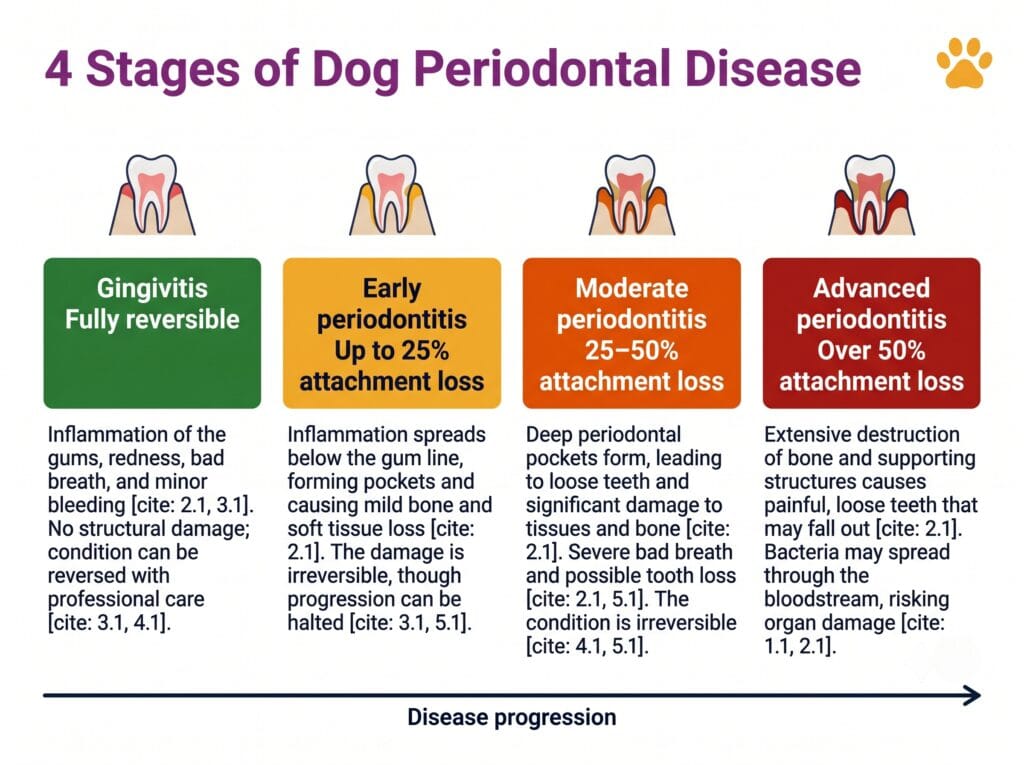
Periodontal disease in dogs is classified into four stages that reflect the extent of tissue and bone involvement. Stage 1 is the only fully reversible stage; stages 2 through 4 describe progressive, irreversible loss of the structures supporting the tooth.
The table below uses the staging criteria recognized by the American Veterinary Medical Association and expanded through the clinical descriptions published by the American Veterinary Dental College (AVDC).
| Stage | What happens | Reversible? |
| Stage 1: Gingivitis | Gum inflammation with no bone involvement. Plaque and early tartar present. | Yes, with professional cleaning and home care |
| Stage 2: Early periodontitis | Up to 25% attachment loss. Shallow periodontal pockets begin forming. | No. Management possible. |
| Stage 3: Moderate periodontitis | 25 to 50% attachment loss. Deeper pockets, gingival recession, early bone loss visible on X-ray. | No. Progression can be slowed. |
| Stage 4: Advanced periodontitis | More than 50% attachment loss. Severe bone loss, tooth mobility, exposed roots, chronic pain. | No. Extraction often required. |
Most dogs do not show visible distress at stage 2 or 3. The absence of obvious pain does not mean the tissue is intact.
What are the signs of dental disease in dogs?
Signs of dental disease in dogs fall into two categories: what you can observe at home and what only a professional examination can reveal.
Signs observable at home:
- Persistent bad breath (halitosis) that goes beyond normal breath odor
- Visible tartar buildup on the teeth, particularly along the gum line of the upper premolars and molars
- Swollen gums in dogs, especially redness at the margin where the tooth meets the tissue
- Bleeding gums in dogs when touching the mouth or after chewing
- Dropping food, chewing on one side, or reluctance to pick up hard objects
- Pawing at the face or rubbing the muzzle against surfaces
- Loose teeth in dogs at an age when tooth loss is not expected
Signs that require professional examination:
- Periodontal pockets detected through gingival probing
- Bone loss visible on dental X-ray
- Subgingival tartar not visible from outside the mouth
- Root exposure below the visible gum line
- Early signs of tooth root infection
If you notice any of the observable signs above, consult a professional before those findings progress. A detailed guide to recognizing these indicators appears in this article on signs of dental disease in dogs.
Can periodontal disease in dogs be reversed?
Only stage 1 can be reversed. At the gingivitis stage, no permanent structural damage has occurred. Professional dental cleaning removes the tartar that home care cannot reach, and gum tissue that is inflamed but intact can return to a healthy state with consistent daily brushing going forward.
From stage 2 onward, the tissue and bone that have been lost do not regenerate. Periodontal ligament fibers that have detached, bone that has resorbed, and gum tissue that has receded cannot be restored through cleaning alone.
The focus at these stages shifts to slowing the rate of progression and managing the bacterial load to preserve the teeth that still have adequate support.
This distinction matters more than most owners realize. Dogs that receive their first professional evaluation at stage 3 or 4 often need extractions. Dogs evaluated at stage 1 need a cleaning and a home care routine. The disease is the same; the outcome depends entirely on when the intervention happens.
Learn how anesthesia-free dental cleaning works: anesthesia-free dental cleaning.
Which dog breeds are most at risk?
Small breeds and brachycephalic dogs face a higher risk of developing periodontal disease earlier and more severely than larger breeds. The underlying reason is anatomical: smaller jaws crowd the teeth together, which makes it harder to clean between tooth surfaces and creates more retention sites for plaque.
Breeds with consistently elevated risk include:
- Toy breeds: Chihuahua, Yorkshire Terrier, Maltese, Toy Poodle, Shih Tzu
- Small mixed breeds under 10 pounds
- Brachycephalic breeds with compressed skull structure: Bulldog, Pug, Boston Terrier, Cavalier King Charles Spaniel
Gingivitis in dogs of these breeds can appear as early as one to two years of age. Annual professional evaluation is especially important for small breed owners who may not observe early warning signs because the visible tooth surface is small.
How does periodontal disease affect a dog’s overall health?
Dog periodontal disease is not limited to the mouth. The same bacteria responsible for dog gum disease can enter the bloodstream through inflamed and ulcerated gum tissue, reaching organs that have no direct connection to the oral cavity.
Heart disease and periodontal bacteria
Oral bacteria associated with periodontitis have been identified in cardiac tissue in dogs with certain valve conditions. The proposed mechanism involves bacteria circulating through the bloodstream and depositing near the heart’s valves and surrounding arterial walls, triggering an inflammatory response in tissue far removed from the original infection.
A review published by PMC/NCBI describes the systemic pathways through which periodontal bacteria contribute to organ damage in small animals.
Kidney and liver damage
The kidneys and liver are the primary filtration systems of the body, and a persistent oral bacterial load places chronic stress on both organs.
In dogs with advanced periodontal disease, elevated markers of kidney and liver function have been documented in clinical settings, suggesting that long-term, untreated oral infection contributes to organ strain over time. Older dogs with advanced disease may show signs of systemic illness that improve, at least partially, after dental intervention.
Chronic pain and quality of life
Dogs adapt to chronic pain with a consistency that makes it easy to miss. A dog with moderate to advanced periodontal disease may still eat, play, and behave affectionately, even while experiencing discomfort with every bite.
Behavioral changes tend to be subtle: a slight preference for softer food, reduced interest in chewing toys, and occasional hesitation before picking something up. These are not obvious signs of distress, which is why the absence of complaint cannot be used as evidence that the animal is comfortable.
How is periodontal disease in dogs treated?
Periodontal disease in dogs treatment varies by stage and determines what outcomes are still possible at the time of intervention.
At stage 1, professional dental cleaning is the primary intervention. Scaling removes tartar from visible and subgingival surfaces, polishing smooths enamel to reduce future plaque adhesion, and a home care plan is established to maintain the result. No tissue repair is needed because no structural loss has occurred.
At stage 2, the same cleaning process applies, but with closer attention to the periodontal pockets that have begun to form. The pockets are measured, irrigated, and treated topically if indicated. The animal goes home with a more specific home care protocol and a shorter interval before the next evaluation.
At stages 3 and 4, the treatment becomes more complex. Deep pocket therapy, local antibiotic delivery, and assessment of each tooth’s remaining bone support are required.
Teeth with more than 50 percent attachment loss are generally candidates for extraction, as they cannot be stabilized and represent a persistent source of bacterial load and pain. The goal at this stage is to restore oral comfort and remove the infected tissue that is driving systemic effects.
Dog teeth cleaning performed at regular intervals is the most reliable way to keep the disease from reaching the stages where extraction becomes necessary. Mobile dog teeth cleaning services allow owners to schedule professional care without the stress of transporting the animal to an unfamiliar environment.
How can you prevent gum disease in dogs?
Preventing gum disease in dogs requires two things working together: consistent home care that removes plaque before it mineralizes and periodic professional cleaning that addresses what home care cannot reach. Neither one alone is sufficient for most dogs over three years of age.
Daily tooth brushing
Daily brushing is the most effective home care tool available for dog oral health. It disrupts the plaque biofilm before it has time to harden, which is the only way to interrupt the cycle that leads from soft plaque to tartar to gingivitis.
For dogs that have never been brushed, the introduction should be gradual. Start by letting the animal sniff and taste the toothpaste (use a product formulated for dogs, never human toothpaste), then progress to touching the gums with a finger, and finally introduce the brush over the course of a week or two.
Even 30 seconds of brushing on the outer surfaces of the upper teeth makes a measurable difference in plaque accumulation.
Diet and dental health
Diet influences plaque buildup in ways that are not always visible. Wet food tends to adhere more readily to tooth surfaces than dry food, and some formulations designed specifically for dental health include ingredients or texture properties that mechanically reduce plaque as the animal chews.
No diet eliminates the need for brushing or professional cleaning, but choosing food with oral health in mind contributes to a lower baseline bacterial load.
Dental chews and toys
Dental chews and certain toy textures can supplement brushing by providing mechanical abrasion during chewing. Their effectiveness varies widely by product, and they should be viewed as a complement to brushing, not a replacement.
Products carrying the Veterinary Oral Health Council (VOHC) seal have met standards for demonstrated efficacy in reducing plaque or tartar in controlled trials, which makes the seal a useful reference when choosing between options.
Professional dental cleaning
Even with daily brushing, plaque accumulates in areas a brush cannot reach, particularly below the gum line and between crowded teeth. Professional dental cleaning removes this buildup with instruments designed to access subgingival surfaces that home care cannot address.
It also includes a systematic examination of each tooth, periodontal pocket depth measurements, and evaluation of findings that may not be visible from outside the mouth.
Most dogs benefit from one professional cleaning per year, though animals with a history of rapid tartar accumulation, small breed physiology, or a prior diagnosis of periodontal disease may need more frequent care.
Regular attention to dog dental health through both home care and professional evaluation is the most effective framework for keeping the disease at bay. For owners managing multiple aspects of their animal’s well-being, resources on pet care prevention provide broader context for building a consistent routine.
When should you schedule a professional dental cleaning for your dog?
Schedule a professional dental cleaning as soon as you observe any warning sign, not when the signs become severe. Waiting until bad breath is strong, bleeding gums are visible, or tooth mobility is obvious means the disease is already at a stage where the outcome is more limited.
For dogs with no prior dental history, scheduling the first evaluation by age two or three gives the professional a baseline reading against which future changes can be measured. With dogs already diagnosed with any stage of periodontal disease, follow the interval recommended after the last procedure, as that recommendation is based on how quickly tartar returned and how the tissue responded.
If your dog is a small or brachycephalic breed, or has had any prior dental work that revealed bone loss or deep pockets, an annual schedule is the minimum. Twice-yearly professional care is appropriate for many of these animals.
The earlier you intervene, the more options remain available, and the less the procedure needs to address.
Stage 1 disease requires a cleaning and a home care plan. Stage 4 disease requires extractions, advanced treatment, and management of systemic effects. The difference in outcome is determined almost entirely by timing.
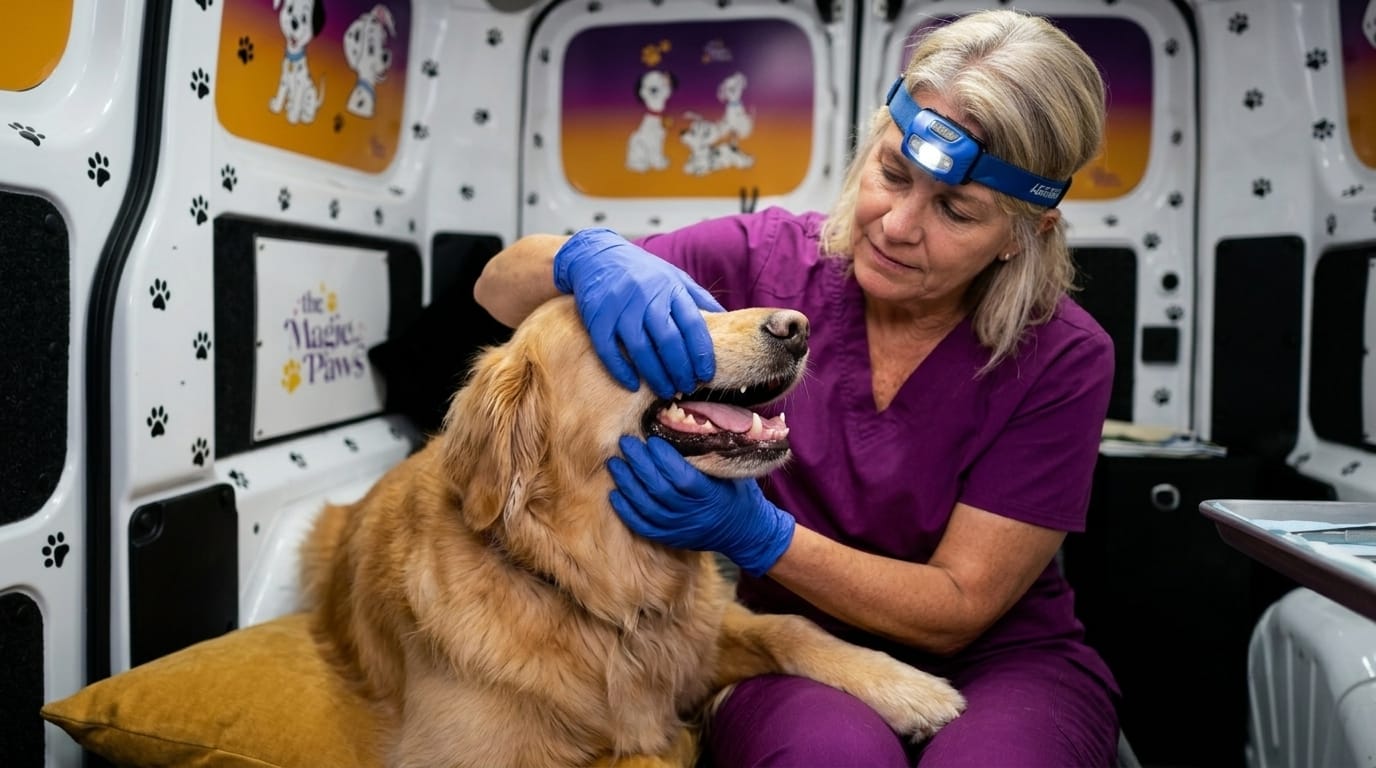
If your dog is due for a professional cleaning, The Magic Paws offers anesthesia-free dental care inside a fully equipped mobile unit. Schedule your dog’s dental cleaning with The Magic Paws.
Frequently asked questions about dog periodontal disease
What is the difference between plaque and tartar in dogs?
Plaque is a soft bacterial biofilm that forms on tooth surfaces within 24 hours and can still be removed by brushing. Tartar is plaque that has mineralized and hardened, bonding to the tooth surface in a way that no brush can disrupt. Removing tartar requires professional instrumentation. The distinction matters because brushing is effective against plaque but has no mechanical effect on tartar once it has formed.
At what age do dogs develop periodontal disease?
Signs can appear as early as two to three years of age, particularly in small breeds. The Cornell University College of Veterinary Medicine reports that between 80 and 90 percent of dogs over three years old show some component of the disease. In large breeds, progression tends to be slower, but periodontal disease is not exclusive to older or smaller animals.
Can periodontal disease kill a dog?
The disease itself is rarely a direct cause of death, but untreated systemic complications, including chronic bacterial load affecting the kidneys, liver, and cardiovascular system, can reduce quality of life and contribute to a shorter life expectancy. The risk is cumulative and tends to be most significant in older animals with advanced, long-standing disease.
Is bad breath always a sign of periodontal disease in dogs?
Mild breath odor is normal in dogs. Persistent foul odor, particularly a sharp or sulfurous smell, is a warning sign that bacterial activity has increased beyond what is typical. If the odor is new, has worsened progressively, or is accompanied by other signs such as swollen gums or reluctance to chew, a professional evaluation is warranted.
How is periodontal disease diagnosed in dogs?
Diagnosis requires an in-person clinical examination. A professional uses a periodontal probe to measure pocket depth around each tooth, assesses gum tissue for recession and inflammation, and, in many cases, uses dental X-rays to evaluate bone levels that are not visible from the surface. No external inspection alone is sufficient for accurate staging.
Can small dogs get periodontal disease more easily than large dogs?
Yes. Small breeds have teeth that are proportionally large for their jaw size, which means the teeth are crowded together with less space for cleaning between them. This creates more plaque retention sites and faster tartar accumulation. Brachycephalic breeds face a similar challenge due to their compressed skull structure, which rotates and crowds the teeth.
What happens if periodontal disease is left untreated in dogs?
Untreated disease progresses through four stages, with each stage representing greater destruction of the structures holding the tooth in place. Bone loss, tooth mobility, and chronic pain are the local consequences. At the systemic level, persistent oral bacteria can affect organ function over time. Stage 1 remains the only point at which the damage can still be fully reversed, which makes early detection essential.
How often should dogs get professional dental cleanings?
Most dogs benefit from one professional cleaning per year. Animals with rapid tartar accumulation, a history of periodontal disease, or small breed physiology may need more frequent care. The interval is best determined by a professional after the first complete evaluation, since the recommendation should reflect how quickly tartar returns and how the tissue responds between appointments.
Does dry food help prevent periodontal disease in dogs?
Dry food may provide a mild mechanical cleaning effect during chewing, but it does not replace brushing or professional cleaning as a preventive measure. Formulations specifically designed for dental health, particularly those carrying the VOHC seal, have demonstrated some efficacy in reducing plaque or tartar in controlled settings. Diet is one factor among several, not a standalone solution.
Can I brush my dog’s teeth if they already have periodontal disease?
It depends on the stage. In early stages, brushing helps disrupt plaque before it mineralizes and contributes to slowing progression. In advanced stages, where pockets are deep and tissue is fragile, brushing may cause pain and should not begin until after a professional cleaning addresses the active disease. If you are unsure of your dog’s current status, have the animal evaluated before starting a brushing routine.