Dog dental chews are one of the most purchased items in the pet care aisle, and one of the most misunderstood. Owners pick them up at the grocery store, drop one in the food bowl after dinner, and feel like they have done their part for oral health. The problem is not the intention. It is the gap between what the product can do and what owners expect from it.
Most pets on a daily chew routine still show significant tartar accumulation at their next veterinary appointment. The chew is working on one layer of the problem, but the mouth has several layers, and each one requires a different approach. Choosing the wrong product, or using the right one without understanding its limits, leaves the rest of those layers untouched.
This guide breaks down how dog dental chews actually work, what formats are available, which criteria matter when selecting one, and where the product’s ceiling is. The goal is not to talk you out of using them. It is to help you use them better and recognize when your dog needs more than a daily treat can provide.
If you have been choosing dental treats for dogs or dog dental treats based on packaging claims alone, the next few sections will give you a more useful framework.
What are dog dental chews and how do they work?
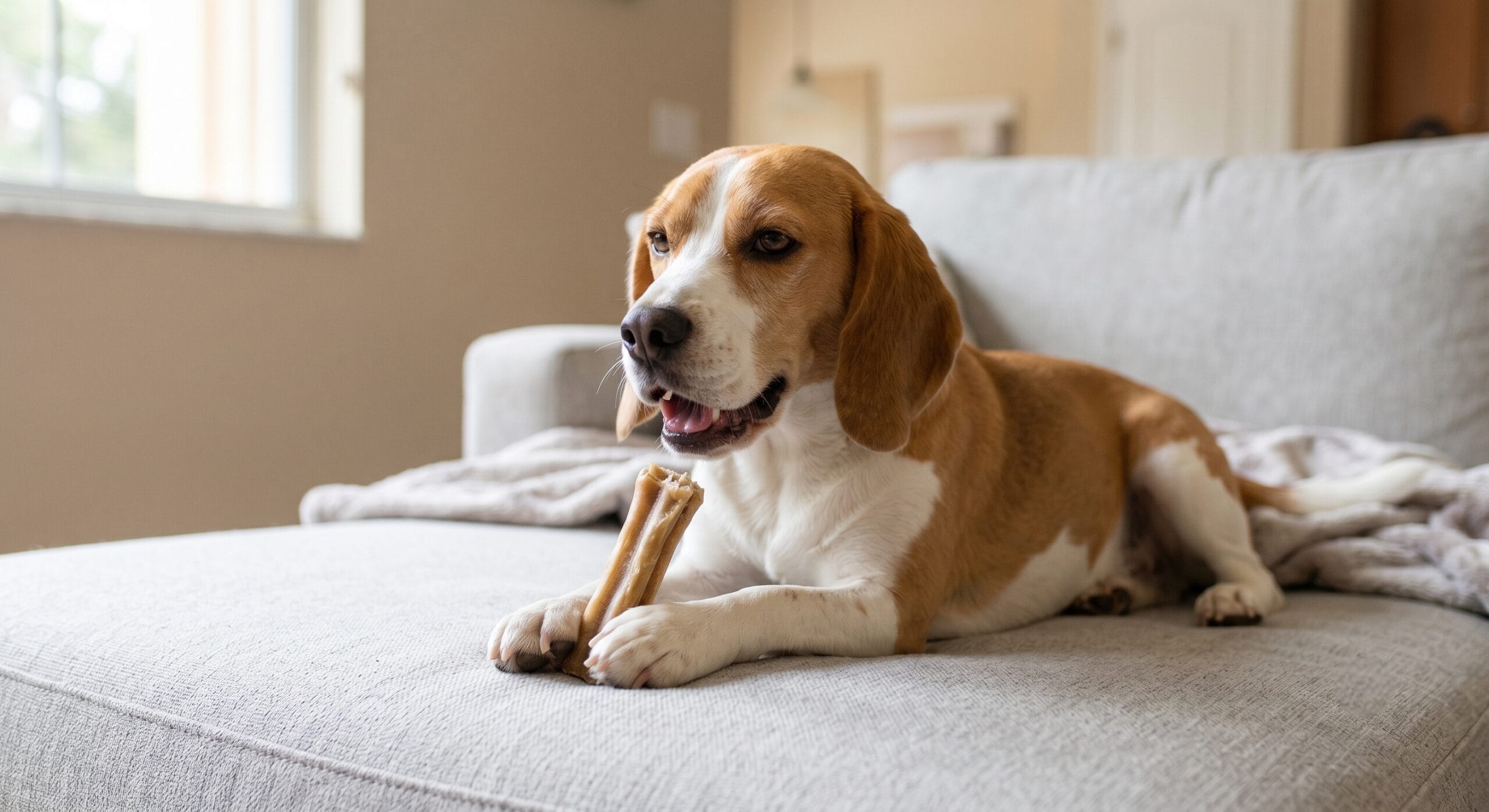
Dog dental chews are products designed to reduce plaque and tartar through two distinct mechanisms: mechanical abrasion and enzymatic activity. The chewing action creates friction against tooth surfaces, physically scraping away soft deposits before they harden. Some products also contain active ingredients that break down the chemical bonds in plaque at a molecular level.
Not every product on the shelf uses both mechanisms. Some rely entirely on texture, some use only enzymatic ingredients, and a smaller category combines both. The distinction matters because mechanical and enzymatic action address different stages of plaque development and work best when the animal actually engages with the product for a meaningful amount of time.
Enzymatic ingredients and what they actually do
Enzymatic chews for dogs contain compounds, most commonly glucose oxidase or lactoperoxidase, that produce hydrogen peroxide in the presence of saliva. The resulting reaction disrupts the bacterial cell membrane, slowing the rate at which plaque forms and limiting the accumulation of odor-causing compounds.
This process does not scrape or scrub anything. It changes the biochemical environment of the mouth in a way that makes bacterial colonization more difficult. A chew that swallowed quickly, without significant contact time, delivers very little enzymatic benefit regardless of the ingredient list. The two mechanisms work best together: texture handles the mechanical side, and enzymes handle the chemical side, and the combination covers more of the tooth surface than either approach alone.
How does chew texture actually remove plaque?
The texture of a dental chew supports plaque removal for dogs by creating friction along the tooth surface as the animal bites down and works through the product. The outer layers of soft plaque are lifted and displaced before they have a chance to calcify. This works on exposed crown surfaces, but the physical contact is limited to what the dog’s chewing pattern reaches.
Texture works proportionally to engagement time. A chew that disappears in thirty seconds provides a fraction of the abrasive contact that a chew requiring five to ten minutes of sustained work provides. This is one reason that harder textures, within safe limits, tend to produce better mechanical results than soft ones. Softer formats break apart quickly, especially in larger or more aggressive chewers, and the cleaning window closes before the full tooth surface has been covered.
What types of dog dental chews are available?
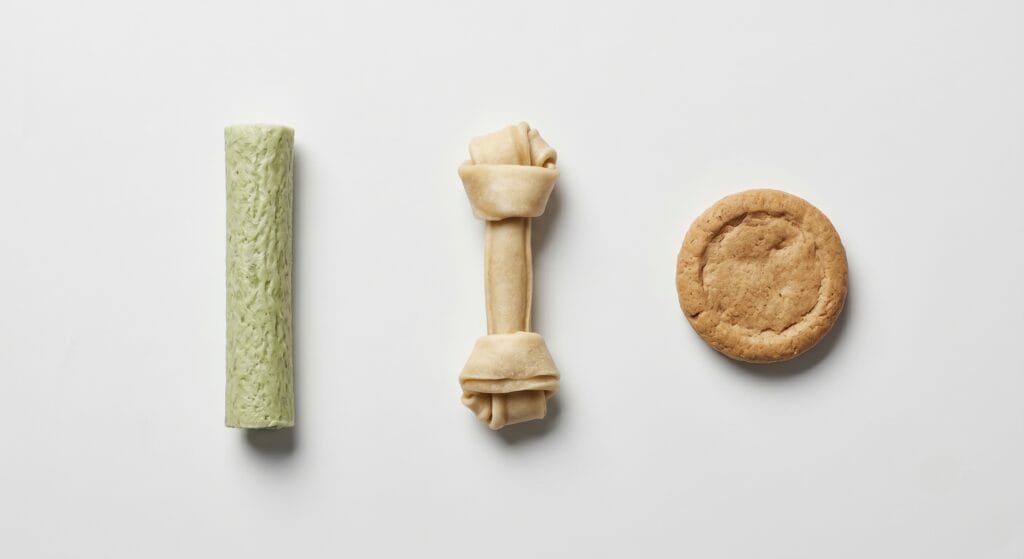
Three main formats dominate the market: sticks, bones or shaped chews, and dental biscuits. Each has a different profile in terms of texture, chewing duration, and who it suits best. Water additives are also available as a complementary option, though they work differently and do not replace any of the above.
The table below covers the three primary formats side by side.
| Type | Mechanism | Recommended profile |
| Stick or roll | Mechanical + enzymatic | Most sizes; good for moderate chewers |
| Bone or shaped chew | Mechanical (texture-heavy) | Medium to large dogs; longer chewing duration |
| Dental biscuit | Mostly mechanical | Small dogs or seniors; shorter chew sessions |
Dental biscuits deserve a note: they are the softest format of the three, which makes them suitable for dogs with dental sensitivity or smaller jaws. The trade-off is that the abrasive contact time is shortest with this format. They work best as a supplement to a broader oral care routine rather than as the sole product.
A dog dental water additive is worth mentioning separately. This type of product, also called a water additive for dogs teeth, is poured into the drinking bowl and typically contains enzymes or antiseptic agents that reduce bacterial load over the course of the day. They do not provide any mechanical cleaning, but they can support the enzymatic side of plaque control in animals that do not tolerate chewing products well. They are not a focus of this article but will be covered in more depth separately.
How do you choose the right dental chew for your dog?
When looking for the best dog dental chews, the most reliable starting point is the VOHC Seal of Acceptance, not packaging language, not flavor ratings, and not price. From there, the right choice depends on your dog’s body weight, jaw strength, chewing style, and any known dietary sensitivities.
This section covers the objective criteria in order of importance.
The VOHC seal of acceptance: what it means and why it matters
The Veterinary Oral Health Council (VOHC) is an independent organization that evaluates dental products against a defined clinical standard. A product earns the VOHC Seal of Acceptance only when controlled trials demonstrate a measurable reduction in plaque or tartar, typically a minimum of 10% to 20% compared to a control group.
The seal does not indicate the product is the best-tasting or most convenient. It indicates the product did what it claims to do under conditions that could be verified. A product without the seal is not automatically ineffective, but the VOHC seal is the only verifiable, independent criterion available to the consumer at the time of purchase. Everything else is a marketing claim.
The accepted product list on the VOHC website is the most reliable reference when evaluating the best dog chews for teeth, covering both plaque-reduction and tartar-reduction claims. Some products earn the seal for one but not the other. Checking the specific claim on the seal, plaque versus tartar, helps you match the product to your dog’s current needs.
Size, texture, and calorie content: the practical checklist
Size is not optional. A chew that is too small for a dog’s mouth can be swallowed whole without any mechanical contact, which provides zero benefit and a potential choking risk. A chew that is too large and too hard creates fracture risk on the carnassial tooth and upper premolars. Most manufacturers provide weight-based sizing guides, and these should be followed rather than estimated.
The nail test is the most practical field check for texture hardness: if you cannot press your thumbnail into the surface of the chew without significant resistance, it is too hard. Products such as antlers, hooves, and real bones consistently fail this test and carry a documented risk of slab fracture in dogs.
The calorie content in dog treats is easy to overlook. Some larger dental chews contain 100 to 150 calories per piece. If your dog receives one daily, that is a meaningful addition to the day’s total intake. Treat the chew as part of the daily calorie budget, not as an extra on top of meals.
For puppies, the minimum recommended age for most dental chews is 6 months, when the permanent adult teeth are fully in. Before that point, the developing teeth are more vulnerable to damage, and the eruption timeline makes many chew textures inappropriate.
Are there dental chews that are unsafe for dogs?
Some chew categories carry a meaningful fracture risk, and dog chew safety should be evaluated before any product becomes part of the daily routine. The nail test is the most useful screening tool at the point of purchase.
Products to avoid on the basis of safety evidence:
- Antlers: extremely dense and unyielding, with consistent documentation of slab fractures and tooth splits
- Hooves: similar hardness profile to antlers, with additional contamination concerns in some products
- Raw or cooked real bones: cooked bones can splinter; raw bones pass the nail test in some cases but carry bacterial contamination risk and are inconsistent in density
- Conventional rawhide: the processing method for standard rawhide often uses chemical treatments, and the material can swell after ingestion, creating a blockage risk in some animals
Safer options worth considering as a rawhide alternative for dogs include products with VOHC approval, natural rubber chews with appropriate give, and enzymatic dental sticks formulated for the animal’s weight range.
How often should you give your dog a dental chew?
For most VOHC approved dental chews, once daily is the standard use frequency. This matches the rate at which plaque accumulates and provides consistent mechanical and enzymatic contact before soft deposits have time to harden into tartar.
Consistency matters more than quantity. A dog that receives one chew every day for thirty days builds better plaque control than a dog that receives seven chews over a single weekend. The mechanism is cumulative, and irregular use produces irregular results.
If your dog has a sensitive digestive system, introduce a new chew product gradually over five to seven days to allow the gut to adjust. Some animals experience loose stools when switching chew products, particularly when moving from a grain-based format to a different base ingredient.
What can dog dental chews not do?
Dog dental chews cannot clean below the gumline. This is the critical limitation that every owner should understand before building a dental care routine around them. The subgingival region, the space between the tooth and the gum, is where the most destructive bacterial activity occurs, and it is inaccessible to any chew product.
Plaque that is not removed from the tooth surface eventually mineralizes, and tartar buildup in dogs follows a predictable pattern: it hardens and begins migrating below the gumline. Once bacteria reach the periodontal pockets, they trigger an inflammatory response that progressively destroys the attachment between the tooth and the bone. Dog periodontal disease develops this way, and this is precisely what dog dental disease develops, and it is irreversible at advanced stages.
Chews reduce the rate of plaque accumulation on exposed crown surfaces. They do not prevent subgingival colonization, do not remove existing tartar, and do not treat active periodontal disease. A dog can use good dental chews for dogs every day for a year and still develop significant periodontal involvement if the subgingival region is never professionally cleaned. Recognizing the signs your dog needs a dental cleaning is what allows owners to intervene before the disease progresses.
Not sure whether your dog’s dental situation has moved past what a chew can address. Check the 3 signs most owners miss.
How do dental chews fit into a complete dental care routine?
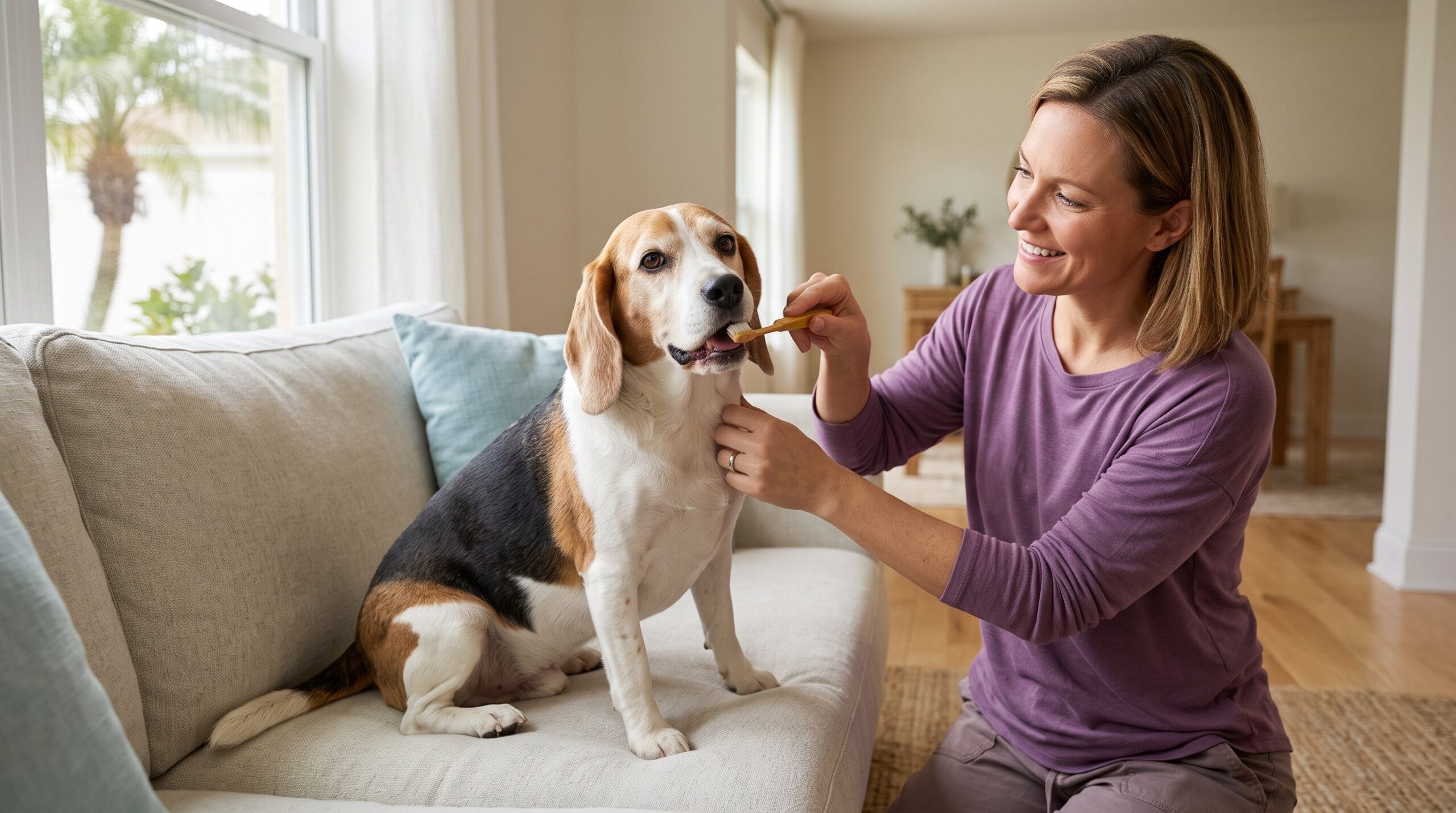
A complete dog oral hygiene routine has three components: daily dental chews, regular toothbrushing, and periodic professional cleaning. Each addresses a different layer of the same problem, and none of them fully replaces the others.
Dog teeth cleaning at home starts with chews handling the daily reduction of surface plaque between brushing sessions. A consistent toothbrushing routine extends the mechanical cleaning to the surfaces that chewing misses, particularly the lingual side of the teeth and the areas near the gumline. Brushing with an enzymatic toothpaste adds a chemical layer on top of the physical one.
Professional cleaning handles what both of those tools leave behind. It scales mineralized tartar from crown surfaces and clears the subgingival region, resetting the bacterial load to a level that daily care can realistically manage. The interval between professional sessions depends on the individual dog, breed-specific risk, and how consistently the daily routine is maintained. A broader guide on essential dog dental care covers how to build and maintain that complete routine across all three layers.
Water additives can function as a fourth layer in animals that resist chewing or brushing. They reduce bacterial activity over the course of the day without requiring any active cooperation from the pet. They are worth considering as a supplement, not as a replacement for any of the components above.
Want to understand what happens during a professional session and whether it is right for your dog. See how anesthesia-free cleaning works and what to expect.
Is anesthesia-free cleaning the right next step for your dog?
For most dogs on a daily chew and brushing routine, anesthesia-free dog dental cleaning is the logical complement that closes the subgingival gap. It removes what home care cannot reach, extends the window of effectiveness for everything else in the routine, and does not require the risks associated with general anesthesia in otherwise healthy animals.
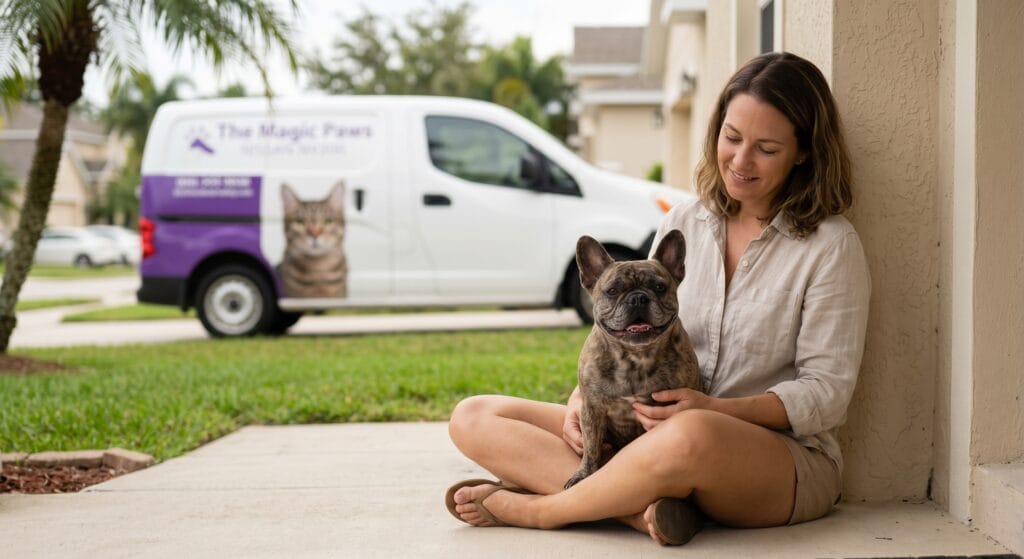
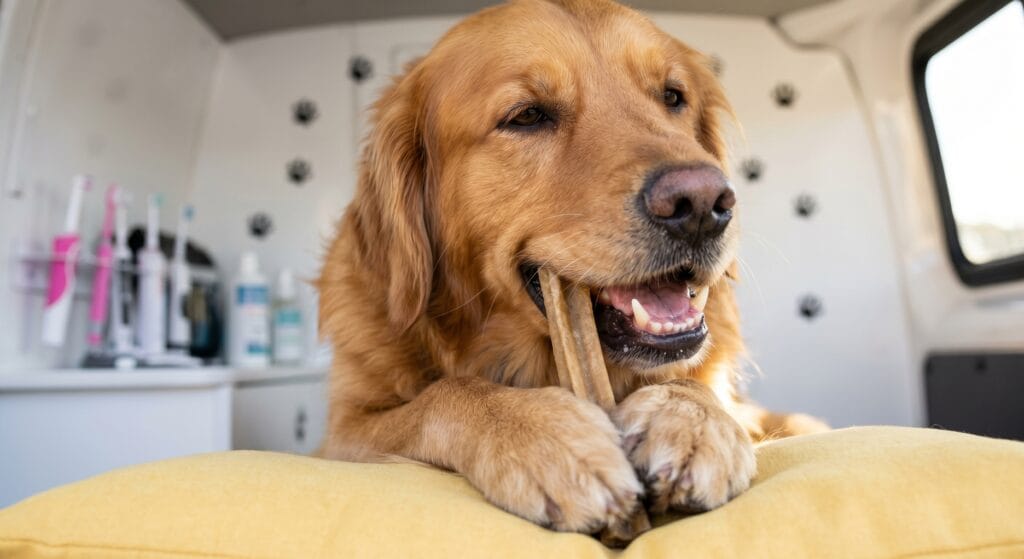
At The Magic Paws, professional dog dental cleaning is performed inside a fully equipped mobile van by Illana Reisner, a licensed dental professional with formal odontological training. The service comes to your location in Florida, with no clinic visit required. Every appointment follows the Senses Therapy protocol, which combines aromatherapy, music therapy, chromotherapy, and massage to keep pets calm throughout the procedure without sedation.
The anesthesia-free approach is designed for preventive maintenance, dogs that are not showing advanced periodontal disease but need regular subgingival cleaning for dogs to stay ahead of it. If your dog qualifies, understanding what anesthesia-free peace of mind actually means in practice makes the decision straightforward. If you are uncertain whether your dog’s current dental status is a fit for this type of service, regular dental check-ups with your veterinarian provide the clinical context needed to decide.
Your dog’s chews are doing their part. Schedule the cleaning that finishes the job. Dog dental cleaning without anesthesia: no stress, no sedation, right at your door.
Frequently asked questions about dog dental chews
Do vets recommend dental chews for dogs?
Yes, most veterinary dentists support the use of dental treats for dogs as part of a preventive routine, not as a substitute for brushing or professional cleaning. Products with the VOHC Seal of Acceptance have clinical backing showing measurable plaque or tartar reduction. The recommendation is always to use them alongside other tools, not instead of them.
At what age can puppies start using dental chews?
Puppies can start using dental chews from 6 months of age, once their permanent adult teeth have fully erupted. Before that point, the developing teeth are more susceptible to pressure damage, and most chew textures are not appropriate for the deciduous set. Introducing good dental chews for teeth during the first months of adulthood also helps establish the habit early.
Can dental chews replace brushing?
No. Dental chews and toothbrushing address different tooth surfaces through different mechanisms. Chews work primarily on the biting and outer surfaces; brushing reaches the inner surfaces and the area directly at the gumline. Using both together provides better coverage than either one alone. Treating one as a substitute for the other leaves meaningful gaps in the routine.
How long should a dog chew on a dental chew?
There is no single recommended duration, but chewing time is directly related to effectiveness. Products consumed in under a minute do not provide sufficient mechanical contact or adequate enzymatic exposure time. Look for formats that require sustained engagement of five minutes or more for your dog’s size and chewing style. If your pet swallows most dental biscuits for dogs immediately, switching to a denser format is worth testing.
What ingredients should I avoid in dog dental chews?
The main categories to avoid include conventional rawhide processed with chemical treatments, artificial colorants and synthetic preservatives, and common allergens such as wheat or chicken in dogs with known sensitivities. For dogs prone to digestive upset, products with a short ingredient list and a single protein source are generally better tolerated. The VOHC list does not account for individual sensitivities, so pairing the seal with an ingredient review is the most complete selection approach.
Are grain-free dental chews better for dogs?
Not universally. A grain-free format is relevant for dogs with documented wheat or grain sensitivity, but grain content alone is not a meaningful quality indicator for dental chews. The VOHC Seal of Acceptance remains the most objective criterion for clinical effectiveness. For dogs without sensitivities, grain composition is secondary to texture, size, and VOHC status.
Can dental chews cause digestive upset in dogs?
Yes, especially when introducing a new product or when a dog swallows the chew quickly rather than working through it. Digestive biscuits for dogs with novel protein bases can also trigger mild reactions in sensitive animals. A gradual introduction over five to seven days reduces this risk significantly. If loose stools persist beyond the adjustment period, switching to a different formula or base ingredient is advisable.
Do dental chews help with bad breath in dogs?
Dental chews work as a daily dog breath freshener by reducing the surface plaque and bacterial activity on exposed tooth surfaces. They are effective for breath that originates from the oral cavity and is related to plaque accumulation. They do not address halitosis caused by active periodontal disease, subgingival infection, or systemic issues. If the breath remains noticeably unpleasant despite consistent chew use, it is a signal worth discussing with a veterinarian because the source may be below the gumline.
How much do professional dog dental cleanings cost?
Cost varies depending on the region, the provider, and the method used. Anesthesia-free cleaning generally has a different price point than procedures performed under general anesthesia, which also require pre-anesthetic bloodwork and monitoring. Getting a dog dental cleaning quote from a local provider, including what is included in the session, is the most reliable way to evaluate the investment for your specific situation.
How do I schedule an anesthesia-free dental cleaning for my dog?
The Magic Paws operates throughout Florida, including Central Florida and the Miami area, with service delivered inside a fully equipped mobile van. There is no need to take your pet to a clinic. Appointments are scheduled directly through dog dental cleaning, where you can check availability and book based on your location.