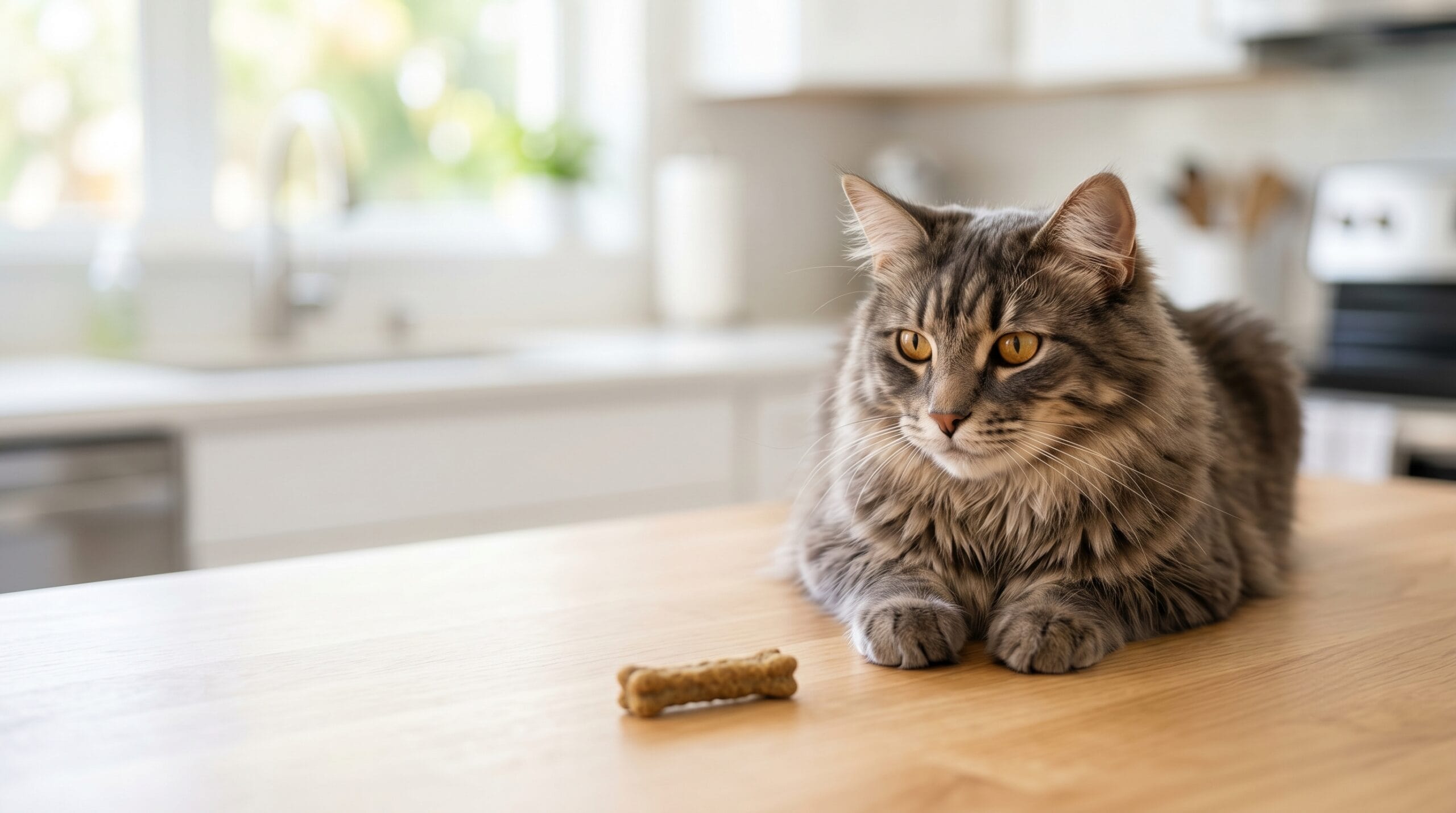
Cat dental chews are one of the most popular home care tools among owners who want to take their cat’s oral health seriously. They are easy to give, most animals accept them without resistance, and the variety available today covers different textures, formulas, and sizes. The appeal is straightforward: something the cat already hopes to eat that also does something useful.
The problem is that what chews actually do and what owners hope they will do are not always the same thing. A cat can receive a dental treat every single day and still develop significant tartar over the course of a year. That gap between effort and result is not a failure of commitment. It is a question of biology, behavior, and where the real threat to cat dental health actually lives.
Understanding the limits of dental chews does not mean abandoning them. It means using them correctly, within a routine that accounts for what they genuinely handle and what requires a different approach. That distinction is what this article is built around.
By the end, you will know exactly what cat dental treats do for your cat’s teeth, what they cannot do regardless of frequency or quality. You will also learn how to structure a routine that actually protects your cat’s mouth over the long term.
Do cat dental chews actually work?
Cat dental chews work by reducing surface plaque on the crown of the tooth. The most effective products do this through two mechanisms: mechanical abrasion, where the texture of the chew physically scrubs the tooth surface during biting, and enzymatic action, where ingredients in the chew interact with saliva to inhibit bacterial growth. Neither mechanism reaches below the gumline.
The key word in that answer is “surface”. Chews improve the daily baseline for cat oral health by slowing the accumulation of new plaque. When used consistently, they reduce the rate at which the crown of the tooth builds up deposits. What they do not do is reverse plaque that has already hardened into tartar, or access the subgingival region where feline periodontal disease originates.
That distinction matters more for cats than for most owners realize, because cats are generally very good at hiding discomfort. A cat with early-stage dental disease will often continue eating, playing, and grooming normally, giving the impression that everything is fine. The chew routine feels like it is working. The mouth, below the visible surface, may be developing a problem.
How enzymatic chews work differently
Enzymatic chews contain ingredients such as glucose oxidase and lactoperoxidase that activate on contact with saliva, generating a chemical reaction that inhibits the bacteria responsible for plaque formation. Because this process depends on saliva rather than on physical contact with the tooth, enzymatic products do not require the cat to actually bite and chew the treat to be effective.
That characteristic makes enzymatic chews more reliable for cats with a common behavioral tendency: swallowing treats whole. A crunchy mechanical chew only cleans if it physically contacts the tooth surface during biting. When a cat swallows it in one motion, the abrasive action never happens. Enzymatic formulas bypass this limitation entirely.
For owners whose cats routinely skip the chewing step, enzymatic options or powder supplements added to food are the more practical choice. The mechanism is independent of what the cat does with the treat, which means results are more consistent regardless of the animal’s eating behavior.
How mechanical chews clean the tooth surface
Mechanical chews clean by friction. When the cat bites down on a crunchy treat, the texture scrubs the enamel and removes soft plaque deposits that have not yet hardened. The cleaning occurs on the part of the tooth that is visible above the gumline, specifically the area that the chew physically contacts during each bite.
This mechanism is straightforward but has a hard structural limit: it stops where the gumline begins. The subgingival space, the narrow gap between the tooth and the surrounding gum tissue, is where the most damaging bacteria colonize. No chew texture, regardless of how abrasive or how well designed, can reach into that area.
For cats that chew actively and consistently, mechanical treats offer a genuine benefit at the surface level. They slow plaque buildup on the visible tooth. They do not address what accumulates below, which is where the clinical damage to a cat’s dental health actually begins.
What types of cat dental chews are available?
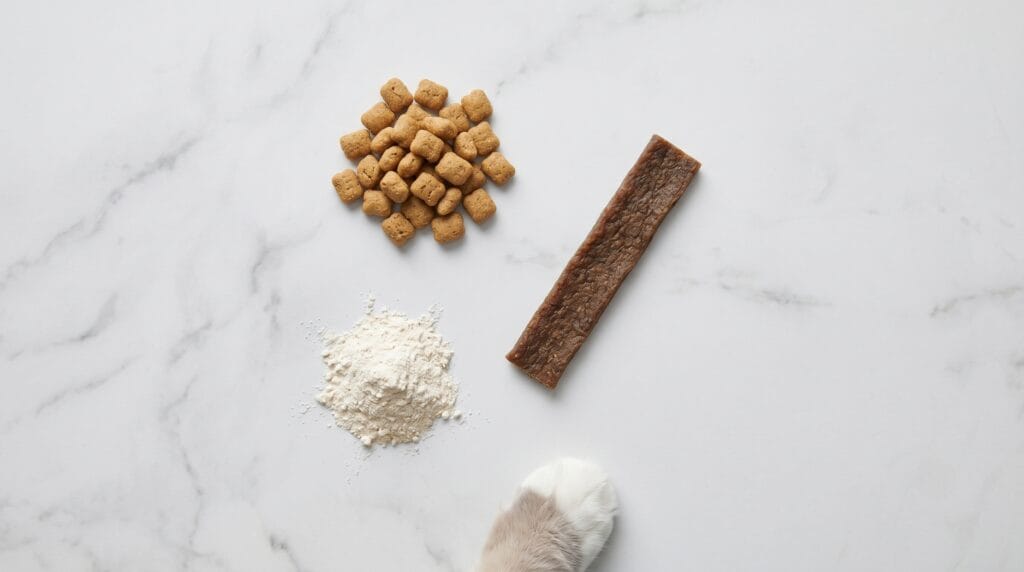
Three main formats of cat dental treats are available, each with a different mechanism, a different dependency on the cat’s chewing behavior, and a different practical profile for cat dental health.
The table below compares them directly:
| Type | How it works | Effectiveness on plaque | Effectiveness on tartar | Depends on active chewing |
| Crunchy / mechanical | Abrasion on tooth contact | Moderate | None | Yes |
| Enzymatic / soft chew | Saliva-activated chemical inhibition | Moderate to high | None | No |
| Powder / supplement | Mixed into food, acts via saliva throughout the day | Low to moderate | None | No |
No format removes tartar that has already formed. That distinction applies to every product category, regardless of claims on the packaging. The differences between formats are about how well they slow new plaque accumulation and how reliably they work given the cat’s behavior.
How do you choose a good cat dental chew?
The most reliable criterion for selecting a dental chew for cats is the Veterinary Oral Health Council (VOHC) Seal of Acceptance. Products that carry this seal have been tested in controlled studies and demonstrated to reduce plaque or tartar meaningfully. The seal is issued independently of the manufacturer, which makes it the only selection criterion backed by clinical evidence rather than marketing language.
The Veterinary Oral Health Council maintains a current list of accepted products for cats on its website. Among the options that have carried VOHC acceptance for cats are Feline Greenies, Purina DentaLife Daily Oral Care treats, Whiskas Dentabites, and ProDen PlaqueOff Powder. The powder format is particularly relevant for cats that swallow treats whole, since it works through saliva rather than through any chewing action.
When comparing products, check whether the seal specifies plaque control, tartar control, or both. Some products are accepted for one and not the other.
That distinction matters for cat dental health because plaque and mineralized tartar require different strategies to address, and a chew accepted for plaque reduction does not necessarily do anything about existing tartar deposits.
Why do cats sometimes swallow dental chews whole?
Cats are obligate carnivores, and their teeth evolved for gripping and tearing prey, not for grinding. Unlike dogs, cats have a limited lateral jaw movement, which means their natural chewing motion is not designed for sustained contact with a hard surface. When a treat is small enough to fit in one bite, many cats will simply swallow it without the back-and-forth motion that would generate mechanical cleaning.
This behavior is more common with small, uniform-sized treats, particularly crunchy formats designed for mechanical abrasion. The product reaches the cat’s mouth but never performs the function it was designed for.
Owners who observe their cat finishing dental treats in one or two seconds without visible chewing are likely seeing this pattern, and in those cases, the treat is not providing any meaningful plaque reduction.
The practical response is to switch formats rather than try to change the cat’s behavior. Enzymatic chews, soft options designed to dissolve slowly, or powder supplements added to wet food are more suitable for animals with this tendency.
If you already notice signs your pet might have dental problems, the question of chew type becomes secondary to getting a professional evaluation.
What can’t cat dental chews do?
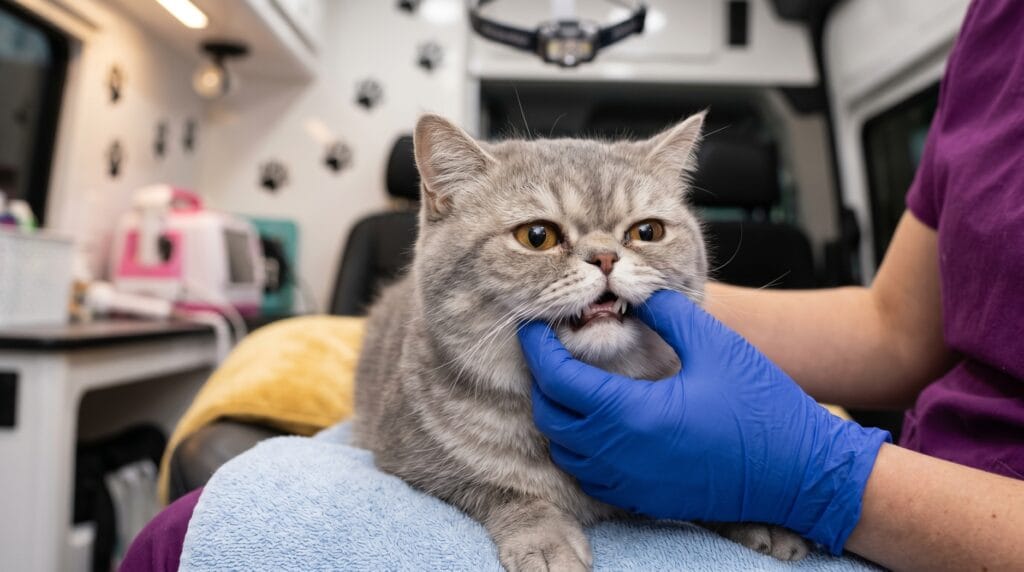
No type of dental chew reaches below the gumline. That is the central limitation of every home care product in this category, regardless of texture, formula, price, or frequency of use. The subgingival space is where gumline bacteria settle and multiply, producing the toxins that cause inflammation, bone loss, and the progression of feline periodontal disease.
What chews can’t reach
The subgingival region is a narrow space between the tooth root and the surrounding gum tissue. It is invisible without lifting the gum and inaccessible to any product applied at the surface.
Both mechanical abrasion and enzymatic saliva interaction are limited to the visible portion of the tooth crown. This means the area where most of the clinical damage in cat dental disease develops is entirely outside the reach of daily chews and treats.
According to Cornell University College of Veterinary Medicine, approximately 70% of cats over three years of age have some degree of dental disease. That prevalence reflects exactly this gap: owners doing their best with available home care products while the subgingival area accumulates the bacterial load that drives disease progression.
There is a hidden danger in your cat’s mouth that daily treats simply cannot address, which is why the silent threat of feline dental disease advances undetected in so many households.
When tartar has already formed
Once plaque mineralizes into tartar, no home care product can remove it. Tartar is calcified mineral deposits that bond to the tooth surface. Daily chews prevent new soft plaque from accumulating at the surface, but they have no mechanism to break down or dissolve what has already hardened.
This distinction is clinically important because tartar is the foundation on which the most damaging bacteria anchor themselves. A cat with tartar buildup is not in the same situation as one with only soft plaque, and continuing with chews alone does not change that. When signs your pet might have dental problems are present, the priority shifts from prevention to evaluation and treatment.
Want to know what a professional anesthesia-free cat cleaning looks like? See how The Magic Paws completes your cat’s dental routine with cat dental cleaning.
How often should cats have a professional dental cleaning?
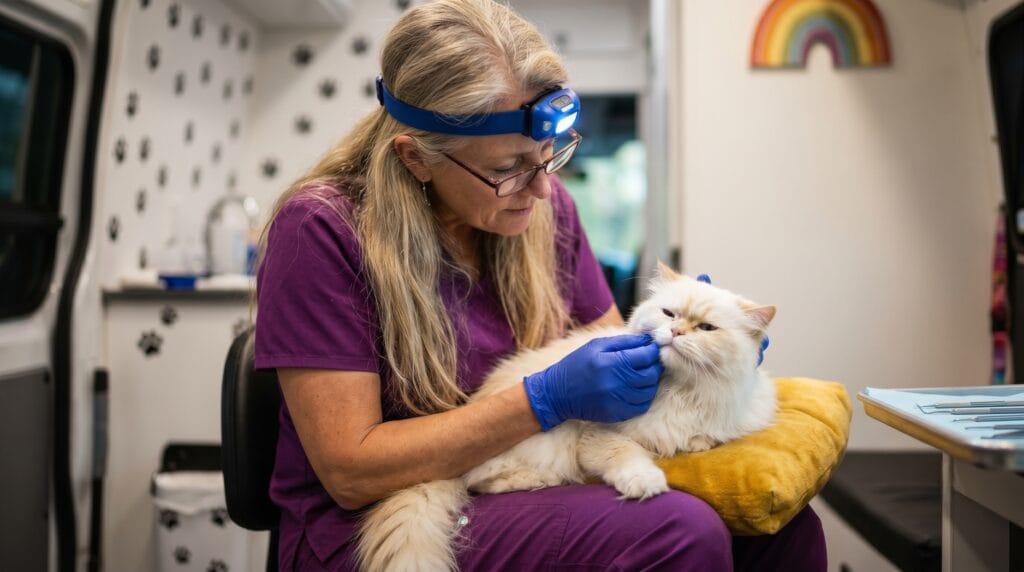
Most cats benefit from professional dental cleaning once a year. The right interval depends on the individual animal: the rate at which tartar accumulates, breed-specific dental anatomy, existing periodontal history, and the consistency of daily home care all influence how quickly deposits build up. A cat that already has a history of feline periodontal disease may need evaluation every six months.
The professional cleaning removes what daily chews, powder supplements, and brushing cannot: mineralized tartar from both the visible crown and the subgingival region. That is the step that resets the cat’s mouth to a clean baseline, from which daily home care can actually maintain results rather than simply slow a progressive accumulation.
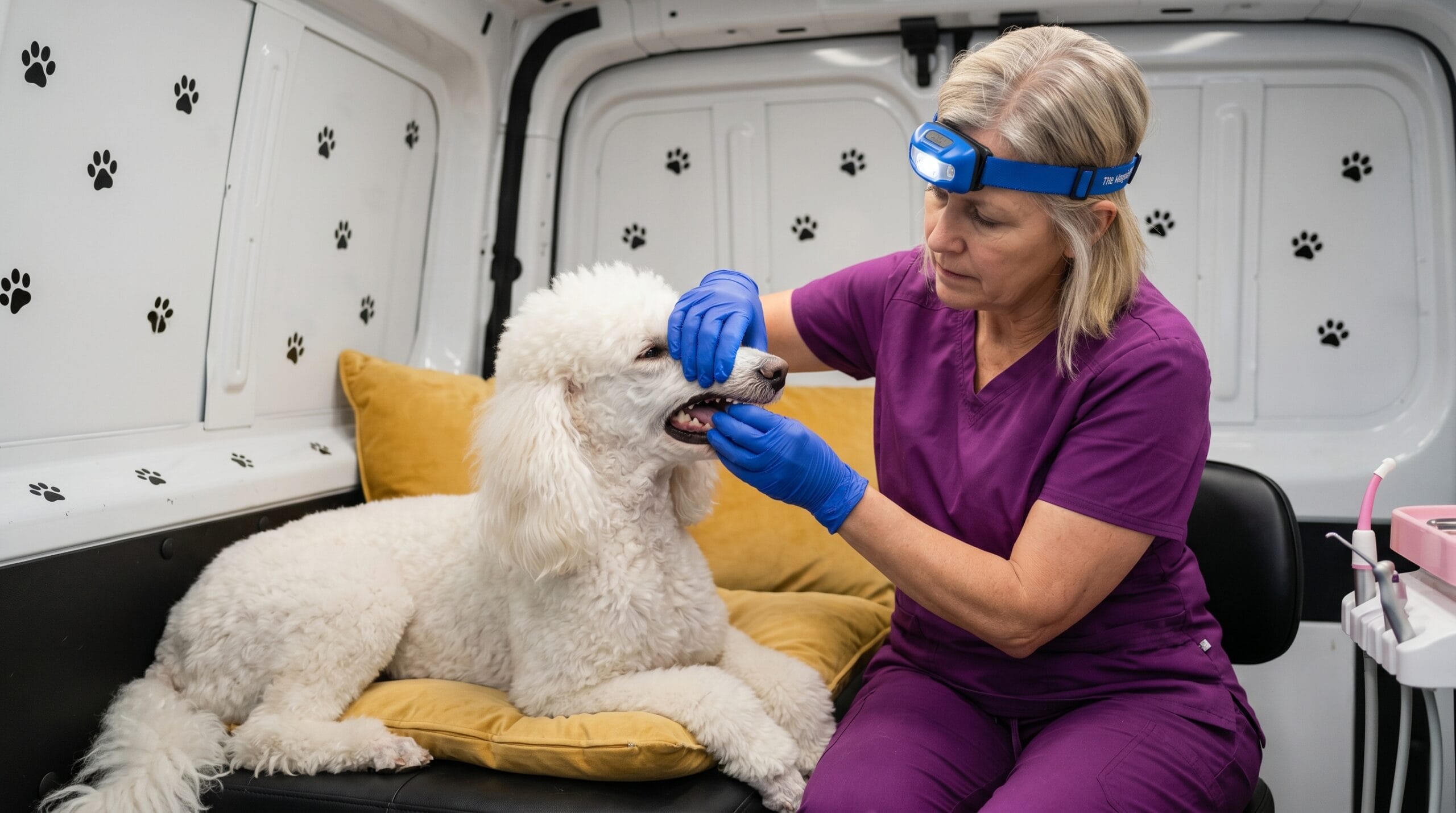
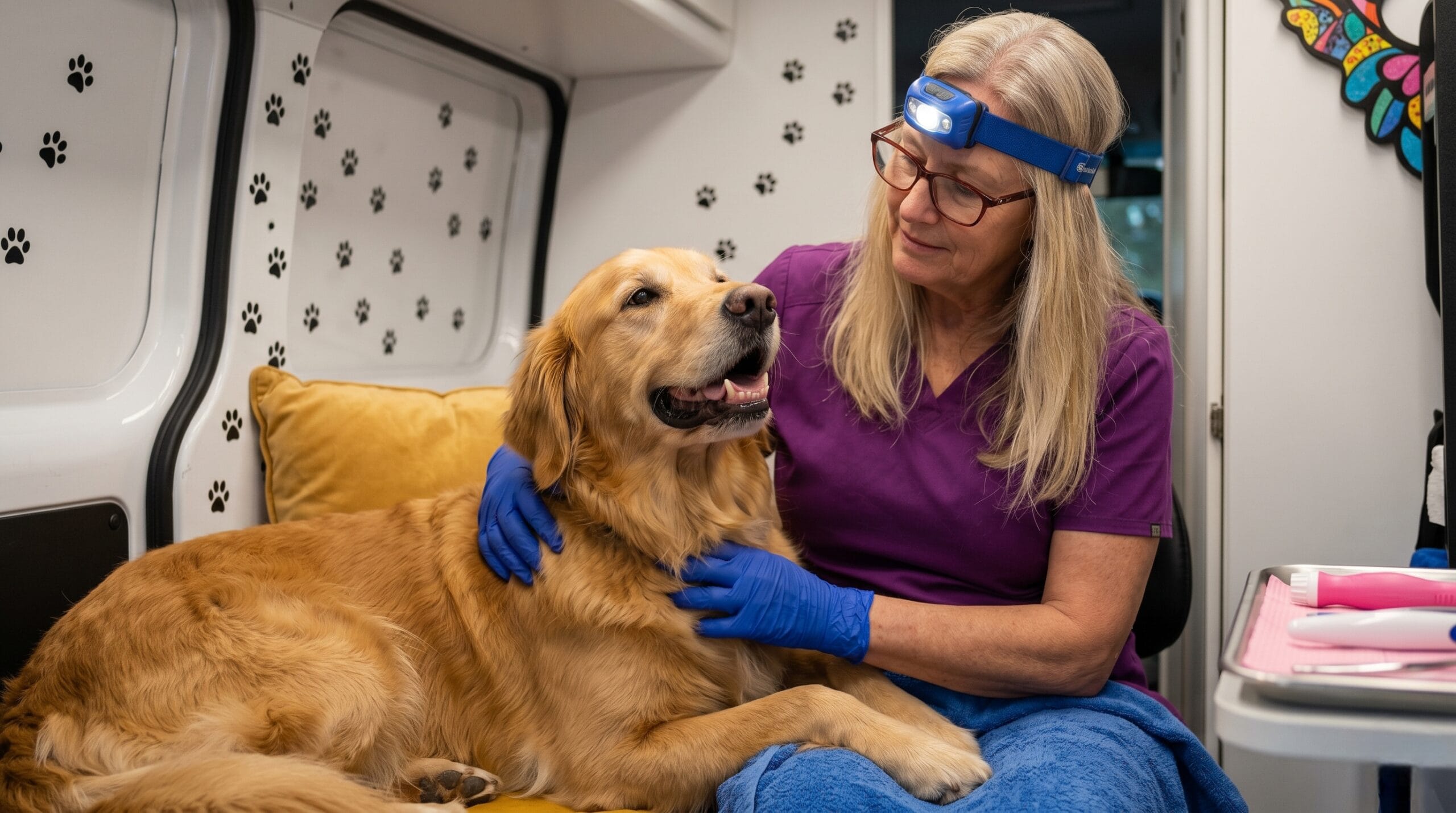
The Magic Paws offers anesthesia-free cat dental cleaning performed inside the van at the owner’s home in Florida. The procedure follows the Senses Therapy protocol (aromatherapy, music therapy, chromotherapy, and massage), which keeps the animal calm without sedation. For more detail on the procedure itself and how to prepare your cat, the article on everything you need to know about cat dental cleaning covers the full process step by step.
With more than 2,000 procedures performed across Florida, and a professional background in human dentistry that Illana, the founder, brings to every protocol, the service is built specifically for cats that need thorough preventive cleaning. Without the risks associated with general anesthesia. Booking is available directly through the cat dental cleaning page.
What does a complete cat dental care routine look like?
A complete routine for cat dental health combines three layers, each addressing a different part of the mouth and a different timeline. None of the three replaces the others, and the value of the full routine is precisely in their combination.
The first layer is daily cat dental treats or a VOHC-accepted powder supplement. This handles surface plaque on the crown of the tooth, day by day, and is the easiest to maintain consistently.
Establishing a toothbrushing routine for your pet is the second layer and the most effective at-home method available. Brushing reaches further along the gumline than any chew or treat, covers more tooth surface, and is the closest thing to a professional clean that owners can do themselves.
The third layer is professional dental cleaning, ideally once a year. There are 6 essential reasons to schedule your pet’s dental cleaning that go well beyond aesthetics, including systemic health risks when bacteria from the mouth enter the bloodstream. Regular dental check-ups for your pet and consistent essential dental care habits together create a prevention framework that home care products alone cannot replicate.
Dental chews are a real part of that framework. They are neither a shortcut nor a substitute. Used correctly, within a complete routine, they do exactly what they are designed to do: maintain the surface of the tooth between professional cleanings, slow plaque accumulation, and support cat oral health at the level where they can actually reach.
Dental chews handle the surface. The Magic Paws handles what they cannot reach. Book your cat cleaning today. Schedule your cat anesthesia-free cleaning.
FAQ about cat dental chews
Are cat dental chews safe for daily use?
Yes, for most products formulated for daily use. Check the packaging for the recommended frequency and pay attention to caloric content. Dental treats should not exceed 10% of the cat’s daily caloric intake. If your cat is on a restricted diet or has a health condition, confirm with your veterinarian before introducing any new daily treat.
Do dental chews help with cat bad breath?
Partially, yes. Dental treats for cats reduce surface bacteria and stimulate saliva production, both of which contribute to fresher breath. However, persistent or strong bad breath often indicates established disease below the gumline, which chews do not treat. If the odor does not improve with consistent use, a professional evaluation is the appropriate next step.
What is the VOHC seal and why does it matter?
The Veterinary Oral Health Council (VOHC) is an independent body of veterinary dental specialists that reviews and accepts products proven to reduce plaque or tartar in controlled studies. Products carrying the VOHC Seal of Acceptance have passed that review. It is the most reliable standard for evaluating dental chews and treats, because it is based on evidence rather than manufacturer claims.
Can kittens use dental chews?
It depends on the product. Some dental chews are formulated for adult cats only. Always check the age indication on the packaging before offering anything to a young animal. Introducing chews early can help establish a positive routine, but for kittens under one year, it is worth checking with a veterinarian before adding a new daily supplement.
How many dental chews should I give my cat per day?
Frequency varies by product and by the cat’s size. Most daily-use products specify one to two units per day for adult cats. Always follow the package instructions. Because treats contribute to the daily caloric total, adjust the main meal proportionally to avoid overfeeding, particularly for indoor cats or those prone to weight gain.
Do soft dental chews work as well as crunchy ones?
It depends on the cat’s behavior. Soft chews with enzymatic ingredients work through saliva and do not require active chewing to be effective, making them more reliable for cats that swallow treats whole. Crunchy chews depend on sustained physical contact with the tooth to generate the abrasive action that removes surface plaque. For cats that chew actively, crunchy formats are effective. For those that do not, enzymatic or powder options deliver more consistent results.
Can dental chews replace brushing a cat’s teeth?
No. Toothbrushing is the most effective home care method because it covers a larger portion of the tooth surface, including areas near the gumline that treats do not consistently reach. Dental chews and dog dental chews alike are a complement to brushing, not a substitute. Both contribute to a complete preventive routine, but brushing is the higher-value step.
How do I know if my cat’s dental health needs professional attention?
Signs that indicate the need for professional evaluation include persistent bad breath that does not improve with daily care, difficulty eating or preference for one side of the mouth, red or swollen gums, excessive drooling, and visible brown or yellow deposits on the teeth. Any of these signals that chews and brushing are no longer sufficient and that a cleaning professional should assess the current state of the mouth.
Does The Magic Paws offer anesthesia-free dental cleaning for cats?
Yes. The Magic Paws performs anesthesia-free dental cleaning for cats throughout Florida, with the procedure conducted by a dental professional inside the van, at the owner’s home. The session follows the Senses Therapy protocol (aromatherapy, music therapy, chromotherapy, and massage) to keep the animal calm throughout. Scheduling is available on the cat dental cleaning service page.
How often should cats have a professional dental cleaning?
Most cats benefit from professional cleaning once a year. Animals with a history of feline periodontal disease or rapid tartar buildup may need more frequent sessions. The cleaning professional or veterinarian should evaluate the individual cat’s situation to determine the appropriate interval, taking into account the quality and consistency of home care between appointments.