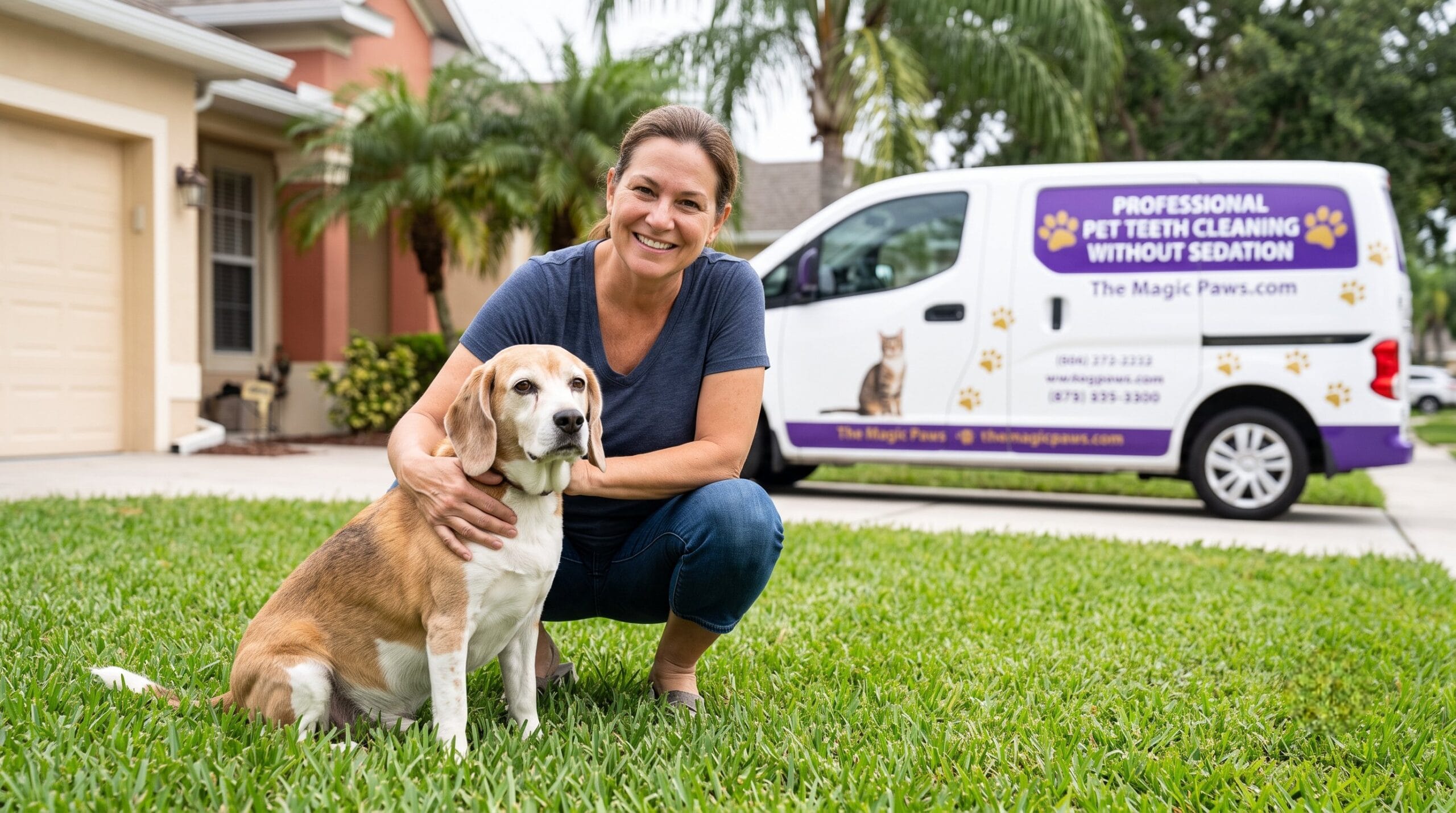
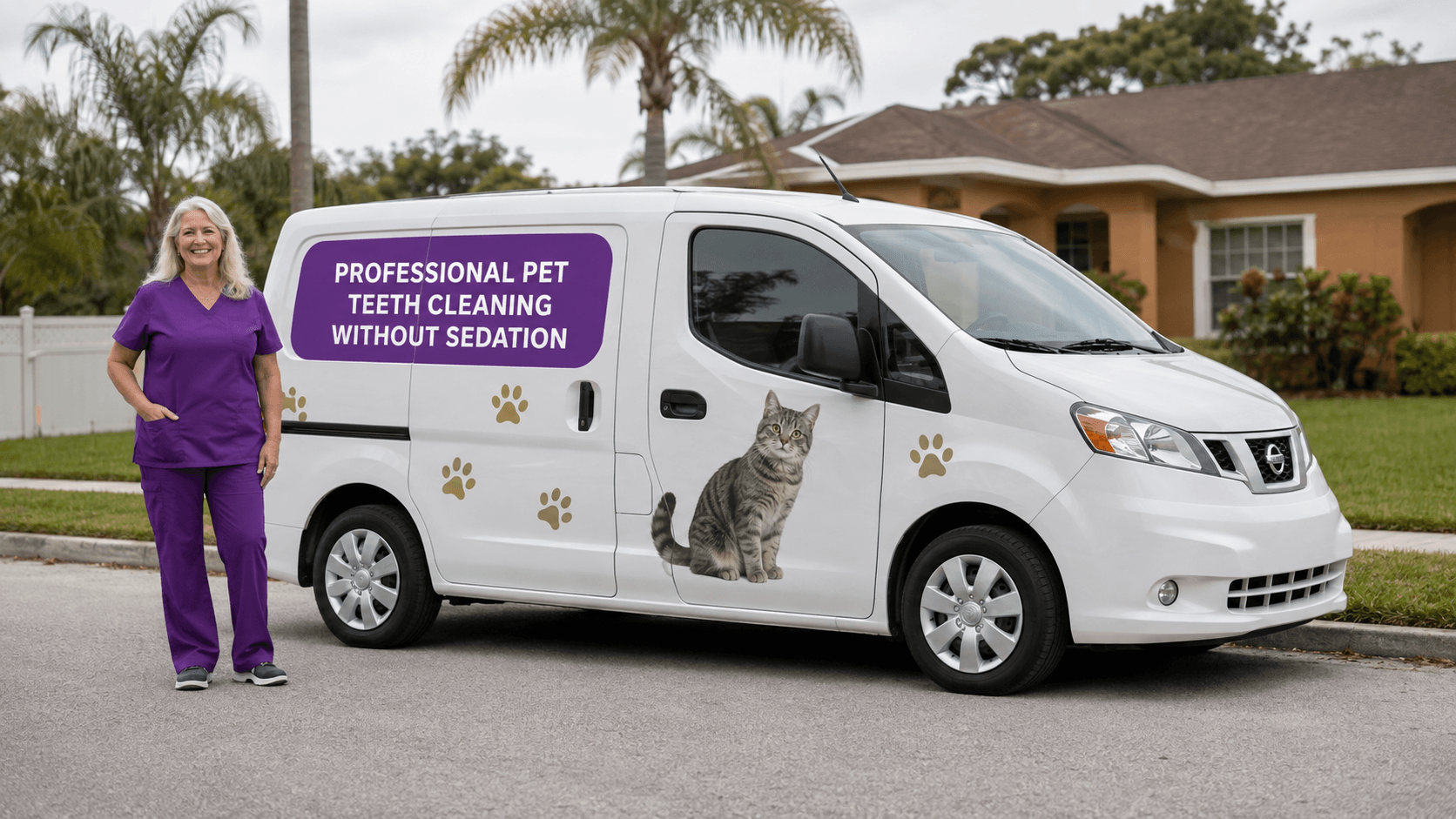
The Magic Paws van is one of those things most pet owners hear about before they actually see it. You get the address confirmation and the appointment reminder, and then a white van parks in front of your house, and suddenly you realize the whole appointment happens in there. No clinic. No lobby. No waiting room with other animals.
That moment of curiosity is completely normal. What happens behind those doors? Is it organized enough for a real dental procedure? Will your dog or cat be calm in such a small space? These are legitimate questions, and answering them in detail is exactly what this article is here for.
The experience inside The Magic Paws van is not a simplified version of clinic care. It is a purpose-built service designed from the ground up for mobile delivery, using a protocol that accounts for the specific challenges of treating animals outside a fixed facility. Understanding how it works helps you arrive at the appointment informed, and helps your pet have a better session.
What follows is a complete walkthrough: the van itself, the environment inside it, the step-by-step flow of the appointment, how Senses Therapy operates within that space, and how to know whether the service is the right fit for your dog or cat.
What is The Magic Paws van? How does the service work?
The Magic Paws van is a fully equipped mobile dental unit that travels to the client’s home and performs professional anesthesia-free teeth cleaning for dogs and cats on-site. The appointment takes place inside the vehicle, parked at the client’s address. There is no clinic to visit, no drop-off, and no separate facility. Everything happens at your door. For an overview of how the mobile model compares to traditional options, the article on mobile dog dentist services covers the key differences in detail.
A fully equipped dental unit parked at your door
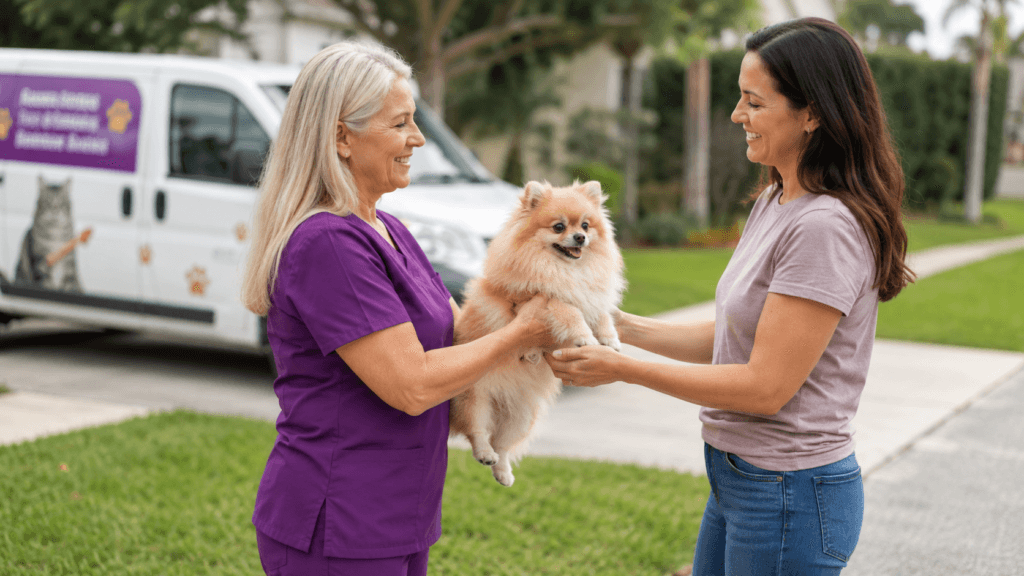
In practice, “mobile” means the service comes to you. The van parks on the street or in the driveway, the tutor hands the pet over outside, and the technician takes it from there. There is no travel time for the owner, no clinic check-in, and no time spent in a waiting area near other animals.
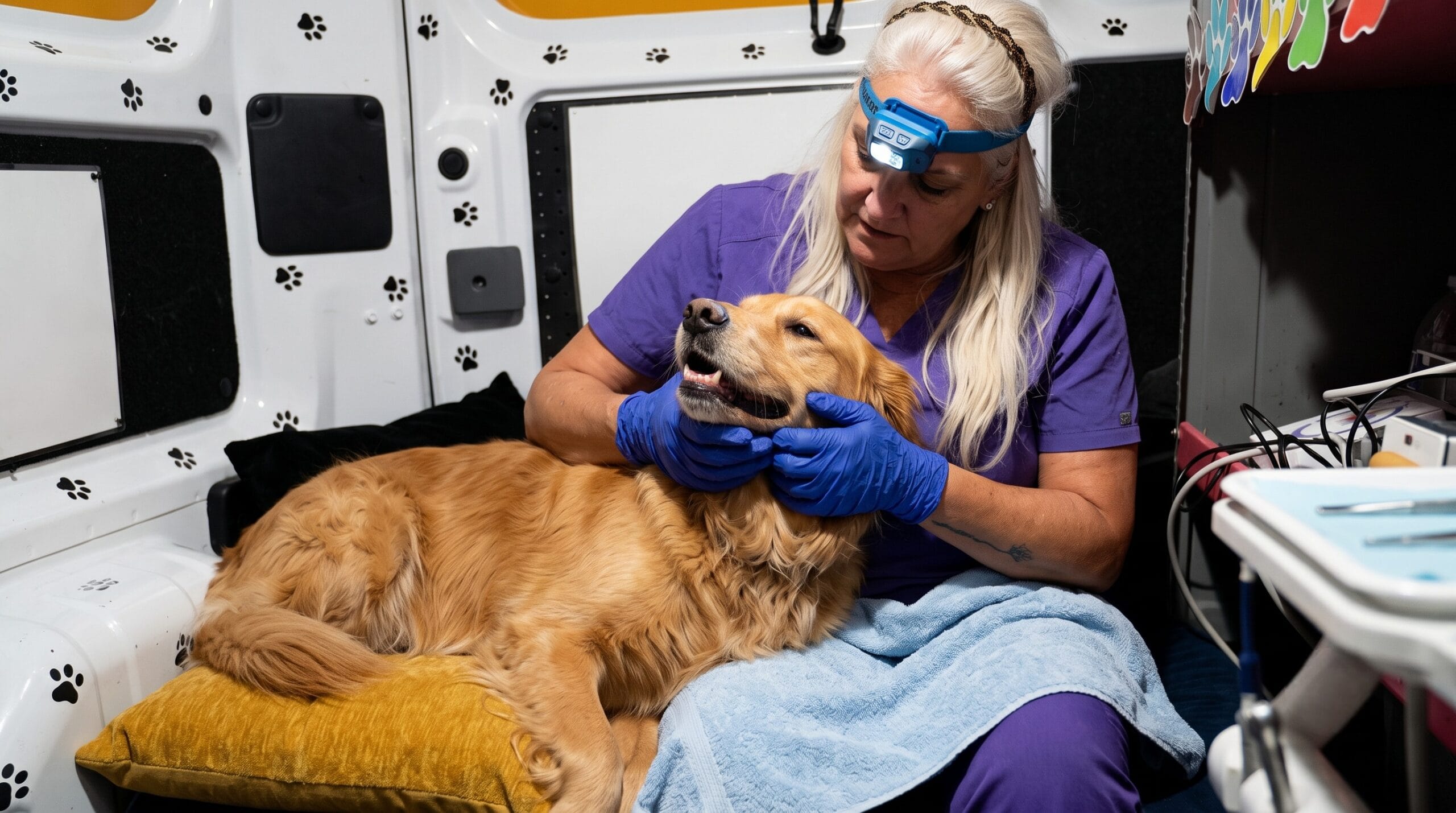
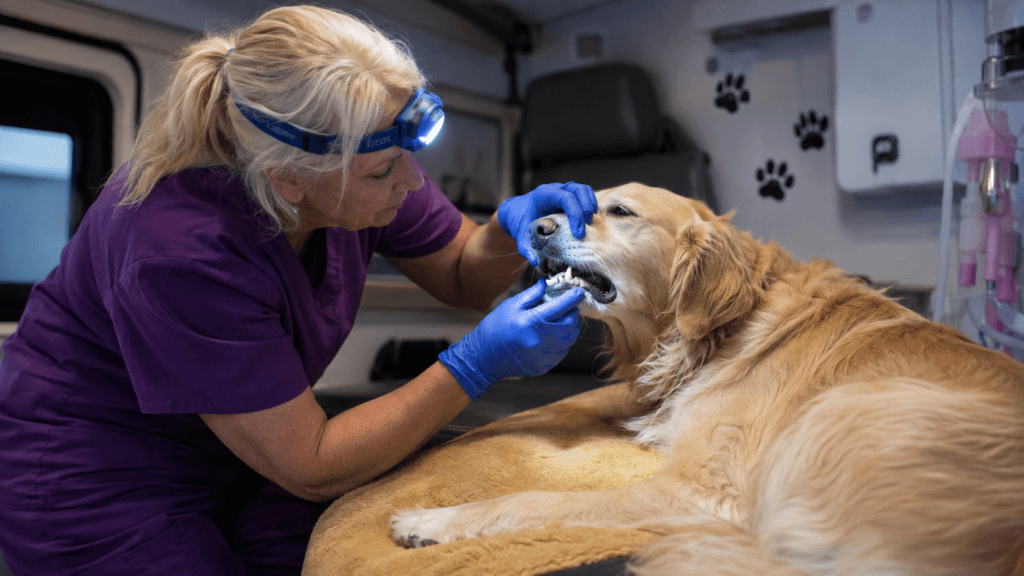
The vehicle carries all the equipment needed for a professional supragingival cleaning: dental instruments, a blue LED headlamp for precise examination, hygiene materials, and everything required for the calming protocol. Nothing is improvised or brought in separately. If you want to understand what a professional dental exam for pets involves, before the cleaning begins, that process also taking place inside the van as the first step of the appointment.
According to the American Veterinary Dental College, supragingival cleaning covers the visible surfaces of the teeth and is distinct from the deeper periodontal treatment that requires anesthesia. That distinction matters for understanding the scope of what happens inside the van.
Who performs the cleaning inside the van?
Illana, the founder of The Magic Paws, holds a dental degree and has worked as a licensed dental hygienist since 2005. That background is not a marketing detail. It shapes how the protocol was designed: assessment before each session, defined criteria for referral, and a structured cleaning sequence rather than an improvised routine.
Every technician operating under The Magic Paws protocol is trained to evaluate the animal’s oral condition before beginning. The service performs supragingival cleaning only, which means visible plaque and tartar on the tooth surface. Cases presenting signs of advanced periodontal disease, loose teeth, or conditions requiring surgical access are referred to a veterinarian. The mobile appointment is preventive maintenance, not a replacement for clinical intervention when one is genuinely needed.
What does the inside of The Magic Paws van look like?
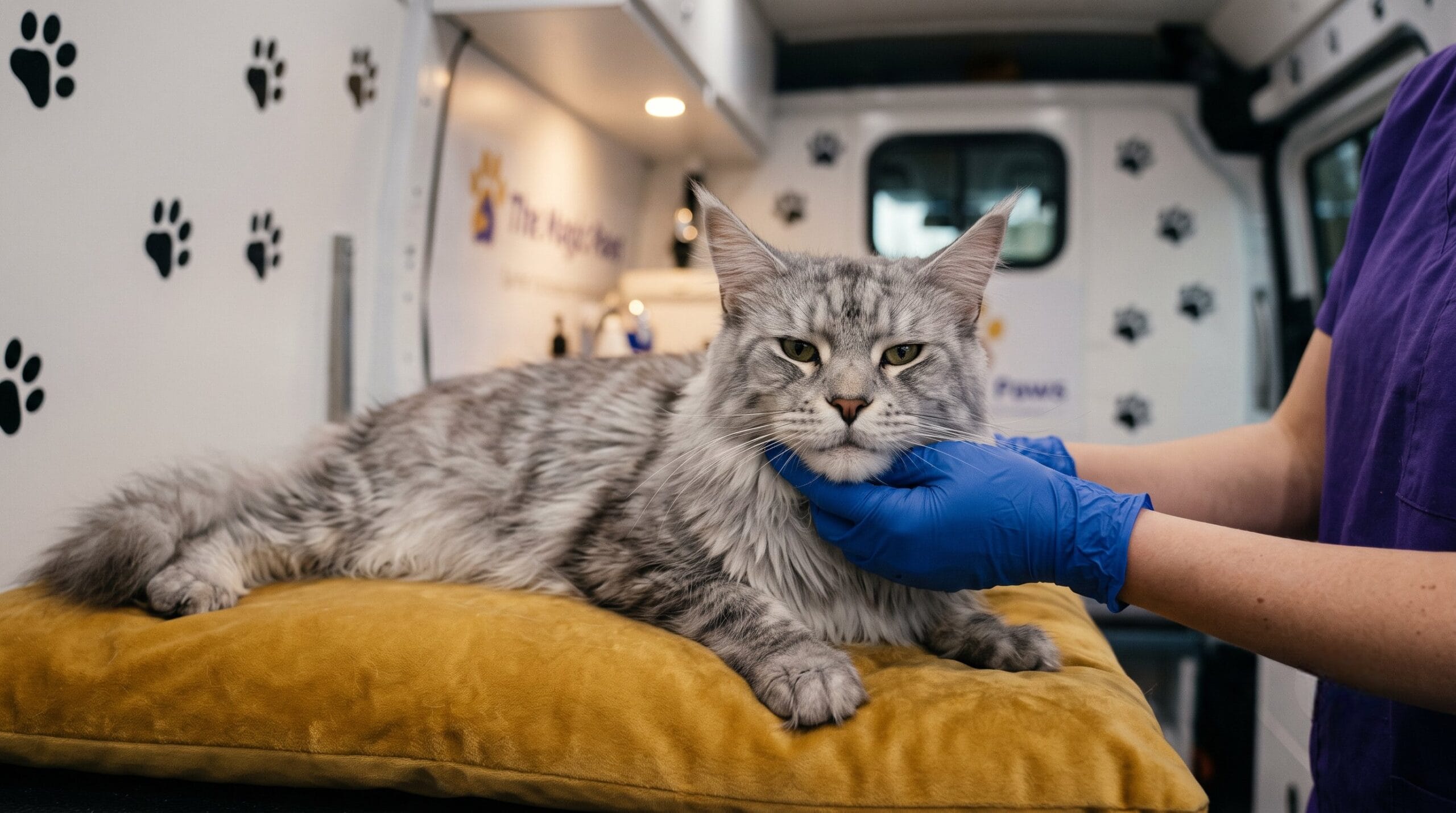
The interior of the van is organized, intimate, and purpose-built for the procedure. White walls with black paw print decals surround a padded seat, a golden cushion used to support the animal during the session, and the dental equipment arranged within easy reach of the technician. The space is compact by design, and that compactness is part of what makes the procedure work.
The blue LED headlamp mounted on the technician’s head provides the focused lighting required for a careful examination.
Dental instruments and hygiene materials are stored within reach, occupying a small area to the side without dominating the visual field. Anyone who has never seen inside a dog teeth cleaning setup expects something closer to a surgical room. What they find is a clean, calm space that looks more like a well-organized treatment chair than an operating theater.
A calm, controlled space designed for the pet
The compact dimensions of the van interior are not a limitation. They are a deliberate feature of the protocol. A smaller, enclosed space means fewer variables: no other animals, no ambient clinic noise, no unfamiliar smells from adjacent rooms, and no rotating staff walking in and out.
For a dog or cat that has never experienced no-anesthesia dog teeth cleaning before, that stability matters. The environment itself reduces the inputs that tend to trigger anxiety in animals in clinical settings. The technician works in proximity, which allows for consistent handling and immediate response to behavioral changes throughout the session.
What happens during the appointment?
A typical appointment follows this sequence: van arrival at the client’s address, pet handover outside the vehicle, initial oral assessment by the technician, activation of the Senses Therapy protocol, supragingival cleaning, and return of the animal to the tutor. Most sessions run between 30 and 60 minutes. To understand what influences that range, the article on how long a dog dental cleaning takes breaks down the variables in detail.
The initial assessment is not a formality. Before the cleaning begins, the technician evaluates the animal’s oral condition, behavior, and any signals that might affect how the session is conducted. If the assessment reveals something outside the scope of the service, the appointment does not proceed, and the tutor receives a referral recommendation.
Once the assessment confirms the animal is a practical candidate for that session, the calming protocol activates and the cleaning begins. The technician removes visible plaque and tartar from the tooth surfaces using hand instruments, working methodically and adjusting pace based on how the animal responds. No sedation is used at any point.
What does the tutor do while the pet is inside the van?
The tutor stays outside during the procedure. This is part of the protocol, not an oversight or a logistical inconvenience. The presence of the owner, however calm and well-intentioned, introduces a variable that often works against the animal’s cooperation: most pets become more alert, more focused on the owner’s reaction, and harder to settle when their person is nearby during a hands-on procedure.
The absence of that distraction supports the pet’s calm. Many tutors who felt uncertain about waiting outside report that their animal returned noticeably relaxed, which is the opposite of what they expected. The article on dental cleaning safety for dogs covers the broader safety framework that makes the session secure even without the owner present.
The tutor stays available, nearby, and reachable throughout the session. The technician communicates anything relevant at the end of the appointment, including observations about the animal’s oral condition and any recommendations for follow-up.
How does Senses Therapy work inside the van?
Senses Therapy is The Magic Paws’ proprietary relaxation protocol, active throughout the cleaning session. It combines four components: aromatherapy, music therapy, chromotherapy, and massage. These are not background additions. They are integrated into the procedure itself, working together to support the animal’s calm while the technician works.
Aromatherapy introduces calming scents into the van environment before the session begins. Music therapy uses soothing audio to reduce ambient noise sensitivity and create a consistent sound environment.
Chromotherapy applies color-based light cues calibrated for their calming effect on animals. Massage targets specific relaxation points before and during the cleaning to release tension and reduce reactivity.
Concerns about safety are reasonable when choosing a sedation-free service. The article addressing how many dogs die from teeth cleaning puts those concerns in factual context, covering the specific risks associated with anesthesia versus the anesthesia-free approach.
Why does the van environment make Senses Therapy more effective?
Each of the four Senses Therapy components performs better inside a controlled space than it would in an open or shared environment. The compact van interior amplifies the aromatherapy by keeping the scent concentration consistent. The enclosed space allows music therapy to work without competing with external noise.
The absence of external light sources makes chromotherapy more precise. And the close handling required for massage is easier to maintain consistently in a confined, stable area.
The van is not just where the appointment happens to take place. It is the physical infrastructure that makes the protocol work.
This applies equally to both species the service covers: the Senses Therapy protocol is calibrated for dogs and cats, with handling techniques adjusted for each. For cats specifically, the article on cat teeth cleaning covers how feline dental care differs and what makes the van environment particularly suitable for that species.
Schedule your pet’s first appointment and see the van for yourself.
Is The Magic Paws van service right for your pet?
Most healthy dogs and cats qualify for the mobile dental cleaning appointment. The procedure is designed for animals that need preventive maintenance: removal of visible plaque and tartar before bacterial buildup reaches a stage that requires veterinary treatment. The American Veterinary Medical Association supports regular oral health care as a core component of preventive medicine for companion animals.
Pets with advanced periodontal disease, significant tooth mobility, or conditions that require radiographs, extractions, or surgical access are not candidates for the service. In those cases, The Magic Paws technician refers the animal to a veterinarian for the appropriate level of care. This is not a limitation to work around. It is the responsible boundary that makes the service trustworthy.
The mobile appointment does not replace the veterinarian. It occupies the space before a veterinary problem develops: regular supragingival cleaning that slows bacterial accumulation, keeps gum tissue healthier, and reduces the likelihood of the animal reaching a stage where more invasive treatment becomes necessary.
Pets that receive consistent preventive care arrive at their veterinary dental visits with less severity, which is better for the animal and reduces the scope of intervention required.
Prevention starts with one appointment. Book now and bring The Magic Paws van to your door.
Frequently asked questions about The Magic Paws van
What happens inside The Magic Paws van during a cleaning?
The technician begins with an initial oral assessment, then activates the Senses Therapy protocol, which includes aromatherapy, music therapy, chromotherapy, and massage. The cleaning follows: supragingival removal of visible plaque and tartar without sedation. The pet is returned to the tutor at the end of the session. The full process typically takes between 30 and 60 minutes.
Does my pet stay inside The Magic Paws van alone?
The pet stays inside the van with the technician throughout the procedure. The tutor waits outside, which is part of the protocol. The owner’s absence reduces behavioral distraction and supports the animal’s calm, which improves the quality of the session.
How long does an appointment inside the van take?
Most appointments run between 30 and 60 minutes. The exact duration depends on the animal’s oral condition, the amount of tartar present, and how the pet responds during the session. The technician adjusts pace accordingly.
Is the van fully equipped for a professional dental cleaning?
Yes. The van carries dental hand instruments, a blue LED headlamp for precise oral examination, hygiene materials, and everything needed for the Senses Therapy protocol. The space is organized and purpose-built for the procedure.
Can both dogs and cats be treated inside The Magic Paws van?
Yes. The service covers both dogs and cats. Handling techniques, positioning, and the application of the Senses Therapy components are adjusted for each species.
What is Senses Therapy and how is it used inside the van?
Senses Therapy is The Magic Paws’ proprietary relaxation protocol. It combines four components: aromatherapy, music therapy, chromotherapy, and massage. The protocol is active during the cleaning session, not before or after, and is designed to support the animal’s calm throughout the procedure without the use of sedation.
Do I need to do anything before The Magic Paws van arrives?
Withhold food for at least one hour before the appointment. Have your pet on a leash or in a carrier, depending on the species. Be present and available to hand the animal over when the van arrives. Confirm any specific preparation instructions with The Magic Paws team when booking.
Is the cleaning inside the van done without any sedation?
Yes. The procedure is entirely anesthesia-free. It covers supragingival cleaning: the removal of visible plaque and tartar from the tooth surface. Cases that require deeper periodontal treatment, extractions, or any procedure requiring sedation are referred to a veterinarian.
In which areas of Florida does The Magic Paws van operate?
The Magic Paws operates throughout Florida, serving Central Florida, Jacksonville, Tampa and surrounding cities, and the Miami area. Check availability for your specific location at the time of booking.
How do I schedule an appointment with The Magic Paws van?
Scheduling is done online. Visit themagicpaws.com/#pricing to select your region, check availability, and book your pet’s appointment directly.