
depends
Most dog owners assume annual vet checkups cover dental health. In practice, how often should dogs get their teeth cleaned is one of the most underdiscussed questions in routine pet care, and the gap between what owners believe and what their dog actually needs can span months of preventable damage.
A dog’s mouth accumulates plaque within 24 hours of a cleaning. Left undisturbed, plaque mineralizes into tartar in as little as three to five days, hardening along the gumline where neither a toothbrush nor a chew can reach. By the time bad breath becomes noticeable, the process has already been underway for some time.
The right professional cleaning schedule depends on factors specific to each animal: breed, size, age, diet, and whether the pet has a history of gum disease. A large, healthy Labrador on a dry kibble diet may do well with one professional cleaning per year. A small Shih Tzu on a mixed diet could need one every six months. Neither answer is wrong because neither situation is the same.
This guide breaks down the frequency question by risk profile, covers the signs that your dog may already be overdue, and explains what the dental cleaning procedure actually involves so you can make an informed decision rather than guessing.
How often should dogs get their teeth cleaned?
Most dogs benefit from at least one professional dental cleaning per year, but that figure is a baseline, not a ceiling. Breed size, diet, age, and oral health history are the factors that determine whether your pet needs cleaning once, twice, or more frequently within a 12-month period.
Plaque buildup is a daily process. Every meal leaves a thin bacterial film on the tooth surface, and without consistent disruption, that film calcifies into tartar. At-home brushing slows this process but cannot reverse it once mineralization has occurred. This is why professional cleaning and a home routine function as complements, not substitutes for each other.
Understanding dog dental disease helps clarify why frequency matters so much: unmanaged tartar leads directly to gingivitis, which advances into periodontal disease when left untreated. That progression is preventable at the right cadence of professional care.
Frequency by risk profile: small breeds, seniors, and high-risk dogs
The standard once-a-year recommendation works for many dogs but underserves the groups most prone to rapid plaque accumulation. The table below presents the recommended cleaning frequency by risk profile and the primary reason behind each guideline.
| Risk profile | Recommended frequency | Key reason |
| Healthy large breed (e.g., Golden Retriever, Labrador) | Once a year | Lower plaque accumulation rate, larger tooth surface area |
| Small breed (e.g., French Bulldog, Yorkshire Terrier, Pomeranian, Dachshund) | Every 6 to 9 months | Crowded teeth, shallower roots, faster tartar buildup |
| Senior dog (7 years and older) | Every 6 months | Accumulated dental history, slower tissue recovery |
| Wet food diet | Every 6 months | Soft food adheres more readily to tooth surfaces |
| History of periodontal disease | Every 6 months or per veterinary guidance | Existing tissue damage accelerates future buildup |
For owners curious about how long a dog dental cleaning takes and what the session involves, duration varies based on the level of tartar present, which itself reflects how long since the last professional cleaning.
When should your dog have its first dental cleaning?
The first professional dental cleaning should not wait until problems are visible. For small breeds, the ideal window is between one and a half and two years of age. For large breeds, between two and three years is the typical recommendation.
According to the American Veterinary Dental College, most dogs show evidence of some form of periodontal disease by the time they reach three years of age. Early intervention through preventive cleaning reduces the risk that early-stage tartar or gingivitis becomes an established condition requiring more intensive treatment. The first cleaning sets the baseline from which a preventive frequency schedule is built.
What are the signs your dog needs a dental cleaning now?
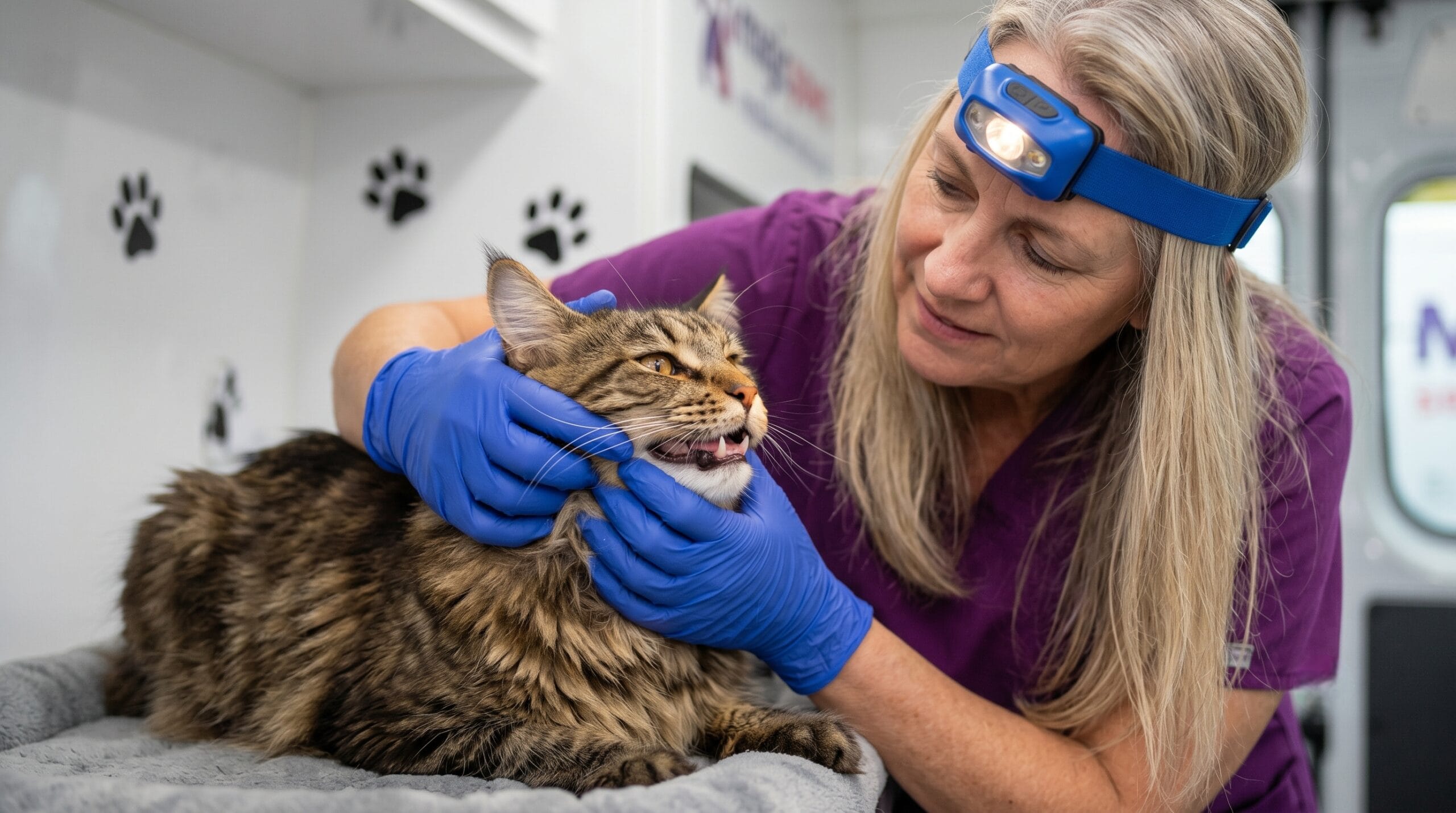
Several visible indicators signal that your dog’s current cleaning schedule, or the absence of one, is no longer keeping pace with buildup. The most common signs include persistent bad breath, visible yellow or brown tartar on the teeth, red or swollen gums, difficulty or reluctance to chew, excessive drooling, and pawing at the mouth.
Bad breath in dogs is not a quirk of the species. Halitosis is one of the earliest external signs of bacteria thriving below the gumline. An animal may tolerate significant discomfort without showing obvious distress because pets adapt remarkably well to chronic pain.
If your dog is showing any of these signals, reviewing signs your pet might have dental problems can help you identify how far the condition may have progressed. At that point, the frequency question has already been answered: the current schedule is not enough, and waiting longer increases the risk of permanent damage.
A professional evaluation gives a clearer picture than any symptom checklist can. Understanding what dog teeth cleaning involves at the clinical level helps owners set realistic expectations for what the procedure can address and what may require veterinary referral.
If the dog already shows these signs, the ideal preventive frequency has already been exceeded.
Not sure how often your dog needs a cleaning? Check eligibility and book a visit with The Magic Paws!
How does the dog dental cleaning procedure work?
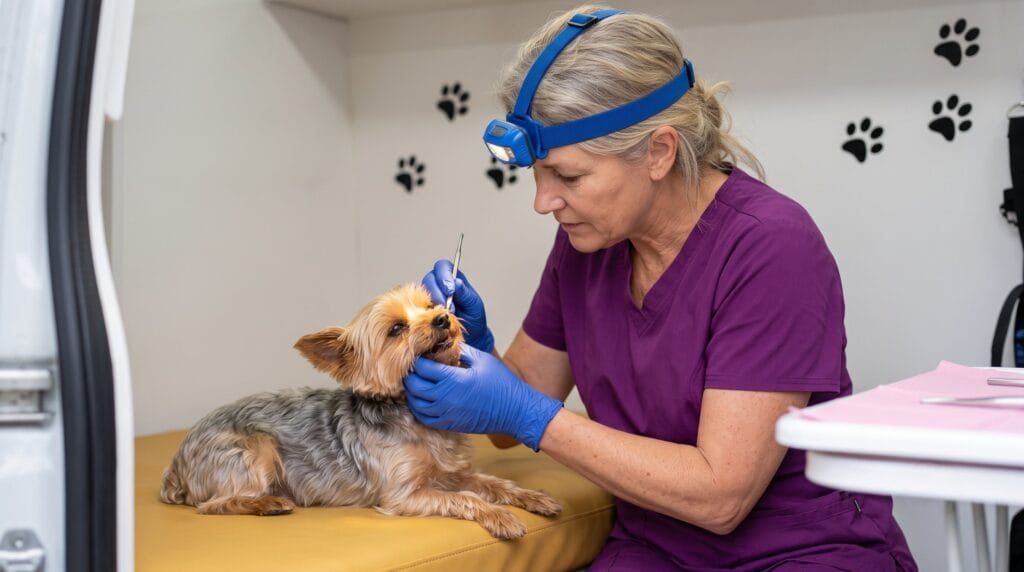
The dog dental cleaning procedure involves three sequential steps: an eligibility evaluation, manual scaling to remove plaque and tartar, and polishing to protect the tooth surface. Each step serves a distinct purpose in a complete preventive session.
Research from Cornell University College of Veterinary Medicine confirms that bacteria originating in an unhealthy mouth can travel through the bloodstream and affect the heart and kidneys. This systemic link is why professional cleaning carries a medical rationale beyond cosmetic oral hygiene.
Scheduling a dental exam for pets as part of a regular preventive calendar gives practitioners the opportunity to catch early-stage changes before they require more complex intervention.
Eligibility evaluation
Before any cleaning begins, a thorough evaluation of the pet’s condition is required. This includes reviewing the animal’s health history, assessing current behavior and stress tolerance, and examining the oral cavity for conditions that would make the session inappropriate.
Not every dog qualifies for an anesthesia-free session, and responsible care means making that determination before proceeding. At The Magic Paws, this evaluation is performed by Illana Reisner, a formally trained dental professional who brings clinical judgment from over two decades of practice to every eligibility assessment. Proceeding without criteria is not a protocol, it is a risk.
Scaling
Scaling removes the plaque and tartar accumulated on and around the tooth surface, including deposits at the gumline. The technique relies on the pet remaining calm and cooperative, which is why the environment and approach before and during the session matter as much as the instruments used.
Manual scaling without sedation is effective when the pet is eligible and the protocol is structured. The goal is to disrupt the bacterial deposits that a toothbrush cannot reach and to reduce the inflammatory load along the gumline.
Polishing
Polishing follows scaling and serves a protective function. The process smooths micro-irregularities left on the tooth surface after tartar removal, reducing the sites where bacteria can adhere during the weeks following the appointment.
A complete session, scaling and polishing together, performed at the right frequency, is what sustains long-term preventive oral health. Single cleanings without follow-up scheduling allow the accumulation cycle to restart unchecked.
Your dog may already be showing signs. Schedule a sedation-free cleaning today before it progresses!
Is anesthesia-free dental cleaning effective for regular maintenance?
Anesthesia-free dog dental cleaning is effective for preventive maintenance when performed on eligible pets by a trained professional using a structured protocol. The key word is preventive: this approach works best as a high-frequency complement to routine care, not as a replacement for veterinary procedures in advanced cases.
The objection that sedation-free cleaning is less thorough than anesthesia-based procedures misses the clinical context. For a dog with no acute disease and manageable tartar, a structured anesthesia-free session at the right frequency keeps the oral environment stable. It is the frequency that prevents the buildup from ever reaching the level that would require more invasive treatment.
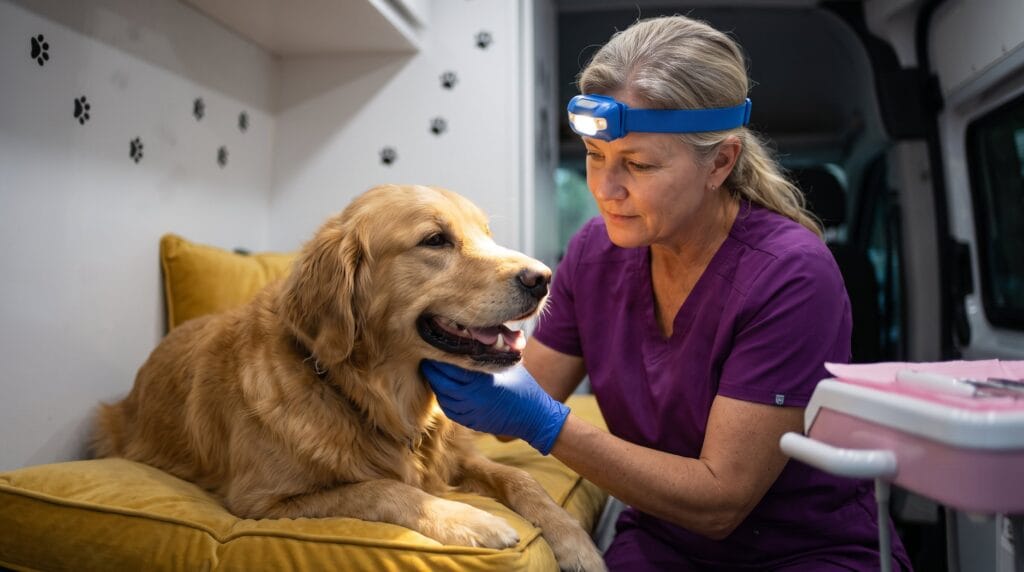
At The Magic Paws, the approach that keeps pets calm without sedation is Senses Therapy, a proprietary protocol combining aromatherapy, music therapy, chromotherapy, and massage. Each component reduces stress and promotes cooperation, allowing the cleaning to be completed thoroughly without chemical sedation.
For owners researching this option, reading about no anesthesia dog teeth cleaning and dog dental cleaning without anesthesia provides a detailed view of what the sedation-free protocol involves and which dogs are candidates.
How can you maintain your dog’s oral health between cleanings?
Maintaining your dog’s oral health between professional sessions involves three complementary habits: daily brushing, dental chews, and water dental additives. None of these replaces professional cleaning, but each one slows the rate of plaque accumulation and extends the effective window between appointments.
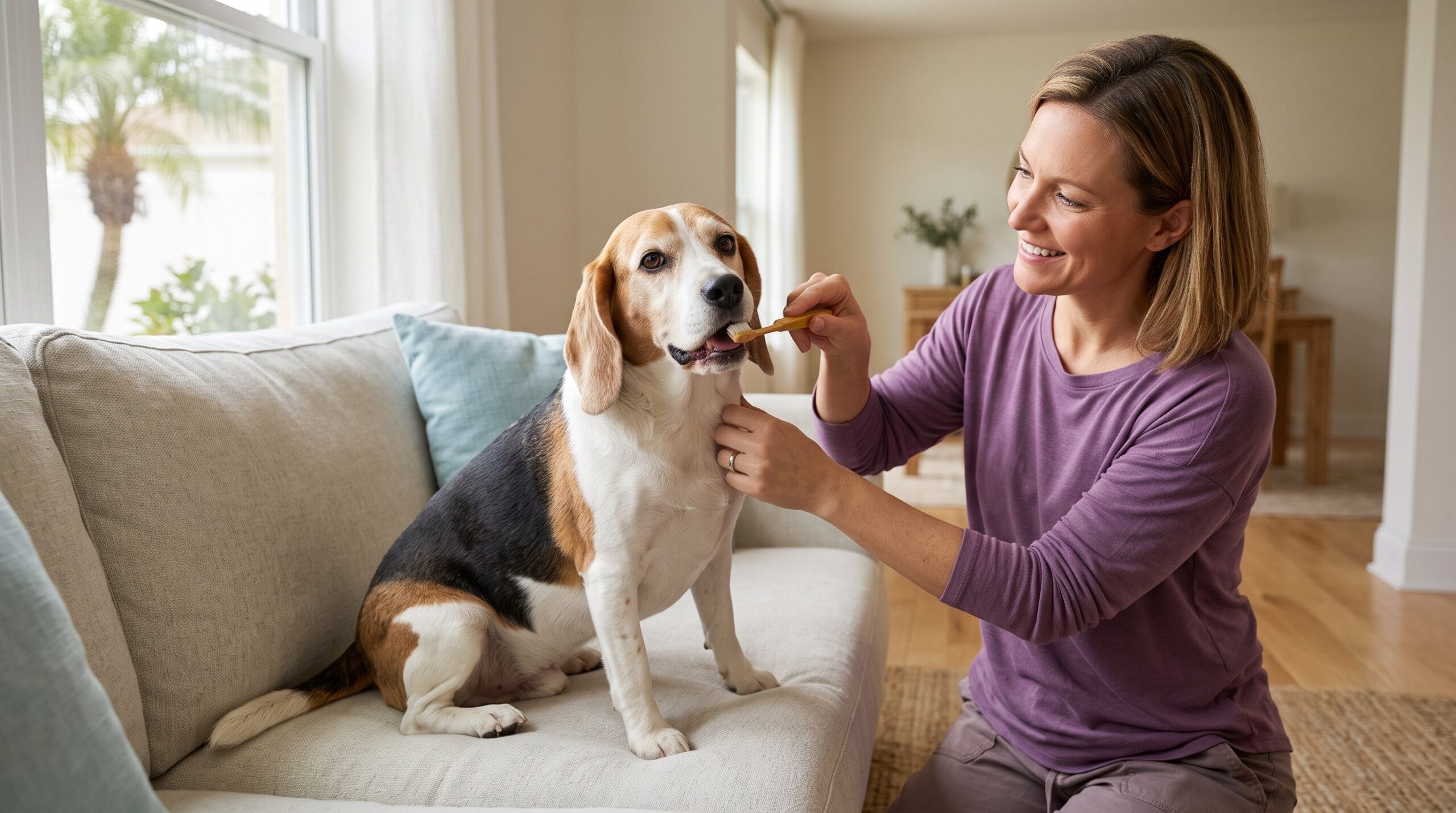
Daily brushing is the most impactful at-home habit. Even partial cooperation from the pet, reaching the outer tooth surfaces where plaque is heaviest, produces a measurable reduction in buildup. Resources on essential dog dental care outline what a sustainable home routine looks like for different temperaments and breeds.
Establishing a consistent toothbrushing routine for your pet early in the animal’s life produces far better long-term results than attempting to introduce brushing to an adult dog that has no prior experience with it. Small breed dog dental care especially benefits from early habituation because these animals are the group most affected by accelerated tartar cycles.
Dental chews offer mechanical abrasion along the tooth surface during chewing. Their effectiveness depends on the product formulation and the pet’s chewing behavior, but when used consistently they contribute to reducing the bacterial load between professional sessions. A review of dog dental chews explains which formats deliver the most reliable benefit and which are primarily marketing.
Why does dental cleaning frequency affect your dog’s longevity?
Cleaning frequency is directly connected to a dog’s longevity because oral bacteria do not stay confined to the mouth. When periodontal disease advances unchecked, the bacterial load along the gumline enters the bloodstream, reaching the heart and kidneys and contributing to systemic organ strain over time.
Studies have linked responsible pet care practices, including consistent dog dental maintenance, to an average increase of two to three years in a pet’s lifespan compared to animals with no preventive oral health history. This connection between bacteria in the dog’s mouth and vital organ function is the same principle that drives preventive frequency recommendations.
Dog dental health and heart disease are increasingly recognized as related outcomes rather than separate concerns. The kidneys are equally vulnerable: chronic bacteremia from an inflamed oral cavity creates a cumulative inflammatory burden that affects organ function gradually, often without obvious symptoms until the damage is significant.
Scheduling a dental exam for pets on a regular calendar basis, not only when problems become visible, is the structural decision that keeps the preventive frequency on track. A dog that receives consistent cleaning at the right interval for its risk profile is a dog whose systemic health is being supported, not just whose teeth are being cleaned.
Ready to set the right schedule for your dog?
The right cleaning frequency protects your dog’s oral health, reduces the systemic risk that comes with chronic periodontal disease, and directly supports longevity. The answer to how often your dog should have its teeth professionally cleaned is not a fixed number, but it is always specific once breed, age, diet, and current condition are factored in.
Pets with no prior professional cleaning often discover they are already in a higher-frequency risk category before the first session is complete. Starting sooner gives the preventive cycle more time to work in your dog’s favor.
Prevention is always less costly than treatment. Book your dog’s sedation-free cleaning now. Schedule your dog’s cleaning today and stay ahead of dental disease.
Frequently asked questions
How often should small dogs get their teeth cleaned?
Small dogs should have their teeth professionally cleaned every six to nine months. Breeds such as French Bulldogs, Yorkshire Terriers, and Pomeranians have more crowded teeth and shallower roots, which accelerates plaque buildup and tartar formation compared to larger breeds. The shorter interval compensates for this structural disadvantage and keeps periodontal disease from establishing.
How often should senior dogs get their teeth cleaned?
Senior dogs aged seven and older benefit from professional cleaning every six months. Accumulated tartar from earlier years, combined with slower tissue recovery, means that the standard annual schedule is often insufficient for older animals. Consistent cleaning at this frequency reduces the bacterial load that reaches systemic circulation and supports organ health during a period when the body’s resilience is already lower.
At what age should a dog have its first dental cleaning?
Small breeds are generally ready for their first professional cleaning between one and a half and two years of age. Large breeds can start between two and three years. Waiting beyond these windows increases the risk that tartar and early-stage gingivitis become established, requiring more intensive intervention before a preventive routine can begin.
What happens if I don’t clean my dog’s teeth regularly?
Without regular professional cleaning, plaque hardens into tartar, which accumulates along the gumline and triggers gingivitis. Left untreated, gingivitis advances into periodontal disease, causing tissue and bone loss around the teeth. Bacteria from the infected gumline can then enter the bloodstream, contributing to conditions affecting the heart and kidneys over time. The progression is gradual and often silent until significant damage has occurred.
Does diet affect how often my dog needs a dental cleaning?
Yes. Pets eating wet food diets tend to accumulate plaque more quickly than those on dry or dental-formula kibble, because soft food adheres more readily to tooth surfaces. A dry diet reduces the accumulation rate but does not eliminate it. Regardless of what a dog eats, professional cleaning remains necessary because no dietary choice removes tartar that has already mineralized.
Is anesthesia-free dental cleaning effective for regular maintenance?
Yes, anesthesia-free dental cleaning is effective for preventive maintenance when performed on eligible pets using a structured protocol. The approach works best as a high-frequency complement: a dog maintained at the right cleaning interval never accumulates the level of tartar that would require sedation for removal. The key conditions are eligibility, a trained professional, and a calming protocol that allows the session to be completed thoroughly.
How do I know if my dog needs a dental cleaning before the scheduled date?
Look for persistent bad breath, visible tartar deposits along the gumline, red or swollen gums, reluctance to chew hard food, excessive drooling, or pawing at the mouth. Any of these signs indicates that the current cleaning frequency is not keeping pace with accumulation and that scheduling sooner is the appropriate response.
Can I replace professional cleaning with brushing at home?
No. Brushing reduces the rate of plaque buildup and supports gum health between professional sessions, but it cannot remove tartar that has already hardened onto the tooth surface or address deposits below the gumline. Professional cleaning and home brushing are complementary practices, each performing a function the other cannot replicate.
How long does a dog dental cleaning take at The Magic Paws?
A typical session at The Magic Paws takes between 45 minutes and one hour, depending on the level of tartar present and the pet’s individual cooperation. The service is performed inside the branded van at the owner’s location, with no travel or clinic visit required. For a full breakdown of what the appointment involves, the article on how long a dog dental cleaning takes covers each step of the session in detail.
How do I schedule a dog dental cleaning in Florida?
Scheduling is available directly at themagicpaws.com. The Magic Paws operates across Florida with a mobile service that brings the full cleaning session to the pet’s location. No sedation is required, and the van is equipped to complete the procedure at the owner’s home. Book your dog’s appointment today and confirm availability in your area.