How mobile dog teeth cleaning work? It brings professional dental care directly to your home, without sedation, without waiting rooms, and without the stress of a clinic environment. Understanding how does mobile dog teeth cleaning work, from the scheduling call to the final care report, makes it easier to know what to expect and how to prepare your dog for a productive appointment.
Dogs accumulate plaque and tartar just like humans do. Without regular cleaning, that buildup leads to periodontal disease, which, left untreated, does far more than cause bad breath. Bacteria from infected gums can enter the bloodstream and affect the heart, kidneys, and liver. The problem with conventional dental care for pets is that it almost always requires general anesthesia, a factor that many owners, especially those with senior dogs or animals with health conditions, weigh carefully before booking.
The mobile model was developed precisely to address that gap. Instead of putting the dog under to perform a routine preventive cleaning, a certified professional comes to your address, sets up a calm and controlled environment inside the van, and carries out the procedure. The animal stays fully conscious and relaxed.
Knowing what to expect from mobile pet dental cleaning removes much of the uncertainty that keeps owners from scheduling the first appointment. The sections below walk through each stage of the process, from your initial call to the post-procedure care instructions.
What does a mobile dog teeth cleaning appointment look like?
A mobile dog teeth cleaning appointment follows a structured sequence: scheduling and confirmation, van arrival, initial eligibility assessment, sensory relaxation protocol, dental cleaning procedure, and a final care briefing. The entire visit, from the moment the professional arrives to checkout, typically takes between 45 minutes and one hour.
The process is designed to be predictable for the owner and low-stress for the animal. Each stage builds on the one before it, and nothing moves forward until the dog is ready.
Step 1: Scheduling and confirmation
Booking a mobile pet dental cleaning appointment starts with selecting your region and a time slot that works for your schedule. After confirmation, you receive instructions on how to prepare your dog for the visit: no food in the one hour before the appointment, an adult present at home, and a calm space near where the van will park.
The confirmation also includes what to expect on the day, so there are no surprises when the vehicle arrives. For first-time clients, this is a good moment to share any relevant information about your dog’s health history or previous dental care.
Step 2: The van arrives at your door
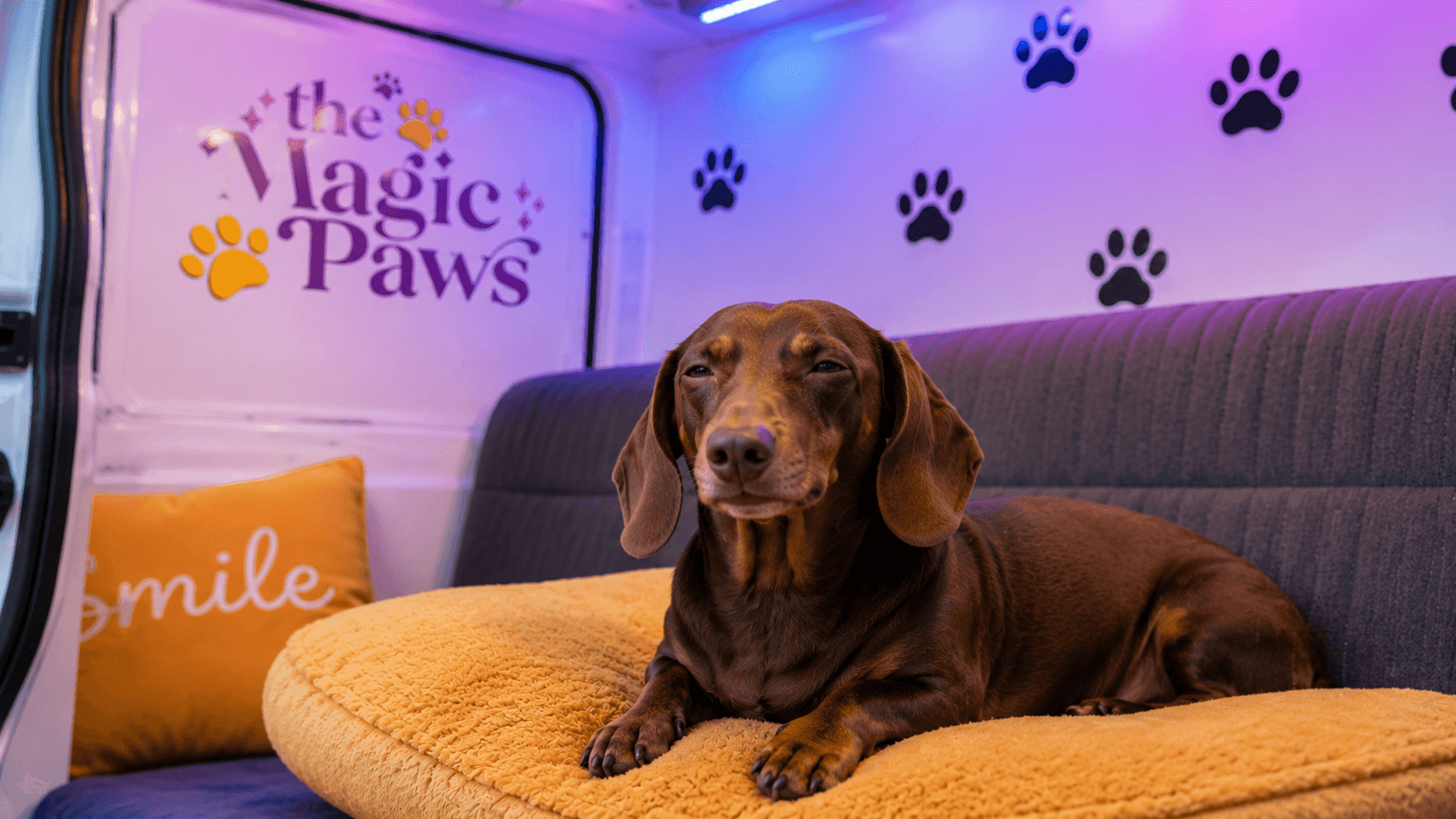
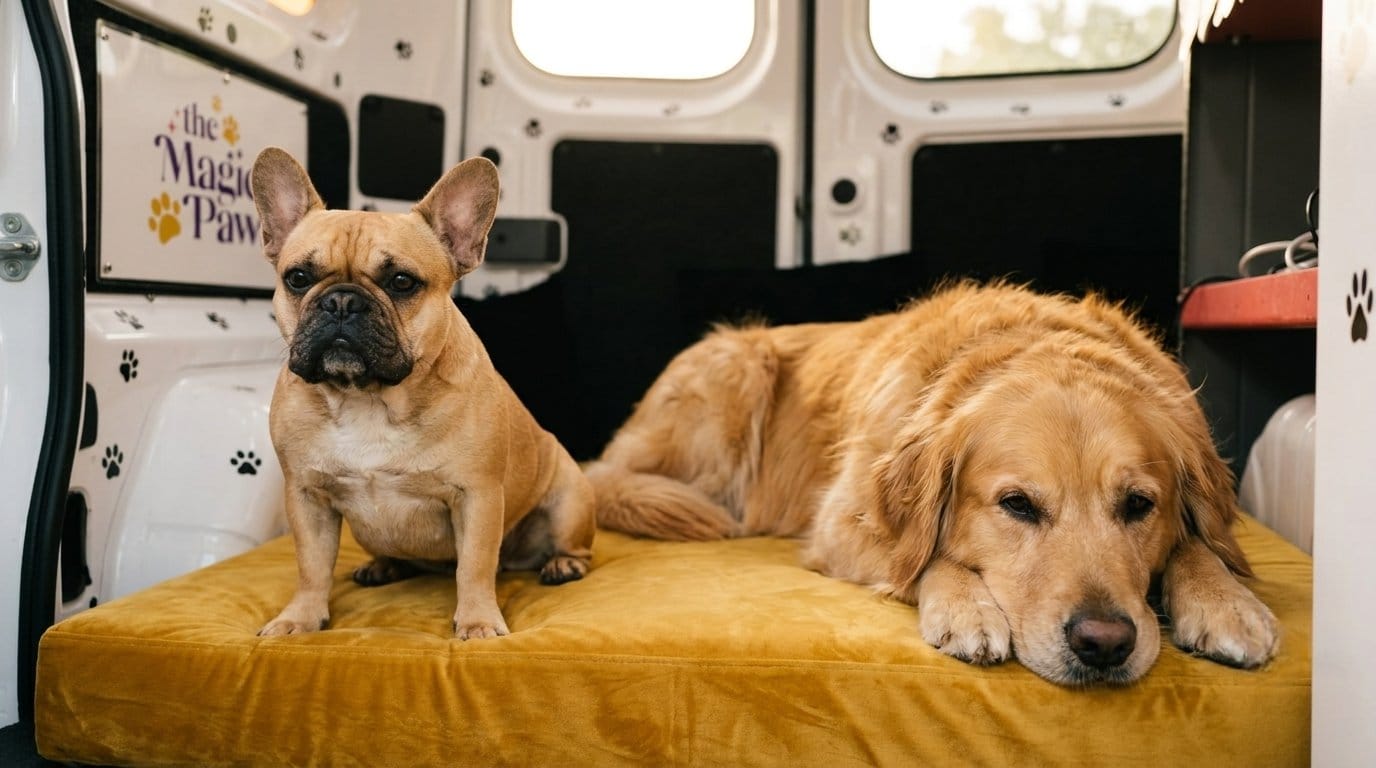
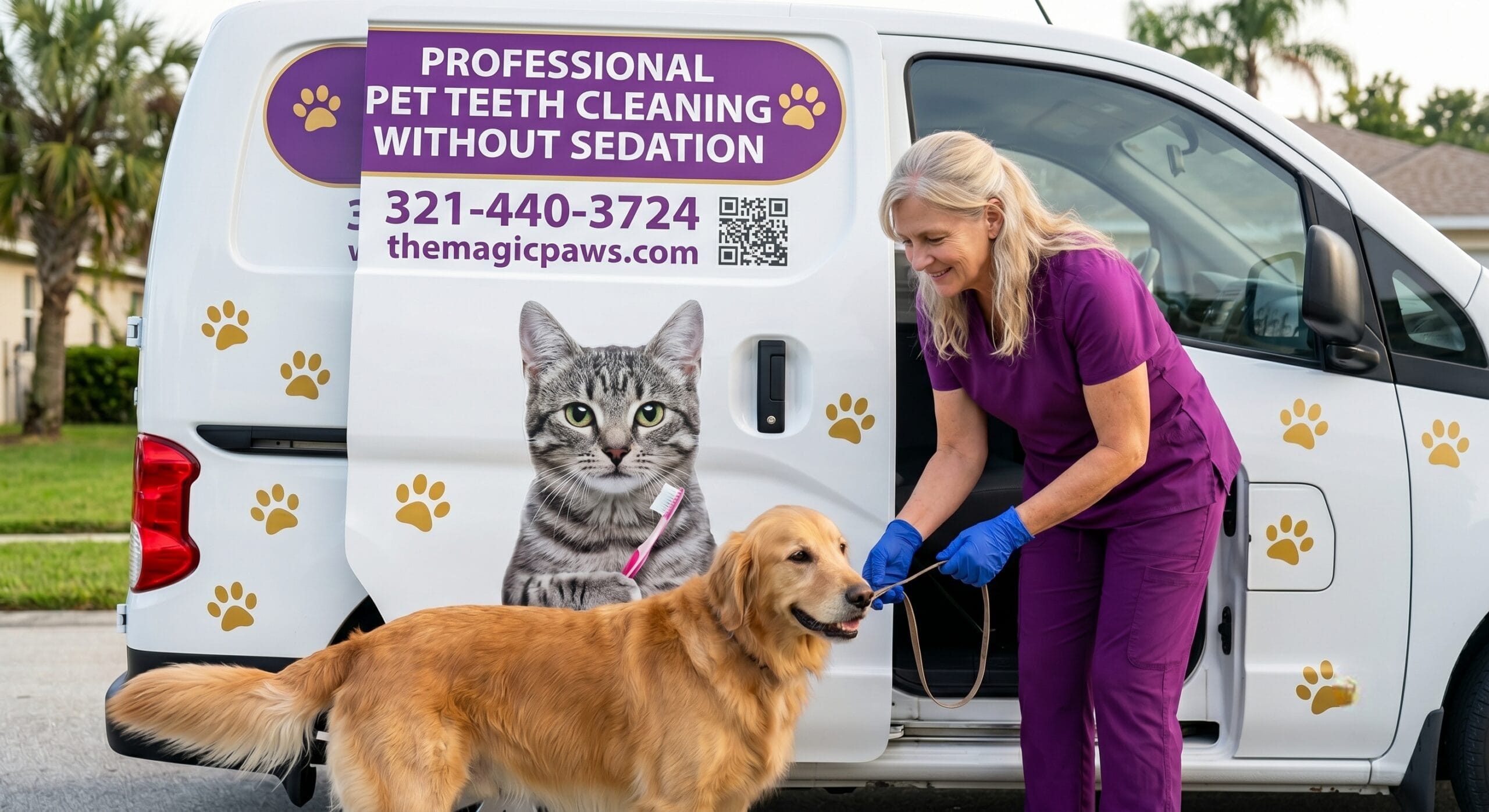
The service vehicle is a Nissan NV200 with a purple and gold branded wrap, easy to identify when it pulls up in front of your home. Inside, the van is set up specifically for dental procedures: a padded seat, organized equipment and a controlled lighting system that forms part of the sensory protocol applied during the cleaning.
How does the TMP van work as a treatment environment? The interior combines functionality with comfort. The space is compact but well-organized, designed so that the professional can work efficiently while keeping the dog in a stable, familiar-feeling position throughout the session.
Step 3: Initial assessment
Before any cleaning begins, the professional conducts a hands-on evaluation of your dog’s mouth. This is not a formality. The assessment determines whether the animal is a suitable candidate for anesthesia-free cleaning on that day.
The professional looks at the degree of tartar buildup, the condition of the gums, the presence of any visible inflammation, and whether the dog’s temperament allows for a safe, cooperative procedure. For is dental cleaning safe for dogs to be the right answer, the assessment has to confirm it.
Not all dogs pass. If your animal presents conditions that require extraction, deep subgingival treatment, or X-rays, the professional will stop the process and guide you toward a veterinary consultation. No cleaning is performed on a dog that isn’t a candidate. That protocol exists to protect the animal, not to fill appointment slots.
Step 4: The Senses Therapy protocol
Once the assessment confirms eligibility, the Senses Therapy protocol is activated. This is the proprietary relaxation system developed to keep dogs calm and cooperative throughout the anesthesia-free dog teeth cleaning process, without the use of sedatives.
Senses Therapy works through four simultaneous inputs:
- Aromatherapy: Calming essential oils, including lavender, are diffused near the dog to reduce anxiety and lower stress responses before and during the procedure.
- Music therapy: a curated selection of soothing audio is played during the session to create a steady, non-stimulating acoustic environment.
- Chromotherapy: specific light frequencies are used inside the van to support an emotionally balanced state in the animal. Color selection follows documented calming properties.
- Massage: Gentle pressure applied to specific relaxation points helps release tension in the dog’s body, making physical cooperation during the cleaning significantly easier.
The protocol was developed by Illana, a licensed dentist with formal dental hygiene training and years of clinical experience with animals. Its design is intentional: each component addresses a different sensory channel, and together they produce a level of calm that makes the procedure safe without pharmaceutical intervention.
Step 5: The cleaning itself
With the dog relaxed and positioned, the cleaning proceeds. The professional uses hand scaling to manually remove plaque and tartar deposits from the visible surfaces of the teeth, including the gumline. Ultrasonic scaling may also be used, depending on the level of buildup.
After scaling, the teeth are polished. Polishing smooths the enamel surface, which slows the rate at which new plaque adheres between visits. The professional also conducts a visual oral inspection throughout the process, noting any areas of concern, such as gum recession, tooth discoloration or signs of early gum disease.
The dog remains awake and conscious from start to finish. There is no post-sedation recovery, no grogginess, and no need for fasting beyond the one-hour pre-appointment window. Most dogs tolerate the session well, particularly after the Senses Therapy protocol has taken effect.
Step 6: After the cleaning
At the end of the session, the professional walks you through a summary of your dog’s oral health. This includes the condition found before cleaning, any areas to monitor and recommendations for maintaining dental hygiene between visits.
You will receive guidance on essential dog dental care routines that support the results of the professional cleaning. Daily brushing, dental chews and water additives are typically part of the conversation, with product suggestions calibrated to your dog’s specific condition.
The professional also recommends a return interval based on your animal’s size, breed and how quickly tartar typically accumulates. Most dogs benefit from a cleaning every three to six months.
Is mobile dog teeth cleaning safe without anesthesia?
Mobile anesthesia-free pet dental cleaning is safe for dogs that are confirmed candidates through the initial assessment. The procedure does not require sedation because it targets the visible surfaces of the teeth, above the gumline, and relies on the animal’s cooperation supported by the sensory relaxation protocol.
The American Veterinary Medical Association (AVMA) emphasizes that periodontal disease is the most common health condition in adult dogs, affecting the majority of animals by age three. Regular preventive cleaning directly reduces that risk. According to the AVMA, consistent oral hygiene is among the most impactful preventive measures a dog owner can take.
The American Veterinary Dental College (AVDC) distinguishes between cleaning for maintenance and procedures that require veterinary intervention. For dogs without active disease, structural damage, or conditions requiring extraction, anesthesia-free dog teeth cleaning is a recognized approach to preventive oral hygiene.
What makes no anesthesia dog teeth cleaning particularly suitable for certain dogs, including older animals or those with cardiovascular conditions, is the absence of anesthetic risk. Senior dogs, in particular, often benefit from this model precisely because anesthesia carries greater physiological uncertainty as animals age.
The key condition is suitability. The initial assessment is not optional. It is the mechanism that ensures the procedure is only performed on dogs for whom it is appropriate.
What makes the TMP van different from a standard mobile service?
The Magic Paws van functions as a fully equipped mobile dental environment designed around the animal’s experience, not just the procedure itself. What distinguishes it from a generic mobile service is the combination of a structured sensory protocol, a professionally trained operator, and a setup built specifically for anesthesia-free cleaning.
Most mobile pet dental cleaning services offer portability: the professional comes to you. The TMP approach adds a layer that conventional mobile services do not have. The Senses Therapy protocol converts the van interior into a sensory environment calibrated to reduce stress in dogs before and during the procedure. That distinction changes the animal’s experience entirely.
The service is led by Illana, a licensed dentist with formal dental training, not a groomer or an uncertified technician. That background matters in terms of how the assessment is conducted, how potential issues are identified and how the cleaning is adapted to each animal’s specific oral condition. Understanding how mobile dog teeth cleaning works means recognizing that the operator’s credentials are part of the safety equation.
For a closer look at the mobile dog dentist profile and what to look for when choosing a mobile dental provider, that resource covers the key questions worth asking before booking.
See what our mobile service covers: mobile teeth cleaning for dogs.
How often should your dog get a mobile dental cleaning?
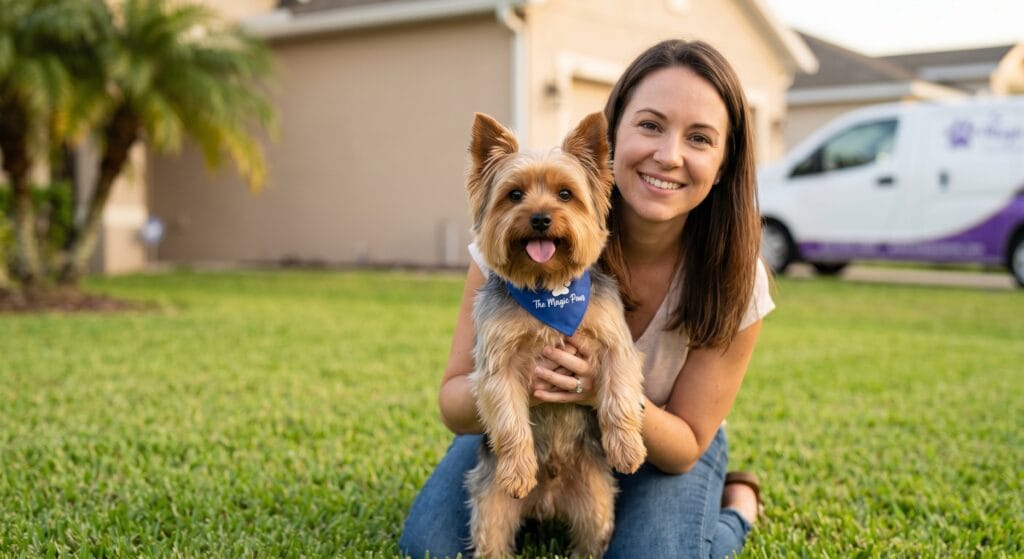
For most dogs, a mobile dental cleaning every three to six months is the appropriate maintenance interval. The specific frequency depends on the animal’s size, breed and the rate at which tartar accumulates between appointments.
Smaller breeds tend to accumulate tartar faster than larger ones due to the anatomy of their mouths, where teeth are more closely spaced. Yorkshire Terriers, Dachshunds, Chihuahuas, and other small-framed dogs often benefit from more frequent sessions, sometimes every three months, to prevent rapid buildup that could accelerate periodontal disease progression.
Larger breeds with fewer dental crowding issues may comfortably maintain oral health with cleanings every five to six months, provided at-home hygiene is consistent. Brachycephalic breeds, such as French Bulldogs and Bulldogs, typically require careful individual assessment due to structural differences in their oral anatomy.
To understand how long does a dog dental cleaning take in practical terms and how that fits into your schedule, that article provides a detailed breakdown of the appointment timeline.
How do you book a mobile dog teeth cleaning with The Magic Paws?
Booking a mobile dental cleaning with The Magic Paws starts on the service page, where you select your region (South Florida or Central Florida, including Orlando), choose a time slot, and confirm your address. The process takes a few minutes, and you receive confirmation with preparation instructions shortly after.
The mobile teeth cleaning for dogs service page includes current availability by area and answers to common pre-booking questions. Pricing depends on the dog’s size, and full details, including the breakdown by weight category, are available at dog dental cleaning cost so you can plan accordingly.
For first-time clients, the process is the same. The initial assessment on the day of the appointment serves as the baseline evaluation, so no prior veterinary records are required to book. If you want to review what happens before the van arrives, the preparation guide on how to prepare your dog for dental cleaning covers every step.
Your dog’s cleaning comes to you. Book a mobile appointment and skip the waiting room. Book your dog’s mobile dental cleaning today.
Frequently asked questions about mobile dog teeth cleaning
Does my dog need to be sedated for a mobile teeth cleaning?
No. The anesthesia-free dog teeth cleaning process keeps the animal fully awake throughout the appointment. Senses Therapy, which combines aromatherapy, music therapy, chromotherapy, and massage, is what maintains the dog’s calm state during the procedure. The protocol eliminates the need for sedatives in dogs confirmed as suitable candidates during the initial assessment.
How long does a mobile dog dental cleaning appointment take?
The cleaning itself takes between 45 minutes and one hour. Total appointment time may vary depending on the level of tartar buildup and the individual dog’s temperament. Dogs with heavier accumulation may require additional time for thorough scaling and polishing.
What happens if my dog is not a good candidate?
If the initial assessment finds that your dog is not suitable for anesthesia-free cleaning on that day, no procedure is performed. The professional explains what was found and guides you toward the appropriate next step, typically a referral to a veterinary specialist. The assessment is designed to protect the animal, and not passing it is not a failure.
Is anesthesia-free dog teeth cleaning as effective as cleaning under anesthesia?
For maintenance cleaning and periodontal disease prevention, yes. The procedure effectively removes plaque and tartar from visible tooth surfaces and the gumline. For cases requiring extractions, deep subgingival treatment, or diagnostic X-rays, anesthesia is necessary and appropriate. The AVDC provides detailed guidance on when each approach is indicated at avdc.org/pet-owners/why-is-veterinary-dentistry-important.
What does the inside of The Magic Paws van look like?
The van is a Nissan NV200 set up as a controlled dental environment. The interior includes a padded seat for the animal, organized dental equipment and a lighting system used as part of the Senses Therapy protocol. The space is compact, clean and designed to minimize sensory disruption for the dog during the procedure.
Can all dog breeds get a mobile anesthesia-free dental cleaning?
Most dogs are eligible candidates. Brachycephalic breeds or dogs with specific health conditions may require a more individualized assessment before the procedure is confirmed. The initial evaluation on appointment day determines eligibility for each animal, regardless of breed or size.
What should I do before the mobile dental cleaning appointment?
Avoid feeding your dog in the one hour before the appointment. Have an adult present at home for the duration of the visit. Prepare a calm, accessible spot near where the van will park. If your dog takes regular medication, continue the normal schedule unless your veterinarian advises otherwise.
How much does a mobile dog teeth cleaning cost?
Pricing varies by the dog’s size. Full details are available on The Magic Paws service page, where rates are listed by weight category for South Florida and Central Florida. Checking the service page directly ensures you have the current pricing before booking.
Does The Magic Paws serve my area?
The service covers South Florida and Central Florida, including the Orlando area. Specific availability by location can be confirmed through the booking page, where you select your region to see open time slots.
How is The Magic Paws different from a regular vet dental cleaning?