How many dogs die from teeth cleaning is a question no pet owner wants to ask, yet many do. The concern is legitimate, and it deserves a direct, honest answer rather than reassurance that glosses over the real picture.
For some pet parents, the concern comes from reading about rare complications. For others, it may come from a personal experience or the story of another pet owner. Either way, it is natural to feel worried when your dog’s health is involved.
The reality is that modern veterinary dentistry is generally very safe. However, anesthesia always carries a small level of risk. Studies and veterinary reports suggest that approximately 1 in 2,000 healthy dogs may experience fatal complications related to anesthesia during procedures such as dental cleanings.
This statistic can sound alarming when taken out of context. In practice, veterinarians use extensive safety protocols to minimize these risks, including bloodwork, monitoring equipment and careful anesthesia management.
For dogs that qualify, anesthesia-free dental cleaning can help maintain oral health while avoiding anesthesia entirely.
What is the real risk of dogs dying during a teeth cleaning?
The risk of dogs dying during dental cleaning is primarily associated with anesthesia complications rather than the cleaning procedure itself.
Dental scaling and polishing are routine veterinary procedures. The potential danger comes from the sedation required to perform a full dental exam, X-rays and treatment beneath the gumline.
Understanding the actual risk, as well as which dogs are most vulnerable, helps owners make informed decisions about their pet’s dental care.
How common is anesthesia-related death in dogs during dental procedures?
Approximately 1 in 2,000 healthy dogs die from anesthesia-related causes during dental procedures, according to reporting by the Mercury News on veterinary anesthesia risks. That figure applies to healthy animals. For dogs with pre-existing conditions, the risk is higher.
To put that in context: modern veterinary anesthesia protocols have improved significantly over the past two decades. Pre-anesthetic screening, monitoring equipment and drug combinations have all made sedation safer than it once was.
The risk is not a reason to avoid dental care. It is a reason to understand it, ask the right questions and, where possible, choose a method that removes sedation from the process altogether.
Which dogs are most at risk during dental anesthesia?
Some dogs face higher anesthesia risk due to age, anatomy or underlying medical conditions. Veterinary professionals typically consider the following groups more vulnerable:
Senior dogs (age 7 and older)
As dogs age, organ function declines. The liver and kidneys, which are responsible for metabolizing and clearing anesthetic agents, become less efficient.
This means sedation takes longer to wear off and the margin for complication is narrower.
Brachycephalic breeds
Bulldogs, French Bulldogs, Pugs and Shih Tzus have compressed airways by nature of their anatomy. Anesthesia relaxes the soft tissue surrounding the airway, which in these breeds can lead to partial or complete obstruction.
Intubation and monitoring requirements for brachycephalic dogs are more complex than for dogs with standard airway anatomy.
Dogs with heart disease
Cardiac conditions affect how the body responds to the physiological stress of anesthesia. Blood pressure changes during sedation can place significant strain on a compromised heart.
Dogs with kidney or liver disease
Impaired organ function directly affects anesthetic clearance. Drugs that would clear a healthy dog’s system in predictable timeframes may accumulate in dogs with reduced renal or hepatic capacity.
Overweight or obese dogs
Extra body weight can affect respiratory function and medication dosing during anesthesia. For dog owners who notice early dental issues, recognizing the warning signs can help prevent problems from progressing.
If your dog falls into any of these categories, early awareness of dental problems is especially valuable. Learn the signs your pet might have dental problems before the situation requires more complex intervention.
What are the most common causes of complications during dog dental cleanings?
Complications during dental procedures are usually related to anesthesia reactions or underlying health conditions, not the dental cleaning itself. Some of the most commonly reported complications include:
Adverse anesthetic reactions
Some dogs respond unpredictably to sedative agents, even when pre-screening has been completed and no contraindications were identified. These reactions are rare, but they can escalate quickly without proper monitoring.
Cardiovascular complications
Anesthesia affects blood pressure and heart rate. In dogs with undiagnosed or poorly managed cardiac conditions, these changes can trigger serious complications during the procedure.
Tracheal collapse
Dogs with airway challenges may experience breathing difficulties during sedation. Yorkshire Terriers and other small breeds are anatomically predisposed to tracheal weakness. Intubation and the physical handling involved in a dental procedure can sometimes trigger collapse in susceptible animals.
Aspiration pneumonia
When a dog under anesthesia inhales oral fluids or debris into the lungs, pneumonia can develop as a complication. Proper positioning, fasting protocols, and careful monitoring reduce this risk but do not eliminate it entirely.
Cases reported in veterinary news coverage, including a South Florida case highlighted by Local10 News, emphasize the importance of thorough health screening and bloodwork before anesthesia.
These precautions help veterinarians identify potential risks and adjust the treatment plan accordingly.
Worried about anesthesia risks during dental cleaning? For eligible pets, there is a safer option. Book an anesthesia-free dog dental cleaning with The Magic Paws: mobile service across Miami-Dade, Broward and Palm Beach.
How can you protect your dog from anesthesia risks during teeth cleaning?
Protecting your dog from anesthesia risks begins with understanding when anesthesia is necessary and when it may be avoidable.
Traditional veterinary dental cleaning remains essential in cases where dogs have advanced periodontal disease, require dental X-rays or need extractions. In these situations, anesthesia allows veterinarians to perform a complete examination and treat serious oral health problems safely.
However, many dogs receiving routine dental maintenance may not require this level of intervention. For these pets, preventive dental care options that avoid anesthesia can significantly reduce risk.
The key is choosing the right approach for your dog’s specific health condition, age and dental needs.
What should you do before putting your dog under anesthesia for a dental cleaning?
If your dog requires a dental cleaning under anesthesia, several precautions can significantly reduce the risk of complications. Veterinary guidelines consistently emphasize the importance of proper screening and medical evaluation before any anesthetic procedure.
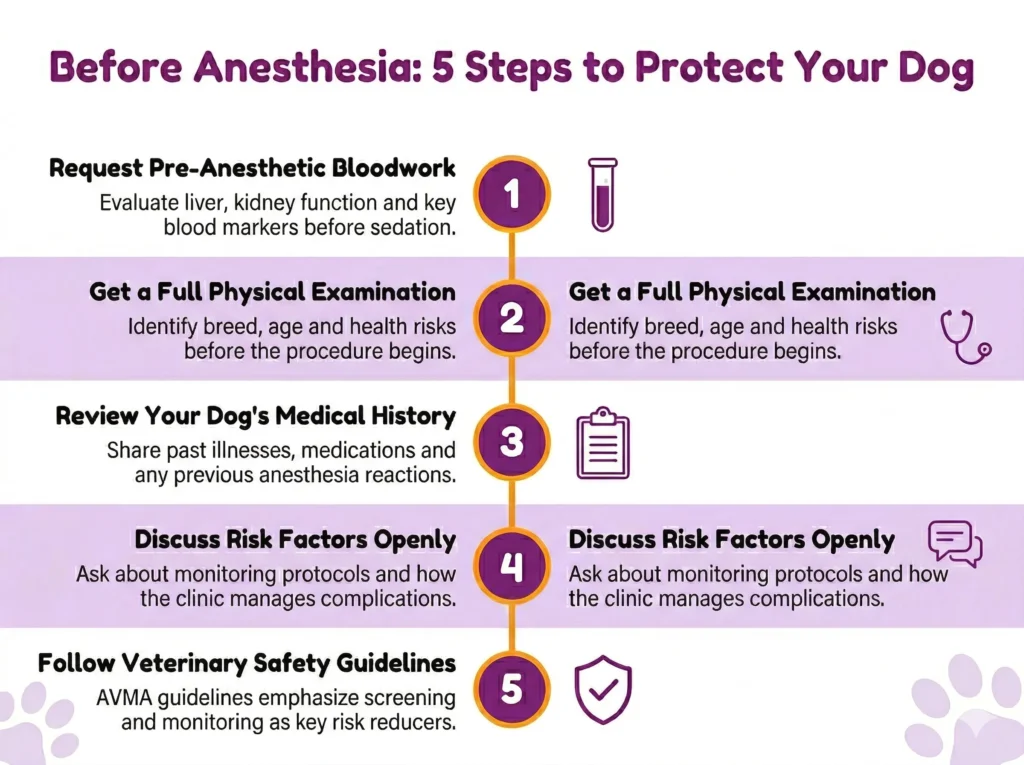
Pre-anesthetic bloodwork
One of the most important steps is pre-anesthetic bloodwork. A complete blood panel evaluates liver and kidney function, red blood cell counts, and other key markers that help veterinarians determine how the dog’s body is likely to respond to anesthetic agents.
Even dogs that appear healthy externally may have underlying organ values that increase anesthesia risk.
A full physical examination
A thorough physical examination should also be performed by the veterinarian before the procedure. This exam helps identify potential concerns related to the dog’s age, breed, overall health status, and medical history.
Certain breeds, senior dogs, and pets with pre-existing conditions may require additional precautions during anesthesia.
Reviewing medical history
Veterinarians should review the dog’s complete medical history, including medications, past illnesses, and any previous reactions to anesthesia. This information allows the veterinary team to adjust anesthesia protocols and monitoring strategies to match the dog’s individual risk profile.
Discussing risk factors openly
Open communication between pet owners and the veterinary team is also essential. Owners should feel comfortable asking questions about anesthesia monitoring, safety protocols, and recovery procedures. Understanding how the clinic manages anesthesia helps ensure informed decisions before the procedure.
Following veterinary safety guidelines
Veterinary organizations such as the American Veterinary Medical Association (AVMA) emphasize that proper pre-anesthetic screening and monitoring significantly reduce anesthesia risks during dental procedures.
Cases reported in veterinary news coverage, including a South Florida case highlighted by Local10 News, reinforce the importance of careful health screening and bloodwork before anesthesia. These precautions help veterinarians identify potential risks early and adjust the treatment plan accordingly.
For a complete overview of how professional pet dental procedures work and how to prepare your dog, see The Magic Paws complete guide to professional pet dental cleaning.
Is anesthesia-free dog teeth cleaning a safe alternative?
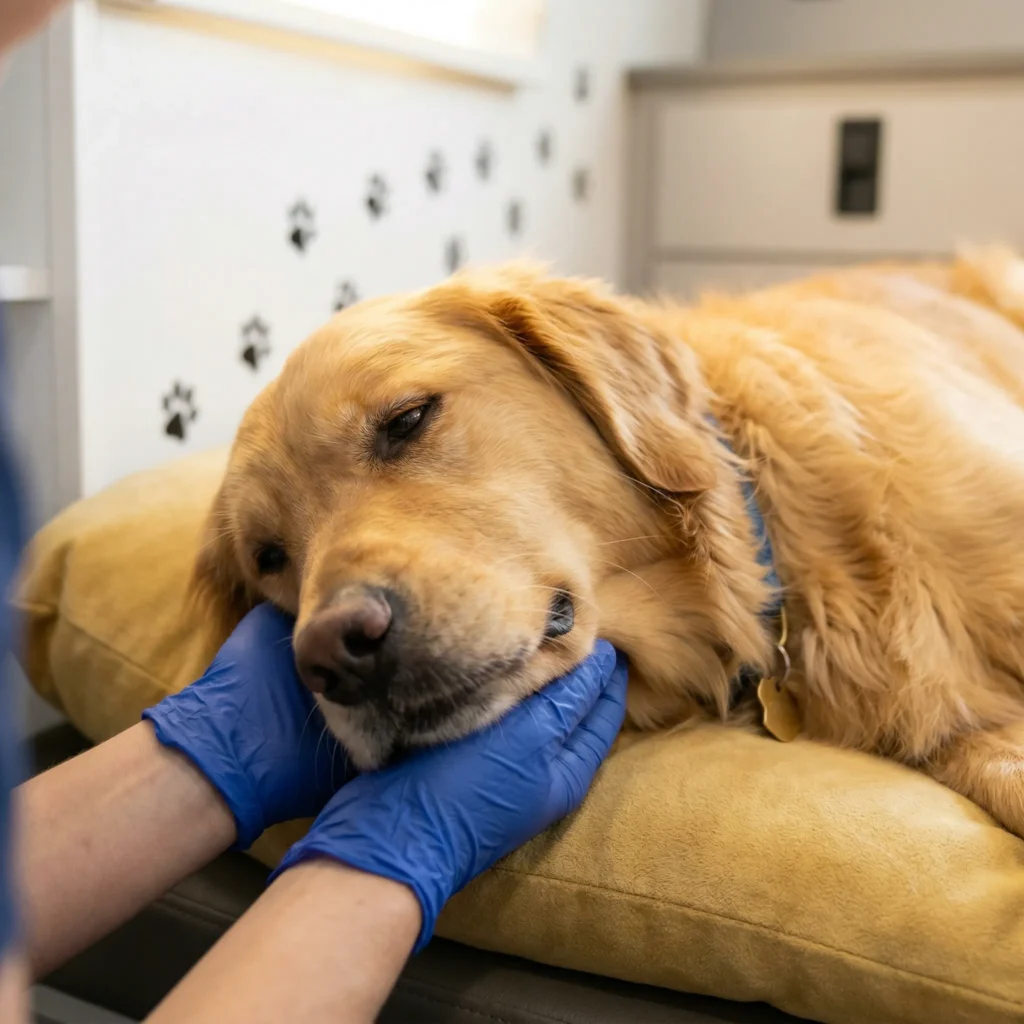
For eligible pets, yes. Anesthesia-free cleaning removes sedation from the process entirely, which means the anesthesia-related risks described in the previous sections do not apply. No drugs are administered, no intubation is required, and no recovery period follows the session.
For many dogs, this preventive approach offers several advantages:
- No anesthesia or sedation required;
- No recovery time after the cleaning;
- Reduced stress when performed in a calm environment;
- The ability to schedule regular maintenance cleanings.
However, anesthesia-free cleaning is not suitable for every case. Dogs with severe periodontal disease, fractured teeth, or infections still require veterinary dental treatment under anesthesia.
For dogs that qualify, anesthesia-free dental care provides a practical way to maintain oral health while avoiding sedation-related risks.
What makes The Magic Paws anesthesia-free cleaning safer and more comfortable?
The quality of an anesthesia-free cleaning depends heavily on how calm the dog remains throughout the session. A relaxed and cooperative dog allows the technician to work safely and thoroughly.
When a dog is anxious or resistant, the cleaning becomes more difficult to perform and less effective. In some cases, excessive stress can prevent the session from being completed.
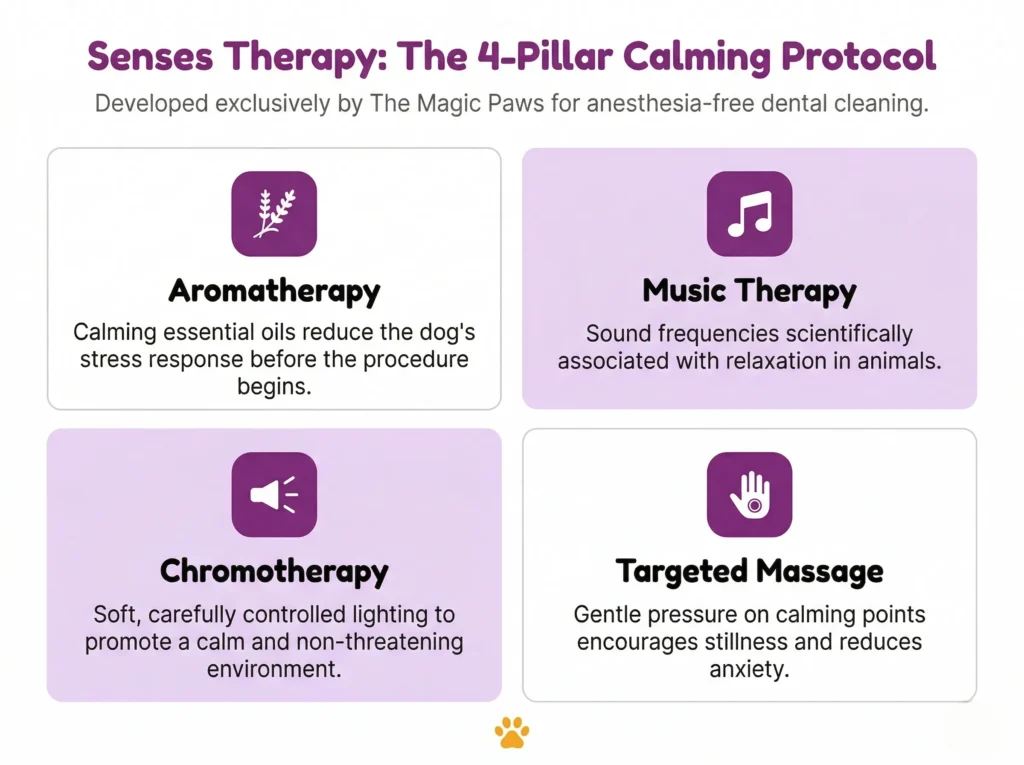
What is sensory therapy?
Senses Therapy is a calming protocol developed by The Magic Paws specifically for anesthesia-free dog dental cleaning.
Before any instrument touches the dog’s mouth, four calming elements are applied together to help the dog enter a relaxed state.
The four elements of Senses Therapy
The protocol combines four sensory techniques designed to reduce stress and promote cooperation:
- Aromatherapy with lavender to help reduce the dog’s stress response;
- Music therapy using sound frequencies known to promote relaxation in animals;
- Chromotherapy through soft, carefully controlled lighting;
- Targeted massage on calming pressure points to encourage stillness
Why this approach improves the cleaning
By combining these calming inputs, dogs often reach a physiologically calmer state than they would through handling alone.
This directly improves both the safety of the procedure and the quality of the dental cleaning, allowing plaque and tartar to be removed more effectively.
Currently, no other provider in South Florida offers this four-pillar relaxation protocol as part of a standard anesthesia-free dental cleaning session.
Mobile dog dental cleaning across South Florida
The Magic Paws operates as a fully mobile service, bringing this protocol directly to your home across Miami-Dade, Broward, and Palm Beach counties.
Which dogs are ideal candidates for anesthesia-free cleaning at The Magic Paws?
The best candidates for anesthesia-free dental cleaning are healthy dogs with mild to moderate tartar buildup who can remain calm during the procedure. Common examples include:
- Dogs receiving preventive dental maintenance;
- Senior dogs with increased anesthesia risk;
- Brachycephalic breeds such as Bulldogs and Pug;
- Dogs with certain medical conditions where anesthesia should be minimized.
On the other hand, some dogs require traditional veterinary dental treatment. Anesthesia-free cleaning is not appropriate for pets that have:
- Severe periodontal disease;
- Loose or fractured teeth;
- Oral infections or tumors;
- Cases requiring tooth extractions
Responsible providers evaluate each dog before beginning the procedure to ensure that the chosen dental care approach is appropriate. This candidacy evaluation helps protect the pet’s safety while maintaining effective dental care.
Your dog deserves clean teeth without you having to fear for their life
Dental care is not optional. Periodontal disease affects the majority of dogs by age three, and its impact goes far beyond the mouth. Oral infections can affect the heart, kidneys, and a dog’s overall quality of life.
The real question has never been whether your dog needs dental care. The real question is which path to that care carries the least risk.
At the same time, it is completely natural for pet owners to want the safest possible option for their dog. Understanding the real risks of anesthesia, along with the alternatives available, helps owners make informed decisions about their pet’s dental health.
For many dogs, anesthesia-free dental cleaning offers a practical way to maintain oral health without sedation. When performed on eligible pets, this preventive approach removes plaque and tartar while the dog remains awake and calm, eliminating anesthesia-related risks and recovery time.
For families across South Florida, The Magic Paws provides a calm and convenient mobile dental care experience designed to support long-term oral health.
Each session begins with a candidacy evaluation to confirm the dog is an appropriate candidate for anesthesia-free cleaning. The appointment then follows the Prevention Protocol and includes Senses Therapy, a multi-sensory relaxation approach designed to help dogs remain calm from start to finish.
You don’t have to choose between your dog’s dental health and their safety. Book an anesthesia-free cleaning with The Magic Paws: mobile service across South Florida, zero sedation, zero risk.
Frequently asked questions about dog teeth cleaning risks and safety
Below are some of the most common questions pet owners ask when researching the safety of dog dental cleaning.
How many dogs die from teeth cleaning?
Approximately 1 in 2,000 healthy dogs die from anesthesia-related causes during dental procedures, according to veterinary safety reports cited by sources such as Mercury News.
While this risk is considered low, it is still important for owners to understand the factors that may increase anesthesia complications.
What are the risks of dog teeth cleaning with anesthesia?
The main complications associated with anesthesia during dental procedures include adverse anesthetic reaction, cardiovascular complications from blood pressure and heart rate changes, tracheal collapse in small and brachycephalic breeds, and aspiration pneumonia.
Pre-anesthetic bloodwork significantly reduces the likelihood of these events by identifying dogs whose organ function or health status makes sedation higher risk.
Can a dog die from teeth cleaning without anesthesia?
The risk of anesthesia-related death is eliminated when anesthesia is not used. Anesthesia-free dental cleaning avoids sedation entirely, which removes the possibility of complications related to anesthetic drugs.
However, it is important that the dog is an appropriate candidate for the procedure. The Magic Paws performs a candidacy evaluation before every cleaning to ensure the dog can safely receive anesthesia-free care.
Is dog teeth cleaning safe for senior dogs?
Dental cleaning can be safe for senior dogs, but anesthesia risks may increase with age. Because older dogs may have underlying health conditions, anesthesia-free dental cleaning is often considered a suitable preventive option when the dog qualifies.
Preventive programs such as routine maintenance cleanings can help reduce the need for more complex procedures later.
What dog breeds are most at risk during dental anesthesia?
Brachycephalic breeds, including Bulldogs, French Bulldogs, Pugs and Shih Tzus, carry elevated risk due to their compressed airway anatomy.
Yorkshire Terriers and other small breeds face higher tracheal collapse risk during intubation. Senior dogs and those with cardiac, kidney or liver conditions are also in a higher-risk category regardless of breed.
For all of these groups, anesthesia-free cleaning is worth exploring as a preventive alternative when the dog is an eligible candidate.
How can I reduce the risk of my dog dying during teeth cleaning?
Always request complete pre-anesthetic bloodwork before any procedure involving sedation. Discuss your dog’s breed, age and health history openly with the veterinarian and confirm that monitoring protocols are in place throughout the procedure.
For eligible pets, exploring anesthesia-free cleaning as a preventive alternative removes the risk of anesthesia-related complications entirely.
Is anesthesia-free dog teeth cleaning safer than traditional cleaning?
For eligible pets, anesthesia-free dental cleaning eliminates anesthesia risk entirely.
However, traditional veterinary dental procedures are still necessary when dogs require dental X-rays, extractions or treatment of severe periodontal disease. Both approaches have their place depending on the dog’s condition.
What should I do if I’m scared of putting my dog under anesthesia for teeth cleaning?
Start by talking to your veterinarian about your dog’s specific risk profile. Ask about pre-anesthetic testing and what monitoring will be in place during the procedure.
If your dog is a candidate for anesthesia-free cleaning, that conversation is worth having with The Magic Paws as well. For eligible pets in Miami-Dade, Broward and Palm Beach, it is a proven preventive option that removes the source of that fear altogether.