Old cat bad breath is easy to notice and easy to dismiss. One week your cat smells the way it always has, and the next, something in that scent has shifted into territory that makes you pull back instead of leaning in for a nuzzle.
Many owners assume this is simply what happens to a cat’s mouth over the years, the same way fur can thin or joints can stiffen. That assumption feels reasonable, but it is not accurate.
A cat’s breath does not change on its own. Something inside the mouth, or somewhere else in the body, is producing that odor, and figuring out what is behind it matters more with an older cat than with a younger one.
This guide walks through the most common reasons a senior cat’s breath changes, how to tell a dental problem apart from a kidney problem, and what signs mean it is time to stop watching and start scheduling an evaluation.
Why does an old cat’s breath suddenly smell bad?
A cat’s breath smells bad when bacteria multiply somewhere in the mouth or when a systemic illness changes the chemistry of saliva. In senior cats, dental disease is the most frequent culprit, followed closely by kidney disease affecting waste filtration.
Cat halitosis causes are not always dental. The gums, the kidneys, the blood sugar, and even the thyroid can all influence how a cat’s mouth smells, which is why the same symptom can point to very different problems.
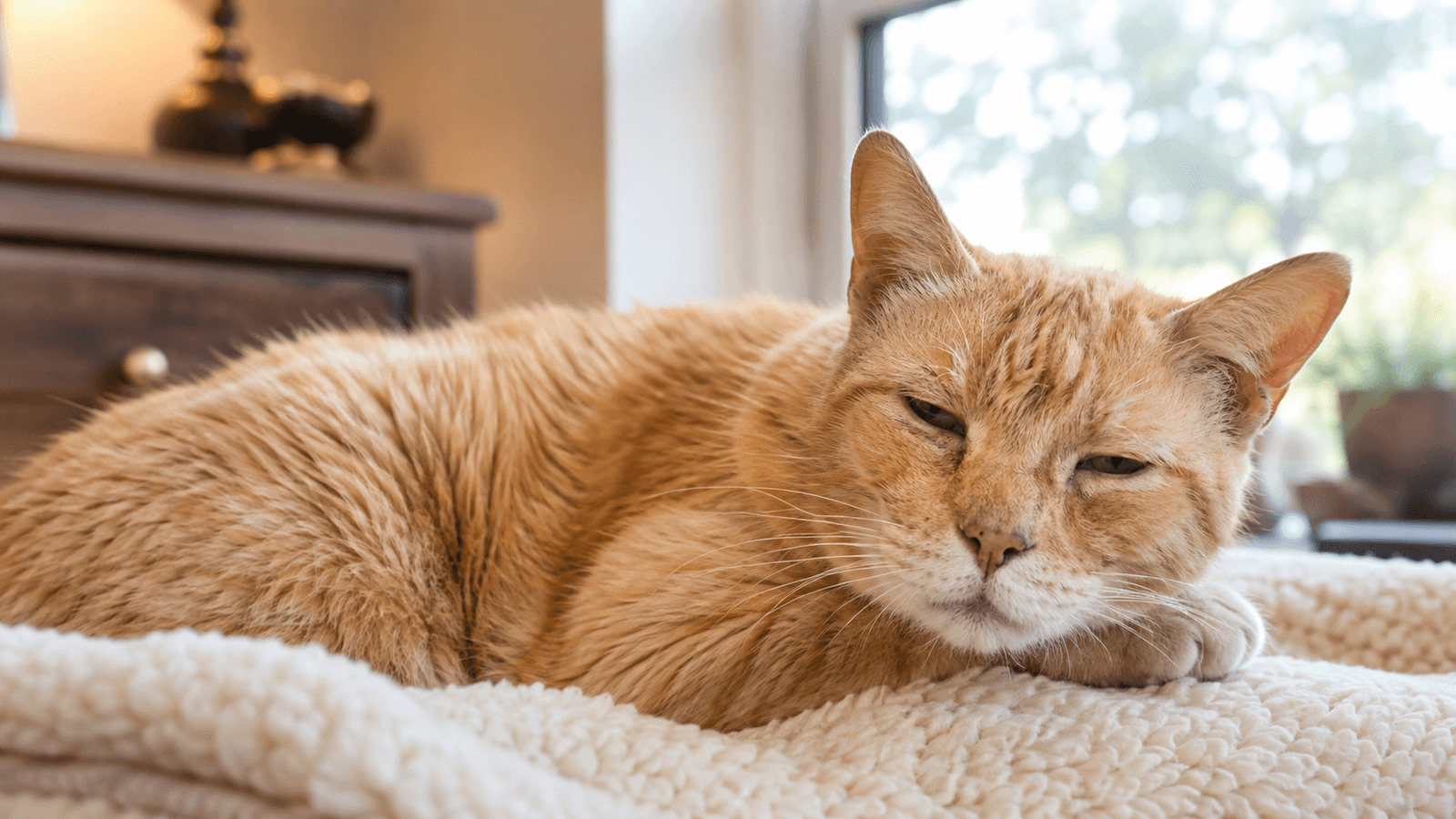
Age plays a role because a cat’s immune system and organ function shift over time, giving bacteria and disease more opportunities to take hold. A senior cat has simply had more years for small problems to become established ones.
None of this means bad breath should be treated as routine. Foul mouth odor is a signal your cat is sending, and reading it correctly starts with understanding the two conditions responsible for most cases.
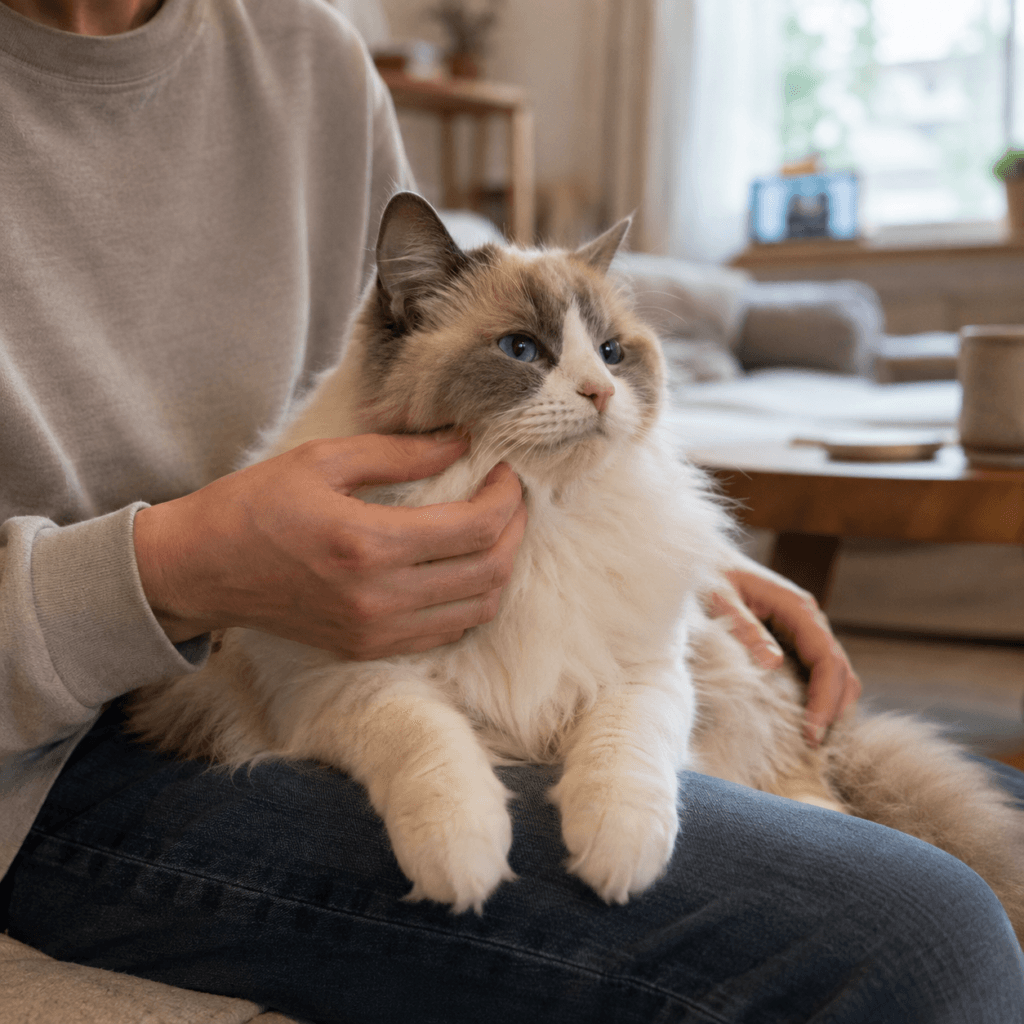
Is dental disease the main cause of bad breath in senior cats?
Yes, dental disease is the leading cause of bad breath in senior cats. Plaque hardens into tartar along the gumline, triggering gingivitis, and left untreated, this progression can advance into deeper periodontal disease and even tooth resorption.
The process usually starts quietly. Soft plaque forms within hours of eating, and if it is not removed, minerals in saliva harden it into tartar within a few days. This buildup provides a surface where bacteria multiply undisturbed.
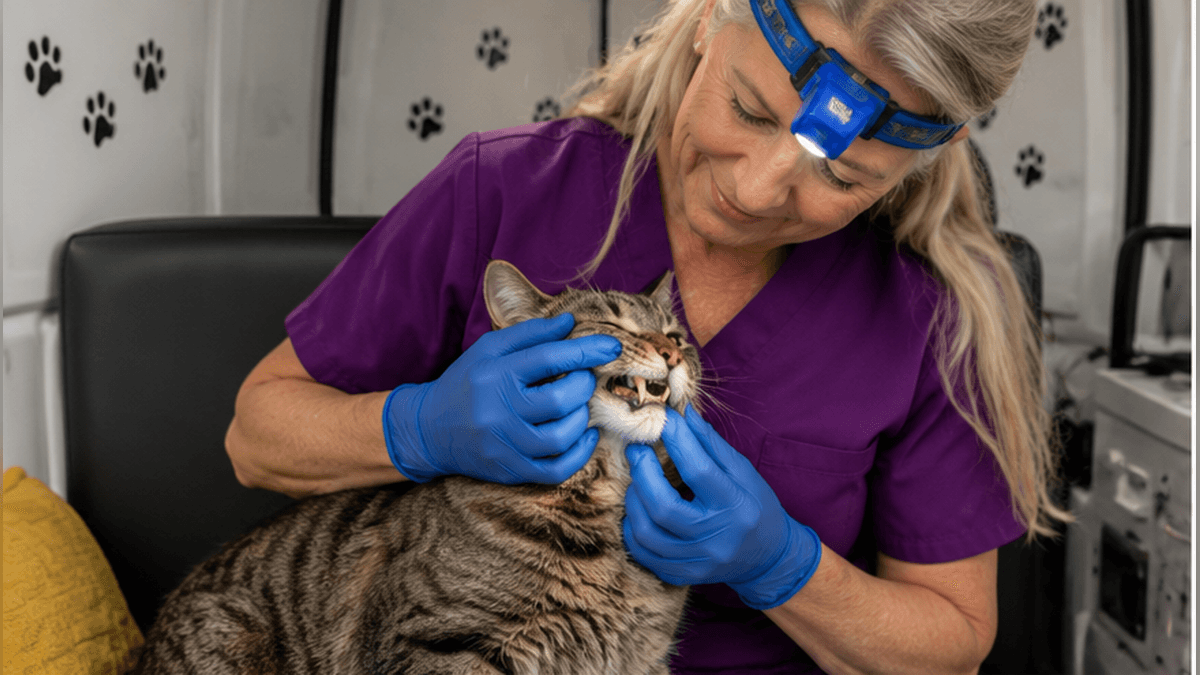
Once tartar reaches the how many teeth cats have beneath the gumline, inflammation follows. Gums turn red, swell, and can bleed during eating or grooming, which is often the stage where owners first notice the smell.
Signs of dental disease in cats extend beyond odor. Reduced appetite, dropping food while chewing, and pawing at the mouth all point toward the same underlying issue: bacteria have moved past the enamel and into tissue that was never meant to host them.
Left alone, gingivitis can progress into periodontal disease, where bone supporting the teeth begins to break down, and eventually into tooth resorption, a painful condition where the tooth structure itself is absorbed. Routine cat dental cleanings interrupt this chain before it reaches that point.
A fourteen-year-old cat with visible tartar on the back molars, for example, may already have gum recession that a casual glance at the mouth would never reveal. Only a proper dental exam catches damage at that depth.
Can bad breath mean kidney disease in an older cat?
Yes, bad breath can signal kidney disease in an older cat, and the odor is distinctive. As kidney function declines, waste products such as urea accumulate in the blood and are released through saliva, producing a smell many owners compare to ammonia.
Kidney disease in cats is common in the senior population, and the Cornell Feline Health Center notes that bad breath should never be dismissed as ordinary aging, since it frequently points to disease already active in the mouth or the body.
This connection matters because kidney disease develops silently for a long stretch before other symptoms appear. A cat can look and act normal while its kidneys are already filtering less efficiently than they should.
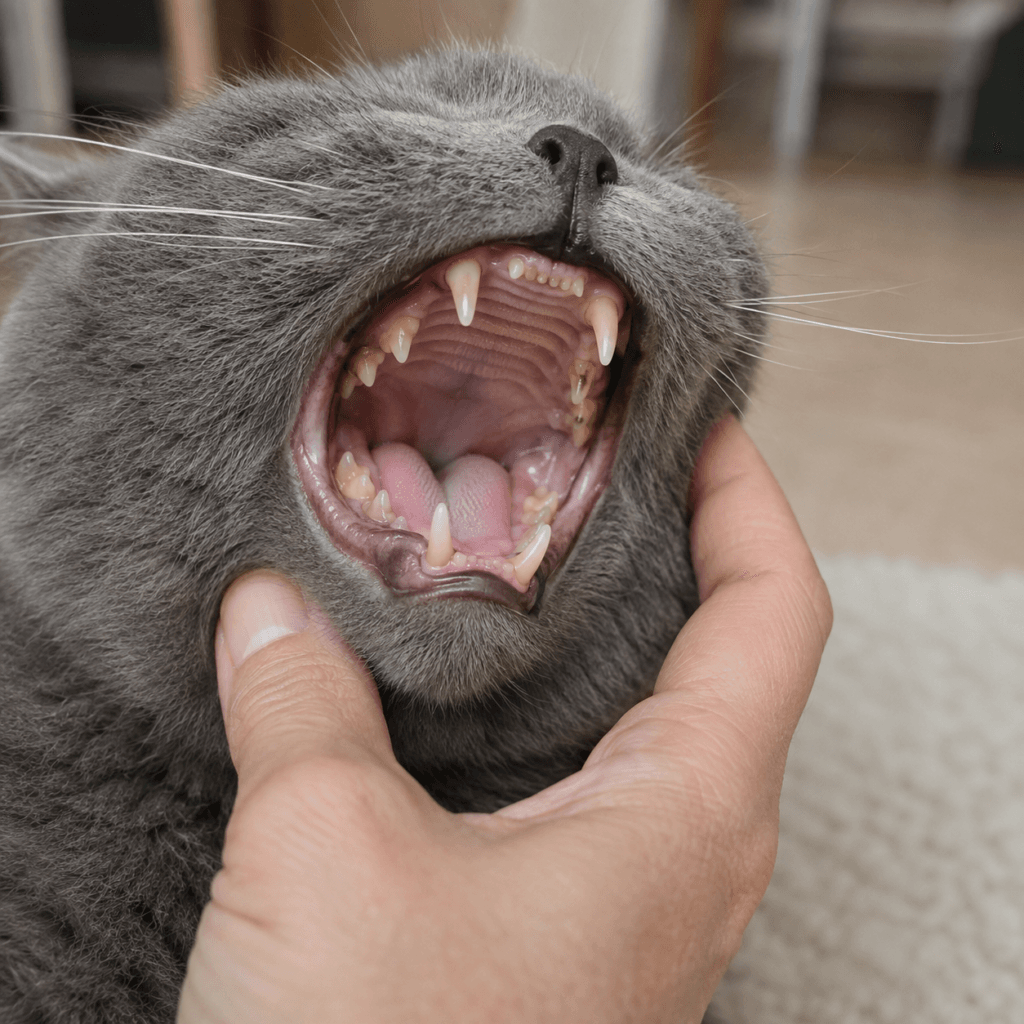
What ammonia-smelling breath indicates
Old cat mouth smells like ammonia when urea, a waste product normally filtered out by the kidneys, builds up in the bloodstream and escapes through saliva and breath. This smell tends to be sharper and less food-related than dental odor.
A twelve-year-old cat with sudden ammonia-like breath and no obvious dental tartar, for example, may be developing kidney disease before any other visible symptom shows up. Increased thirst, more frequent urination, and weight loss often follow soon after.
Because dental disease and kidney disease can overlap in the same cat, and because one can accelerate the other, distinguishing between the two odors is not something to attempt without bloodwork and a physical exam from a veterinarian.
What other health problems cause bad breath in aging cats?
Diabetes and oral tumors also cause bad breath in aging cats, though less frequently than dental or kidney disease. Diabetes can produce a faintly sweet or acetone-like smell, while oral tumors often bring a distinct, foul odor tied to tissue breakdown.
Stomatitis is another possibility worth ruling out. This is a painful, widespread inflammation of the mouth tissue that goes beyond the gumline, and it tends to cause drooling and reluctance to eat alongside the odor.
Cat mouth infection symptoms can look similar across these conditions from the outside, which is exactly why a professional exam matters more than guessing from the smell alone. An eligibility check before any procedure, not a one-size-fits-all approach, is what separates careful anesthesia-free cat dental cleaning from a routine no cat should undergo without evaluation.
This distinction matters because anesthesia risk in senior pets rises when an undiagnosed condition like diabetes or a tumor is present. Anesthesia-free teeth cleaning for senior cats only makes sense once a professional has confirmed the cat is a safe candidate.
What warning signs mean it’s time to see a professional?
Persistent bad breath paired with any of the signs below means it is time to schedule a veterinary evaluation rather than wait.
- Reduced appetite or reluctance to chew on one side of the mouth
- Visible tartar, red or swollen gums, or bleeding while eating
- Drooling more than usual, sometimes with blood present
- Pawing at the face or rubbing the mouth against furniture
- Increased thirst, more frequent urination, or noticeable weight loss
- Lethargy or a general drop in energy compared to a few months earlier
Any single sign on this list can have an innocent explanation, but a cat presenting several signs at once alongside changed breath deserves a same-week appointment, not a wait-and-see approach.
Why is anesthesia riskier for senior cats?
Anesthesia carries higher risk for senior cats because aging organs, including the heart, liver, and kidneys, process sedative drugs more slowly and less predictably than in younger animals. This is exactly why a sedation-free option is worth exploring first.
Older cats frequently have undiagnosed kidney or heart changes precisely because early stages produce no obvious symptoms. Adding anesthesia on top of an already compromised organ can turn a routine procedure into a genuine risk.
This is where sedation-free dental care becomes practical rather than theoretical. Anesthesia-free cleaning is not a replacement for veterinary care when disease requires surgery or extraction, but it is a safer, more accessible option for routine preventive maintenance.
At The Magic Paws, every senior cat goes through an individualized evaluation before any cleaning begins, and technicians use the Senses Therapy protocol, aromatherapy, music therapy, chromotherapy, and massage, always in that order, to keep the cat calm without sedation. You can read more about the approach on the dedicated Senses Therapy page.
Illana Reisner, the dentist behind the protocol, built the evaluation process specifically to catch cats that are not good candidates and refer them for veterinary care instead of proceeding regardless.
See pricing for a sedation-free senior cat cleaning: see pricing.
What can you do at home to support your cat’s dental health?
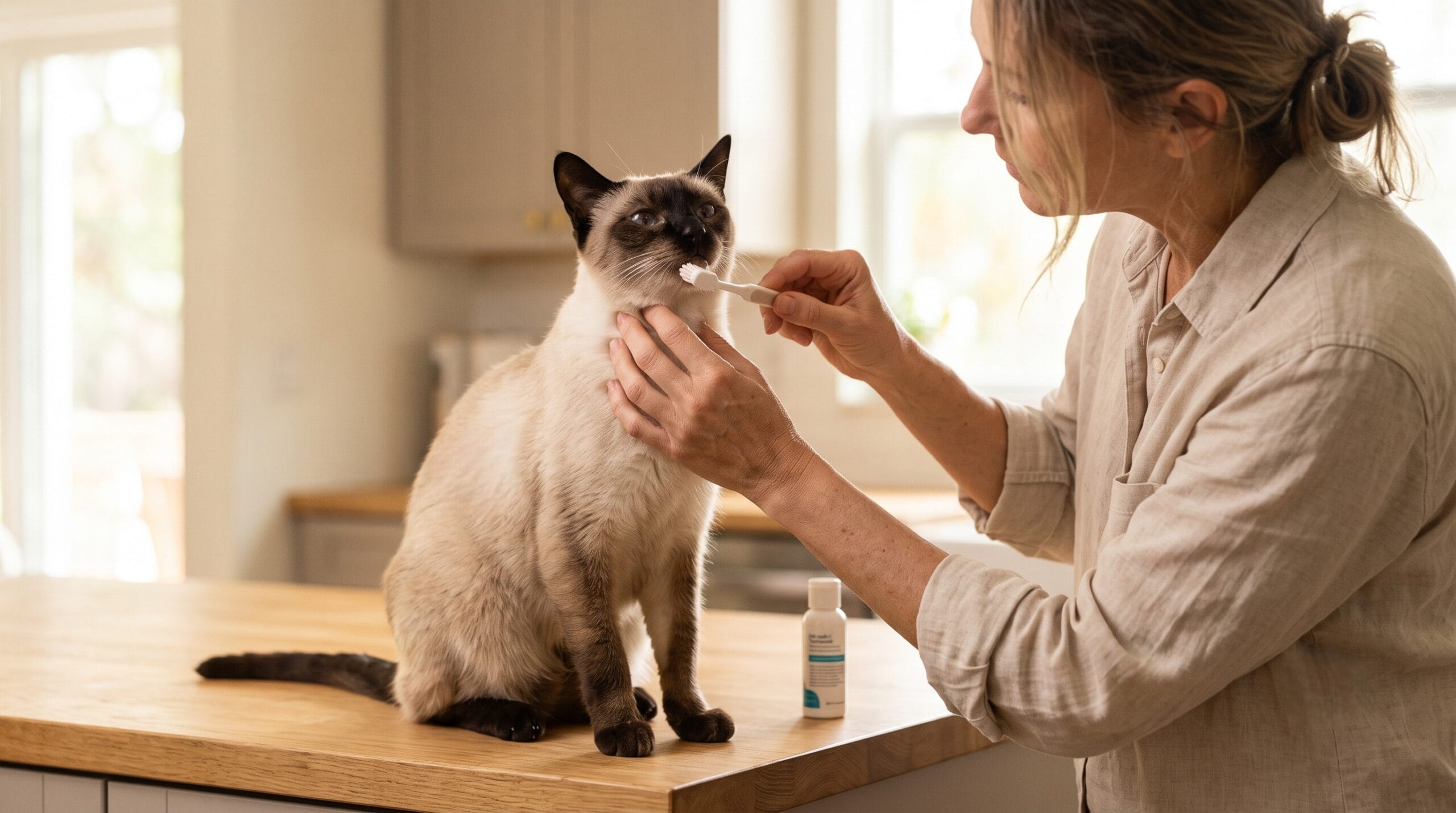
Brushing your cat’s teeth several times a week, offering dental-specific treats, and monitoring breath changes closely are the most effective home habits for supporting a senior cat’s dental health between professional visits.
Consistency matters more than intensity. A cat brushed briefly three or four times a week benefits more than one brushed thoroughly once a month, since plaque forms continuously and needs regular disruption.
- Brush gently along the gumline using a cat-specific toothpaste, never human toothpaste
- Offer dental treats or diets formulated to reduce tartar buildup
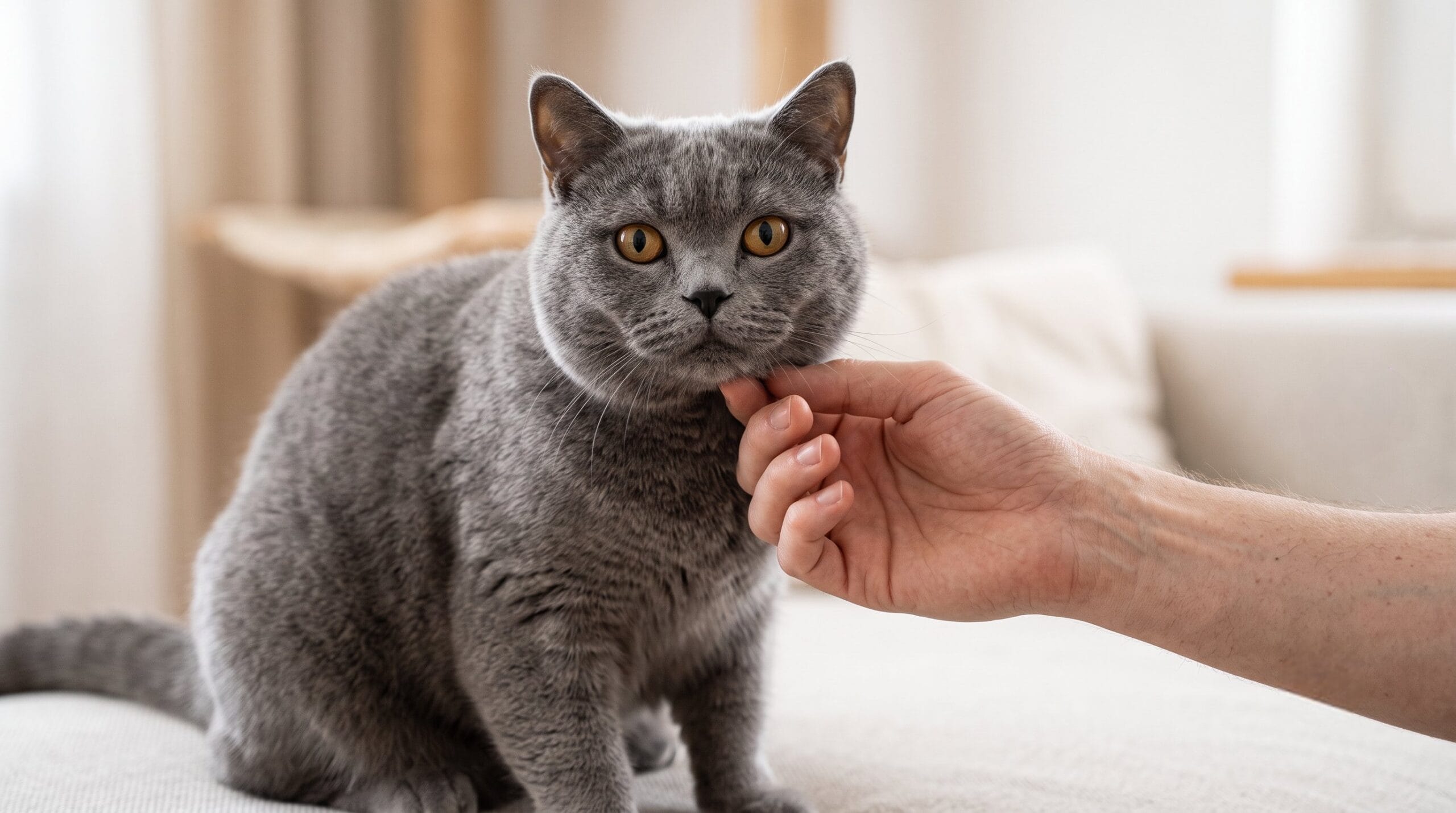
- Check the mouth weekly for new redness, swelling, or odor changes
- Keep a simple log of appetite and water intake to catch subtle shifts early
An at-home dental care routine works best alongside, not instead of, professional evaluation. Home care slows plaque formation, but it cannot remove tartar that has already hardened below the gumline.
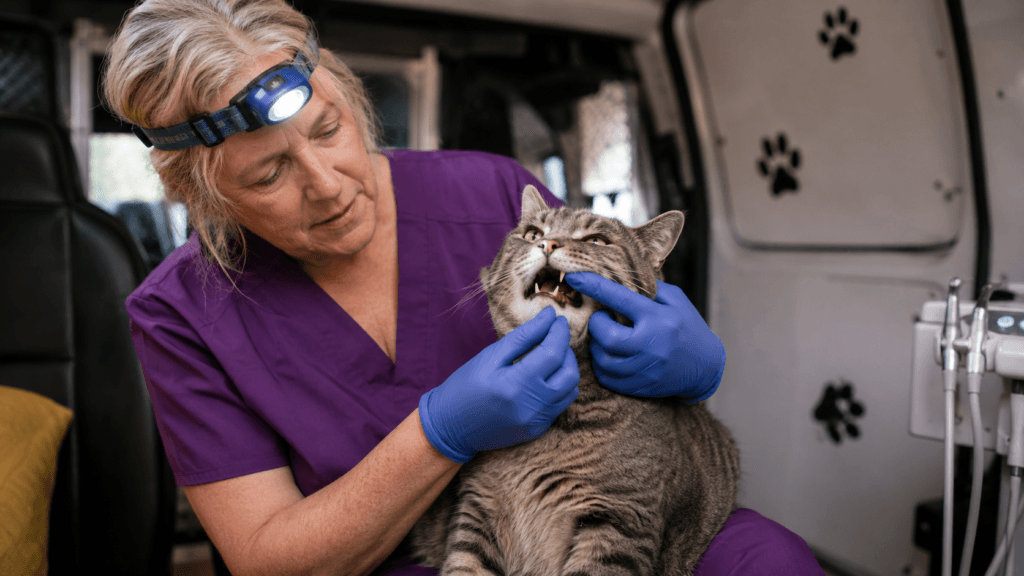
For cats who resist handling near the mouth, a mobile pet dental service that comes to the home in a van already set up for calm, low-stress visits removes much of the friction that keeps owners from following through.
When should you schedule a professional cleaning?
Schedule a professional cleaning as soon as bad breath appears alongside any visible tartar, gum changes, or shifts in appetite, rather than waiting for the odor to worsen. For most senior cats without active disease, a preventive cleaning every six to twelve months keeps buildup from progressing.
The exact frequency depends on the individual cat. A cat with a history of gingivitis needs closer monitoring than one with consistently clean teeth, which is why an individualized evaluation matters more than a fixed calendar rule.
The Magic Paws has evaluated more than two thousand pets across Florida, and sudden breath changes in senior cats are among the most common reasons owners request an appointment. Each visit starts with an assessment of whether sedation-free cleaning is appropriate for that specific cat.
Waiting rarely makes the underlying cause disappear. A cat dental cleaning scheduled promptly, alongside a look at cat dental cleaning pricing, gives you a clear next step instead of another month of wondering.
Your cat cannot describe what changed in its mouth or its body, but the breath is telling you something worth listening to. Book a sedation-free cat dental cleaning in Florida today and give your senior cat one less thing to worry about: schedule your cat’s cleaning.
FAQ about old cat bad breath
Why does my old cat’s breath suddenly smell bad?
The most common cause is tartar buildup below the gumline, which allows bacteria to multiply and produce odor, though a systemic cause such as kidney disease should never be ruled out without an exam.
Is bad breath in senior cats a sign of kidney disease?
It can be. Ammonia-like breath specifically points toward kidney disease, since waste products normally filtered by the kidneys build up in the blood and escape through saliva when function declines.
Can dental disease in cats be reversed?
Cleaning removes plaque and tartar and stops active inflammation, but bone loss that has already occurred around the teeth cannot be reversed, which is why early intervention matters.
How often should senior cats get their teeth cleaned?
Most senior cats benefit from a cleaning every six to twelve months, though the right frequency depends on an individual eligibility assessment rather than a fixed schedule.
Is anesthesia-free cleaning safe for older cats?
For cats who pass an individualized evaluation, sedation-free cleaning avoids the added risk anesthesia poses to aging organs. It is not appropriate for every cat, which is why the assessment comes first.
Does bad breath in cats always mean a vet visit is needed?
Persistent bad breath is never normal, even in a senior cat, so it always deserves a professional look rather than being written off as part of aging.
What does ammonia breath in cats smell like?
Owners often describe it as sharp and chemical, closer to a bathroom smell than to food odor, distinct from the heavier, decay-like smell tied to dental disease.
Can brushing my cat’s teeth at home fix bad breath?
Brushing slows plaque formation and helps with mild odor, but it cannot remove tartar that has already hardened or reverse damage from advanced gum disease.
What happens if bad breath in an old cat is ignored?
The underlying cause typically progresses. Dental disease can advance to tooth loss, and kidney disease can worsen silently, so delaying an evaluation removes the chance to catch either one early.
How much does a sedation-free cat dental cleaning cost in Florida?
Pricing varies by cat size and location within Florida. Checking current rates before booking gives you a clear picture of cost alongside what the cleaning includes.