Cat dental health by breed is not a topic most owners think about until something goes wrong. When a cat stops eating hard food, develops persistent bad breath, or resists having her mouth touched, the damage is often already progressing below the gumline. For owners of purebred cats, that progression may have started earlier than they realize, not because of diet or hygiene habits, but because of genetics.
Most cats are stoic by nature. They continue eating, grooming, and behaving normally even when oral pain has become chronic. This survival instinct, which served wild ancestors well, makes dental disease in domestic cats one of the quietest health threats a feline owner can face. By the time behavioral signs appear, periodontal disease or tooth resorption may already be in an advanced stage.
What many owners don’t know is that the risk does not start at the same baseline for every cat. Breed structure and genetic inheritance influence which cats are most likely to develop certain conditions, how quickly disease progresses, and how responsive the animal is to routine home care. A Persian and a Domestic Shorthair living in the same household, eating the same food, receiving the same brushing routine, can reach dramatically different oral health outcomes by age five.
Understanding your cat’s breed-specific risk is the first step toward a prevention plan that actually matches her biology.
Does your cat’s breed affect her dental health?
Yes, and the effect is documented. Breed influences the type, timing, and frequency of feline dental disease in ways that go beyond individual variation. According to data gathered through the RVC VetCompass study on feline periodontal disease, certain breeds show significantly higher prevalence rates than others, with some lineages facing nearly double the baseline risk of the general cat population. For a full overview of what feline oral care involves, everything you need to know about cat dental cleaning covers the topic from a preventive
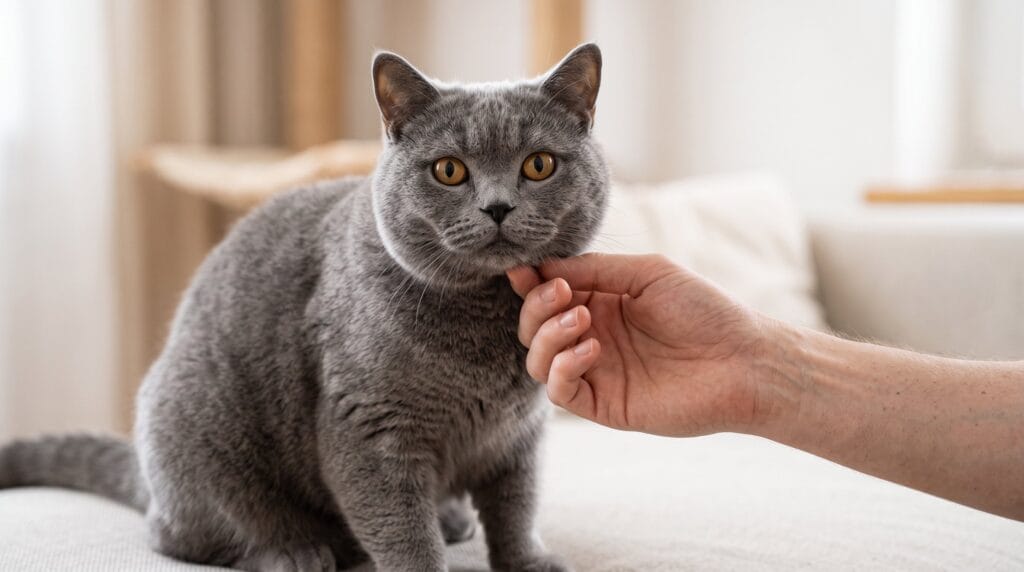
How genetics shape feline oral health risks
Genetics influence cat dental health through two primary mechanisms: anatomical structure and immune response. The first determines how teeth are positioned in the jaw, and whether crowding creates spaces where plaque accumulates faster. The second determines how aggressively the body responds to bacterial infection at the gumline.
Research from the University of Helsinki has linked the MMP9 gene to a documented predisposition to tooth resorption in certain feline lineages. This gene regulates enzymes involved in tissue degradation, and when its expression is dysregulated, it contributes to the progressive breakdown of tooth structure from the inside out. The mechanism is not unique to cats, but its prevalence in specific breeds makes it a clinically meaningful factor in breed-specific oral health planning.
Breeds as a concept in feline genetics also carry narrower gene pools than mixed-breed cats. This means hereditary traits, including those linked to immune sensitivity and connective tissue behavior, are more consistently expressed across individuals of the same lineage. A Siamese with juvenile-onset periodontitis is not an anomaly. Within that breed, it is a pattern.
Why purebred cats carry higher baseline risk
Purebred cats as a group present higher incidence of periodontal disease than mixed-breed populations, according to clinical data compiled by Cornell University College of Veterinary Medicine. This does not mean every purebred cat will develop severe oral disease, but it does mean the risk threshold is different from the start. Routine prevention timelines designed for the average cat may not be sufficient for animals in higher-risk categories.
For owners who have been following a standard annual cleaning schedule, this distinction matters. If your cat belongs to a lineage with documented susceptibility, once-a-year professional care may allow enough time for tartar and early-stage gingivitis to progress before the next appointment. Pairing regular brushing at home with professional cat teeth cleaning at more frequent intervals can interrupt that cycle before structural damage sets in.
Which cat breeds are most prone to dental disease?
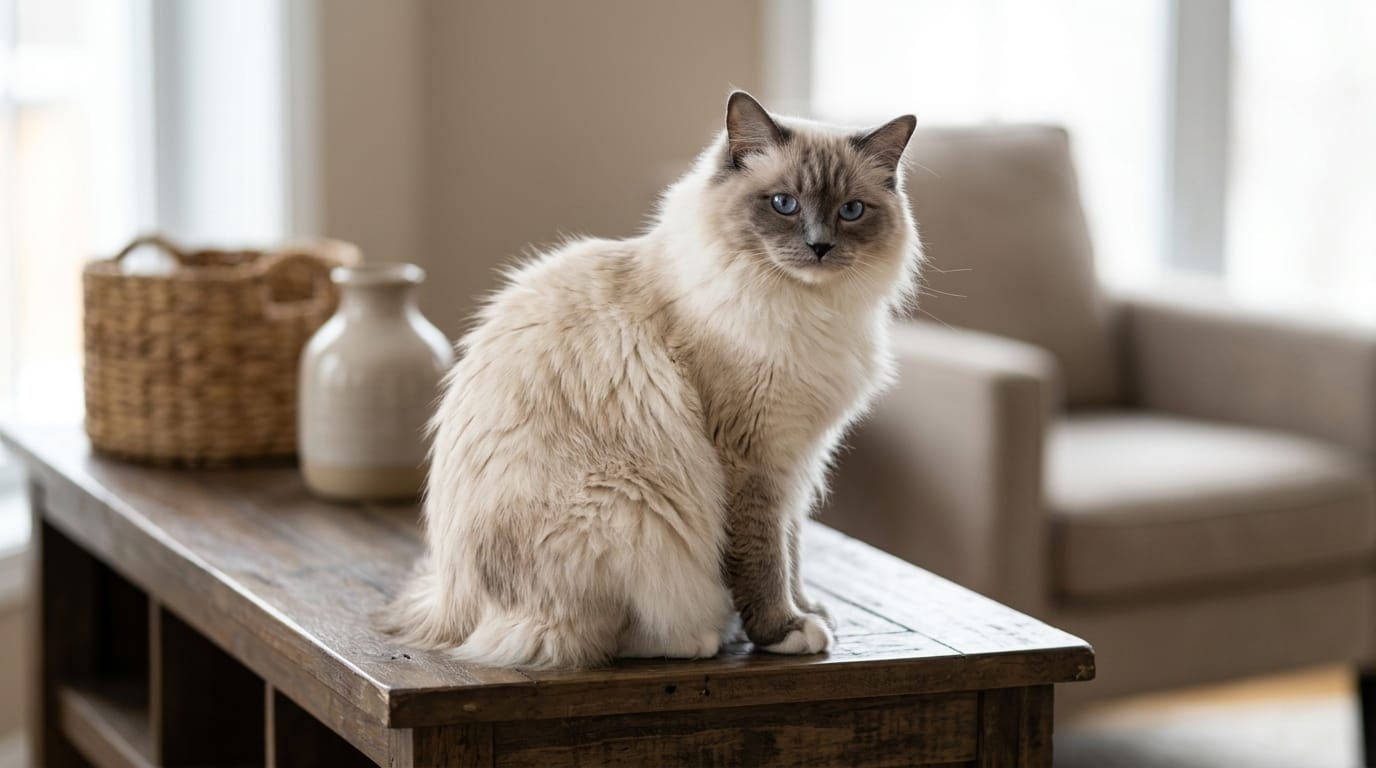
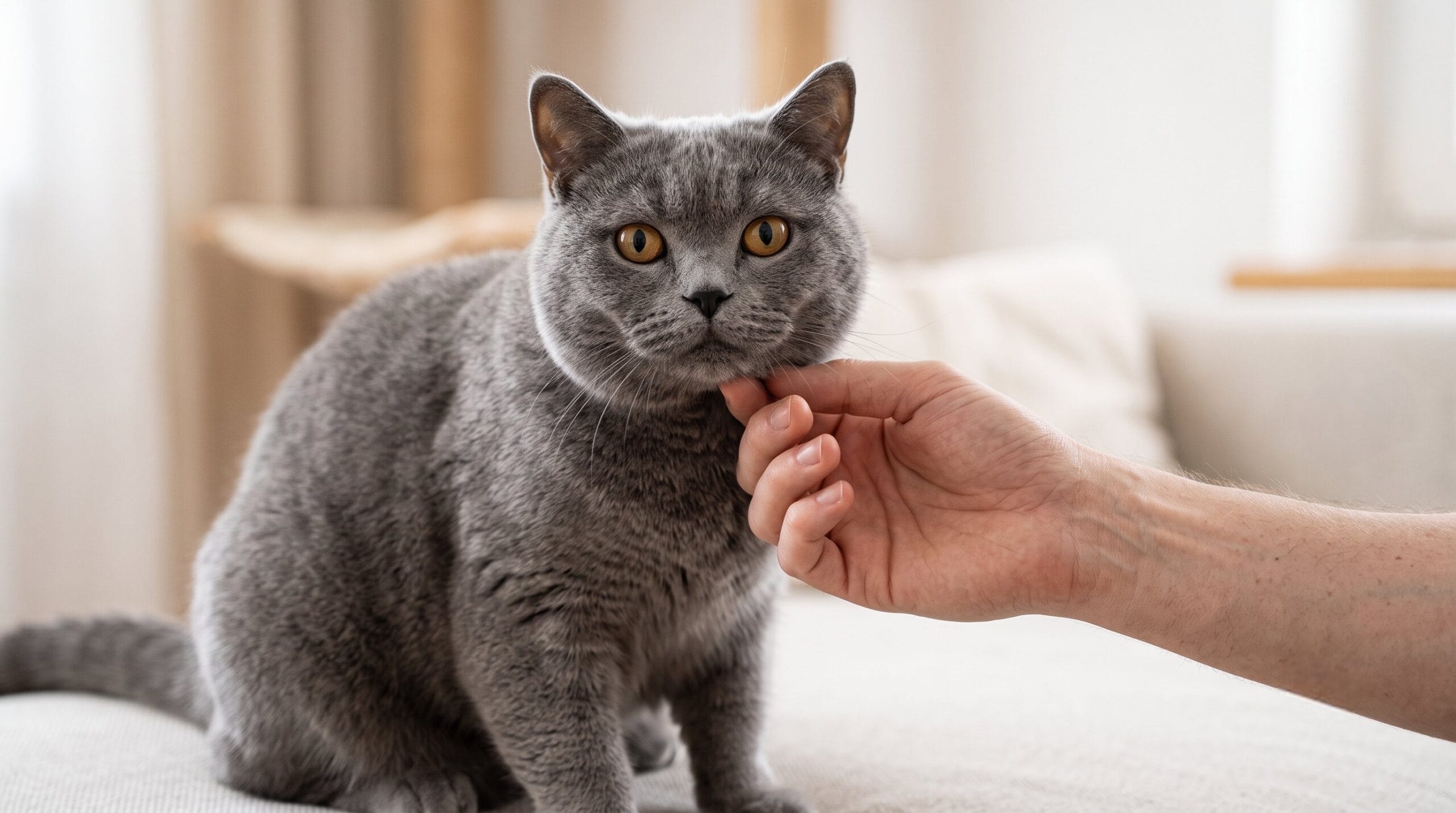
Two distinct groups emerge from current veterinary research. Brachycephalic breeds, specifically Persian, Exotic Shorthair, and British Shorthair cats, are prone to dental crowding caused by their compressed facial structure. A second group, including Siamese, Maine Coon, and Abyssinian cats, carries genetic predisposition to periodontal disease and tooth resorption. Both groups benefit from earlier and more frequent preventive care than the general feline population. Knowing which category your cat falls into helps you recognize the signs your pet might have dental problems before they become visible.
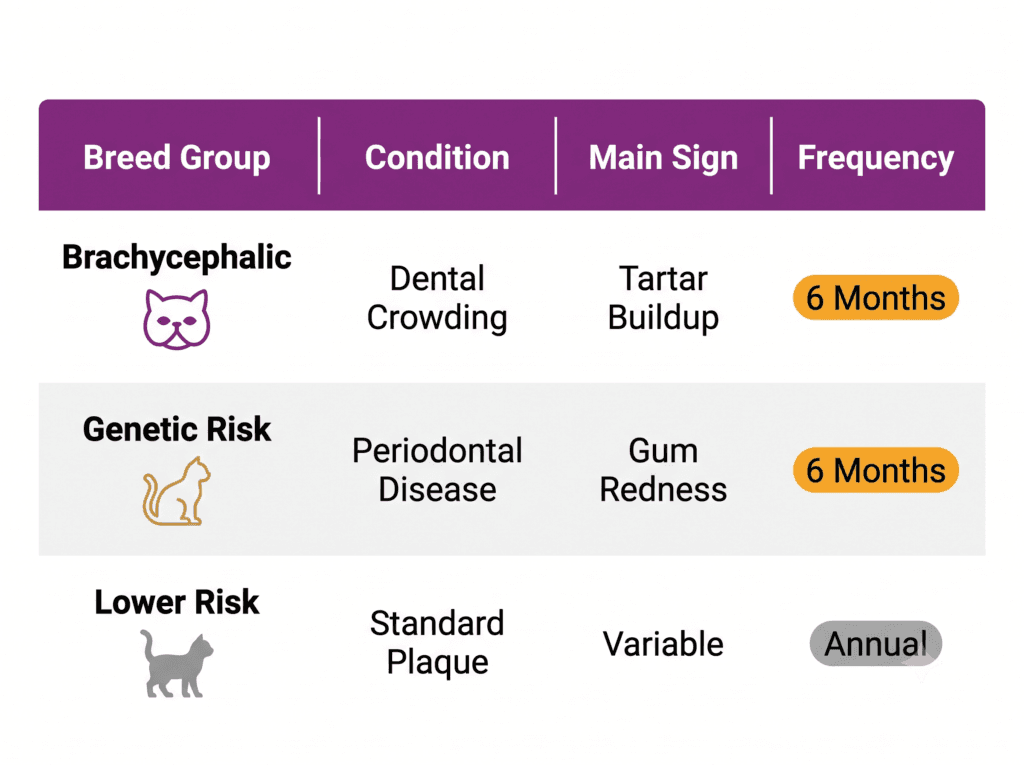
The table below summarizes the primary risk profile for each breed group:
| Breed group | Representative breeds | Primary condition | Most common sign | Recommended frequency |
| Brachycephalic | Persian, Exotic Shorthair, British Shorthair | Dental crowding, accelerated tartar buildup | Visible tartar, bad breath | Every 6 months |
| Genetic predisposition | Siamese, Maine Coon, Abyssinian | Periodontal disease, tooth resorption | Gum redness, food avoidance | Every 6 months |
| Lower baseline risk | Domestic Shorthair, mixed breed | Standard plaque accumulation | Variable | Annually |
Brachycephalic breeds: when facial structure creates dental crowding
In brachycephalic cats, the skull is compressed horizontally, but the number of teeth remains the same as in breeds with longer muzzles. The result is a jaw that cannot accommodate teeth in standard alignment, forcing them into irregular angles and creating contact points where plaque accumulates faster than brushing can address.
Persian and Exotic Shorthair cats are the most affected in this group. Their facial compression is most extreme, and the consequences for oral hygiene are direct: toothbrush bristles cannot reach between rotated or overlapping teeth consistently, meaning home care alone provides limited protection. British Shorthair cats sit at a moderate level of facial compression, with similar but less severe crowding patterns. For all three breeds, professional cleaning removes the buildup that home care misses, before it mineralizes into tartar that only instrumentation can address.
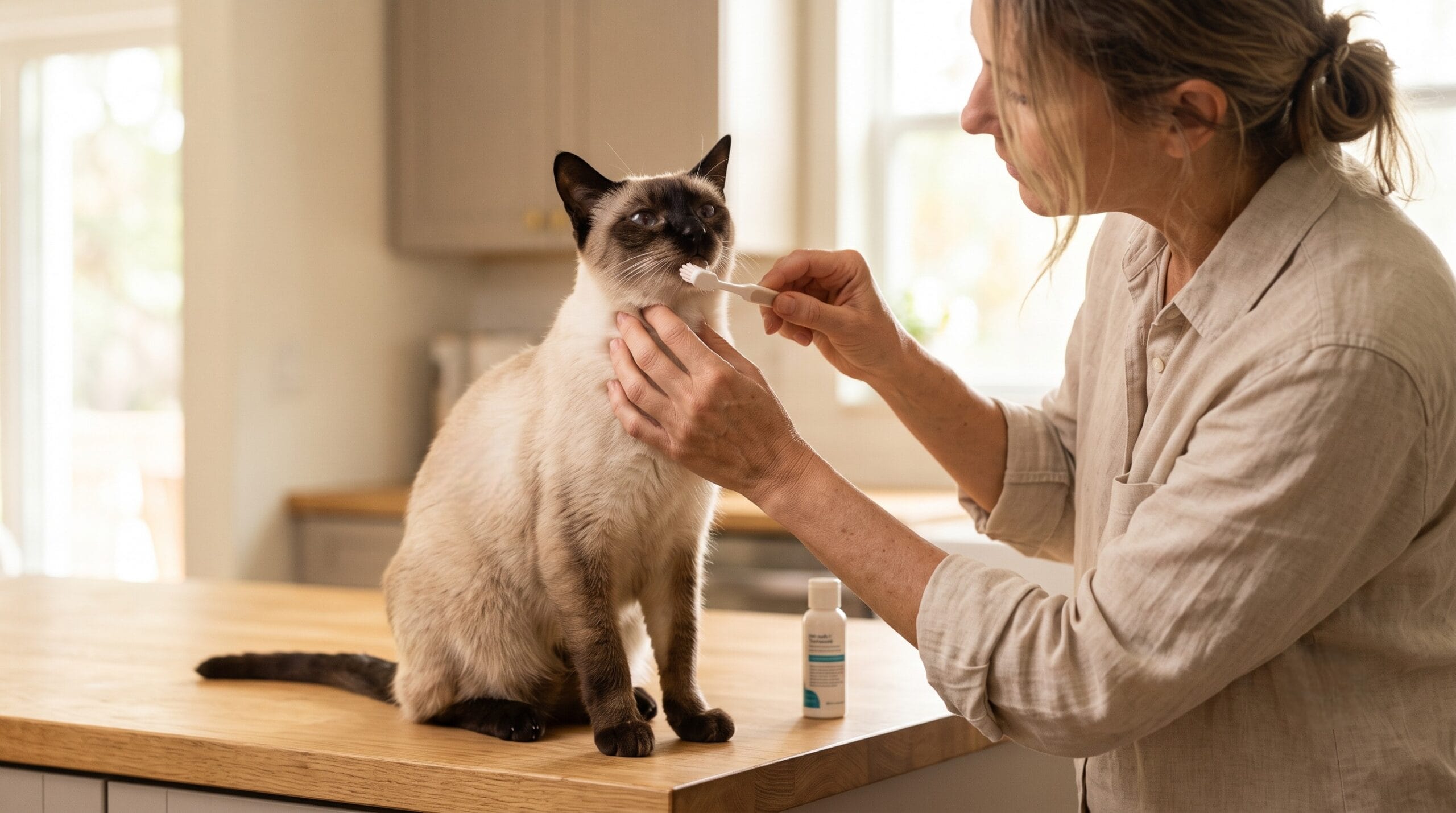
The practical implication for owners is not that brushing is pointless. It remains valuable for gum stimulation and early detection. But for brachycephalic cats, home care functions as a supplement to professional preventive care, not a substitute for it.
Breeds with genetic predisposition to periodontitis and resorption
Siamese cats have one of the highest documented rates of juvenile-onset periodontitis among domestic feline breeds. The RVC VetCompass study on feline periodontal disease found Siamese cats at 18.7 percent prevalence, and Maine Coon cats at 16.7 percent, both significantly above the general cat population baseline. Abyssinian cats share a similar predisposition profile, with elevated susceptibility to both periodontal tissue breakdown and resorptive lesions.
These are not conditions that develop slowly over many years in high-risk breeds. Periodontitis can appear in Siamese cats before age four, progressing from mild gingivitis to bone loss around tooth roots within months if unchecked. For Maine Coons, the same pattern appears with tooth resorption, often at younger ages than owners anticipate. Tracking the importance of regular dental check-ups for your pet becomes especially relevant when the animal’s lineage places it in a higher-risk category from the start.
What is tooth resorption and which cats are at higher risk?
Tooth resorption is a progressive condition in which the internal structure of the tooth breaks down from the inside out, eventually destroying the root and crown. It affects an estimated 50 percent of cats over five years old and represents one of the most painful oral conditions in feline medicine. Despite its prevalence, it produces almost no visible signs until late-stage progression. Research published through breed-specific predisposition to feline tooth resorption confirms that genetic lineage is a significant factor in which animals develop the condition earliest and most severely. Understanding the hidden danger in your cat’s mouth and the broader reasons to schedule your pet’s dental cleaning can clarify how preventive frequency connects directly to this risk.
Feline oral resorptive lesions (FORLs) begin at the cementoenamel junction, the point where the crown meets the root. From there, specialized cells called odontoclasts begin eroding the mineralized structure. The process is irreversible once it starts, and without professional examination, it can progress through multiple teeth before any behavioral sign appears.
Why tooth resorption is so hard to detect at home
Cats suppress behavioral signs of dental pain with remarkable consistency. An animal experiencing resorptive lesion pain may continue eating, playing, and grooming normally until the condition reaches a point where function becomes genuinely impaired. Owners often describe their cat as “suddenly” losing interest in food or becoming sensitive around the face, when in fact the process had been underway for months.
Late-stage signs that owners can observe include dropping food while chewing, excessive drooling, resistance to touch around the jaw, and preference for softer food over dry kibble. But these signs rarely appear in early or mid-stage resorption. The silent threat in cat dental health is precisely this gap between when the condition begins and when it becomes behaviorally visible. Without a professional exam that includes probing and, ideally, dental radiography, resorptive lesions remain undetected.
How often should cats from high-risk breeds get a dental cleaning?
Cats from high-risk breeds benefit from professional dental cleanings every six months rather than annually. This frequency applies specifically to brachycephalic cats with confirmed dental crowding and to breeds with documented genetic predisposition to periodontal disease or resorption. For cats without these risk factors, annual cleaning remains the standard recommendation. Individual assessment before each session determines whether the animal is eligible and identifies any changes since the last visit. Scheduling a dental exam for pets at the right interval is one of the most practical steps toward keeping a high-risk cat’s oral health stable.
The difference between annual and biannual care is not arbitrary. In a Siamese cat prone to juvenile-onset periodontitis, twelve months is enough time for early gingivitis to progress to stage two or three periodontal disease, with measurable bone loss around the affected teeth. At six months, the same window allows intervention before that threshold is crossed. Prevention works when it is timed to the pace of disease, not to a standard calendar that treats all cats as equivalent.
Signs that your cat may need more frequent dental care
Some indicators appear between professional cleanings and signal that the current schedule may not be sufficient for your cat’s risk profile. These are not diagnostic, but they provide grounds for scheduling an earlier evaluation:
- Persistent bad breath that does not improve after a recent cleaning
- Reddened or swollen gum tissue, particularly around the upper molars or canines
- Visible resistance when the cat is touched around the jaw or cheeks
- Preference for soft food over hard kibble, or dropping food while chewing
- Excessive drooling without an obvious cause
If any of these signs are present, contacting a specialist in feline oral health is the appropriate next step. A dentist for cats who focuses specifically on feline dental health can assess whether the signs reflect a cleaning schedule that needs adjustment or a condition requiring veterinary intervention.
Don’t wait for symptoms to confirm what her breed already suggests. Book now at The Magic Paws.
Can anesthesia-free cleaning help cats with genetic dental risks?
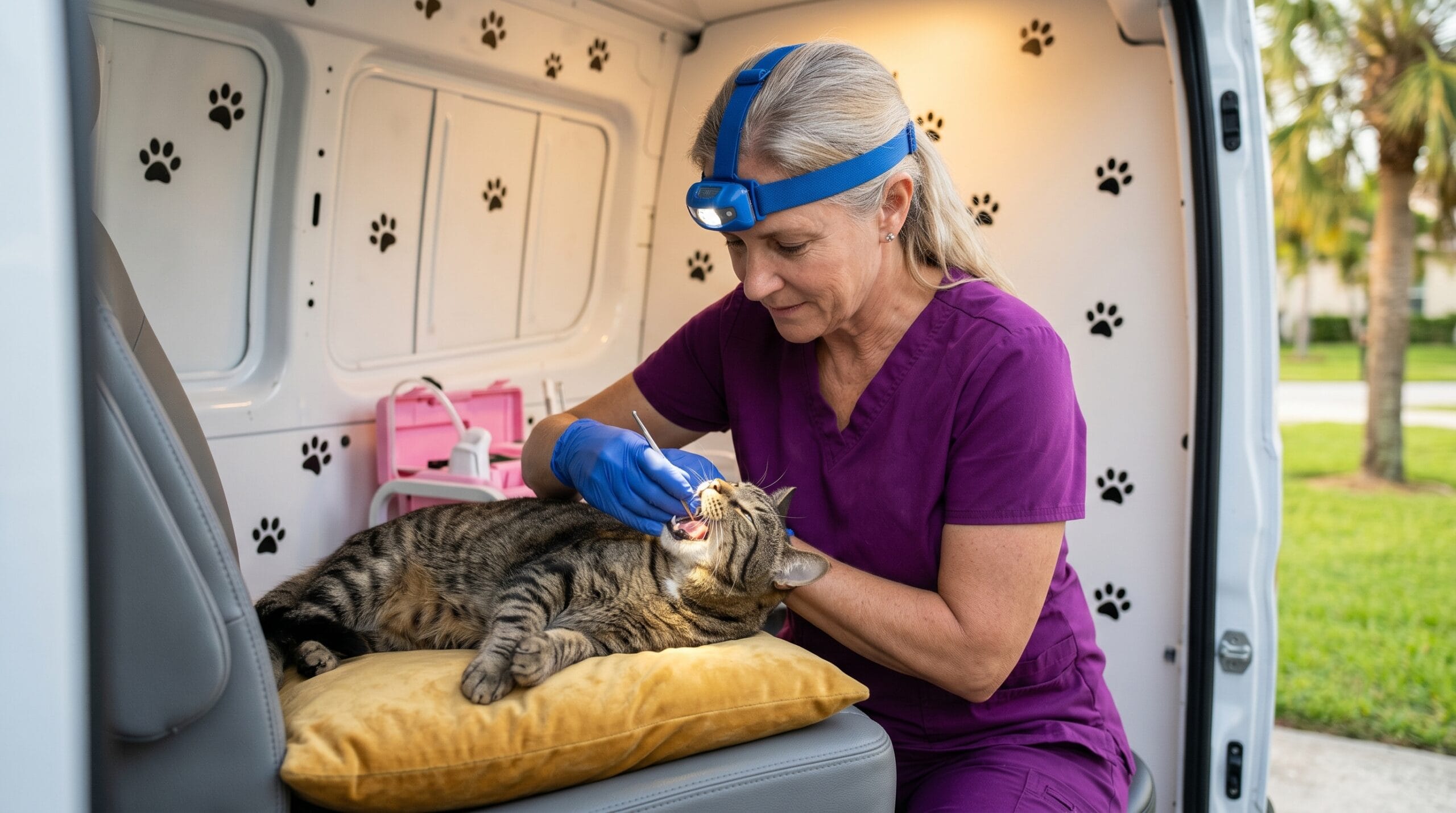
Yes, for continuous supragingival prevention, anesthesia-free cleaning removes plaque and tartar buildup before it progresses to subgingival disease. For cats from high-risk breeds, this form of preventive care can interrupt the accumulation cycle that drives gingivitis and early-stage periodontal disease.
It is a complement to veterinary care, positioned before disease reaches the level where sedation and surgical intervention become necessary. Cat teeth cleaning without sedation provides more context on how this type of preventive approach works and which animals are appropriate candidates. Owners who want to move forward can schedule a cat dental cleaning directly through The Magic Paws.
Anesthesia is an important tool in veterinary dentistry when a cat requires extraction, subgingival scaling, or treatment of advanced periodontal disease. The claim being made here is not that sedation is unnecessary in general, but that professional cleaning does not require anesthesia when the goal is prevention.
For eligible cats, removing supragingival buildup regularly keeps the oral environment stable and reduces the rate at which disease would otherwise advance.
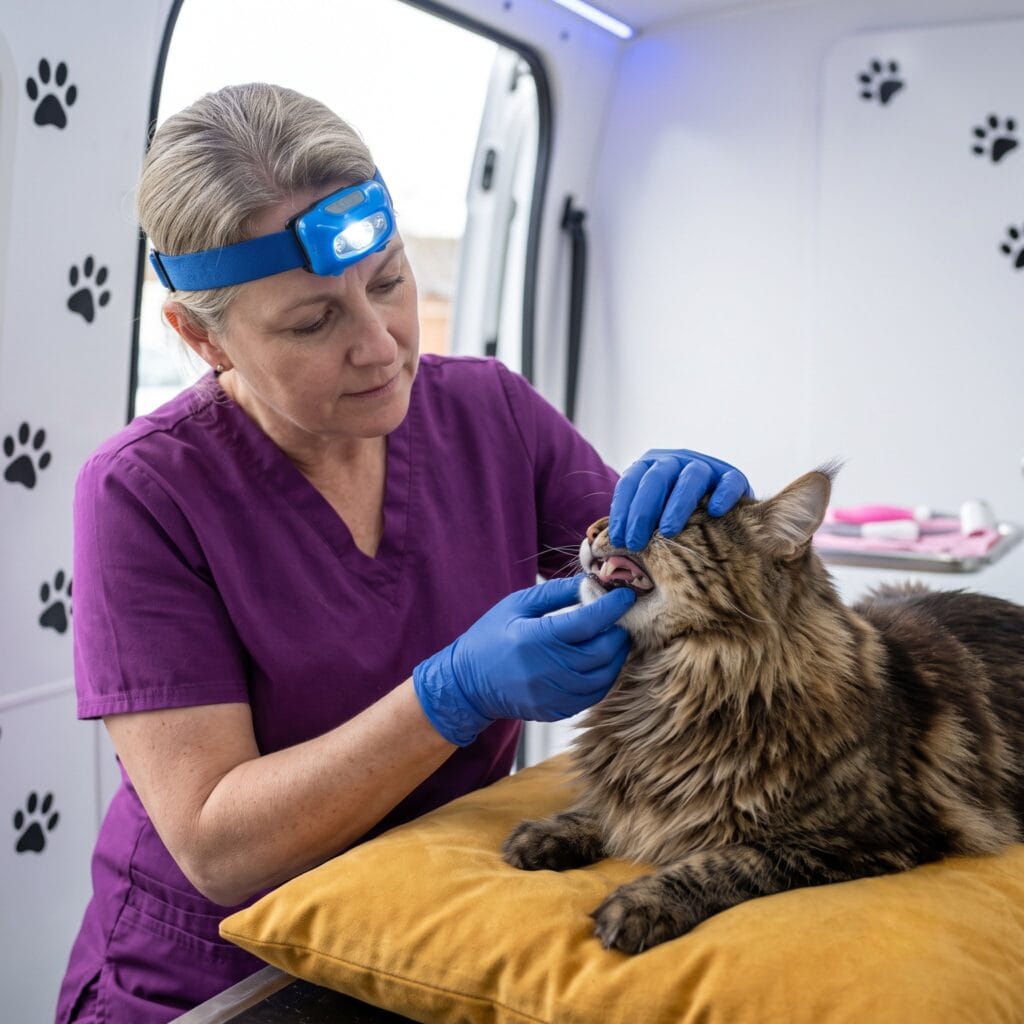
How The Magic Paws approaches cats with higher dental risk
Each appointment at The Magic Paws begins with an individual eligibility evaluation. For cats from breeds with documented dental sensitivity, this step determines whether the animal is a suitable candidate for the session and whether the current state of the mouth suggests any areas requiring closer attention before cleaning proceeds.
The calming protocol used during every appointment is Senses Therapy, which integrates aromatherapy, music therapy, chromotherapy, and massage.
For breeds that tend toward heightened sensitivity or anxiety, this combination of sensory support reduces procedural stress and allows the technician to work more thoroughly. The approach is particularly relevant for Siamese cats, which are known for their vocalness and sensory reactivity, and for Persian cats, whose compressed muzzle anatomy requires careful handling during cleaning.
What every cat owner with a purebred should know about prevention
Genetic risk is real, but it is not fixed. The conditions that affect brachycephalic and predisposed breeds most severely share one feature: they are significantly more manageable when caught early. Periodontal disease at stage one is reversible with proper treatment and consistent prevention. Tooth resorption detected before the crown is compromised still allows for planning that preserves adjacent teeth.
Advanced periodontitis and multi-tooth resorption at late stage require extraction and recovery that could have been avoided.
The recommendation is not to treat every purebred cat as if disease is inevitable. It is to match the prevention schedule to the actual risk the cat carries. A Persian or a Siamese owner who books professional cleanings every six months, stays consistent with home brushing, and knows the early behavioral signs of dental discomfort is already ahead of the curve.
Cats don’t tell you when something hurts. That silence is not reassurance. For owners whose animals already carry a documented genetic predisposition to feline dental disease, consistent preventive care is the clearest path toward keeping that genetic risk from becoming a dental emergency.
Book your cat’s dental cleaning today and get ahead of the risks her breed already carries. Schedule now at The Magic Paws
FAQ about cat dental health by breed
What cat breeds are most prone to dental disease?
Two main groups carry the highest risk. Brachycephalic breeds, including Persian, Exotic Shorthair, and British Shorthair cats, are prone to dental crowding due to their compressed facial structure, which accelerates tartar buildup. Siamese, Maine Coon, and Abyssinian cats carry documented genetic predisposition to periodontal disease and tooth resorption. According to the RVC VetCompass study on feline periodontal disease, Siamese cats show an 18.7 percent prevalence and Maine Coon cats 16.7 percent, both significantly above the general cat population.
Does cat dental health by breed vary significantly?
Yes, in a documented way. Cat dental health by breed varies based on facial anatomy, genetic predisposition to periodontal disease, and immune response patterns. Purebred cats as a group present higher incidence of dental disease than mixed-breed cats, according to data from Cornell University College of Veterinary Medicine. The variation is not minor: certain breeds face disease onset years earlier than others, and the conditions involved differ in mechanism and progression rate.
Are Persian cats more likely to have dental problems?
Yes. Persian cats have a compressed facial structure that positions their teeth in a smaller jaw than their tooth count requires. The resulting crowding creates irregular contact points where plaque accumulates faster, and where toothbrush bristles cannot reach consistently. For this reason, home brushing provides less protection in Persian cats than in breeds with standard muzzle length, and professional cleaning at more frequent intervals becomes a practical necessity rather than an optional upgrade.
What is tooth resorption in cats and which breeds are affected?
Tooth resorption is a condition in which the internal structure of the tooth breaks down progressively from the inside out, destroying root and crown over time. It affects an estimated 50 percent of cats over five years old. According to a peer-reviewed study on breed-specific predisposition to feline tooth resorption published through PubMed, genetic lineage plays a documented role in which animals develop the condition earliest. Siamese, Maine Coon, and Abyssinian cats are among the lineages with higher documented susceptibility.
How often should a cat get a professional dental cleaning?
Frequency depends on risk profile. Cats from lower-risk backgrounds and without structural concerns benefit from annual professional cleaning. Cats from brachycephalic breeds or those with genetic predisposition to periodontal disease and resorption benefit from cleaning every six months. Individual evaluation is necessary before any specific schedule can be confirmed, as the animal’s current oral condition determines whether the recommended interval applies or requires adjustment.
Can you tell if a cat has dental disease just by looking?
Rarely. Cats mask pain by instinct and continue behaving normally through significant oral disease. Most cases of feline periodontal disease and tooth resorption are identified only through professional examination that includes probing and, when available, dental radiography. Signs an owner can observe at home include persistent bad breath, visible gum redness, and resistance to touch around the face, but these appear in later stages, not at onset.
Is anesthesia-free dental cleaning safe for cats with dental issues?
For continuous prevention in eligible animals, yes. Anesthesia-free cleaning removes supragingival plaque and tartar before disease progresses, and it is appropriate for cats whose dental condition falls within preventive parameters. It is not indicated for advanced periodontal disease requiring extraction, subgingival intervention, or surgical treatment. At The Magic Paws, eligibility is evaluated individually before each session, ensuring the approach is appropriate for the specific animal.
Does cat dental health by breed affect how long a cat lives?
Indirectly, yes. Untreated periodontal disease and systemic bacterial exposure from chronic oral infection increase the risk of cardiac and renal conditions. Data from the RVC VetCompass study indicates that cats with periodontal disease have 1.79 times higher odds of associated comorbidities. Breed-based dental risk that goes unaddressed over years can therefore contribute to systemic health consequences beyond the mouth, making early prevention a factor in overall longevity.
What is the difference between gingivitis and periodontitis in cats?
Gingivitis is inflammation of the gum tissue caused by bacterial plaque accumulation at the gumline. It is reversible with appropriate treatment and consistent oral hygiene. Periodontitis is a progression of untreated gingivitis in which inflammation extends to the ligaments and bone supporting the teeth, causing irreversible structural damage. According to the Cornell Feline Health Center, the distinction matters because periodontitis cannot be undone, only managed.
How do I book an anesthesia-free dental cleaning for my cat in Florida?
The Magic Paws provides anesthesia-free dental cleaning for cats across Florida. Scheduling is available directly through themagicpaws.com/#pricing, where pricing and coverage details are listed by region. The team evaluates each animal’s eligibility before the appointment to confirm the approach is appropriate for the cat’s current oral health status.