If you’re worried about what to feed your dog after a dental cleaning, you’re likely picturing days of special meals for a groggy, nauseous pup. While soft foods are indeed key for sensitive gums, the difficult recovery you’re bracing for is often a side effect of general anesthesia—not the cleaning itself.
Index:
- The Recovery Menu: Safe Food Options for Sensitive Gums
- Traditional vs. Sedation-Free: How Recovery Differs
- Essential Safety Guidelines for Your Preventative Visit
- Knowing the Difference: Preventative Maintenance vs. Veterinary Surgery
- Conclusion: Consistent Care for a Lifetime of Smiles
Text:
That pit in your stomach when you think about your dog’s dental cleaning is all too real. You’re researching what to feed your dog after a dental cleaning because you’re bracing for the hard part: a groggy, nauseous pup who needs days to recover. We understand that fear completely—it’s the main reason loving owners put off vital preventative care.
This guide will cover the best soft foods for sensitive gums. But more importantly, it will show you that the difficult, nauseous recovery you’re expecting is almost entirely a side effect of general anesthesia—not the cleaning itself.
A truly gentle, sedation-free experience means no post-procedure fog, and your dog can be alert and asking for their normal dinner that very same night.
The Recovery Menu: Safe Food Options for Sensitive Gums
It’s completely normal to feel a little anxious about mealtime after your dog’s cleaning. We absolutely get it. As pet parents, the last thing we want is to cause our best friend any discomfort when their mouth is already feeling a bit tender.
The golden rule for the first 24–48 hours is to keep it soft and simple to protect those sensitive gums.
Best Soft Foods: A high-quality canned (wet) food is an easy choice. If your pup is a kibble fanatic, you can simply soak their regular dry food in warm water for 10–15 minutes until it’s soft and easily digestible. And of course, the classic bland diet of plain, boiled, unseasoned chicken with a little white rice is always a safe bet for a tender mouth.
A Quick Pre-Procedure Note: To ensure your pet’s comfort during the preventative cleaning, please make sure they do not eat within 1 hour before their appointment. This helps prevent nausea and potential vomiting during the procedure, making their experience truly Pawtastic.
A Note on Sensitivity: If your dog’s gums were already inflamed prior to the cleaning, they may experience a slight sensitivity to cold or hard foods for a day or two. This is normal and a sign the healing process has begun.
Foods to Strictly Avoid: This is the most important part. For the next two to three days, hold off on all hard, crunchy items. That means no hard kibble, no biscuits, no dental chews, and definitely no hard bones.
You wouldn’t want to chew on a handful of almonds right after your own deep cleaning, right? Those hard edges can easily irritate the gums. This soft-food plan is the standard, safest approach for what to feed your dog after a dental cleaning.
But here’s a critical piece of the puzzle… this extra-cautious diet is often primarily designed to manage a pet who is also recovering from the side effects of general anesthesia.
Traditional vs. Sedation-Free: How Recovery Differs
This is truly the most important part, and it’s where that deep anxiety you’re feeling can finally start to ease. We know how much you care, and as pet parents, we often brace ourselves for a really tough recovery after any procedure.
With a traditional cleaning, the recovery you’re worried about is very real. Your dog is often groggy, confused, and nauseous for hours, and that’s a direct side effect of the general anesthesia. That’s why the post-procedure food plan is so strict—it’s not just about the gums, but about managing a stomach that’s been upset by heavy medication.
Now, here is the Pawtastic difference: with our sedation-free approach, there is zero anesthesia, so there is zero recovery from anesthesia.
Your best friend is fully alert, bright-eyed, and never leaves your sight. There is no post-procedure fog, no stumbling, and no nausea. In fact, our “magic” Senses Therapy—which includes calming music therapy and soothing lavender aromatherapy, massage and chromotherapy —helps prevent stress-induced stomach upset before it can even start.
This completely changes the guide on what to feed your dog after a preventative dental cleaning. You aren’t nursing a groggy patient; you’re just giving a slightly ‘gum-tender’ pup their dinner.
Anesthesia side effects (nausea) vs. rapid, alert recovery with our method
Let’s be honest: that post-anesthesia “fog” is one of the most heartbreaking things a pet parent has to watch. We know how much you care, and seeing your best friend disoriented, confused, or—worst of all—nauseous and vomiting is a terrible experience.
This is a major reason why that traditional post-operative diet has to be so bland and cautious; you’re managing a stomach that has been completely upset by heavy medication.
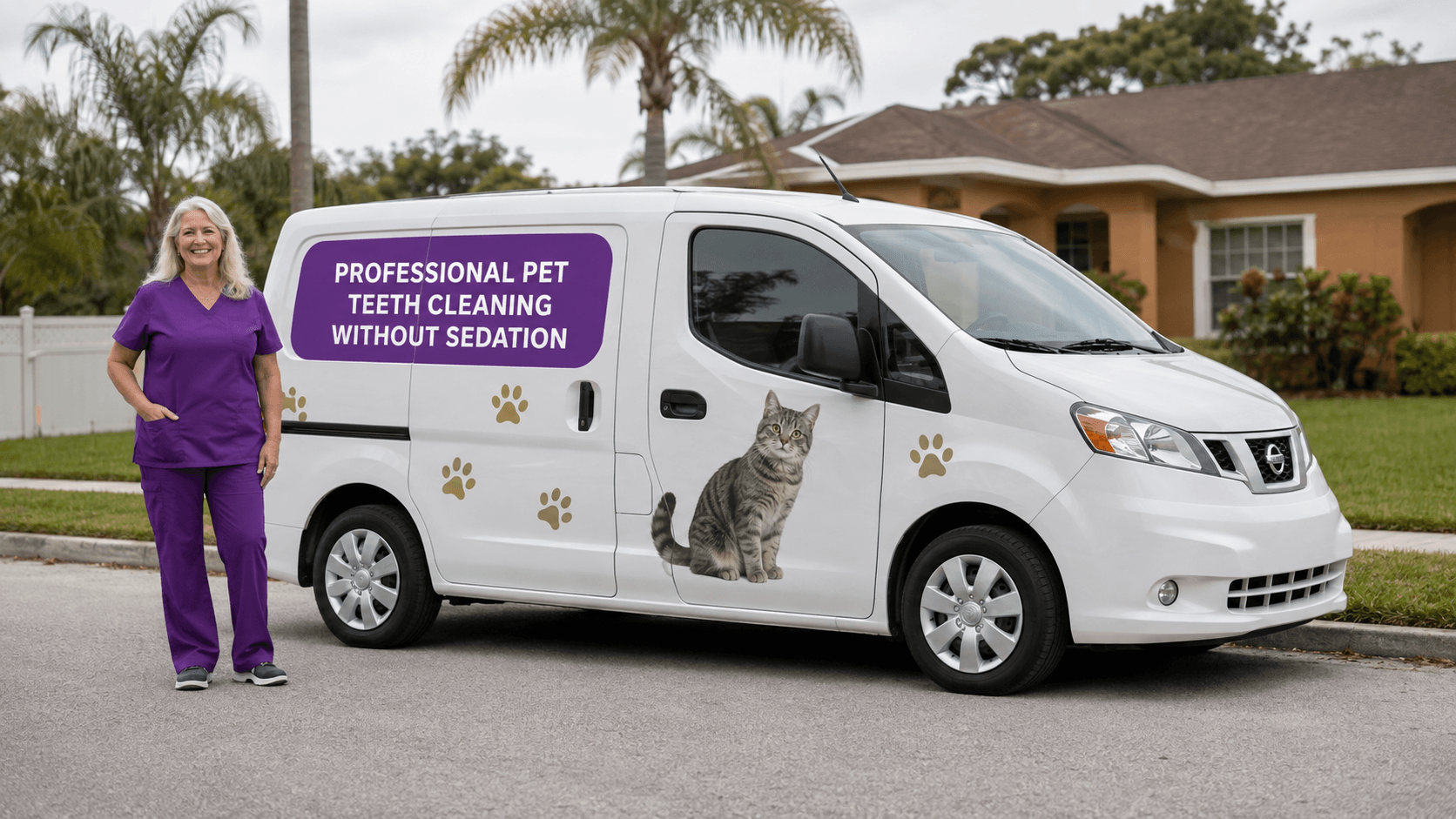
This is the exact anxiety The Magic Paws was created to solve.
Our entire Pawtastic process is 100% sedation-free. Because your pup isn’t recovering from a single drop of general anesthesia, that whole “post-procedure fog” simply doesn’t exist. There is no grogginess, no stumbling, and absolutely no drug-induced nausea. Instead, our Senses Therapy uses gentle techniques (like calming music and aromatherapy) to ensure comfort and eliminate stress-related stomach upset.
The recovery is instant.
Your dog is bright, alert, and 100% themselves the moment the preventative cleaning is done. This provides such incredible peace of mind. It completely changes the conversation about what to feed your dog after a dental cleaning; you’re no longer managing nausea, you’re just making a small, temporary switch to soft foods for their gum comfort. That’s it.
How Senses Therapy (lavender, massage and chromotherapy- purple light therapy) reduces stress-induced stomach upset
We know that heavy medication isn’t the only thing that can upset a pup’s stomach. For many dogs, especially anxious ones like the Golden Retriever, a trip to a strange, sterile-smelling clinic is enough to make them sick with stress. We know how much you care, and seeing them that terrified is truly awful.
This is why our “magic” is so important. We designed our entire Pawtastic experience to stop that stress before it can even begin.
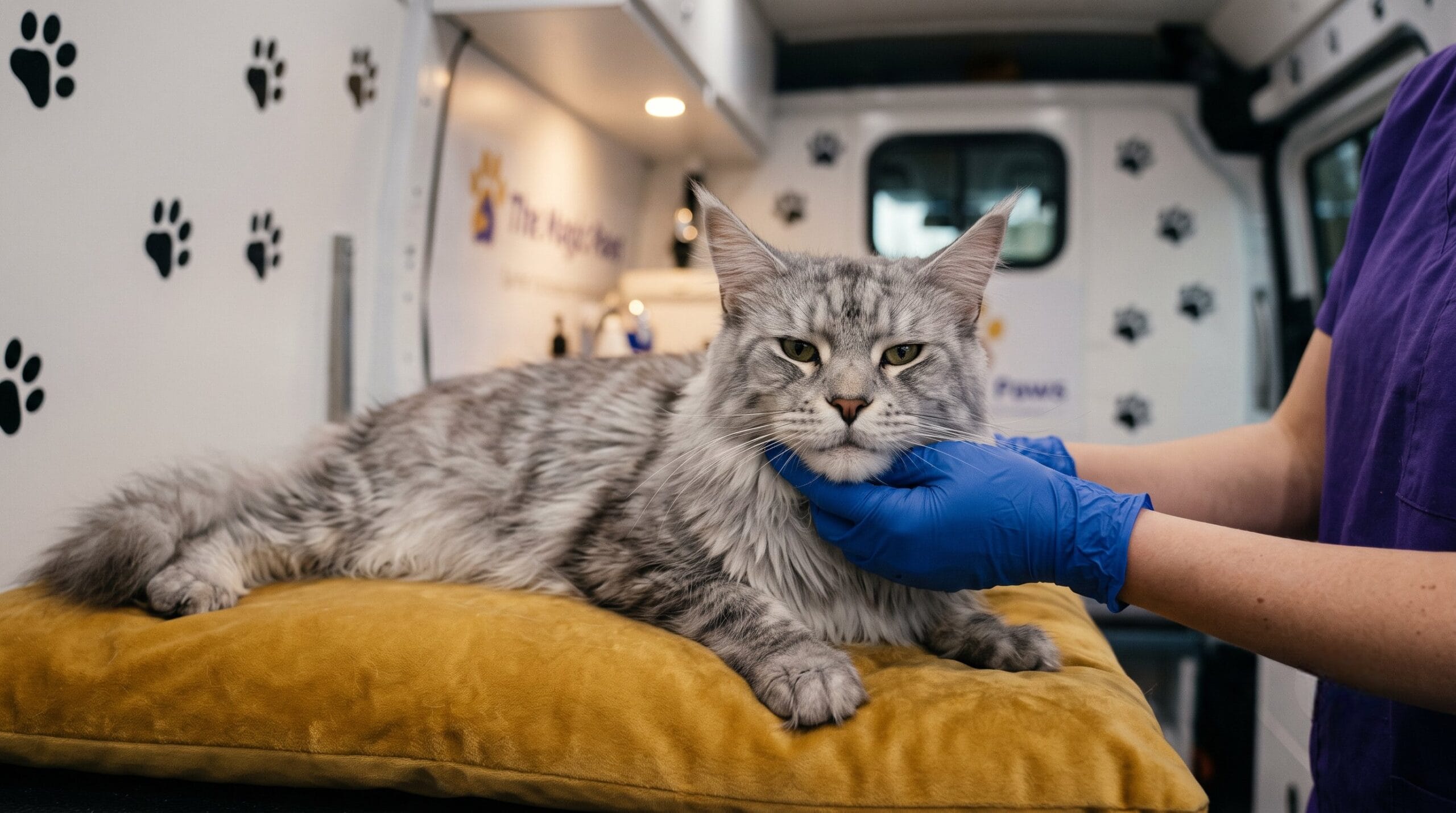
Our Senses Therapy is a core part of that promise. When your best friend enters our mobile van, they aren’t hit with a cold, clinical smell. They’re greeted with gentle, calming music therapy and the soothing scent of lavender aromatherapy, massage and chromotherapy. These aren’t just nice extras; they are scientifically proven techniques to reduce anxiety and create a peaceful environment.
By keeping your pup calm and secure during the preventative procedure, we prevent that fight-or-flight response that leads to a stressed-out, upset stomach. This makes the question of what to feed your dog after a dental cleaning so much simpler. You’re not managing a pup who is sick from fear or medication, giving you complete peace of mind.
Essential Safety Guidelines for Your Preventative Visit
We know that as a caring pet parent, your top priority is safety. It’s ours, too. You just want to know you’re doing everything right for your pup, and we adore that.
The wonderful news is, because our preventative visit is so gentle, the “rules” are incredibly simple and straightforward.
Pre-care: The mandatory “1-Hour Fasting Rule” to prevent vomiting
We know how much you care, and just hearing the word “fasting” can be stressful, right? It immediately brings to mind those long, anxious 12-hour rules before a major vet procedure.
Let’s erase that worry right now.
Because our entire preventative process is 100% sedation-free, we don’t have those scary medical rules. We just ask for one simple, small thing: please withhold food for one hour before our van arrives.
This isn’t for surgical safety—it’s purely for your pup’s comfort. Just like some people, some dogs can get a little queasy from new motion or excitement, even in a calm, spa-like setting. Having an empty stomach just prevents any chance of an upset tummy or vomiting. It’s the same reason you wouldn’t have a giant meal right before a rollercoaster!
This simple step ensures your best friend is perfectly comfortable, so they can relax completely with our Senses Therapy. This easy pre-care makes the post-care—like knowing what to feed your dog after a dental cleaning—even simpler, because you won’t be dealing with a nauseous pup.
Post-care: Managing minor gum sensitivity after preventative tartar removal
One of the biggest worries we have as pet parents is that complicated list of “what to do next” after any procedure. We know you just want to do everything right.
So, here is the best part about a truly sedation-free visit: there is no long, complicated list.
Because your best friend isn’t recovering from general anesthesia, there’s no grogginess, nausea, or medical fog to manage. The only post-care task you have is to be gentle with their gums for a day or two.
A quick note on sensitivity: If your pet’s gums were already inflamed prior to the cleaning, they may experience a slight sensitivity to cold or hard foods. This is perfectly normal and shows the healing process is underway.
It’s the exact same feeling we have after our own dental cleaning; your gums are just a bit tender from having all that plaque and tartar removed. Your pup isn’t sick or in pain; they’re just sensitive.
This is what makes the whole guide on what to feed your dog after a dental cleaning so incredibly simple with our method. It’s not about managing a complex recovery; it’s just about choosing a soft meal for comfort.
That’s it. No confusing instructions. Just lots of cuddles and the peace of mind you deserve.
Knowing the Difference: Preventative Maintenance vs. Veterinary Surgery
This is such an important question, and we know the different terms can be really confusing for pet parents. We know you just want to do what’s best for your best friend. This distinction is the key to your peace of mind.
Here’s the simplest way to think about it, and it’s the core of our entire mission.
You go to your dental hygienist every six months for a routine cleaning. That is preventative maintenance. You do this to prevent cavities and gum disease, so you never have to visit an oral surgeon for a root canal or extraction.
The Magic Paws is that essential, gentle, preventative maintenance for your pup. Our service is designed to remove plaque and tartar before it can cause serious, advanced dental disease.
A “dental cleaning” at a veterinary hospital, under general anesthesia, is often a curative treatment or surgery. This is the necessary step when a pet already has severe disease, such as mobile teeth or advanced periodontal disease, and the vet needs to perform extractions or deep gum surgery. Important: We are not a substitute for your veterinarian. If your pet’s dental disease is already severe, an anesthetic cleaning is the proper, curative path.
This is exactly why the recovery is so different. And it’s why the entire guide on what to feed your dog after a dental cleaning is so much simpler with our preventative method. You’re not recovering from surgery; you’re just resting after a thorough cleaning.
We focus on maintenance; when to see a vet for extractions or curative treatment
We know it can be overwhelming trying to figure out exactly what kind of care your pup needs. As loving pet parents, we just want to make the right call, and it’s hard to know who does what.
Our mission at The Magic Paws is crystal clear: we are experts in preventative maintenance. We are here to keep healthy mouths healthy , and to stop that yucky tartar buildup before it can lead to severe (and expensive) periodontal disease. We are your partner in prevention.
Now, if, during our gentle, Pawtastic cleaning, our trained professionals spot something that goes beyond maintenance—like a cracked tooth, a mobile tooth, or signs of a deep infection—we will stop and show you immediately.
We are not a veterinary surgery. Any curative procedures, like extractions or treatments for advanced disease, absolutely require a veterinarian and general anesthesia.
This distinction gives you true peace of mind. It’s the very reason the question of what to feed your dog after a dental cleaning is so simple with us. You’re just managing a little gum sensitivity from a cleaning, not the long, difficult recovery from a surgical extraction.
Conclusion: Consistent Care for a Lifetime of Smiles
It turns out, knowing what to feed your dog after a dental cleaning is so much simpler than you probably feared.
While soft foods like soaked kibble or chicken and rice are the best choice to protect sensitive gums, the truly difficult recovery you were bracing for—the nausea, the fog, and the upset stomach—is almost always a side effect of general anesthesia, not the cleaning itself.
With a Pawtastic, sedation-free method, that entire fear is taken off the table. Our Senses Therapy (calming music and aromatherapy) helps keep your pup calm from the start , our pre-care is just a simple 1-hour fast (withholding food) , and post-care is only about managing minor tenderness.
By choosing this gentle, preventative maintenance before problems start, you’re not just getting a clean mouth. You’re getting priceless peace of mind and giving your best friend a lifetime of happy, healthy smiles.