We often dismiss bad breath as normal, yet it signals a silent alarm for your pet’s internal health. Truly Understanding Dog Dental Disease: Risks and preventative care reveals that the real danger isn’t just tartar, but how bacteria silently attack the heart and kidneys. Delaying care due to anesthesia fears often creates a much bigger, preventable crisis.
Index:
- The Silent Threat: How Dental Disease Affects Your Dog
- The Magic Paws Solution: Safe Preventative Maintenance
- Essential Safety Guidelines for Our Service
- Scope of Practice: Preventative vs. Curative Care
- Conclusion: Early Detection Saves Lives
Text:
Every time your dog gives you a sloppy kiss, they might be sharing a secret warning. We often overlook that “doggy breath”, yet it signals a bacterial invasion that threatens far more than just their smile. The bacteria involved in periodontal disease have a direct pathway to vital organs, putting the heart and kidneys at risk long before a tooth ever feels loose.
Truly Understanding Dog Dental Disease: Risks and preventative care means recognizing that the biggest danger isn’t the tartar itself, but the fear of anesthesia that keeps owners from acting. Fortunately, there is a safer, gentler middle ground.
By choosing proactive, sedation-free maintenance, you stop this silent progression in its tracks, protecting your best friend’s longevity without ever subjecting them to the risks of unnecessary surgery.
The Silent Threat: How Dental Disease Affects Your Dog
We know you check your best friend for fleas after a walk or worry about them getting too hot in the sun. But there is a hidden danger that is much harder to spot because our dogs are incredibly tough.
They are experts at masking discomfort. Your pup will likely keep eating, playing, and greeting you with a happy tail wag even if they have a toothache or sore gums.
That is exactly what makes this issue so tricky. It creeps up quietly. What begins as a little yellow tartar on the canine teeth quickly becomes a gateway for bacteria to enter the bloodstream. This infection doesn’t just stay in the mouth; it taxes their immune system and drains their energy levels day by day.
You might notice they seem a little slower or assume they are just getting older, when in reality, they are fighting a low-grade infection. This is the core of Understanding Dog Dental Disease: Risks and preventative care. It is about looking past their brave face to stop a systemic problem before it ever gets the chance to slow them down.
From tartar build-up to periodontal disease: The stages of decay
It is alarming how quickly a clean mouth can turn into a medical concern. We know you do your best to keep an eye on things, but the process starts silently the moment your pup finishes their dinner.
It begins with plaque, a sticky film that forms on the teeth. If not brushed away, it hardens into rock-hard tartar in a matter of days. This tartar acts like barnacles on a boat hull, it is rough, stubborn, and gives bacteria a perfect ladder to climb deep under the gumline.
Once there, the bacteria cause gingivitis, which is painful inflammation. If ignored, this advances to full-blown periodontal disease, where the infection destroys the bone and ligaments holding the teeth in place.
Think of it like a seawall slowly eroding from the tides. You might not see the structural damage happening underwater, but eventually, the foundation gives way. By the time a tooth is actually loose, the damage is often permanent.
This rapid timeline is why Understanding Dog Dental Disease: Risks and preventative care focuses so heavily on intervening at the tartar stage, stopping the erosion before it threatens your best friend’s smile.
The hidden danger: Impact on heart, kidney, and liver health
One of the biggest worries we have as pet parents is the thought of our best friend suffering in silence. We obsess over their diet and exercise, but it is terrifying to realize that a dirty mouth acts like a slow poison for their entire body.
When gum tissue becomes inflamed and bleeds, it opens a direct highway for oral bacteria to enter the bloodstream. Once in circulation, these bacteria don’t just float around; they target the organs that receive the most blood flow—specifically the heart valves, kidneys, and liver.
Over time, these vital organs act like filters trying to clean up the mess, but constant exposure to bacteria wears them down, leading to permanent damage or organ failure.
Think of it like running a car with a dirty air filter. The engine has to work twice as hard to do its job, and eventually, that extra stress causes a breakdown. This systemic connection is the most critical part of Understanding Dog Dental Disease: Risks and preventative care.
It isn’t just about fixing bad breath, it’s about stopping this cycle of infection to protect the engine that keeps your dog running strong.
The Magic Paws Solution: Safe Preventative Maintenance
We know exactly how it feels to be stuck between a rock and a hard place. You know your best friend needs dental care to stay healthy, but the thought of putting them under general anesthesia for a routine cleaning is terrifying. It feels like an unnecessary risk, so you wait. But waiting is what allows that silent bacteria to do its damage.
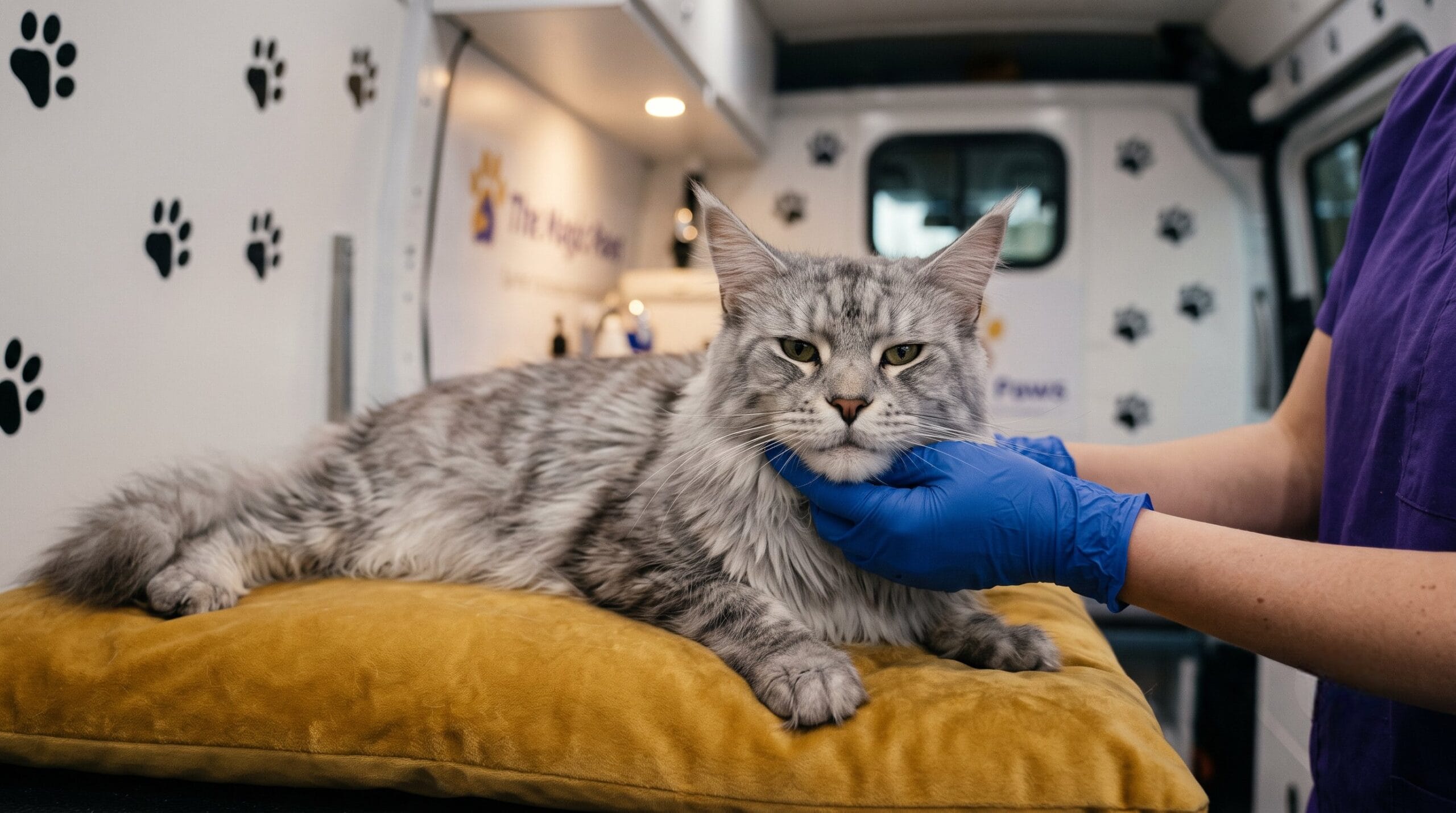
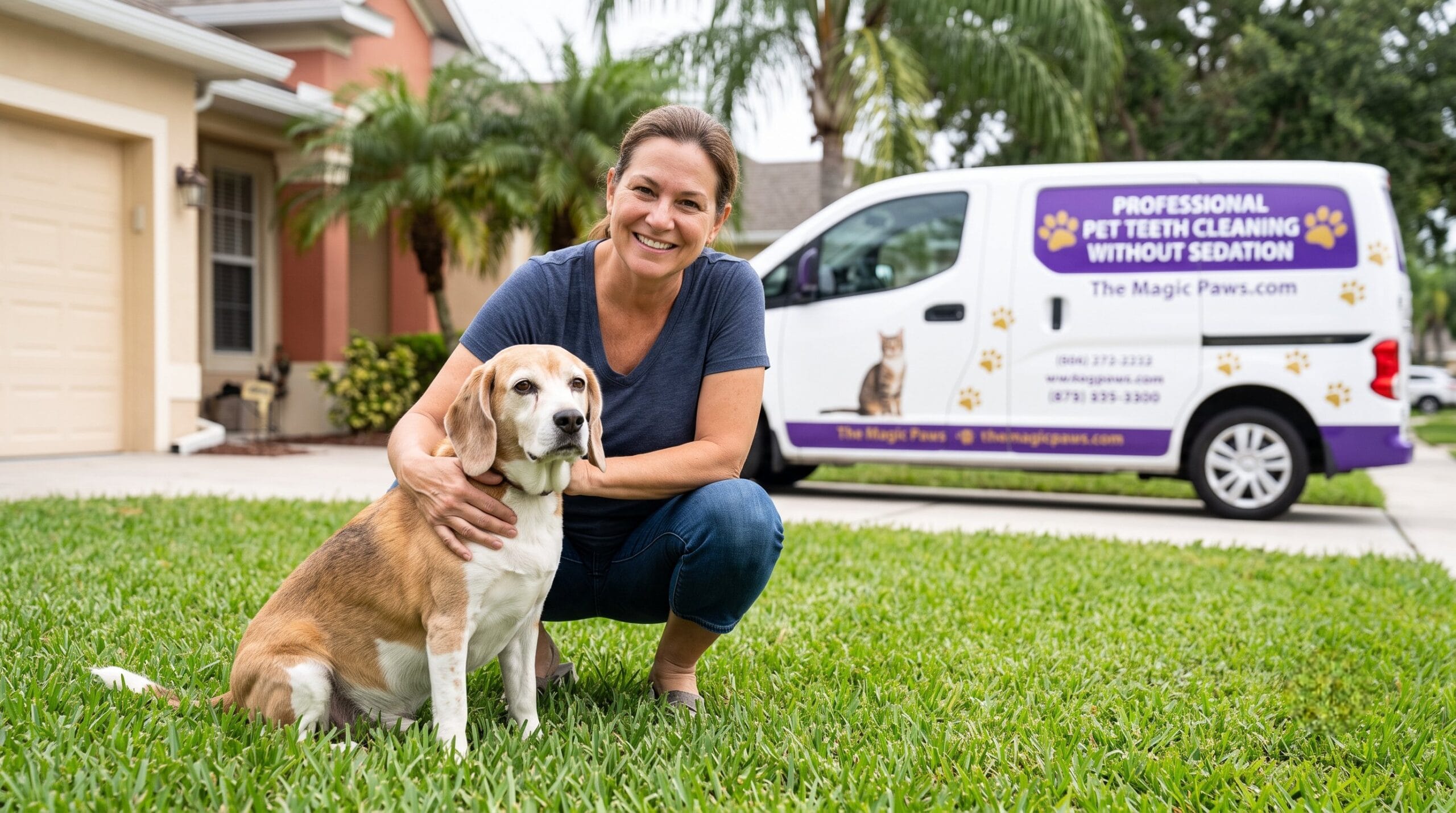
This is where our mobile service changes the game. We specialize in safe, sedation-free preventative maintenance. Our trained technicians manually remove the tartar and plaque that brushing misses, but we do it while your pup is fully awake and comfortable. We act as the essential middle ground between your daily brushing and major veterinary surgery.
Think of it just like your own dental habits. You don’t wait until you have a painful cavity to see a dentist; you go for regular hygiene cleanings to prevent that from ever happening. We provide that same standard of care for your dog. By making professional cleaning a regular, stress-free event, we take the fear out of the equation.
This proactive approach is the most effective way to apply what you are learning about Understanding Dog Dental Disease: Risks and preventative care, stopping the problem before it starts so your pup stays happy and healthy.
Removing tartar effectively without the risks of anesthesia
It is completely valid to feel hesitant about putting your best friend under heavy sedation just for a routine cleaning. We hear this concern every day from neighbors who want to do the right thing but are terrified of the potential side effects, especially for their senior dogs. You shouldn’t have to choose between ignoring a health risk and taking a scary medical gamble.
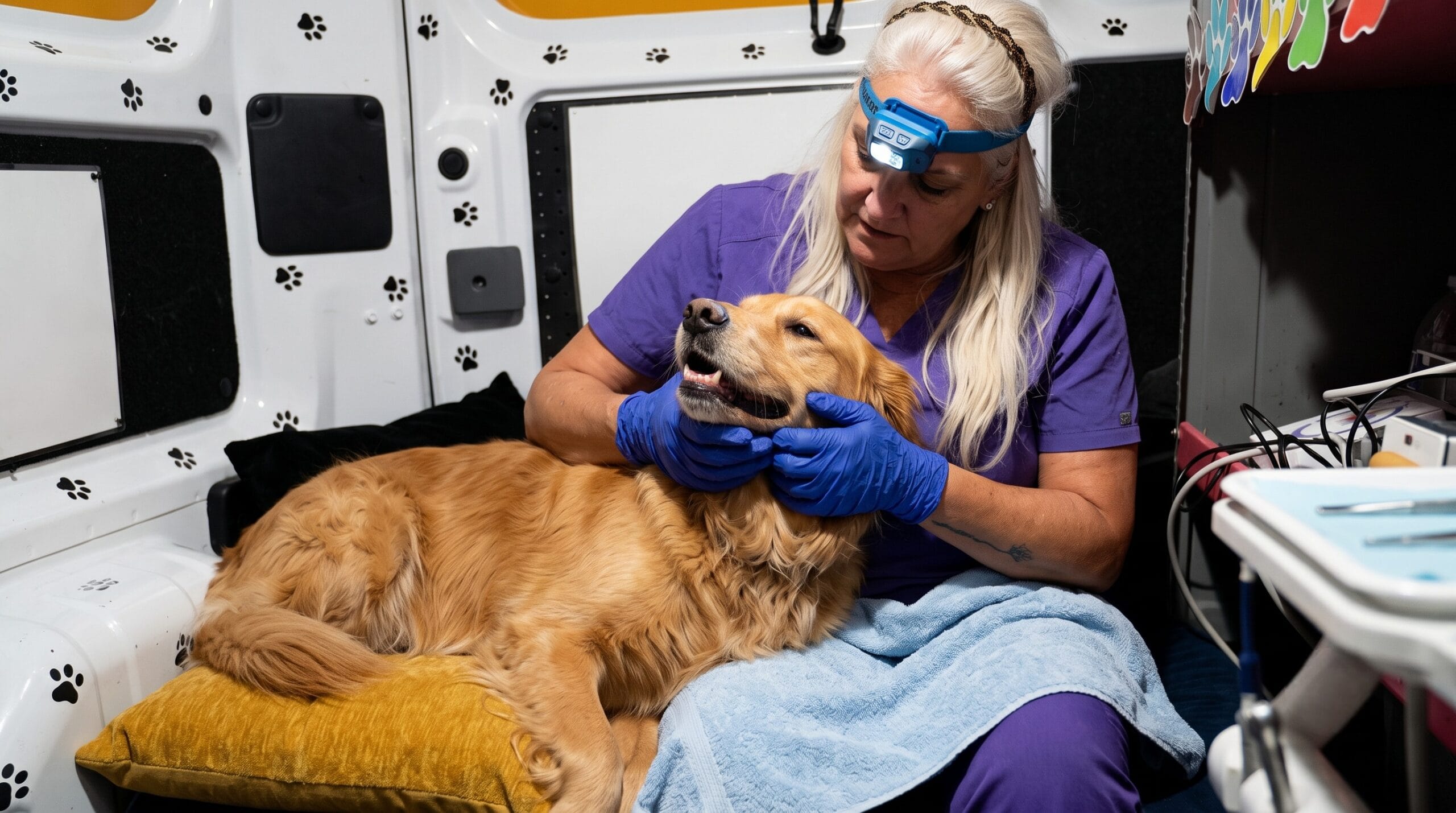
Our method proves that you can achieve a deep, professional clean without the drugs. Our technicians use the same high-quality sterile instruments found in a veterinary clinic to manually scale away the tartar and plaque.
We gently work above and below the gumline to remove the buildup that causes inflammation, all while your pup is fully awake and resting comfortably in our lap.
It is very similar to your own visits to the dental hygienist. You don’t need to be asleep for them to remove tartar; you just need to be calm and cooperative. That is exactly what we achieve with your dog. By removing the barrier of anesthesia, we make it safe to clean their teeth more frequently.
This consistency is the secret to Understanding Dog Dental Disease: Risks and preventative care, allowing you to stop the decay process early and keep your dog healthy without ever facing the stress of a surgical procedure.
Senses Therapy: Using lavender and music to reduce stress
One of the biggest worries we have as pet parents is seeing our best friend shaking with fear the moment we walk into a clinic. We know how much you care, and it is heartbreaking to see them so stressed just because they are trying to stay healthy. That is why we created a mobile environment that feels more like a spa day than a medical procedure.
Our unique Senses Therapy is designed to calm your pup naturally, engaging their senses to signal safety instead of danger. We use the soothing scent of lavender aromatherapy to help them relax and soft music therapy to block out any startling noises. We even use chromotherapy, which involves soft blue and purple lights, to create a peaceful atmosphere.
By replacing the cold, sterile smells of a hospital with these comforting triggers, we can keep your dog calm and cooperative without using a single drop of anesthesia. This holistic approach changes the entire experience.
A huge part of Understanding Dog Dental Disease: Risks and preventative care is realizing that the “procedure” doesn’t have to be traumatic. When your dog is relaxed and happy, maintaining their oral health becomes a simple, stress-free part of your routine rather than a source of anxiety for both of you.
Essential Safety Guidelines for Our Service
Safety is the number one priority for every pet parent we meet. We know you want the best for your dog, and letting someone work on their teeth requires a huge leap of faith. We take that trust seriously. Our service is built on rigorous safety protocols that ensure your best friend is protected every step of the way.
Because we operate without anesthesia, our guidelines are actually much simpler and less scary than what you might expect from a surgical procedure. We rely on the expertise of qualified professionals who guarantee the comfort and care of every animal. We focus entirely on the pet’s comfort, ensuring they are secure and relaxed throughout the session.

It is not just about cleaning teeth; it is about creating a secure environment where your dog feels safe. By adhering to these high standards, we remove the risks associated with sedation while still delivering effective results.
This commitment to safety is an essential part of Understanding Dog Dental Disease: Risks and preventative care, giving you a reliable, worry-free option to maintain your dog’s health for the long haul.
Managing potential gum sensitivity after tartar removal
One of the first questions we ask ourselves after any appointment is, “Will they be in pain when they get home?” We know how much you care, and avoiding discomfort is exactly why you chose a gentle, sedation-free option in the first place. The good news is that because we don’t use heavy medication, your dog won’t have that groggy, confused recovery period.
The only thing to keep on your radar is a little bit of gum sensitivity. Think about how your own mouth feels after a thorough visit to the dental hygienist. Your teeth are sparkling, but your gums might feel a tiny bit tender for a day. It is the exact same sensation for your best friend.
To keep them comfortable, we suggest switching to soft food or soaking their kibble and skipping the hard bones. This easy, manageable recovery is a key benefit of Understanding Dog Dental Disease: Risks and preventative care, allowing you to maintain their health without the stress of a major medical event.
Scope of Practice: Preventative vs. Curative Care
We know it can be a little overwhelming trying to figure out exactly what kind of care your pup needs. As loving pet parents, we just want to make the right call, and it is hard to distinguish between maintenance and medical treatment.
Our role is strictly defined as preventative maintenance. We are here to remove tartar and keep the mouth healthy before problems start. Think of us like the dental hygienist you visit every six months. You go there to prevent cavities and gum issues so you don’t end up needing a root canal later.
A veterinary cleaning under general anesthesia, on the other hand, is often a curative treatment. This is the necessary step when a pet already has severe disease that requires extractions or surgery. Recognizing this difference is the most important part of Understanding Dog Dental Disease: Risks and preventative care.
It gives you the power to choose the right tool for the job, keeping your best friend safe and avoiding invasive medical procedures whenever possible.
We specialize in preventative cleaning, not treatment for severe disease
We know you just want to make the best choice for your best friend, but figuring out the difference between a cleaning and a medical treatment can be confusing. Our lane is strictly preventative maintenance. We are the experts you call to keep a healthy mouth healthy, removing that buildup before it creates a crisis.
Our service is designed for dogs who have mild to moderate tartar but do not yet have advanced decay. If a dog has loose teeth, an abscess, or severe gum infection, that is a medical condition that requires a veterinarian and general anesthesia to fix.
We do not perform surgery. Instead, we are the proactive step you take to avoid ever needing surgery in the first place.
Think of it exactly like your own dental care. You see a hygienist regularly to scrub away plaque and keep your smile bright. You only see an oral surgeon if something has gone wrong and you need a root canal.
We are that hygienist for your pup. Knowing this distinction is the key to Understanding Dog Dental Disease: Risks and preventative care. It empowers you to use our gentle service for routine care, ensuring you only face the risks of medical treatment if absolutely necessary.
When we refer to a veterinarian: Loose teeth and extractions
One of the biggest worries we have as pet parents is wondering if we have waited too long to get help. We value transparency above all else, and we want you to trust us completely with your best friend’s well-being.
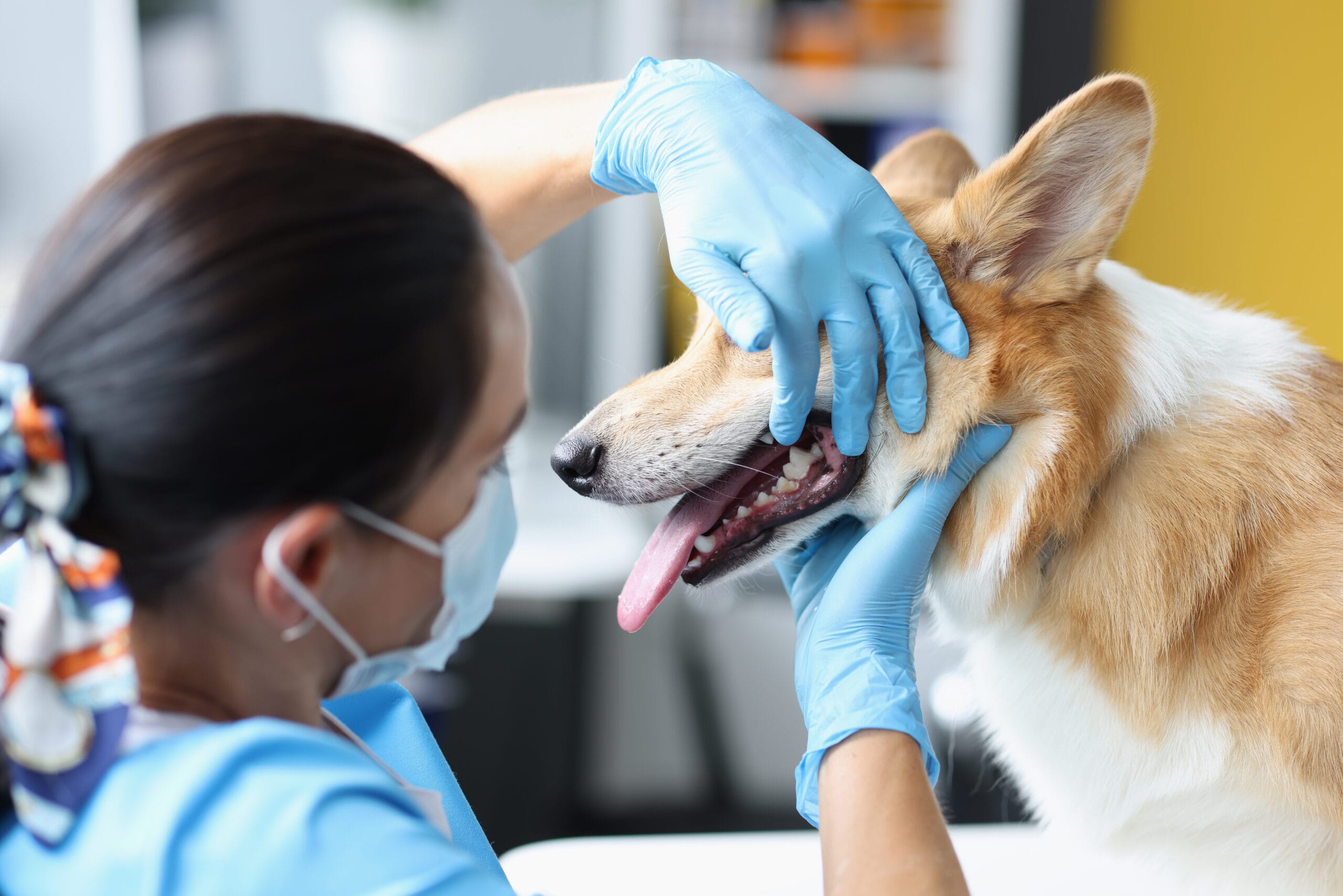
If our technician discovers a tooth that is wiggly, fractured, or showing signs of a deep root abscess during the exam, we will stop immediately and refer you to a veterinarian.
We simply cannot and will not extract teeth. Removing a damaged tooth without anesthesia would be painful and traumatic, and that goes against everything we believe in. In those advanced cases, anesthesia becomes the necessary tool to manage the pain and treat the infection at its source.
Think of us as the crew that pressure washes your driveway to keep it pristine. If we find a giant crack in the concrete foundation, we are going to tell you to call a structural engineer to fix it. We handle the maintenance so you don’t get the cracks, but we respect the limits of our tools.
This transparency is a vital part of Understanding Dog Dental Disease: Risks and preventative care, ensuring your dog always gets exactly the level of care they need—whether that is our gentle cleaning or a vet’s surgical expertise.
Conclusion: Early Detection Saves Lives
The most important takeaway from Understanding Dog Dental Disease: Risks and preventative care is that you have the power to intervene before a silent threat becomes a medical crisis. We have explored how untreated tartar can escalate from a cosmetic nuisance to a systemic danger attacking your best friend’s heart and kidneys.
You no longer need to let the fear of anesthesia paralyze you into inaction. By choosing our gentle, sedation-free maintenance enhanced by calming Senses Therapy, you are stopping decay in its tracks while your pup remains safe and relaxed.
Whether it is our routine cleaning or knowing when to seek a vet for advanced care, the goal remains the same: acting early. Don’t wait for a warning sign, choose preventative care today to secure a happier, healthier future for the one who loves you most.Learn more: Understanding Dog Dental Disease