
Writing off bad breath as just a quirky trait is a common oversight that often masks silent pain. Knowing how to spot the Signs Your Pet Might Have Dental Problems is your first line of defense in shielding their heart and kidneys from hidden infection. Catching these red flags today can sidestep the heartbreak of invasive surgeries tomorrow, ensuring your best friend stays safe and by your side.
Index:
- Signs Your Pet Might Have Dental Problems
- When to Call The Magic Paws vs. When to Call a Vet
- The “Magic” Solution: Stress-Free Cleaning
- Conclusion: Proactive Care is the Best Love
Text:
Our four-legged companions are absolute masters of disguise, instinctively masking their discomfort to keep up appearances for their pack. This ancestral survival trait often leaves even the most loving owners unaware that a quiet health crisis is brewing right under their nose.
While it is easy to write off morning “dragon breath” as just a quirky side effect of aging, it is frequently the first whisper of a much louder problem threatening their heart and kidneys. Recognizing the subtle Signs Your Pet Might Have Dental Problems empowers you to act before a minor issue spirals into a situation demanding an invasive surgical solution.
Spotting these red flags early is the difference between a relaxing, anesthesia-free spa day right at your doorstep and a stressful, costly emergency procedure later. Taking a closer look today safeguards their comfort and grants you the peace of mind that comes with true preventative care.
Signs Your Pet Might Have Dental Problems
You are the world’s leading expert on your four-legged companion, often noticing tiny shifts in their mood that no one else would catch. However, because our pets are evolutionarily hardwired to mask weakness to survive in the wild, they often hide oral pain until it becomes agonizing.
Relying solely on whether they are eating or wagging their tail can be deceptive, as their survival instinct compels them to power through the discomfort.
That is why learning to read their subtle physical and behavioral cues is the most proactive step you can take for their longevity. These indicators are not merely cosmetic nuisances; they are urgent distress signals from their body asking for help.
Identifying the specific Signs Your Pet Might Have Dental Problems early gives you the power to intervene before a standard preventative session escalates into a complex medical necessity.
Think of it like spotting a small leak in your roof before the summer storms roll in; addressing it now is a quick, stress-free fix, but ignoring it leads to costly structural damage later. By staying observant, you become their best advocate, ensuring their golden years remain comfortable and happy.
1. The “Dragon Breath” (Bad Breath)
We often joke about those potent kisses that make us hold our breath, assuming that a strong odor is just “part of the deal” with our four-legged companions. While a little fishy smell after dinner is expected, a persistent, foul stench that clears the room is a glaring warning that something is wrong.
That intense odor is actually caused by bacteria multiplying along the gum line, releasing sulfur compounds that signal an infection is setting in.
Think of it exactly like the check engine light on your dashboard; it is a glowing alert that maintenance is overdue before the engine starts to smoke. Recognizing this specific smell is one of the most reliable Signs Your Pet Might Have Dental Problems that you can spot at home.
Instead of pulling away from their affection, listen to what their body is telling you. Catching this symptom early means we can wipe away the bacteria with a gentle cleaning, restoring their fresh breath and protecting their heart from the infection spreading.
2. Visible Tartar and Discolored Teeth
We all love seeing that happy, panting grin during a game of fetch, but spotting yellow or brown stains on your best friend’s teeth can quickly turn that joy into concern. That hard, discolored coating is tartar, a calcified layer of plaque that cements itself to the enamel and creates a safe haven for harmful bacteria to multiply.
Once this buildup hardens, no amount of brushing at home will budge it. It begins to irritate the gums, slowly pushing them away from the teeth.
You can think of it like barnacles accumulating on a boat’s hull; they might look like just surface roughness, but they are actively compromising the integrity of the vessel beneath the waterline. Identifying these visible deposits is one of the clearest Signs Your Pet Might Have Dental Problems that you should never ignore.
This is not merely a cosmetic flaw; it is visible proof that infection is trying to take hold. Catching it at this stage allows us to gently scale it away, restoring their sparkling smile before the damage reaches the sensitive roots below.
3. Changes in Eating Habits
We all know the rhythmic crunch of kibble is usually the soundtrack of a healthy appetite, so it triggers a sinking feeling when you notice your companion hesitating at their bowl. It is easy to write this off as them just being fussy with a new flavor, but a sudden shift in how they tackle their dinner is frequently a red flag for oral pain.
You might see them chewing exclusively on one side of their mouth, dropping kibble repeatedly, or even gulping down treats whole to avoid biting down altogether.
Imagine trying to eat a bag of crunchy chips with a throbbing toothache; you would carefully maneuver every bite to keep it away from that sore spot. Your pet is doing the exact same thing every time they eat.
Noticing these subtle shifts is one of the most critical Signs Your Pet Might Have Dental Problems that often goes overlooked. They aren’t just being difficult; they are trying to manage pain the only way they know how.
Picking up on this behavior early allows us to step in and relieve that discomfort, ensuring their mealtimes return to being a source of joy rather than a daily struggle.
Are Dog Dental Cleanings Safe? A guide to a worry-free procedure
4. Red, Swollen, or Bleeding Gums
Alarm bells ring when you notice a little pink spot on a favorite chew toy or see a trace of blood after a game of tug-of-war. While we might tell ourselves they just played a little too rough, healthy tissue should always look bubblegum pink and feel firm.
If the gum line looks angry, bright red, or puffy, it means their immune system is actively fighting off an invasion of bacteria.
If your own gums bled every time you brushed, you would likely call your dentist immediately to stop the issue from spiraling. Your best friend deserves that same level of urgency.
Noticing this inflammation is one of the most undeniable Signs Your Pet Might Have Dental Problems that demands attention. It is the body’s way of waving a warning flag before the infection travels deeper into the bloodstream, so addressing it now keeps the issue superficial and protects their long-term health.
What can my dog eat after a dental cleaning? The anesthesia-free advantage
5. Behavioral Changes (Head Shyness)
It can feel like a personal rejection when you reach out for a scratch behind the ears and your loyal companion shies away or flinches. It is easy to misinterpret this as them becoming grumpy or distant, but this withdrawal is rarely an attitude problem.
When a pet becomes “head shy”—avoiding your touch or rubbing their face against the carpet—it is usually because their mouth is radiating pain that they can no longer ignore. They are instinctively guarding a sensitive area, fearing that even your loving hand might accidentally trigger a jolt of pain.
Anyone who has nursed a splitting headache understands the instinct to shield their head from any stimulation. Your pet is reacting the same way to chronic oral discomfort. Recognizing this sudden shift in personality is one of the most heartbreaking yet important Signs Your Pet Might Have Dental Problems to watch for.
They aren’t rejecting your love; they are asking for help in the only silent way they can. By clearing up the infection and removing the source of that throbbing pain, we help them lower their defenses so they can happily lean into your hand for those head scratches once again.
When to Call The Magic Paws vs. When to Call a Vet
We place a premium on transparency because trusting someone with your best friend’s health is a huge decision. It is essential to draw a clear line between routine maintenance and necessary medical surgery. If you spot mild to moderate tartar buildup, heavy breath, or slightly puffy gums, The Magic Paws is your perfect match.
We focus entirely on preventative care, acting exactly like the hygienist who deep cleans your teeth to stop decay from starting. We clear away the bacteria and plaque that cause disease, keeping their mouth healthy without the need for heavy medication.
However, if the issue has progressed to loose teeth, visible abscesses, or extreme pain where they cannot eat, a full veterinary clinic is the safe choice. These advanced conditions often require X-rays and extractions that do necessitate anesthesia for the animal’s safety.
Understanding the severity of the Signs Your Pet Might Have Dental Problems helps you make the right call for their specific needs. If you are ever unsure, we are here to help with an initial assessment. If we find a problem that goes beyond a cleaning, we will immediately refer you to a specialist because your companion’s safety is always our priority.
The “Magic” Solution: Stress-Free Cleaning
We know that the thought of a dental procedure usually conjures up images of cold steel tables and nervous trembling.
It is completely natural to want to shield your companion from that kind of stress, which is why we created a completely different approach designed to soothe their spirit while we care for their smile. You should not have to trade their emotional peace for their physical health.
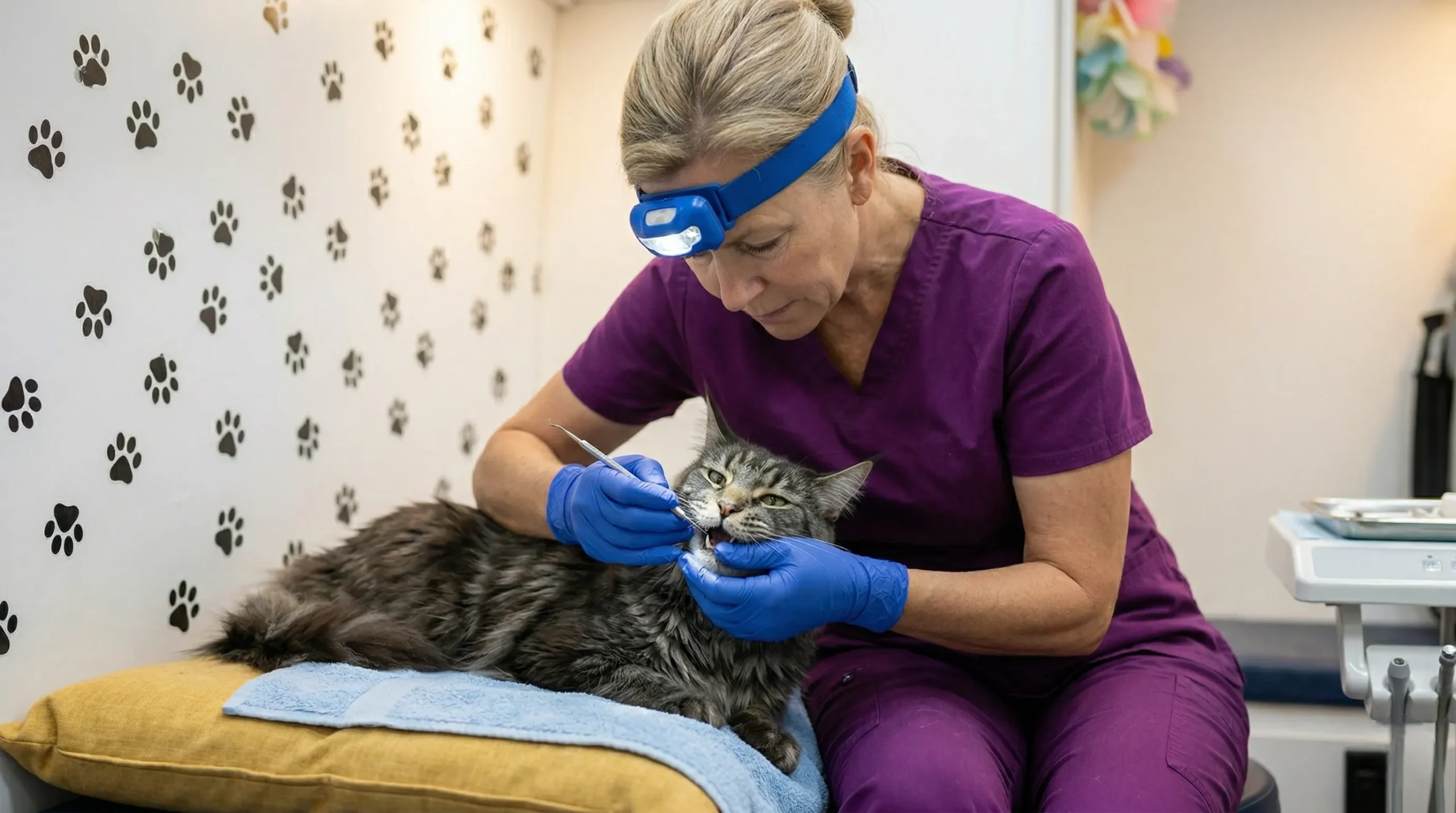
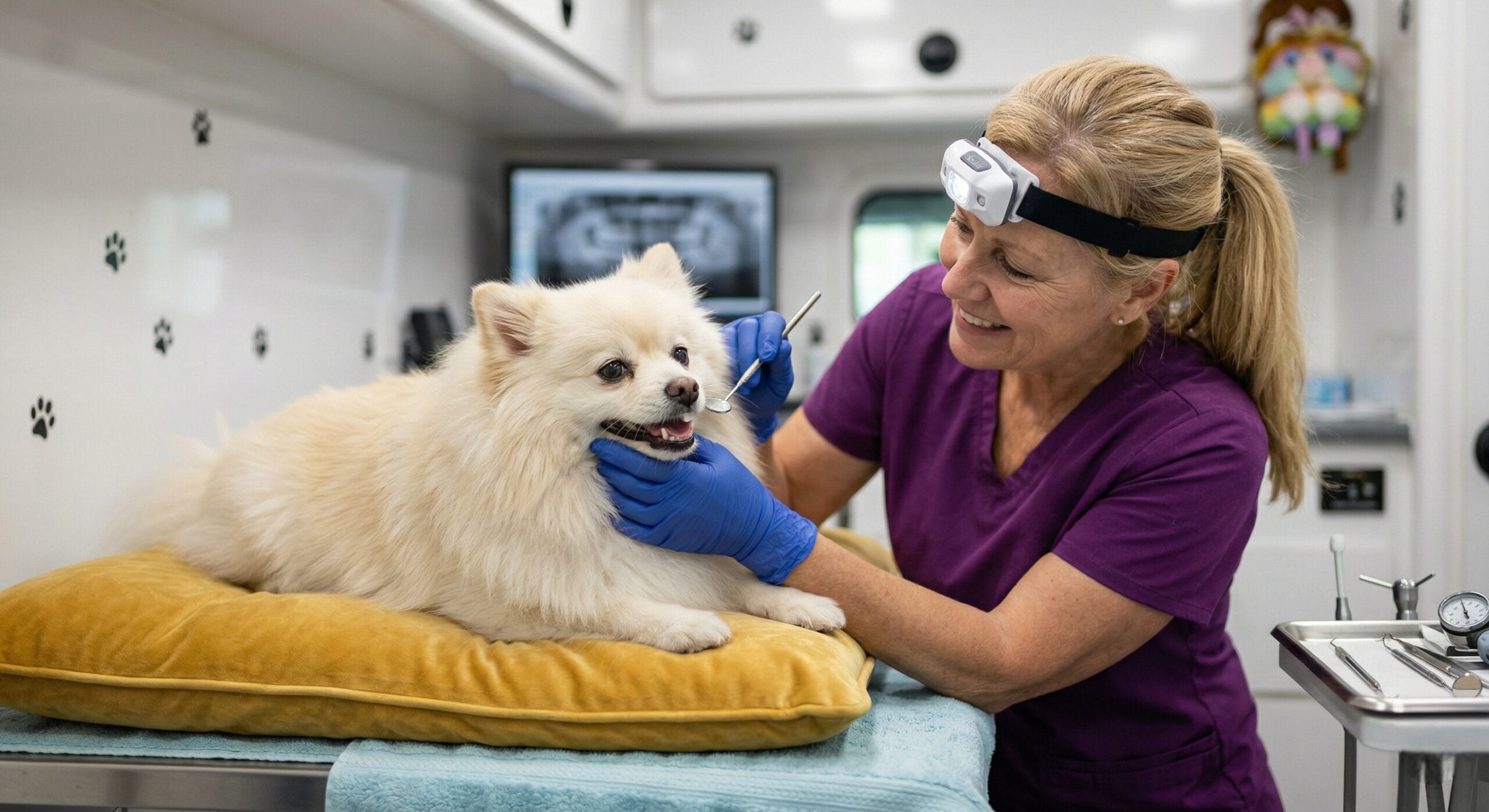
Our proprietary Senses Therapy turns our mobile clinic into a calming sanctuary right in your driveway. We use the gentle scent of lavender aromatherapy to ease anxiety, soft blue and purple chromotherapy lighting to promote relaxation, and frequency-tuned music that helps them settle into a peaceful rhythm.
Instead of being restrained on a hard surface, your pet is swaddled comfortably and rests on a warm lap, receiving gentle acupressure massage throughout the cleaning. It feels less like a medical appointment and more like a relaxing spa day.
Once you have identified the Signs Your Pet Might Have Dental Problems, this gentle method offers a solution that dissolves the trauma. We ensure they return to your arms happy, relaxed, and with a sparkling clean smile, completely unaware they just underwent a procedure.
Conclusion: Proactive Care is the Best Love
Paying close attention to the subtle Signs Your Pet Might Have Dental Problems—from that “dragon breath” and yellow tartar to changes in eating habits or swollen gums—is the ultimate act of protection.
These aren’t just quirks; they are silent pleas for help from a companion instinctively trying to mask their pain. By catching these red flags early, you hold the power to choose a gentle, preventative path rather than facing the heartbreak of invasive surgery down the road.
Whether it is a simple maintenance session using our stress-free Senses Therapy or a prompt referral for advanced care, taking action now puts a stop to silent suffering. Don’t let hidden pain linger. Give your best friend the gift of a healthy heart and a sparkling smile, all from the comfort of your own driveway. Proactive care is truly the best love you can give.