For any loving pet parent, the question, “Is dog dental cleaning safe?” comes from a place of deep care. While the procedure itself is incredibly safe and beneficial, the real source of risk and anxiety has always been tied to one traditionally required element: general anesthesia. For a simple, routine cleaning, it’s a step that is often entirely unnecessary.
- The core question: does a dental cleaning have to involve anesthesia?
- The safe alternative: how anesthesia-free cleaning works
- How we ensure a calm experience: the power of sensory therapy
- Debunking a common myth: does safer mean more expensive?
- A note on at-home care: what’s safe and what isn’t
- Conclusion: the safest choice is peace of mind
When you ask, “Is dog dental cleaning safe?” we know it comes from a place of deep love and responsibility. It’s the most important question a caring pet parent can ask, and the straightforward answer is a resounding yes. The procedure itself is one of the most beneficial things you can do for your companion’s long-term health.
However, the source of every owner’s valid concern—the place where the risk and anxiety truly lie—has never been about the cleaning itself. It has always been tied to a single, powerful component of the traditional process: general anesthesia.
This guide is here to walk you through that crucial distinction, exploring the safety of both methods to give you the clarity and confidence you need to make the most loving choice for your best friend.
The core question: does a dental cleaning have to involve anesthesia?
For a routine, preventative cleaning, our answer is a confident no. We believe it’s an unnecessary risk that can, and should, be avoided.
Let’s be clear: General anesthesia is a powerful and essential tool for curative treatment. This includes major surgeries or treating advanced periodontal disease (such as heavy tartar buildup with periodontal involvement, loose/mobile teeth, or the need for extractions), which we do not perform. For those serious medical situations, it is the only safe option.
However, for the vital work of preventative care—which is our specialty—we believe you shouldn’t have to put your best friend through the stress and inherent risks of sedation. Our service is the ideal, holistic-friendly choice for routine maintenance (e.g., every 6 months) to prevent serious disease, or for animals who have medical contraindications for anesthesia.
Think of it this way: you wouldn’t use a sledgehammer to hang a picture frame. Choosing an anesthesia-free pet dental cleaning is about selecting the right tool for the job. It’s about using a precise instrument for a delicate task and reserving the “sledgehammer” of anesthesia for when it is truly medically required.
The risks of anesthesia: what every pet parent should know
The primary risk associated with a traditional dog dental cleaning isn’t the procedure itself—it’s the general anesthesia required to perform it. Anesthesia is a significant medical event that always carries inherent risks.
Your concern about this is completely valid, and it’s the single biggest worry we hear from pet parents. While administered by professionals, anesthesia always carries the potential for complications. Those risks are magnified for senior pets or those with underlying heart or kidney conditions.
Anesthesia places significant stress on a pet’s entire system. Beyond the most serious complications, there is also the difficult recovery, which can leave your best friend feeling groggy, nauseous, and disoriented for hours after coming home.
Seeing your companion in that state is heartbreaking. That’s why the question, “Is a dental cleaning safe for dogs?” is so often really a question about the safety of anesthesia. You are weighing the benefit of clean teeth against the risk of putting your loved one through a major medical event for what should be a routine, preventative procedure.
The safe alternative: how anesthesia-free cleaning works
So, is an anesthesia-free cleaning truly safe? The answer is an unequivocal yes, especially when the entire process is built around creating a calm and gentle experience.
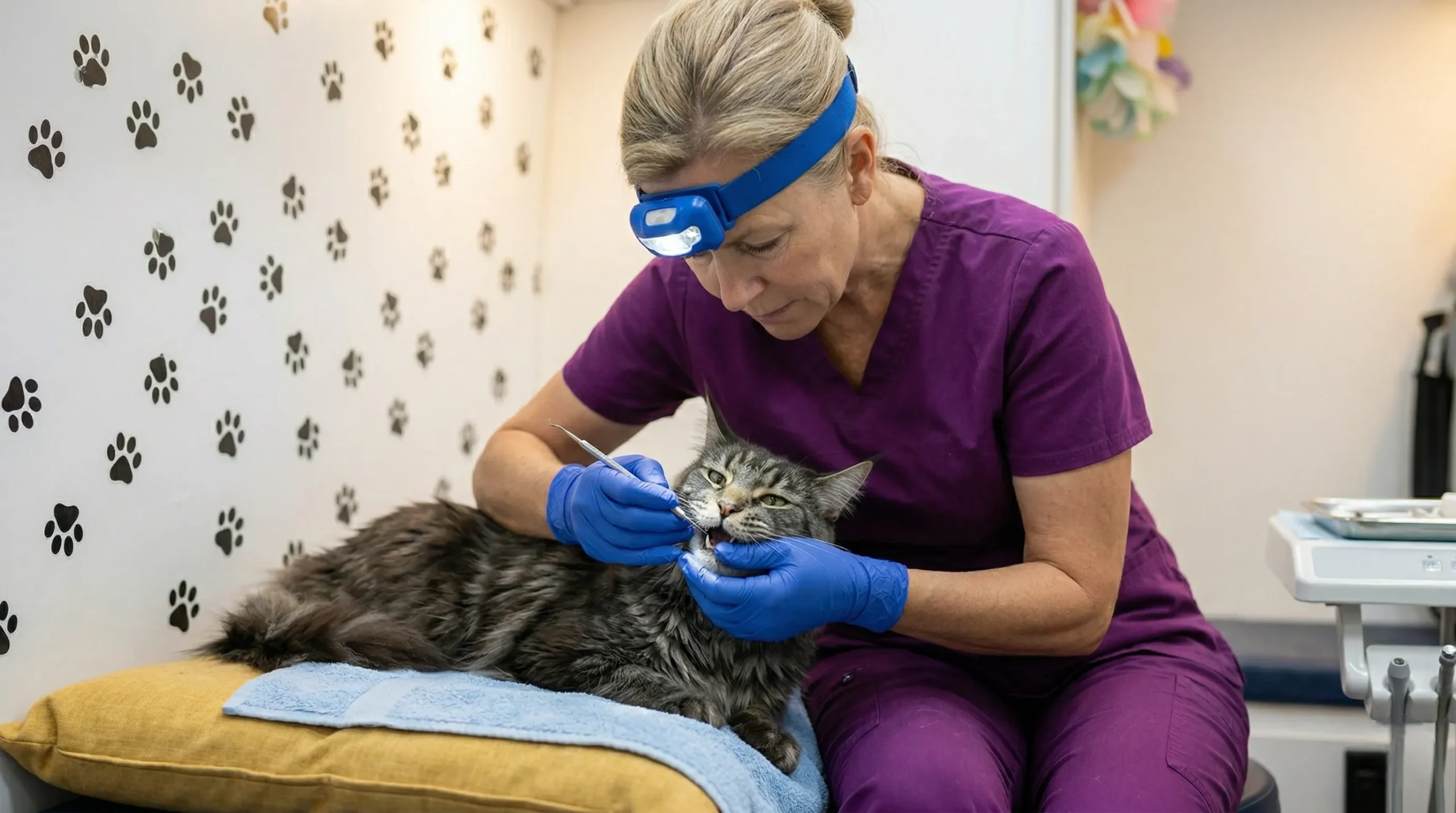
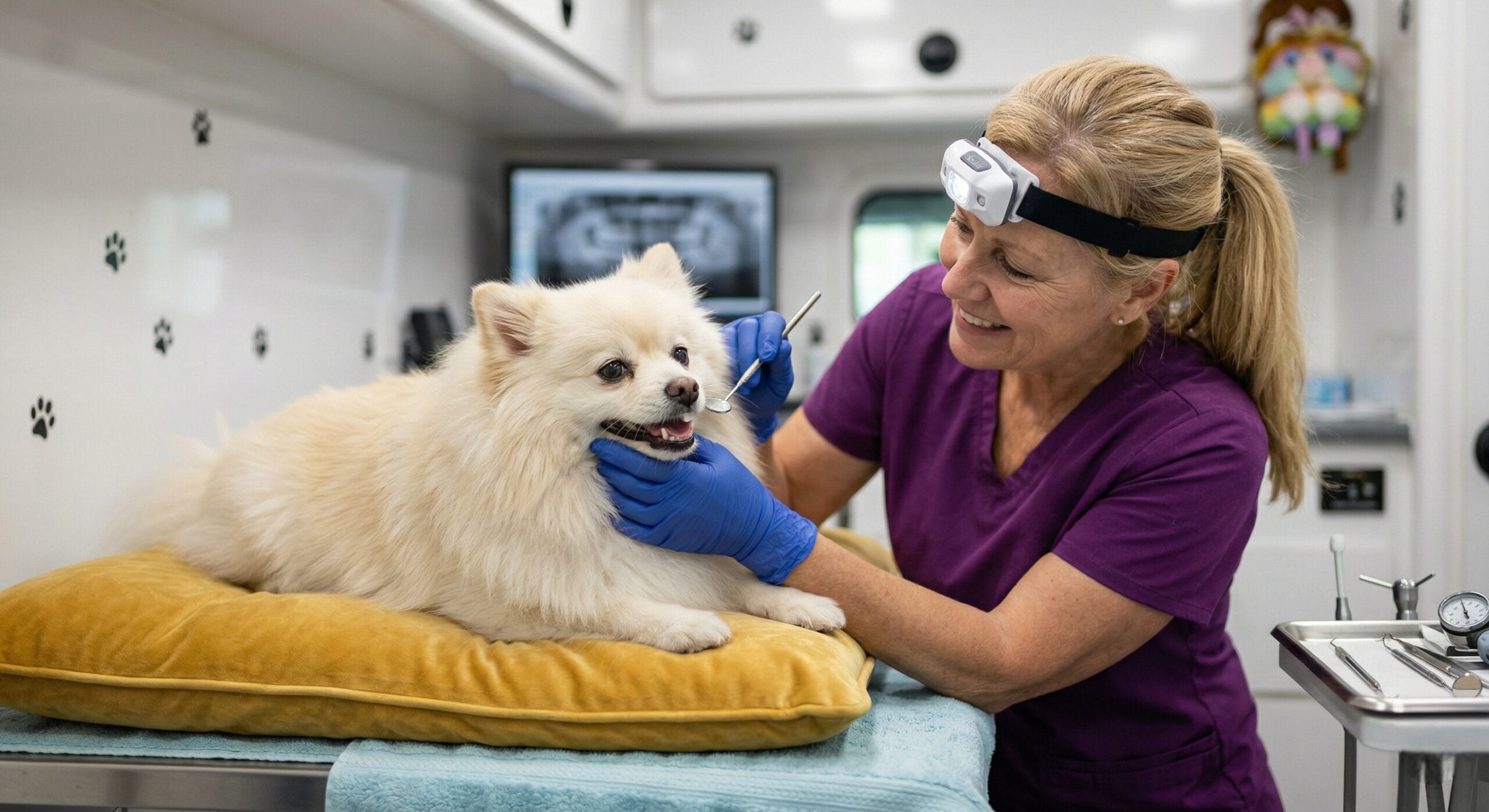
Our entire service is designed to counter the common fear of a stressed, anxious pet. Our technicians are not just experts in dental hygiene; they are masters of creating a tranquil environment. They are trained to be patient, gentle, and hyper-attentive to your dog’s emotional state throughout the process. The result is a procedure where your companion feels secure, not scared.
This is because a sedation-free dental cleaning removes the single biggest medical risk from the equation. So, for the loving pet parent wondering if a dental cleaning without anesthesia is safe, the answer remains a resounding yes. It’s a procedure designed from the ground up with one goal in mind: their safety.
How we ensure a calm experience: the power of sensory therapy
Our entire approach is built on a simple yet powerful principle: a calm pet is a safe pet. This is where our proprietary “Senses Therapy” becomes the heart of the experience—it’s the “magic” in The Magic Paws.
This isn’t just about being gentle; it’s about actively transforming our mobile van into a tranquil spa. The goal is an experience as stress-free as a nap in a sunbeam. We create this peaceful atmosphere by engaging all five of their senses:
- Hearing: Soothing music therapy calms their ears.
- Sight: Soft blue and purple lighting, a form of chromotherapy, relaxes their eyes.
- Smell: A hint of lavender aromatherapy quiets their mind.
- Touch: Gentle holds and calming acupressure points build trust and create a sense of security.
This multi-sensory approach is the key to ensuring a dental cleaning without anesthesia is not just safe, but a genuinely positive experience for your best friend.
Debunking a common myth: does safer mean more expensive?
It’s the fair question every responsible pet parent asks, and the answer is often a pleasant surprise: a safer dog dental cleaning is typically more affordable than the traditional alternative.
Our philosophy is simple: providing the highest standard of safety shouldn’t come with a prohibitive price tag. A traditional dental cleaning at a veterinary clinic involves significant costs associated with the anesthesia itself, pre-procedure bloodwork, and the hours of monitoring required during recovery.
Because our process is sedation-free and performed efficiently in our mobile van, we bypass many of those extra costs. This allows us to offer a premium, specialized service at a sensible price. Think of it as an investment in proactive wellness.
By choosing a gentle, preventative cleaning now, you are not only saving on the immediate cost of a more invasive procedure, but you are also helping to prevent the kind of advanced dental disease that can lead to incredibly expensive treatments down the road. It’s a choice that’s kinder to your best friend and your wallet.
A note on at-home care: what’s safe and what isn’t
At-home care, like daily brushing and providing dental chews, is a vital part of supporting your dog’s oral health, and we are its biggest fans. Think of your at-home routine as the daily maintenance that keeps their smile bright between professional visits.
It’s the same reason we brush our own teeth every day: to manage plaque. Yet, we still see a dental hygienist for a deep cleaning we simply can’t do ourselves. At-home brushing is fantastic for slowing the formation of soft, sticky plaque.
However, once that plaque mineralizes into tartar—that tough, yellowish-brown deposit—it cannot be safely or effectively removed with a toothbrush. At that point, a professional cleaning becomes essential.
Think of it as a partnership. Your loving care at home and our professional service work in tandem to ensure your best friend enjoys a healthy, happy mouth for years to come.
Conclusion: the safest choice is peace of mind
The answer to “Is dog dental cleaning safe?” becomes a confident yes the moment you separate the procedure from the risks of anesthesia. For preventative care, sedation is an unnecessary risk, and a gentle, anesthesia-free cleaning is the exceptionally safe and affordable alternative.
At the end of the day, the safest choice is the one that protects your best friend from unnecessary risks while bringing you total peace of mind. It’s the choice that lets you enjoy their happy, healthy smile without a moment of worry.