Cat teeth cleaning: everything you need to know to keep your cat’s smile healthy!
Cat teeth cleaning is something owners often overlook until a veterinarian identifies a dental problem. Cats are extremely skilled at hiding discomfort, which allows oral disease to develop quietly for long periods before noticeable symptoms appear.
Owners frequently assume their pet’s teeth are healthy because the cat continues eating and behaving normally. However, dental problems often progress silently beneath the gumline. By the time visible tartar, bad breath, or gum inflammation becomes noticeable, the condition may already be advanced.
Veterinary studies indicate that most cats over the age of three show signs of dental disease, making oral health one of the most common medical concerns affecting felines.
Understanding what professional teeth cleaning involves, when it becomes necessary, and what options are available helps owners protect their cat’s long-term health and comfort.
What is cat teeth cleaning?
Cat teeth cleaning is a professional dental procedure that removes plaque, hardened tartar and bacteria from a pet’s teeth and gumline. Unlike simple at-home brushing, professional cleaning uses specialized dental tools to remove buildup that accumulates both above and below the gumline.
This type of cleaning is essential because most dental disease in cats develops in areas that are impossible to reach with a toothbrush alone. Over time, plaque hardens into tartar, which irritates the gums and creates an environment where harmful bacteria thrive.
Professional cat teeth cleaning helps restore healthier gums, reduce bacterial buildup and prevent more serious dental conditions from developing.
So, cleaning helps remove the bacterial buildup created by plaque and tartar, allowing the gums to recover and reducing the risk of more serious dental disease. Regular professional care also helps maintain healthier teeth and supports a cat’s long-term oral health.
Professional Cleaning vs. At-Home Brushing: What Is the Difference?
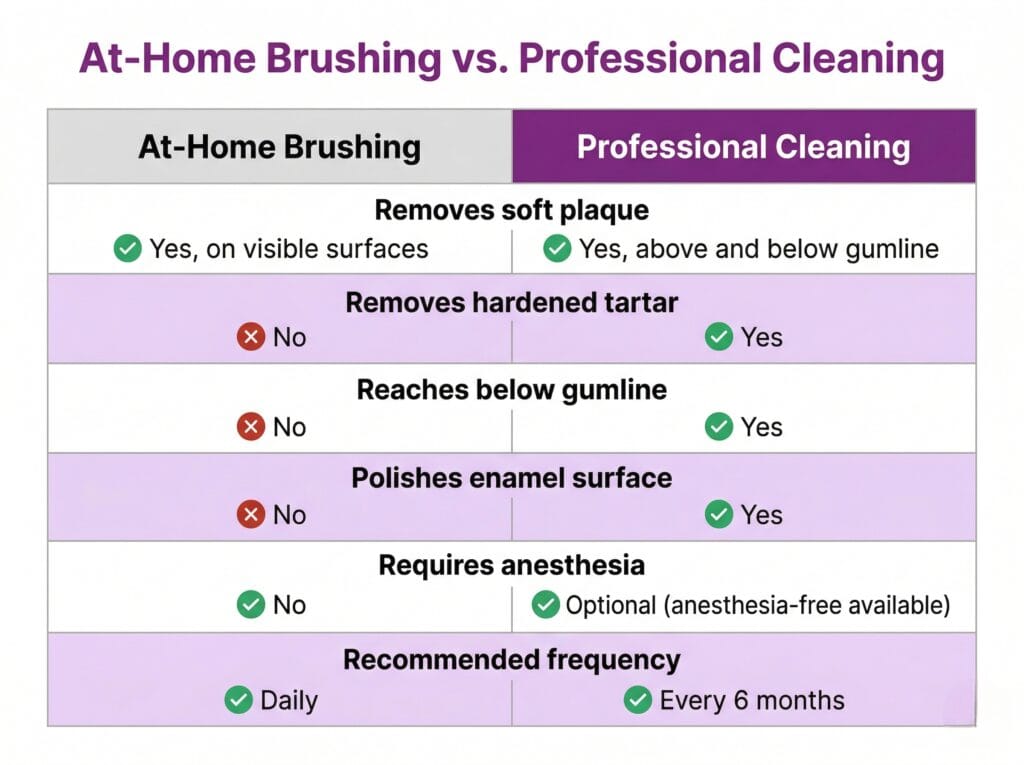
At-home dental care can remove soft plaque from the visible surfaces of a cat’s teeth when performed consistently and correctly. This routine helps slow tartar accumulation between professional cleanings. However, home care cannot remove tartar that has already hardened onto the tooth surface or address the bacterial activity below the gum line where periodontal disease begins.
Professional cleaning uses specialized instruments to remove hardened calculus from both above and below the gum line.
The procedure is then followed by polishing, which smooths the enamel surface and helps reduce future plaque adhesion. For cat owners who want to understand the full scope of what a professional dental evaluation includes before scheduling an appointment, this guide on dental exams for pets explains each type of procedure in detail.
What does a cat teeth cleaning actually remove?
A professional cat teeth cleaning removes four distinct layers of oral disease that accumulate progressively: surface plaque, mineralized tartar, calculus deposits and subgingival bacteria. The most common substances removed include:
Plaque
A soft film made of bacteria and food particles that forms on the teeth every day.
Tartar (calculus)
Plaque that has hardened into a mineralized deposit. Once tartar forms, it cannot be removed through home care alone.
Bacterial buildup below the gumline
This area is where many dental infections begin. Removing these bacteria helps reduce gum inflammation and lowers the risk of periodontal disease. In most cats, dental disease follows a predictable progression:
plaque → tartar → gingivitis → periodontal disease → tooth loss
Professional dental cleaning helps interrupt this progression by removing tartar and reducing bacterial buildup before the condition advances further.
Why is cat teeth cleaning so important?
Cat teeth cleaning is significant because dental disease is one of the most common health problems affecting cats. Many oral conditions begin quietly and progress over time without obvious symptoms.
Veterinary studies estimate that around 70 percent of cats over the age of three develop some level of dental disease. This can include plaque buildup, gum inflammation, and infection beneath the gumline. Because cats instinctively hide pain, these issues often go unnoticed until they become advanced.
Professional cleaning removes hardened tartar and reduces bacterial accumulation in the mouth. By controlling these factors early, preventive dental care helps protect the teeth and gums while lowering the risk of more serious health complications.
How common is dental disease in cats?
Dental disease is the most commonly diagnosed health condition in adult cats, and prevalence data is consistent across major veterinary sources. According to Banfield Pet Hospital, approximately 70% of cats show signs of periodontal disease by the age of three.
The Cornell Feline Health Center reports that Feline Oral Resorptive Lesions (FORL) affect between 20% and 60% of domestic cats, making it one of the most prevalent dental disorders in the species.
Cats are also uniquely impacted by stomatitis, a severe inflammatory condition involving the soft tissues of the entire oral cavity. Unlike most dental diseases, stomatitis has no true equivalent in dogs and often requires intensive veterinary treatment. In advanced cases, full-mouth tooth extraction may be necessary to control the condition.
These problems are not rare. They impact a significant portion of the adult cat population, and many animals show few behavioral changes until the disease has already progressed. For early warning signs every cat owner should recognize, this guide explains the most common dental issue indicators in pets.
What happens to a cat’s health when dental care is ignored?
When dental care is ignored, plaque and bacteria gradually accumulate along the teeth and gumline. Over time, this buildup hardens into tartar, which irritates the gums and allows harmful bacteria to spread beneath the gum tissue. This process leads to gingivitis, the earliest stage of gum disease.
If the condition continues untreated, gingivitis can progress into periodontal disease, which damages the tissues that support the teeth. As the disease advances, it can result in tooth loss, chronic infection, and ongoing oral pain.
One challenge with cats is that they rarely show obvious signs of discomfort. Many continue eating and behaving normally even while experiencing significant dental pain. By the time symptoms become noticeable, the disease is often already advanced.
How does poor oral health affect your cat’s overall health?
Dental disease does not remain confined to the mouth. Bacteria from infected gums can enter the bloodstream and potentially impact other organs throughout the body. Veterinary research suggests that chronic oral infections may contribute to complications involving the heart, liver, and kidneys.
Oral pain can also impact a cat’s daily behavior in subtle ways. Cats experiencing dental discomfort may eat less, groom less frequently, or become more withdrawn.
Because these changes often develop gradually, regular professional dental cleanings play an important role in preventing long-term health complications.
What are the signs your cat needs a teeth cleaning?
Recognizing when a cat needs professional dental care can be more difficult than it is with dogs. Cats are extremely skilled at hiding discomfort, which means signs of dental pain often go unnoticed.
Both visible symptoms and subtle behavioral changes can indicate that a cleaning may be necessary, and paying attention to both types of signals is important.
Bad breath, tartar and other warning signs
he most obvious visible indicators of dental disease in cats include persistent bad breath that does not improve with diet changes, yellow or brown deposits on the teeth, redness or swelling along the gum line, and bleeding gums during eating or grooming.
Visible tartar on the outer surface of the teeth is usually a late-stage indicator. By the time calculus appears above the gum line, the bacterial environment beneath it has already developed and the disease has likely been progressing for some time.
In other words, visible tartar is not the beginning of the problem — it is evidence that the condition is already well underway.
For a complete breakdown of warning signs across different dental conditions in pets, this awareness guide explains the key indicators pet owners should watch for.
Signs our cat may be in dental pain
Cats instinctively hide pain, which means behavioral changes are often the first clues that something is wrong. Watch for signs such as:
- Dropping food while eating;
- Chewing on one side of the mouth;
- Reluctance to eat hard food;
- Avoiding toys that require biting;
- Pawing at the mouth or rubbing the face against surfaces;
- Excessive or sudden drooling;
- Swelling around the jaw or cheeks;
- Irritability when touched near the head;
- Reduced grooming, especially around the face
Even a single one of these signs should prompt a professional dental evaluation. When several appear together, the underlying dental condition has likely been developing for weeks or even months.
When to book a professional Cleaning?
If any of the warning signs above are present, it is best to schedule a professional dental evaluation as soon as possible. Dental disease does not stop progressing on its own.
Even when no symptoms are visible, most cats over the age of three benefit from professional dental cleaning every six months. This schedule aligns with the typical timeline of plaque and tartar accumulation in adult cats.
For pet owners across South Florida, the Dental Clean Club makes this preventive schedule easier to maintain through recurring appointments, priority scheduling, and built-in savings.
Your cat’s dental health should not wait for obvious symptoms. Book with The Magic Paws today — mobile service across Miami-Dade, Broward and Palm Beach.
What types of professional teeth cleaning can cats need?
Professional cat teeth cleaning is not a single standardized procedure. The type of treatment depends on the current state of the cat’s oral health, whether active disease is present, and whether the goal is preventive maintenance or treatment of an existing condition.
Understanding these options helps cat owners determine what level of care their cat may actually need.
Prophylactic cleaning
Prophylactic cleaning is routine preventive care for cats with healthy teeth or only mild plaque and tartar buildup. The procedure removes plaque and tartar above and just below the accessible gum line, followed by polishing to smooth the enamel surface.
The goal is prevention rather than treatment of established disease.
This type of cleaning is most appropriate for cats receiving regular dental care and arriving at appointments without significant buildup. For eligible cats, this is also the focus of The Magic Paws anesthesia-free dental service, which uses the Senses Therapy protocol to keep feline patients calm during the procedure.
Periodontal therapy
Periodontal therapy is recommended when dental disease has progressed beyond what preventive cleaning can address, and treatment may include:
- Deep scaling;
- Root planing;
- Removal of infection beneath the gum line.
These procedures allow the surrounding tissues to heal and prevent further progression of periodontal disease. Because of the precision required, periodontal therapy must be performed by a licensed veterinarian under general anesthesia.
Cats requiring this level of treatment are referred by The Magic Paws to a trusted veterinary specialist.
Tooth extraction
Tooth extraction becomes necessary when a tooth is severely diseased, fractured, resorbing, or causing persistent pain. Extraction is the standard treatment for advanced Feline Oral Resorptive Lesions (FORL) and for teeth affected by severe stomatitis.
This is a surgical veterinary procedure performed under general anesthesia with full monitoring and postoperative care. It is not part of The Magic Paws preventive dental service.
Anesthesia-free Cleaning
Anesthesia-free cleaning is the core preventive service provided by The Magic Paws for eligible cats. Each appointment includes:
- A visual oral exam;
- Tartar removal;
- Scaling above and just below the accessible gum line;
- Polishing of the teeth.
The session typically takes 45 to 60 minutes and is performed in the owner’s home with no sedation and no recovery period.
Before every procedure, a candidacy assessment confirms that the cat qualifies for anesthesia-free care. The Senses Therapy protocol helps keep the cat relaxed through lavender aromatherapy, calming music, chromotherapy lighting, and gentle acupressure.
After the appointment, owners receive before-and-after photos documenting the results. For full details about the Magic Paws cat dental service in South Florida, this page explains the entire process.
What does a professional cat teeth cleaning involve?
Understanding what happens during a professional cat teeth cleaning helps remove the uncertainty that prevents many owners from booking.
The two main approaches follow very different processes, and knowing what each involves helps set realistic expectations before the appointment.
What happens during a traditional vet cat teeth cleaning?
A traditional veterinary cat teeth cleaning is typically a clinic-based procedure that begins before the cat even arrives. Most veterinary protocols require fasting the night before to reduce anesthesia-related aspiration risk.
On the morning of the appointment, the cat is dropped off at the clinic for pre-anesthetic blood work to confirm that organ function is adequate for sedation.
Once cleared, the cat is sedated, intubated, and placed under general anesthesia. The veterinarian then performs a full-mouth examination, dental radiographs, scaling above and below the gum line, root planing when necessary, polishing, and sometimes fluoride treatment.
After the procedure, the cat is monitored until stable enough to return home. The full process usually takes four to eight hours from drop-off to pickup, and recovery at home may include grogginess lasting 24 to 48 hours.
According to American Veterinary Medical Association (AVMA) guidelines, this approach remains the standard for diagnostic and curative dental procedures.
What happens during an anesthesia-free cat teeth cleaning?
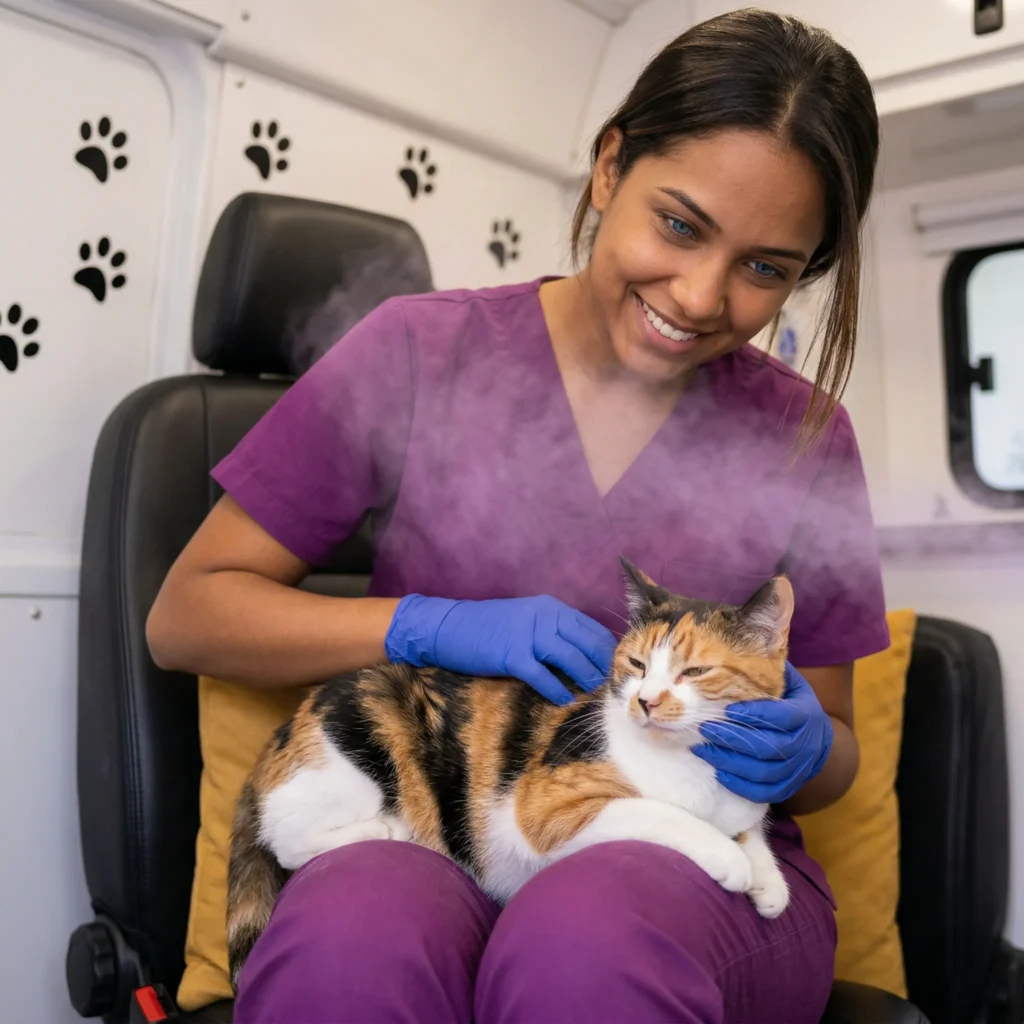
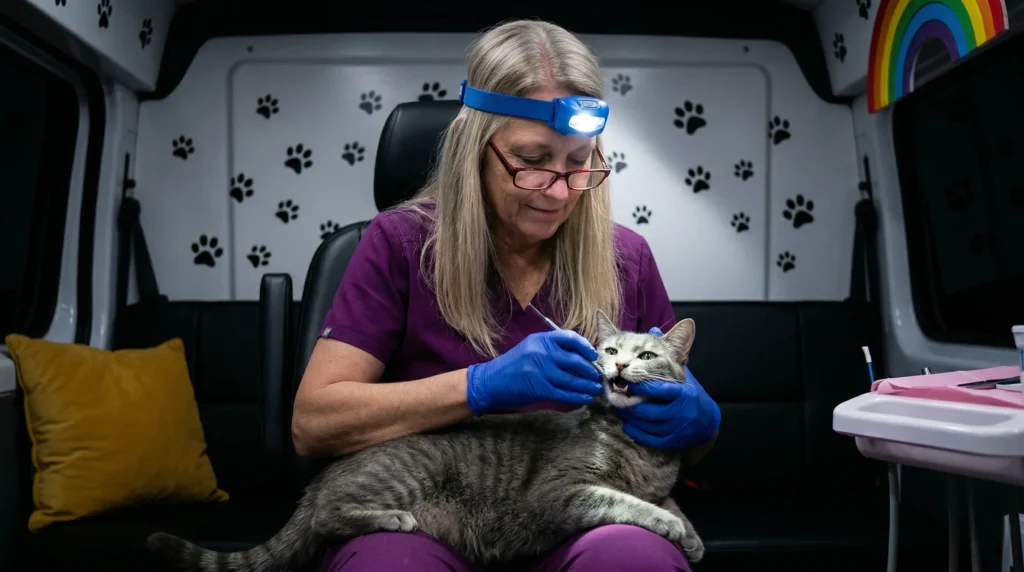
A Magic Paws cat teeth cleaning appointment typically lasts 45 to 60 minutes, from the technician’s arrival to completion. There is no fasting, no drop-off, and no recovery period afterward.
The specialist arrives at the owner’s home and begins with a candidacy assessment to confirm that the cat qualifies for anesthesia-free care. Once eligibility is confirmed, the Senses Therapy protocol is introduced to help the cat remain calm during the procedure.
This protocol combines several calming techniques:
- Lavender aromatherapy;
- Music therapy designed for feline relaxation;
- Chromotherapy using soft blue and purple light;
- Acupressure and gentle massage.
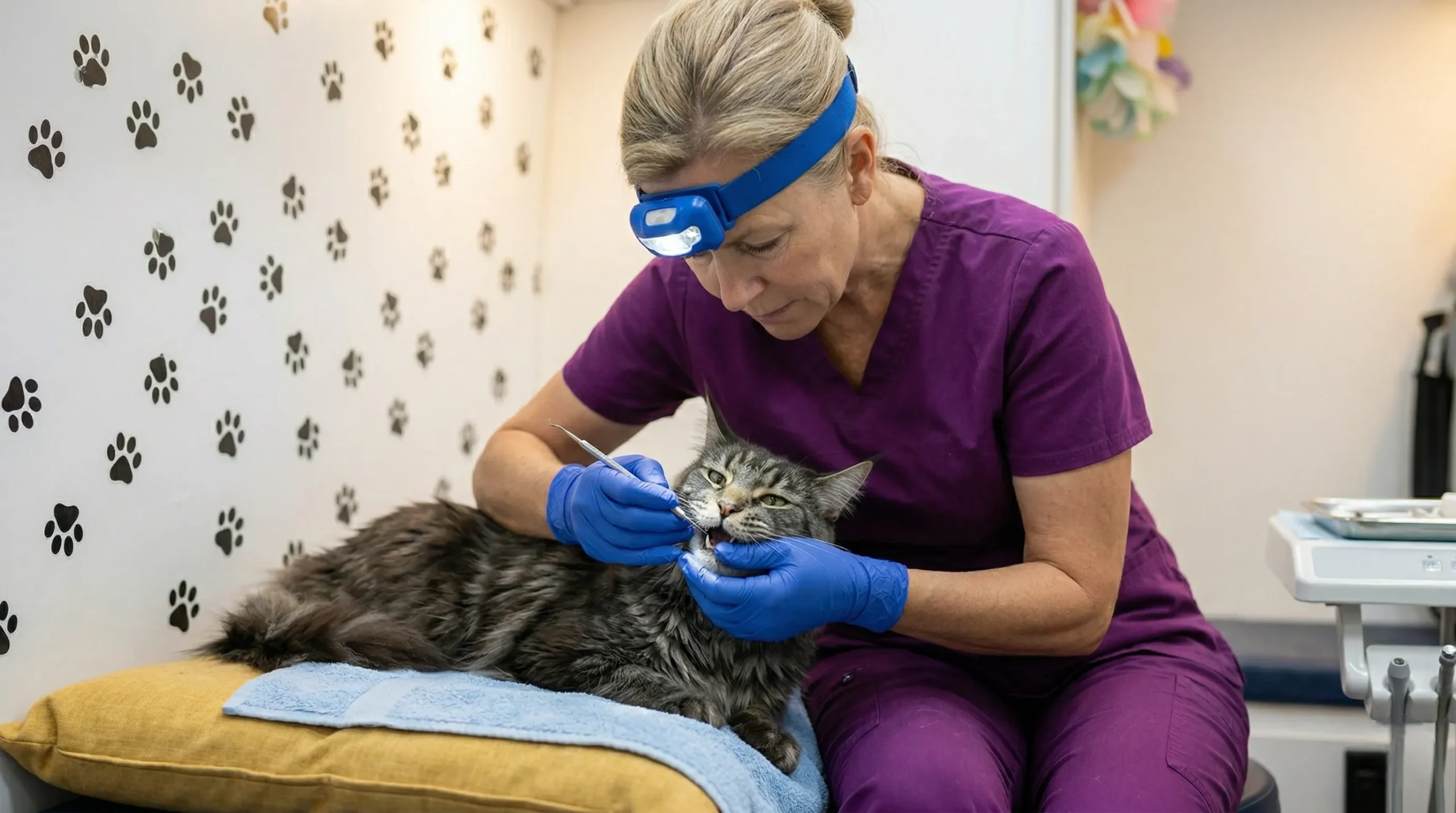
After the cat is relaxed, the technician performs a visual oral exam followed by careful hand scaling to remove visible plaque and tartar. The teeth are then polished to create a smoother enamel surface that helps reduce future plaque accumulation.
For a real example of what these results look like in practice, this article shows documented transformations from professional cleanings.
What Is the Senses Therapy and why does It matter for cats?
The Senses Therapy is The Magic Paws’ proprietary relaxation protocol designed to reduce feline anxiety during dental procedures.
Cats tend to react strongly to unfamiliar handling. When a cat becomes stressed during a dental procedure, it limits the technician’s ability to access important tooth surfaces and can reduce the thoroughness of the cleaning.
Senses Therapy addresses this challenge before the cleaning begins. Aromatherapy helps activate the parasympathetic response, calming background music reduces environmental stress, chromotherapy lighting creates a soothing visual environment, and targeted acupressure helps release physical tension.
The result is a cat that remains calm and cooperative throughout the procedure, allowing the technician to work safely across all accessible tooth surfaces.
Currently, no other mobile pet dental provider in South Florida applies this protocol specifically for feline dental care.
See what a Magic Paws cat cleaning looks like in practice. Book a mobile, anesthesia-free session across South Florida today.
How often should cats get their Teeth Professionally Cleaned?
The right cleaning frequency for a cat depends on several individual factors, but the baseline recommendation for most adult cats is consistent across major veterinary references: every six months for preventive maintenance.
That interval is not arbitrary. It reflects the typical biological timeline of tartar accumulation in adult cats under standard dietary and hygiene conditions, and it keeps the mouth consistently clean between sessions rather than allowing disease to re-establish between annual appointments.
What Affects How Often Your Cat Needs a Cleaning?
Age is the most significant variable. Senior cats accumulate tartar faster, have reduced immune response to oral bacteria and face higher risk from anesthesia-based alternatives, making the six-month anesthesia-free interval both more important and more appropriate as cats get older.
Diet affects accumulation rate. Cats on primarily wet food diets tend to accumulate tartar faster than those eating dry kibble, because the mechanical friction of dry food provides minimal but measurable plaque reduction. At-home brushing consistency matters too: cats whose owners brush regularly between appointments maintain cleaner baseline conditions and may sustain the six-month interval more easily. History of dental disease is the most direct predictor of future accumulation rate. Cats who have required periodontal treatment in the past tend to rebuild tartar faster than cats with consistently healthy baselines. The Dental Clean Club is structured around the six-month standard, with recurring appointments, priority scheduling and built-in savings that make the interval sustainable for South Florida cat owners across Miami-Dade, Broward and Palm Beach County.
Which Cat Breeds Need More Frequent Cleanings?
Brachycephalic cat breeds require particular attention because their compressed facial structure crowds the teeth into a smaller jaw, which traps food and bacteria and accelerates tartar buildup significantly.
The breeds with the highest documented dental risk include Persians, Exotic Shorthairs, British Shorthairs and Himalayans. According to Countryside Veterinary Hospital, these breeds are among the most predisposed to early-onset periodontal disease due to their anatomy. For brachycephalic cats, a cleaning interval of three to four months is often more appropriate than the standard six-month schedule. Siamese cats carry a documented genetic predisposition to periodontal disease and also benefit from a shorter interval between professional cleanings, regardless of visible tartar levels.
Your cat’s breed and history determine the right schedule. Book with The Magic Paws and let the candidacy assessment guide the recommendation.
Is anesthesia-free cat teeth cleaning safe and effective?
Yes. For eligible cats, anesthesia-free dental cleaning can be both safe and effective because it removes the primary risk associated with traditional dental procedures: general anesthesia. At the same time, it effectively removes visible tartar and reduces bacterial buildup, helping control the conditions that drive most common feline dental problems.
When used as part of routine preventive care, anesthesia-free cleaning can play an important role in maintaining healthier teeth and gums.
Which cats are the best candidates for anesthesia free cleaning?
The best candidates for The Magic Paws anesthesia-free cat teeth cleaning are healthy adult and senior cats that need preventive dental maintenance and do not have active disease requiring veterinary treatment.
Cats that experience significant stress during veterinary visits are often especially good candidates. The home environment combined with the Senses Therapy protocol helps reduce many of the stressors that make traditional clinic appointments difficult for them.
Brachycephalic breeds may also benefit from this approach, since these cats can face higher risks during procedures that require anesthesia. Senior cats whose overall health makes sedation a concern may also be well suited for anesthesia-free preventive care.
Every Magic Paws appointment begins with a candidacy assessment to confirm that the individual cat is an appropriate candidate before the cleaning begins.
Why choose The Magic Paws for your cat’s teeth cleaning in South Florida?
For cat owners in South Florida who want preventive dental care without a clinic visit, a full-day drop-off, or the risks associated with general anesthesia, The Magic Paws offers a simpler alternative.
It is the only mobile provider in the region offering anesthesia-free dental cleaning with a structured feline-specific protocol, designed to keep cats calm while delivering effective preventive care.
What makes The Magic Paws different from a traditional vet cleaning?
The differences are structural, not cosmetic. With The Magic Paws mobile service, the technician comes directly to your home. This eliminates the car ride, the clinic environment, and the presence of other animals: three of the most common stress triggers for cats.
The anesthesia-free approach removes the primary risks associated with traditional dental procedures. There is no sedation, no fasting, no blood work requirement, and no recovery period.
The Senses Therapy protocol specifically addresses feline anxiety, helping cats remain calm and cooperative without restraint or sedation. Each appointment takes 45 to 60 minutes and ends with before-and-after photos sent directly by email, providing clear visual documentation of the cleaning results.
The service is also backed by 600+ five-star Google reviews across South Florida and cat owners in Fort Lauderdale, Boca Raton, Miami, and Coral Gables consistently describe the same experience in their reviews: a cat that arrived anxious and left calm.
Which areas of South Florida does The Magic Paws serve?
The Magic Paws provides mobile anesthesia-free cat teeth cleaning across the entire South Florida region, including Miami-Dade, Broward, and Palm Beach County.
Service areas include cities such as Miami, Miami Beach, Coral Gables, Boca Raton, Fort Lauderdale, Hollywood, Pembroke Pines, West Palm Beach, and Aventura.
If you are searching for anesthesia-free cat dental cleaning near you in South Florida, The Magic Paws delivers the same structured protocol and Senses Therapy relaxation method at every appointment.
Does your cat need teeth cleaning? The signs are often invisible
Cat teeth cleaning is not a cosmetic service; it is preventive care that directly affects your cat’s comfort, overall health, and long-term quality of life. Veterinary data shows that around 70% of cats over the age of three already have some form of dental disease, often without any visible symptoms.
The Magic Paws makes professional dental care easier for cat owners by removing the barriers that usually delay treatment. There is no clinic visit, no anesthesia, no drop-off, and no recovery period.
A trained technician comes directly to your home anywhere across Miami-Dade, Broward, and Palm Beach County. The Senses Therapy relaxation protocol keeps your cat calm throughout the appointment, the cleaning is completed in under an hour, and before-and-after photos are sent the same day so you can see the results.
Preventive dental care is a choice. Waiting is also a choice. Your cat deserves a clean, healthy smile, and you deserve the peace of mind that comes with it.
Your cat deserves a clean, healthy smile without the stress of a vet visit. The Magic Paws comes to you across South Florida. No anesthesia, no waiting room. Book today.