Old dog bad teeth what to do is a question that arrives quietly, usually after years of letting the situation drift. One day the animal turns away from its favorite chew, or its breath becomes impossible to ignore, or the gums look redder than they used to. By that point, the problem has almost always been developing for months.
Periodontal disease in senior dogs does not announce itself. It builds below the gumline, where no amount of visual inspection will reveal it. The surface teeth may look acceptable while the attachment between tooth and bone is already compromised. This gap between what owners see and what is actually happening inside the mouth is one of the most consequential misunderstandings in pet care.
Most aging dogs continue eating, playing, and behaving with some version of normalcy even when their mouths hurt. The instinct to mask pain runs deep in the species, and it is precisely that adaptation that allows dental disease to advance without triggering obvious alarm. Tutors who assume he\’s still eating so it can\’t be that bad are often working with the wrong logic.
This guide covers what actually happens to a dog\’s oral health with age, what warning signs to watch for, what options exist from home care to professional intervention, and where anesthesia-free cleaning fits into the picture for senior animals.
Why do senior dogs develop bad teeth in the first place?
Dental decline in older dogs is not a single event. It is the cumulative result of years of plaque accumulation that was never fully addressed. Plaque forms on every tooth surface every day, and when it is not removed, it calcifies into tartar, a hard mineral deposit that brushing at home cannot eliminate.
By age seven, the American Veterinary Dental College estimates that most dogs already show some degree of periodontal compromise. Tartar traps bacteria against the gumline, causing inflammation, gum recession, and eventual attachment loss. The older the animal, the longer this cycle has been running. An overview of what happens during dog teeth cleaning shows what professional care addresses and why delaying it changes the prognosis.
The role of breed and size in dental decline
Small breeds carry a specific structural disadvantage. In a Chihuahua, a Yorkshire Terrier, or a Miniature Schnauzer, the teeth are proportionally large for the jaw. They sit closer together, creating contact points where plaque accumulates faster and is harder to remove. These animals typically develop tartar and periodontal disease earlier than larger breeds, even under the same care routine.
Brachycephalic breeds, including Bulldogs, Pugs, and Boxers, face a related problem. The compressed skull means the teeth erupt into a jaw that does not have enough room to hold them in standard alignment. Crowding, rotation, and overlapping surfaces all create conditions that accelerate bacterial buildup and make cleaning more difficult. For both categories, frequency of professional dental care needs to reflect that reality.
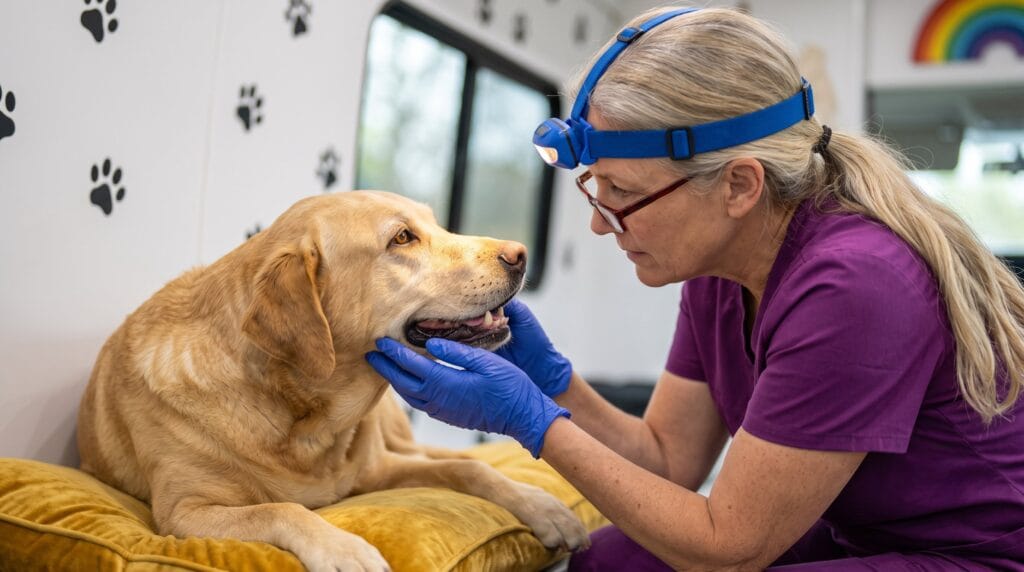
What are the warning signs of bad teeth in old dogs?
The warning signs of bad teeth in senior dogs include persistent bad breath, red or receding gums, reluctance to chew hard food, visible tartar deposits along the gumline, excessive drooling, and pawing at the face. These indicators are observable at home and signal that the disease has likely already progressed beyond its earliest stage.
Because pets rarely present obvious pain behavior, physical signs become the primary diagnostic tool for owners. The following deserve attention:
- Persistent bad breath: breath that smells strongly of decay or sulfur is not a byproduct of aging, it is a sign of active bacterial proliferation
- Red or receding gums: tissue that bleeds when lightly touched indicates gingivitis, the earliest and most reversible stage of periodontal disease
- Reluctance to chew hard food: an animal that avoids kibble, drops food mid-meal, or chews consistently on one side may be protecting a painful tooth
- Visible tartar: yellow or brown deposits along the gumline, particularly on the back premolars, indicate buildup that requires professional removal
- Excessive drooling: saliva production that increases without a clear cause can reflect oral discomfort
- Loose or missing teeth: tooth loss in an adult dog is almost always a sign of advanced periodontal disease, not incidental aging
Reviewing signs your pet might have dental problems provides a structured framework for evaluating what you observe at home and deciding when professional evaluation is warranted.
Signs that go beyond the surface
Dental disease in older dogs is not limited to the mouth. The VCA Animal Hospitals documents the connection between subgingival bacteria and systemic health: the same organisms that cause gum destruction can enter the bloodstream and reach the heart, kidneys, and liver.
This pathway is not a theoretical risk. In animals with advanced periodontal disease, bacterial load in the bloodstream rises during eating and grooming. Long-term exposure to that load has measurable effects on organ function, which is why understanding dog dental disease as a systemic issue, rather than a cosmetic one, changes how urgently treatment is approached.
Why old dogs hide dental pain better than you think
Dogs evolved as prey to predators and competitors alike, and showing weakness was a survival disadvantage. That instinct has not disappeared in domesticated animals, and it is the primary reason so many owners miss the problem until it is severe.
A senior dog in significant oral pain will often continue eating, continue greeting its owner, and continue moving through the day with only subtle behavioral differences. It stops playing with toys it used to chew. It avoids having its face touched around the muzzle.
Not only that, but it gravitates toward wet food or softer textures without a clear explanation. It may seem less energetic, which the owner interprets as normal aging rather than chronic discomfort.
These behavioral shifts are easy to normalize, especially in animals that have been gradually declining over months or years. The difficulty compounds because gradual changes rarely trigger the same concern as sudden ones.
What can you do at home for your old dog’s bad teeth?
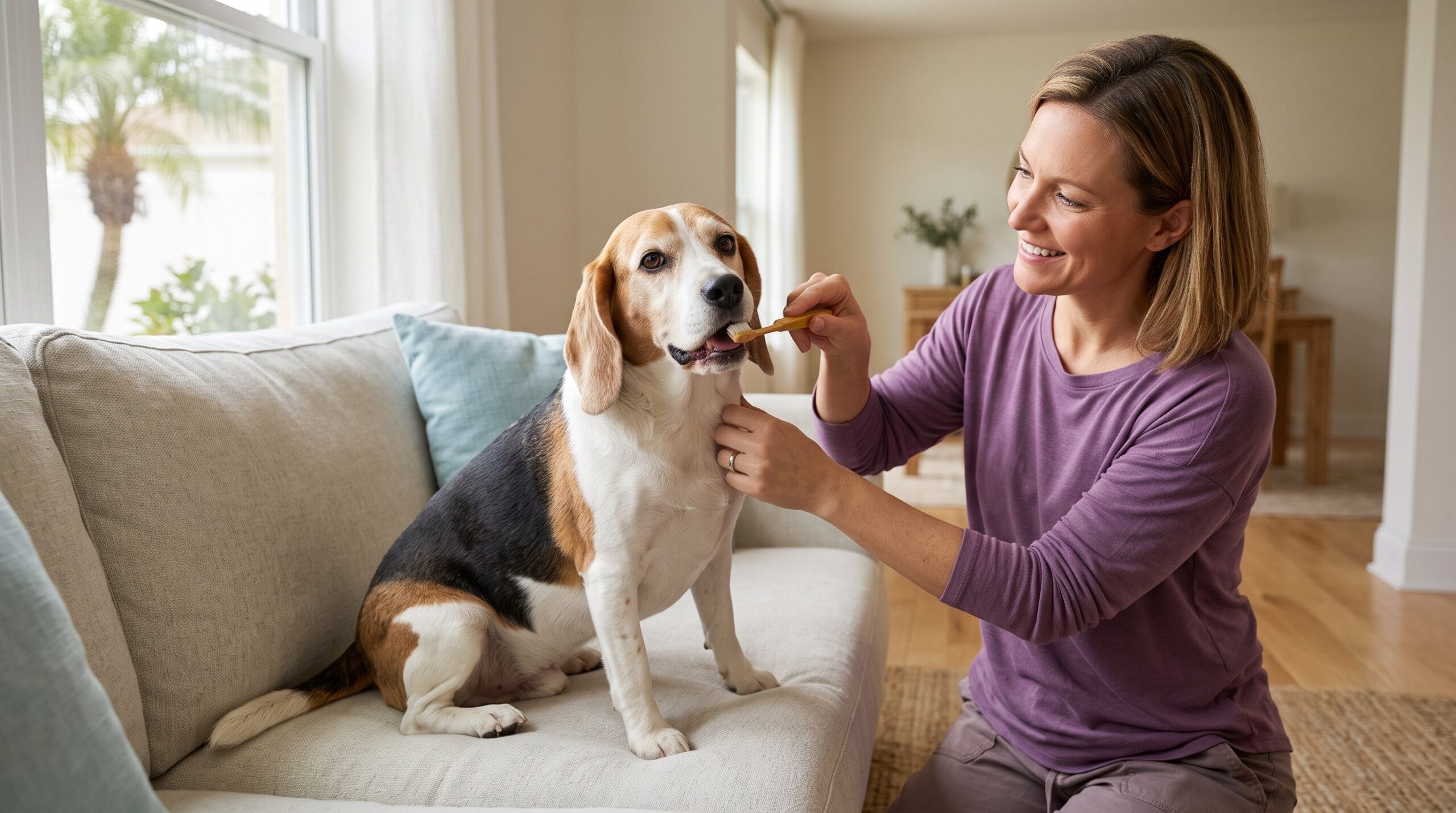
At home, the most effective intervention for old dog bad teeth what to do at home is daily brushing with a toothpaste formulated for dogs. Human toothpaste contains fluoride and foaming agents that are unsafe for animals. Dog-specific formulas come in palatable flavors that most pets tolerate well, and the mechanical action of the brush disrupts the plaque biofilm before it has a chance to harden.
For dogs that do not tolerate brushing, alternatives can slow the rate of accumulation:
- VOHC-approved water additives: the Veterinary Oral Health Council maintains a list of products that have demonstrated efficacy in controlled studies. Adding an approved formula to the water bowl provides passive daily contact with active ingredients
- Gauze wraps: a clean piece of gauze wrapped around a finger and rubbed along the gum surface is a workable substitute for owners whose pets resist brushes
- Dental wipes: pre-moistened wipes designed for canine oral use offer a similar mechanical effect to gauze with slightly more convenience
What to avoid is equally important. Real bones, antlers, compressed nylon chews, and any object that cannot flex or break under pressure carry a meaningful risk of tooth fracture in older animals. A fractured tooth in a senior pet often requires extraction, which means anesthesia.
Appropriate dog dental chews that carry VOHC approval and pass the thumbnail test (if it does not indent under thumbnail pressure, it is too hard) are a safer choice.
A broader review of essential dog dental care covers the full spectrum of at-home options and how to build a routine that older animals will accept.
How often should senior dogs get professional dental cleanings?
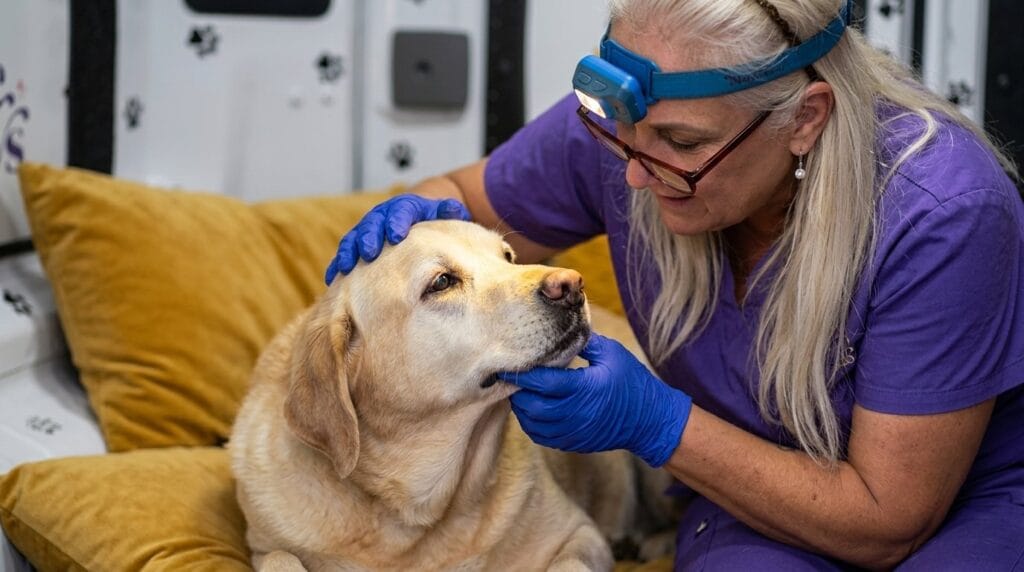
Senior dogs benefit from professional dental cleaning at minimum once per year, and twice a year for animals with a history of rapid tartar accumulation or existing periodontal involvement. Frequency is not cosmetic: it directly affects how far disease progresses between appointments and whether early-stage problems can be maintained without escalating to extraction.
The distinction between preventive maintenance and treatment matters here. Regular cleaning keeps established disease from worsening and can reverse early gingivitis. It cannot undo bone loss or regenerate destroyed attachment tissue. The earlier and more consistently it is performed, the better the long-term prognosis.
An explanation of how long does a dog dental cleaning take helps owners plan around the appointment. Understanding what no anesthesia dog teeth cleaning involves clarifies why it is a viable and appropriate option for senior animals who are candidates for the procedure.
What happens if you don\’t treat an old dog\’s bad teeth?
Untreated dental disease in senior dogs progresses through four documented stages, each more destructive than the last. Stage one, gingivitis, is inflammation of the gum tissue. It is the only fully reversible stage. Stages two through four involve progressive loss of the attachment between tooth and bone, leading to pocket formation, tooth mobility, and eventual loss.
According to the American Veterinary Dental College, advanced periodontal disease in dogs involves jawbone resorption that can compromise structural integrity, particularly in small breeds where the mandible is narrow. In these animals, severe bone loss creates a real risk of pathological fracture, where the jaw breaks spontaneously under the pressure of normal chewing.
The systemic consequences extend beyond the mouth. Bacterial organisms that colonize the subgingival space can enter the bloodstream repeatedly over months and years. Documented organ involvement includes changes in cardiac tissue, kidney function, and liver enzymes in dogs with severe chronic periodontal disease. Scheduling a dental exam for pets before the disease reaches advanced stages changes what interventions are available and at what cost.
Is anesthesia-free dental cleaning safe for older dogs?
Anesthesia-free dental cleaning is safe for senior dogs when the animal meets the eligibility criteria: early to moderate periodontal disease, no need for extraction, no requirement for radiographic diagnosis, and behavioral cooperation during the procedure. The absence of sedation eliminates the cardiovascular and respiratory risks that increase with age, making it a lower-risk option for dogs whose overall health would make anesthesia a concern.
The eligibility evaluation is not a formality. Each animal is assessed individually before the procedure begins, with attention to disease stage, oral anatomy, temperament, and general health history. Not every senior dog qualifies, and that is part of responsible preventive care. Those who do not qualify because they require extraction or X-rays are referred to a veterinarian for appropriate treatment.
Understanding the risks covered in how many dogs die from teeth cleaning contextualizes the anesthesia risk conversation. Exploring mobile dog dentist services explains how van-based care eliminates the transport stress that compounds those risks for older animals.
When a vet visit with anesthesia is necessary instead
Anesthesia is necessary and appropriate in advanced cases. When periodontal disease has reached stage three or four, when there is radiographic evidence of bone loss, when a tooth root abscess is present, or when extraction is indicated, the procedure requires a veterinary dental specialist operating under sedation.
The Magic Paws identifies these cases during the eligibility evaluation and refers the animal to a veterinarian directly. The model is preventive and complementary: regular anesthesia-free cleaning reduces the likelihood that a pet will reach the stage requiring surgical intervention, but it does not replace that intervention when it is genuinely necessary.
Is your senior dog eligible for an anesthesia-free cleaning? Check availability in your area and book today.
What should you expect after a dental cleaning for a senior dog?
After an anesthesia-free dental cleaning, the animal returns to its normal routine immediately. There is no recovery period, no post-sedation monitoring, and no restricted feeding window. Most dogs eat normally within the hour.
Some animals show mild gum sensitivity in the first few hours, particularly if heavy tartar was removed from areas where the tissue was inflamed. This is temporary and typically resolves within 24 hours. Owners should watch for any change in eating behavior, unusual pawing at the face, or sustained reluctance to drink water, and contact the service provider if those signs persist.
The absence of a recovery period is one of the clearest practical differences between anesthesia-free and anesthesia-based procedures. A dog coming out of general anesthesia needs hours of monitoring, restricted activity, and careful observation for post-sedation complications. After a non-surgical cleaning, the animal simply goes home and continues its day.
Why mobile dental care makes a difference for older dogs
For senior dogs, getting to a clinic is not always simple. Mobility limitations, joint pain, anxiety during car rides, and the elevated cortisol that transport produces in older animals all contribute to a procedure experience that starts with stress before anything clinical has begun. Elevated cortisol compromises immune tolerance and affects how an animal handles any procedure, including routine dental cleaning.
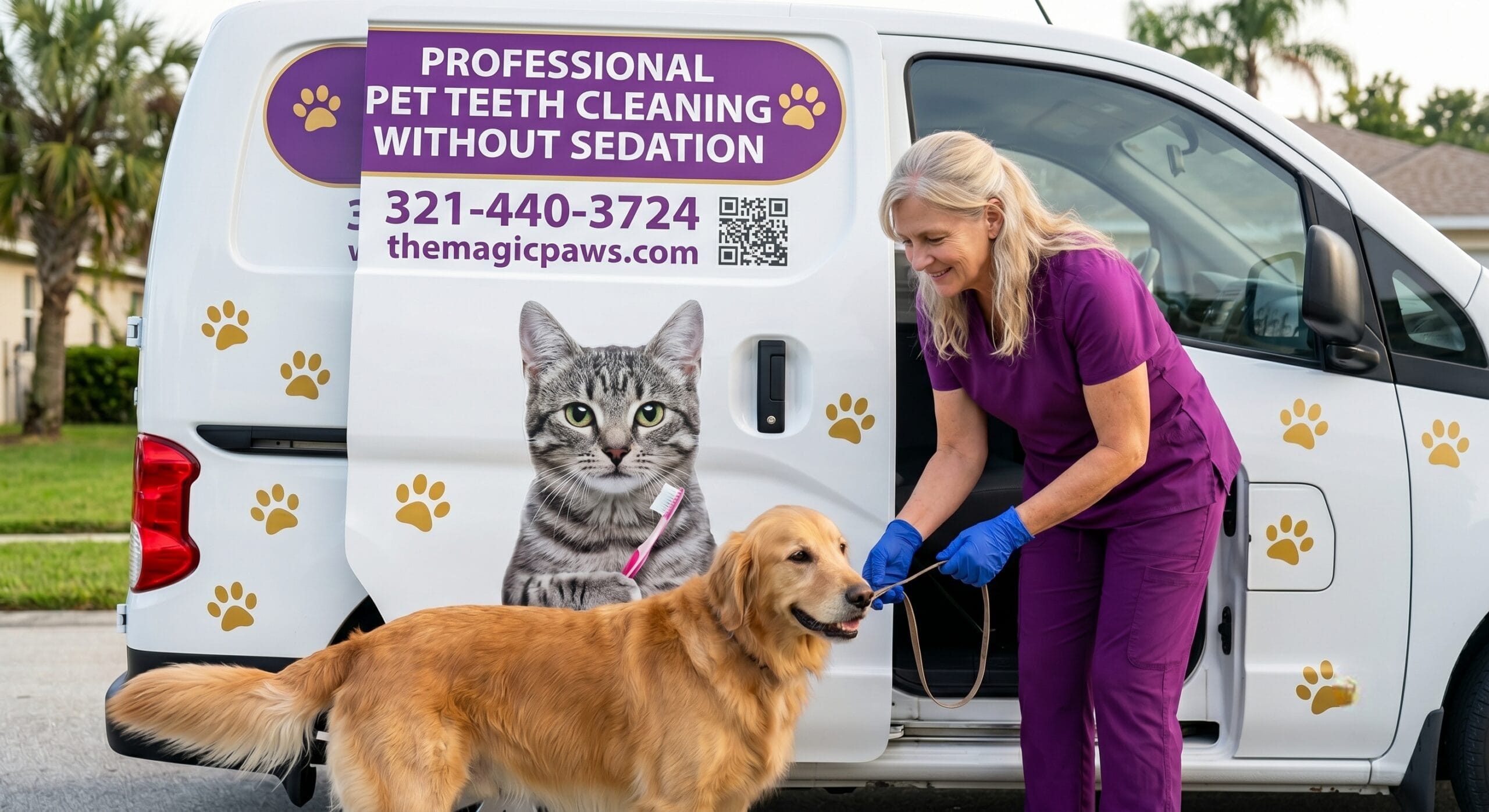
Mobile service eliminates that variable. The Magic Paws comes to the pet’s location throughout Florida, conducting the procedure inside the van, never inside the client’s home, never in a clinic setting. The animal moves from a familiar environment directly into the van, without the waiting room, the unfamiliar smells, or the exposure to other animals.
During the procedure, the Senses Therapy protocol is active: aromatherapy, music therapy, chromotherapy, and massage work in combination to maintain a calm state without sedation. For a senior dog with a lower stress threshold than a younger animal, that environmental control is not a luxury. It changes how the procedure is tolerated and how the tutor observes the animal afterward.
Is there still time to help your senior dog’s mouth?
Prevention remains possible even in older animals. Senior dogs with early to moderate-stage periodontal disease can be maintained with regular professional cleaning that stops the progression from reaching the stages where tooth loss and systemic involvement become unavoidable.
The calculus for waiting is straightforward: every month without intervention is another month of bacterial activity below the gumline, another month of attachment loss that cannot be reversed, and another month closer to the stage where anesthesia becomes necessary rather than optional. Acting before that point protects the animal and keeps more options open.
The Magic Paws serves senior dogs throughout Florida. Each evaluation is individual, each procedure is adapted to the animal\’s current health status, and the objective is always the same: prevent what can still be prevented, and refer what cannot be handled without veterinary intervention.
Your senior dog doesn’t have to live with pain. Book an anesthesia-free cleaning with The Magic Paws and see the difference today. Book your senior dog’s anesthesia-free dental cleaning.
Frequently asked questions about old dog bad teeth
What is the best way to clean an old dog’s teeth at home?
Daily brushing with dog-specific toothpaste is the most effective at-home method. For dogs that resist the brush, a piece of gauze wrapped around the finger and rubbed along the gumline provides similar mechanical disruption of plaque. VOHC-approved water additives offer a passive daily option that requires no handling.
How do I know if my old dog is in pain from his teeth?
Watch for behavioral changes rather than obvious distress. A dog in dental pain often stops interacting with toys it used to chew, avoids being touched near the muzzle, and shifts toward softer food without explanation. Dogs suppress pain by instinct, so the absence of whimpering does not mean the mouth is comfortable.
Should I have my 12-year-old dog’s teeth cleaned?
Yes, provided an eligibility evaluation is performed first. Age alone is not a contraindication. What matters is the animal\’s overall health status and the current stage of periodontal disease. The Magic Paws conducts an individual assessment before every procedure and refers animals that need veterinary dental care rather than preventive cleaning.
Can senior dogs get dental cleanings without anesthesia?
Yes, when the periodontal disease is in an early to moderate stage and no extraction or radiographic diagnosis is required. Eligibility is evaluated individually before each appointment. For animals that meet the criteria, anesthesia-free dental cleaning removes tartar and controls bacterial load without the sedation risks that increase in older dogs.
Is bad breath in old dogs normal?
Persistent bad breath is not a normal part of aging. It signals active bacterial proliferation below the gumline, most commonly associated with periodontal disease. Many owners normalize this sign for years because the onset is gradual. It warrants a professional evaluation regardless of the animal’s age.
What happens if a dog’s bad teeth are left untreated?
Gingivitis progresses to periodontitis, then to bone loss, then to systemic bacterial exposure through the bloodstream. Advanced stages involve chronic pain, tooth loss, and documented effects on heart, kidney, and liver function. Earlier intervention consistently produces better outcomes and lower long-term cost.
Is gum disease in senior dogs reversible?
Stage one, gingivitis, is fully reversible with professional cleaning and consistent home care. Stages two through four are manageable but not fully reversible: the attachment and bone that have been lost do not regenerate. The earlier the intervention, the better the outcome.
How much does it cost to clean a senior dog\’s teeth?
Cost depends on the method and the extent of buildup. Anesthesia-free cleaning carries a lower cost than a veterinary procedure under sedation. Current pricing and availability by area are available at themagicpaws.com/#pricing.
What is the recovery time after a dog dental cleaning without anesthesia?
There is no recovery period. The animal returns to its normal routine immediately after the procedure, including eating. This is one of the practical advantages of anesthesia-free cleaning for senior dogs: no post-sedation monitoring, no restricted feeding window, and no hours of observation before the pet can go home.
Does The Magic Paws serve senior dogs in Florida?
Yes, The Magic Paws serves senior dogs throughout Florida. Each appointment begins with an individual eligibility evaluation to confirm that the animal is a candidate for anesthesia-free cleaning. To check availability in your area, visit themagicpaws.com/#pricing.